



The undercut pixie represents one of the most versatile and striking short haircuts available today. Unlike traditional pixies that sit uniformly close to the scalp, the undercut pixie cleverly combines shaved or closely cropped sides and back with longer hair on top, creating dramatic contrast and endless styling possibilities. This style works because it lets you play with length, texture, and definition in ways that transform your entire look—whether you prefer soft, romantic waves or bold, architectural angles.
What makes the undercut pixie so appealing is how it adapts to different face shapes, hair textures, and personal style preferences. You’re not locked into one interpretation. Some versions whisper elegance with feathered layers and subtle fades, while others command attention with geometric precision and sharp lines. The beauty of this cut is that the foundation stays consistent—shorter sides and back—but the styling and top length variations create completely different energies.
Whether you’re drawn to edgy, fashion-forward looks or prefer something more wearable and low-key, there’s an undercut pixie variation that speaks to you. The real skill in choosing one comes down to understanding what you want to communicate, how much styling time you’re willing to invest, and which specific variations actually work with your hair texture and face shape. Let’s explore eight distinct interpretations, from soft and romantic to sharp and boldly sculptural.
1. The Soft Feathered Undercut Pixie
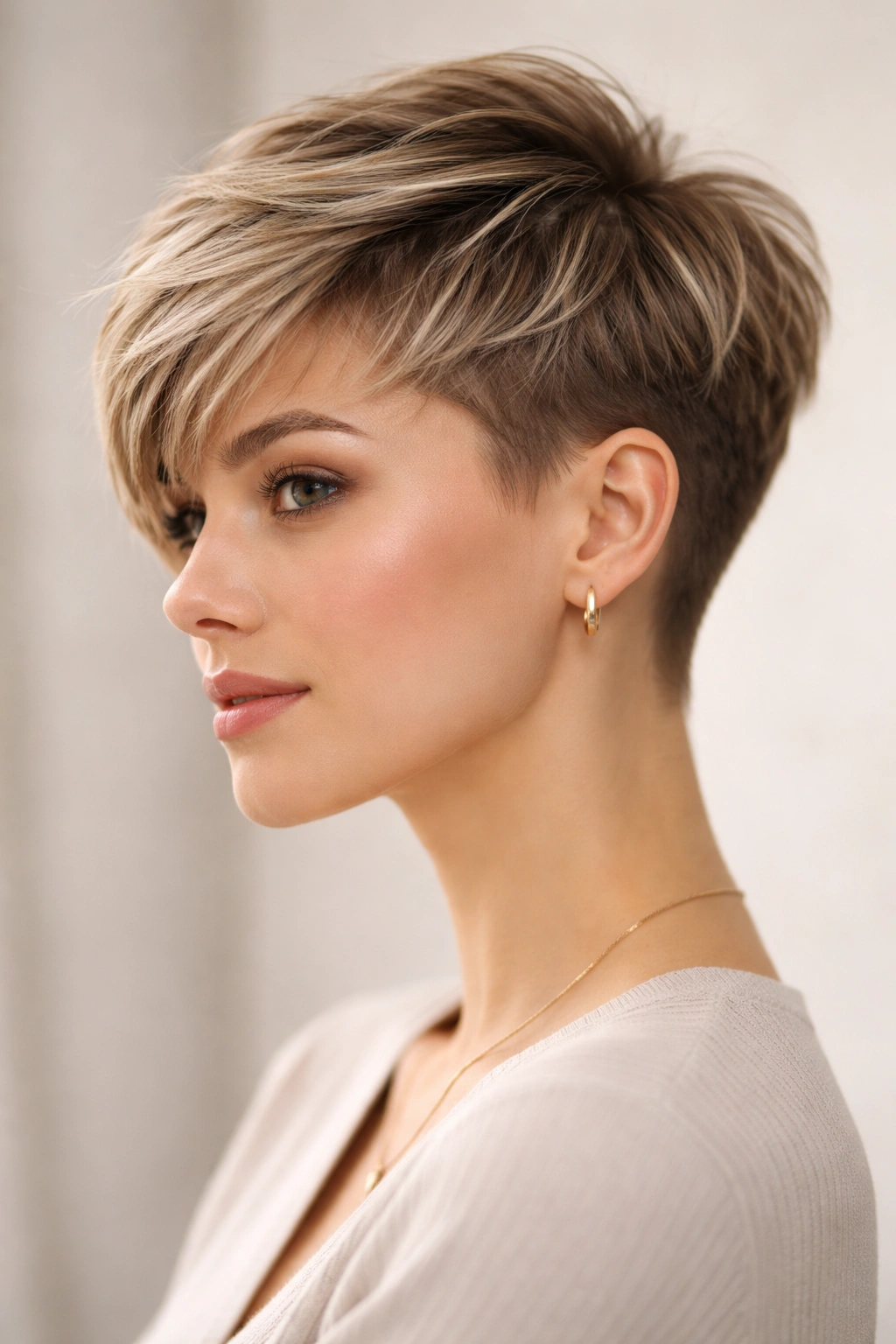
The soft feathered undercut pixie balances edginess with approachability, making it one of the most wearable undercut styles available. This version features delicate, wispy layers across the top that graduate from slightly longer at the crown to shorter around the face, creating a feathered, almost wing-like effect. The undercut remains subtle—typically a fade rather than a sharp shave—so the contrast reads as refined rather than confrontational.
What Makes It Stand Out
This style thrives on movement and lightness. The layers catch light differently depending on how you style them, and they naturally encourage texture without requiring an aggressive product routine. Many people choose this version precisely because it feels polished during the day but can become softer and more romantic when you work with your hair’s natural wave pattern. The feathering also means you have multiple styling options without looking drastically different from day to day.
Best Hair Types and Styling Approach
The soft feathered version works beautifully on wavy and textured hair, where the layers enhance your natural movement. Even straight hair reads well with this cut once you add a light texturizing product or sea salt spray. Style it by running your fingers through with a texturizing product for a tousled, lived-in look, or blow-dry with your fingers for more shape and lift at the crown. Many people let this style air-dry into a soft, organic texture that requires minimal intervention.
Who Should Consider This Version
If you love the idea of an undercut but worry it might be too severe, the soft feathered style is your answer. It reads as edgy to people who don’t know short hair, but it feels feminine and approachable in person. This version suits people who want a low-maintenance cut but don’t want to sacrifice dimension or movement.
2. The Sharp Geometric Undercut Pixie
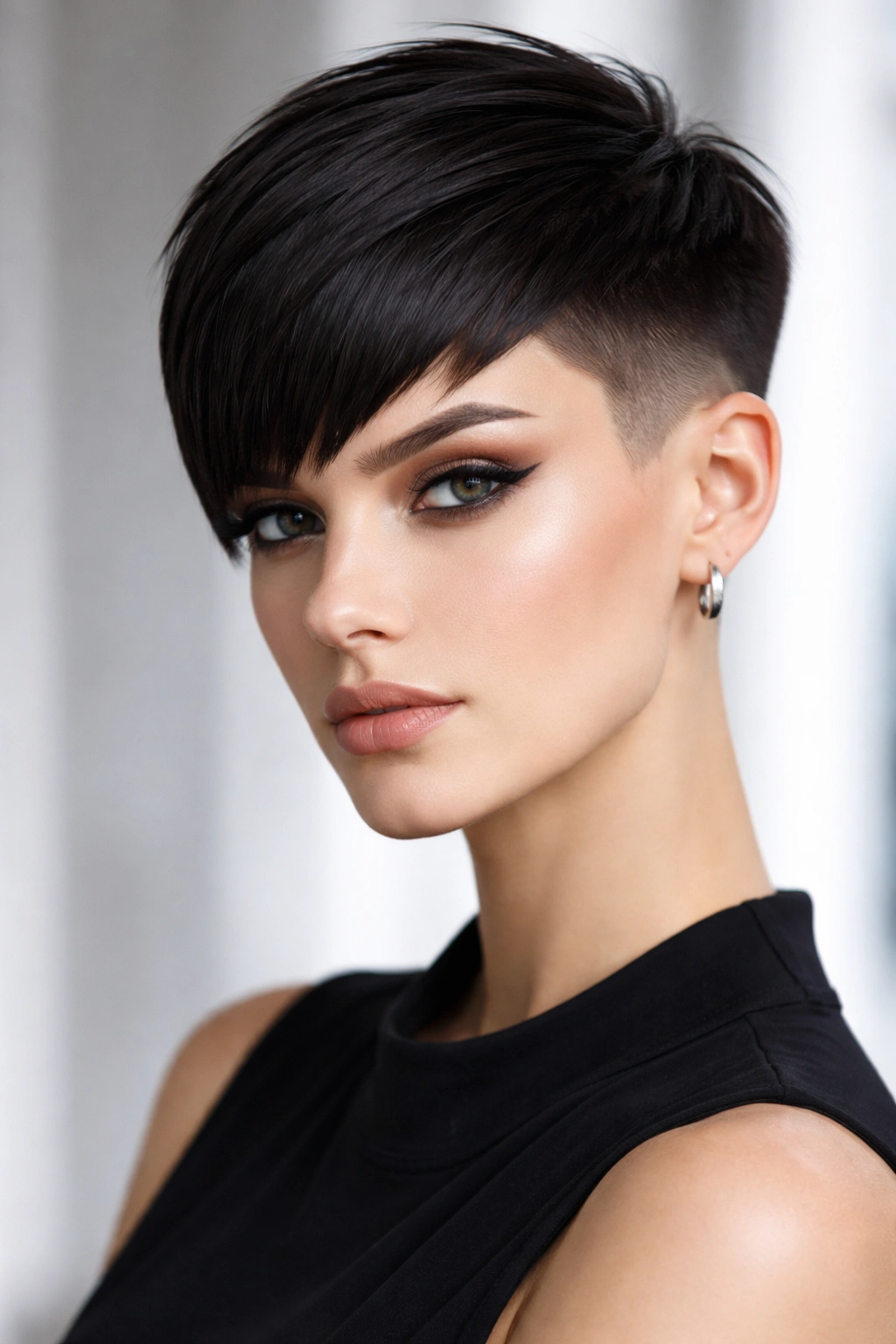
For those who want their pixie to make an architectural statement, the sharp geometric undercut pixie delivers pure sculptural precision. This style features clean, defined lines with blunt edges throughout, a sharp fade or shave on the sides and back, and geometric shaping on top—often with a defined front section that frames the face with intentional angles. There’s no softness or apology in this cut; every line exists for a reason.
What Makes It Stand Out
The geometric undercut reads as immediately fashion-forward and confident. It photographs beautifully and commands attention in any setting. The precision required in cutting and maintaining the lines means working with a skilled barber or pixie specialist who understands how to create and maintain sharp angles. The contrast between the undercut and the shaped top is bold and unapologetic, making this style perfect for people who want their hair to be a statement piece.
Styling and Maintenance Considerations
This cut requires more frequent trims—typically every 4-6 weeks—to keep the lines crisp and intentional. Styling is straightforward: the geometric cut does much of the work for you. You might use a light pomade or styling clay to define the shaped sections and add subtle texture, or wear it more naturally with a matte-finish product that enhances the geometric shapes without adding shine. The undercut requires regular touch-ups to maintain the clean lines.
Who Should Consider This Version
Choose this style if you’re comfortable with regular salon visits and you genuinely love the look of a sharply cut pixie. This version suits angular face shapes beautifully and works well for people with straight to slightly wavy hair, where the geometric lines read clearly. It’s ideal if you want your hair to feel like a deliberate fashion choice rather than just a practical short cut.
3. The Textured Choppy Undercut Pixie
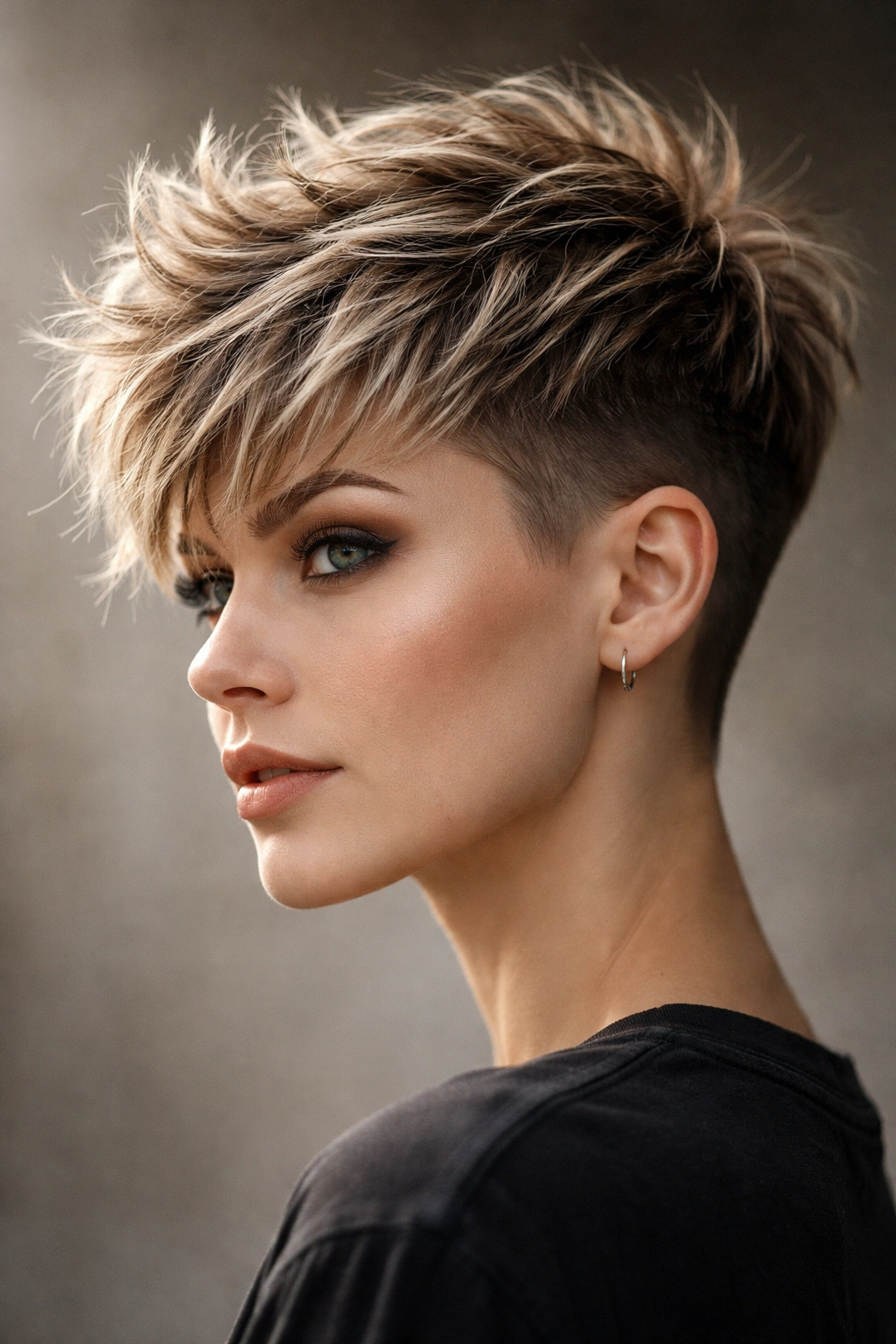
The textured choppy undercut pixie embraces intentional imperfection through shorter, irregular layers across the top that create jagged edges and multiple texture levels. Unlike the geometric pixie with its clean lines, this version celebrates a rougher, lived-in aesthetic. The undercut remains sharp, creating contrast, but the top is deliberately choppy and fragmented, giving the whole look an effortlessly undone quality.
What Makes It Stand Out
This style thrives on movement and texture rather than precision. The choppy layers mean your hair can move in multiple directions, creating a dynamic, three-dimensional look even when you’re standing still. It photographs well in natural light and has an editorial, almost editorial-fashion quality without feeling overdone. The texture also helps disguise any hair that won’t sit perfectly flat, making this version more forgiving than strictly geometric styles.
Styling Tips for Maximum Impact
This cut is incredibly versatile with styling. You can enhance the choppy texture with a matte texture spray or dry shampoo for extra grip and definition. You can also smooth it with a lightweight pomade for a slightly more refined look. Many people let this style air-dry completely, as the layers often find their own texture pattern. Finger-styling works better than trying to blow-dry into perfection—the imperfection is the point.
Who Should Consider This Version
If you prefer a more effortless, less structured aesthetic, the choppy textured version is perfect. It suits most hair types, though it reads especially stunning on naturally textured, curly, or wavy hair where the layers create movement. This version also works well for people who don’t want to commit to frequent trims; it stays looking intentional longer than a sharper geometric cut.
4. The Asymmetrical Undercut Pixie
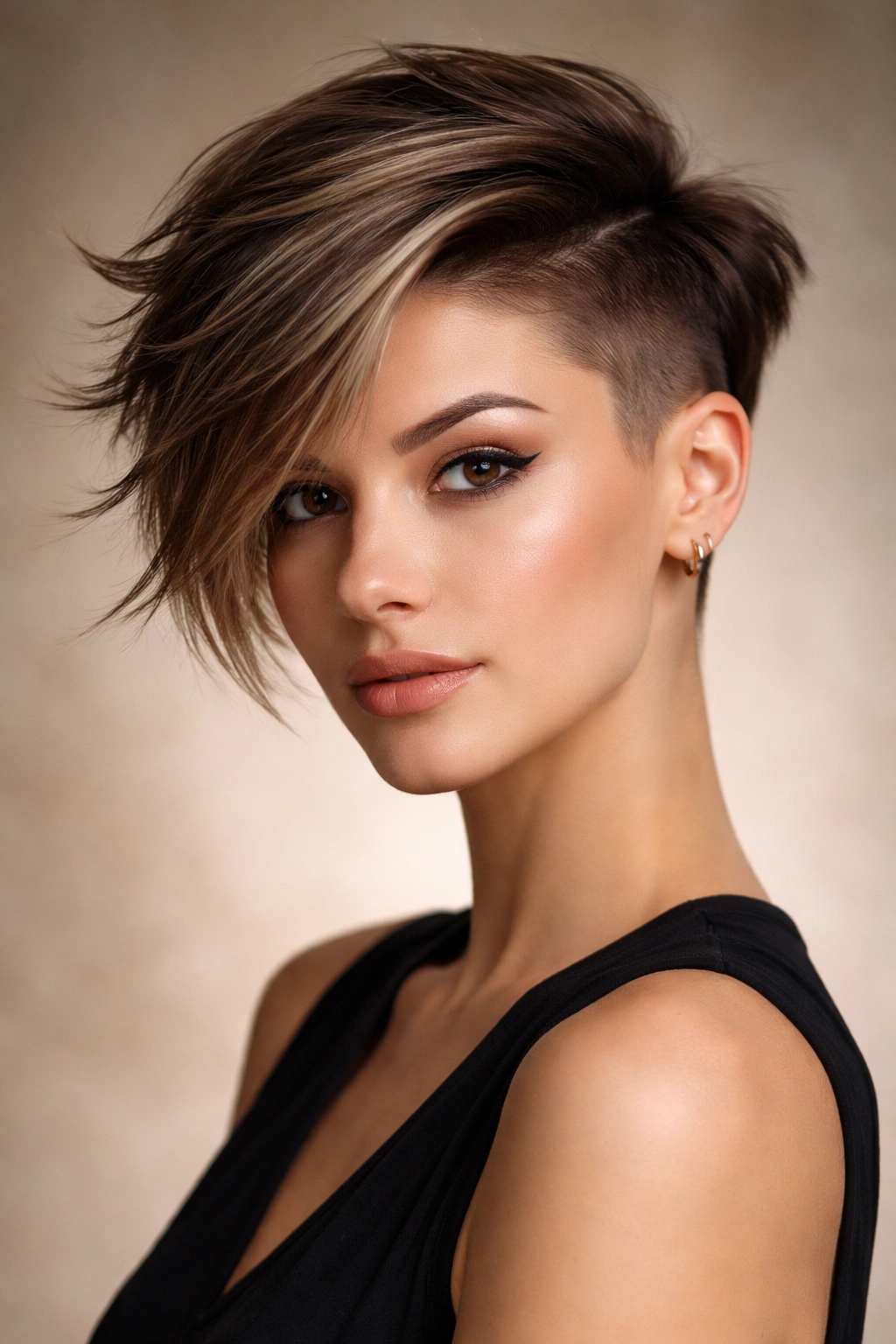
The asymmetrical undercut pixie breaks the traditional symmetry of the pixie cut by making one side noticeably longer or differently shaped than the other, while maintaining the undercut on both sides. This might mean keeping more length on one side of the face, shaping one side more closely while leaving the other fuller, or even undercut heights that differ between sides. The asymmetry creates visual interest and a modern, fashion-conscious edge.
What Makes It Stand Out
Asymmetry automatically elevates a pixie into editorial territory. It reads as intentional and bold, signaling that you’ve made a deliberate choice about your appearance. Asymmetrical cuts photograph beautifully and create visual movement even in static photos. The style also lets you play with your good side or the direction you prefer your hair to fall naturally, giving you some control over how the cut sits each day.
Customizing Asymmetry to Your Face Shape
The best asymmetrical cuts work with your natural face shape rather than against it. If you have a rounder face, your stylist might keep more length on the longer side to create visual length. With an angular face, longer on one side creates softer contrast. Some people choose asymmetry that mirrors their hair’s natural growth pattern or how they prefer their hair to fall. Discuss with your stylist how the asymmetry will work with your specific proportions.
Styling an Asymmetrical Cut
Styling is straightforward—you’re essentially styling a longer pixie on one side and shorter on the other. Use a blow dryer or finger-styling to encourage the lengths to sit as designed. Some asymmetrical pixies work beautifully when you style the longer side over and across, creating extra dimension. Others look better when you let the longer side fall naturally. Experiment during that first week post-cut to discover what feels right.
Who Should Consider This Version
Asymmetrical pixies suit people who want a distinctive, recognizable look and are comfortable with hair that reads as intentionally fashion-forward. They work on most face shapes, but angular and longer faces often carry asymmetry with particular grace. This style is perfect if you want something that feels unique and signals creativity and style awareness.
5. The Faded Undercut Pixie
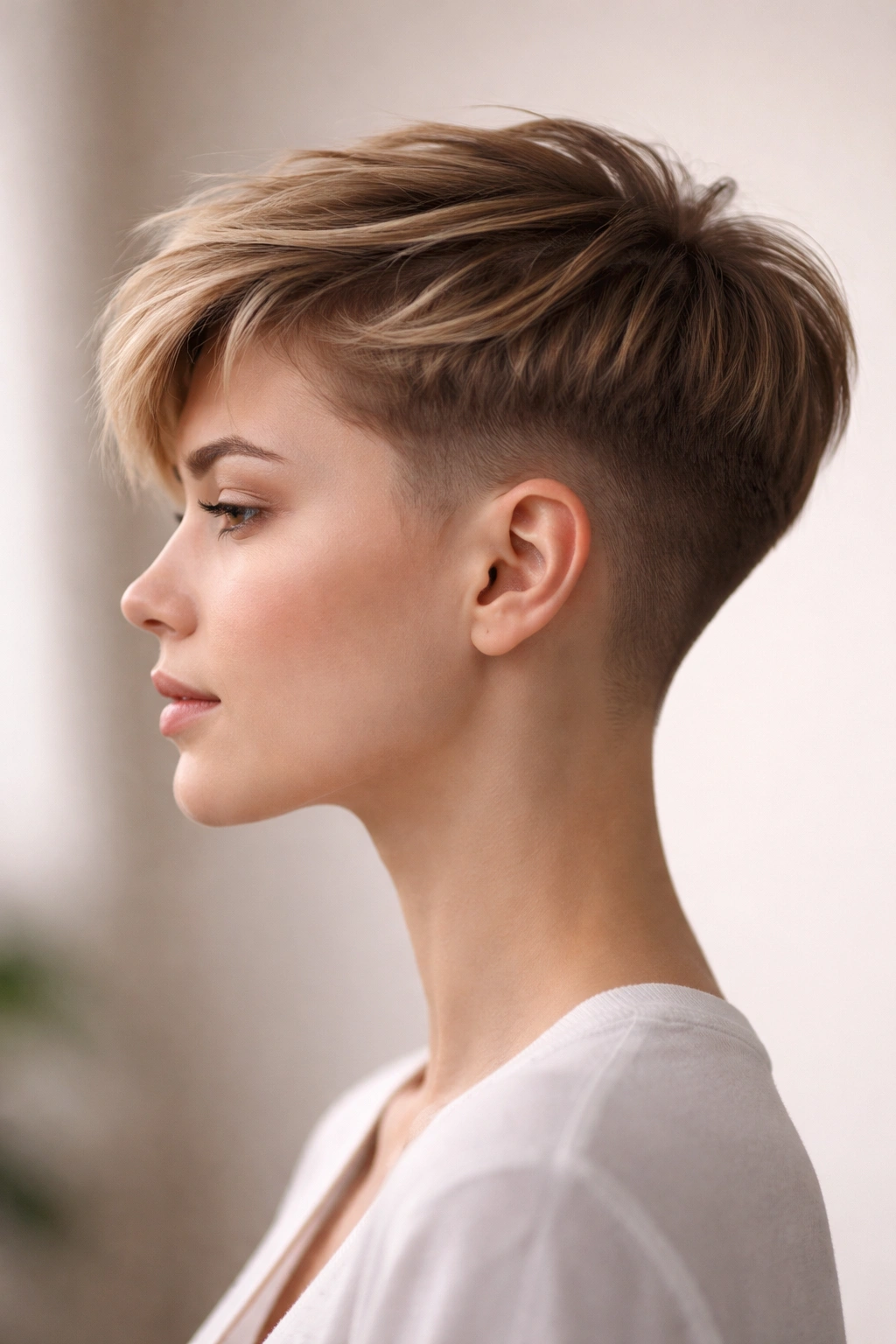
The faded undercut pixie combines a traditional pixie’s longer top with a barber-style fade on the sides and back, where the hair gradually gets shorter from mid-length down to nearly skin-level. Rather than a blunt undercut line, the fade creates a smooth, graduated transition. This version bridges the gap between a full pixie and styles that feel borrowed from men’s barbering, creating an androgynous, contemporary aesthetic.
The Appeal of Fade Over Sharp Undercut
A fade creates sophistication through gradation rather than contrast. It reads as polished and intentional without the drama of a sharp undercut line. The fade also feels slightly less severe than an undercut because there’s no sudden drop-off; your eye follows a smooth progression. Many people find a fade feels more wearable day-to-day than a sharp undercut, while still maintaining that short, clean aesthetic.
Maintaining a Fade
Fades require more frequent touch-ups than undercuts because the graduated nature means you can’t just let it grow; it will lose its clean aesthetic quickly. Plan for trims every 3-4 weeks if you want the fade to read clearly and intentionally. Your barber or stylist can customize how quickly the fade drops and where it transitions, so discuss your preferences about how subtle or dramatic you want the progression to be.
Styling Possibilities
The fade works with virtually any styling approach on top. You might keep the top longer and style it slicked back or to the side, or keep it shorter and choppy. The fade looks equally good with texture spray, pomade, or as a simple wash-and-wear style. The real versatility comes from how many different top lengths work well with a fade—you’re not locked into a specific length requirement.
Who Should Consider This Version
Choose a faded pixie if you appreciate barber-style precision and want something that reads as contemporary and refined. Fades suit most face shapes and work beautifully across hair textures. This version appeals to people who love the short-hair aesthetic but want something that feels slightly less confrontational than a sharp undercut. It’s also ideal if you prefer to visit a barber or someone experienced in men’s cutting techniques.
6. The Long-Top Undercut Pixie
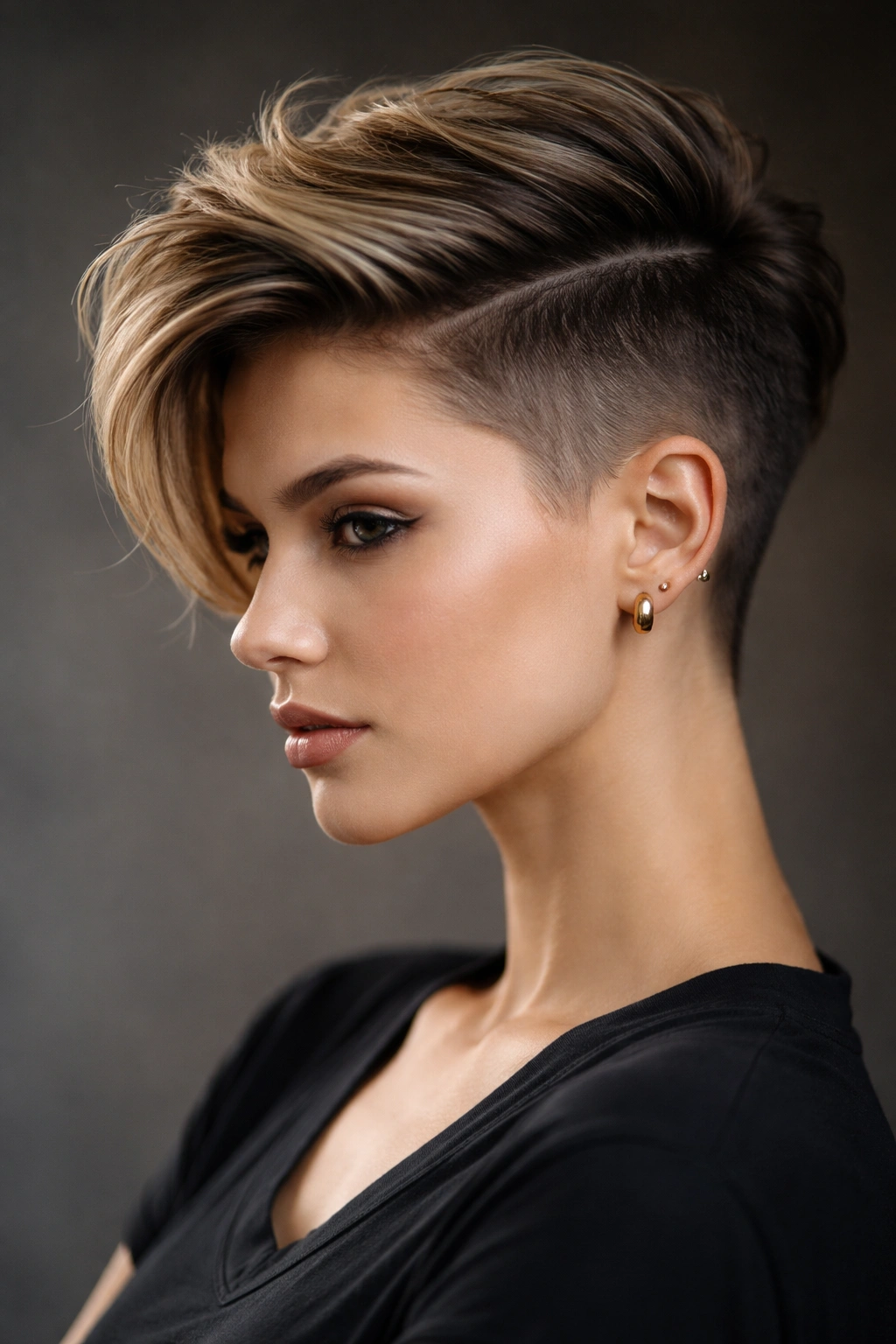
The long-top undercut pixie pushes the visual contrast by keeping significantly more length on top—potentially 2-3 inches or longer—while maintaining a sharp or faded undercut on the sides and back. This creates a look that’s edgy and dramatic, with room for styling versatility on top. You can sweep, tousle, or slick the longer top, completely changing the vibe from day to day.
Why Choose More Length on Top
Extra length on top gives you flexibility that shorter pixies don’t offer. You can style it in multiple directions, create different textures, or even experiment with subtle styling that feels completely different depending on your mood. This version still reads as a short haircut, but the additional length makes it feel less severe and opens up more styling possibilities. It’s perfect if you want the undercut’s edginess without fully committing to a super-short top.
Versatile Styling Options
On days you want the bold look, slick the longer top back to showcase the undercut fully. On other days, tousle or sweep it across for a softer aesthetic. You can part it on either side, create texture throughout, or smooth it sleekly—each approach reads as a distinctly different style. Many people choose this version precisely because they can shift between edgy and approachable styling depending on their plans for the day.
Growing and Maintaining the Transition
The longer top means you have more flexibility on trim timing for the top itself, though you’ll still want regular undercut maintenance. The transition between longer top and shorter sides is crucial; discuss with your stylist how they’ll shape that blend so it reads as intentional rather than unrefined. A skilled cut makes all the difference in how the longer top sits and how naturally it transitions.
Who Should Consider This Version
If you want an undercut pixie but aren’t ready to commit to super-short top length, the long-top version is an excellent middle ground. It suits most face shapes and reads beautifully on straight, wavy, and textured hair. This version appeals to people who want styling versatility and the ability to shift between different aesthetic moods without an entirely new haircut.
7. The Curved Undercut Pixie
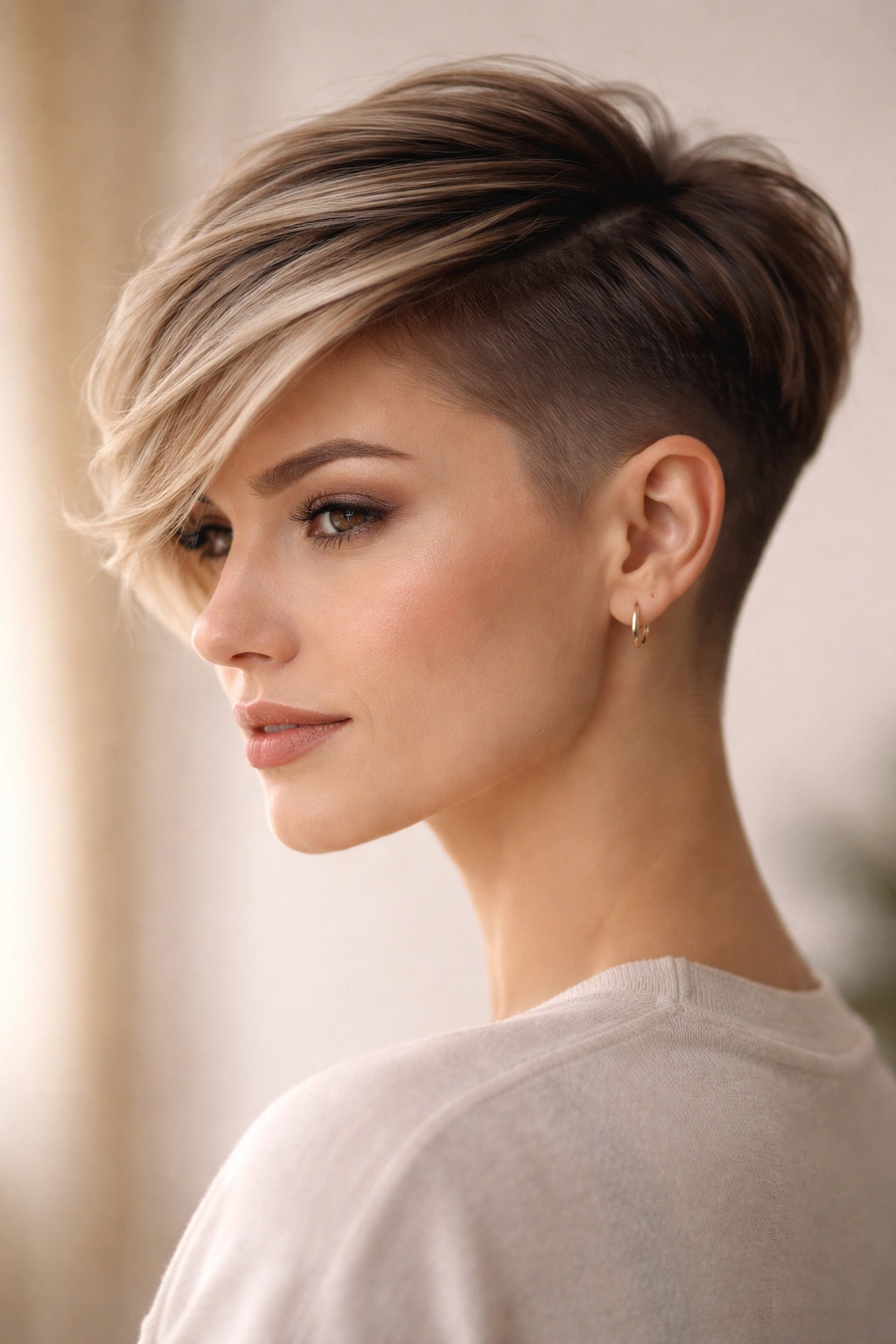
The curved undercut pixie softens the typical sharp lines of an undercut by using rounded, flowing shapes instead of angular edges. The undercut might curve around the ear, the top might follow a gentle arc rather than a sharp line, and the overall effect is more organic and flowing than geometric. This version maintains the undercut’s edge while infusing it with softness and movement.
What Makes Curved Shapes Appealing
Curves create a naturally more approachable, less severe aesthetic than angles. A curved undercut can feel edgy without reading as harsh or aggressive. This version works beautifully for people with rounder face shapes, as the curves echo and complement natural facial geometry. It also photographs wonderfully because curves are inherently flattering and create softer shadows than sharp lines.
Styling a Curved Pixie
Curved pixies work beautifully with movement and texture. The natural curves in the cut mean you don’t need to impose strict geometric styling; instead, you can enhance the organic flow. A light texturizing product, sea salt spray, or air-drying with your fingers allows the curved shape to emerge naturally. You can also smooth it for a more refined look, but many people let the curves do the visual work.
Face Shape Compatibility
Curved undercuts suit round, square, and oval face shapes beautifully. If you have an angular face, curved shapes can soften your features in a flattering way. The gentler aesthetic means this version reads well on most people, regardless of how bold their typical style is. It’s a sophisticated undercut for people who want edge without aggressive geometry.
Who Should Consider This Version
Choose a curved undercut if you want the modern edge of an undercut but prefer softer, more organic shapes. This version suits people with most hair types and works especially well if you have naturally wavy or textured hair that already contains movement. It’s ideal if you want something that feels edgy in concept but approachable and wearable in reality.
8. The Shaved Design Undercut Pixie
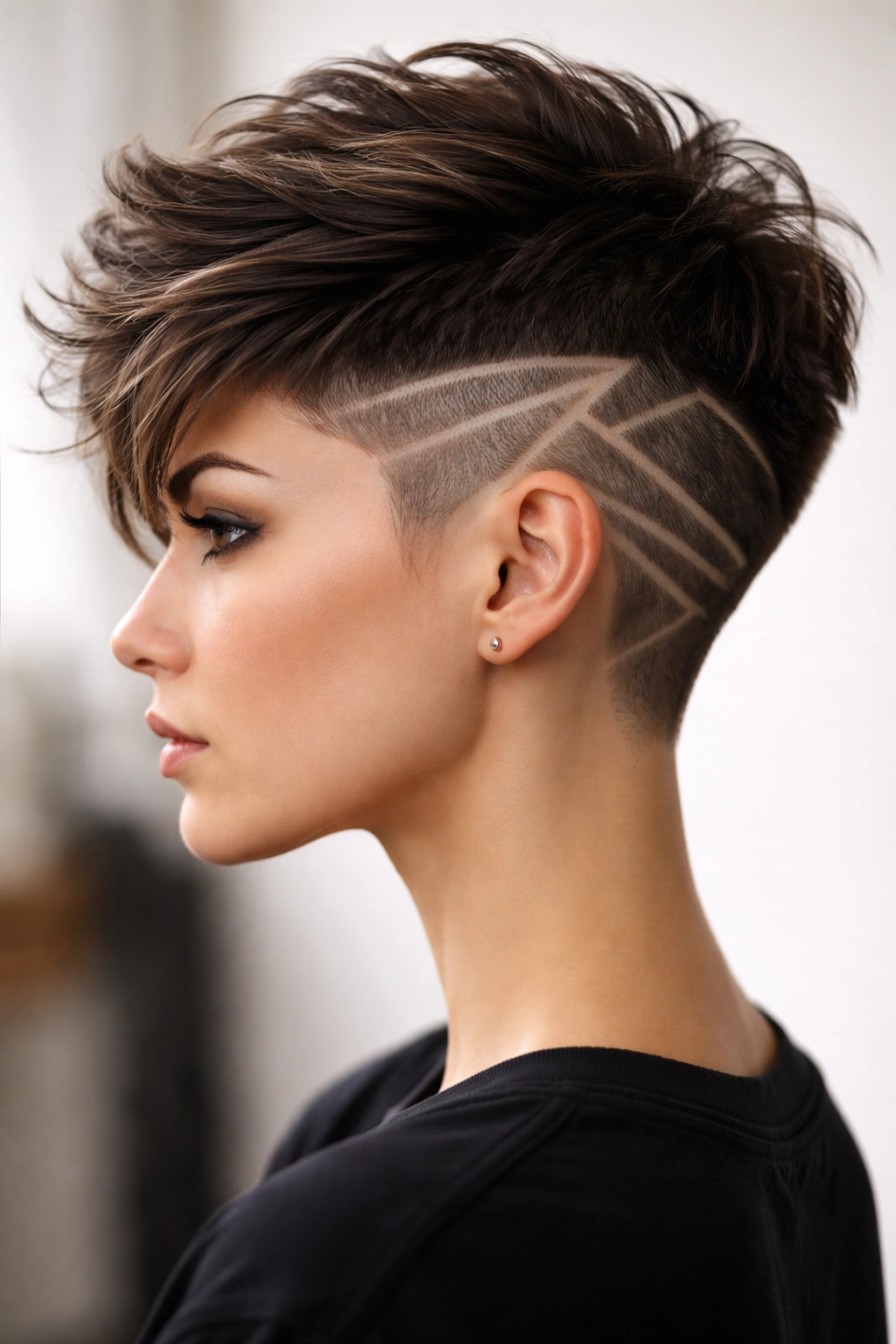
The shaved design undercut pixie takes the undercut concept to an artistic extreme by incorporating deliberate patterns, lines, or designs shaved directly into the sides and/or back. These might be geometric patterns, straight lines, curves, or representational designs. The shaved design area creates a bold artistic statement while the longer top remains more conservative, balancing statement and wearability.
Creative Expression Through Shaved Designs
Shaved designs let you express creativity and individuality in a way that other pixie versions don’t quite capture. You might choose minimalist lines, intricate geometric patterns, or symbolic designs that mean something personal. The designs work best when they’re simple enough to read clearly but interesting enough to justify the statement they’re making. This version is absolutely for people who see their hair as a canvas.
Practical Considerations for Designs
Before committing to a shaved design, discuss placement with your stylist. Designs on the side are visible when hair is pulled back or swept to the opposite side. Designs on the back are hidden most of the time unless your hair is styled up or you deliberately show it off. Some people choose designs that frame the ear or follow the natural curve of the head. The best shaved designs complement your head shape and work with your typical styling habits.
Maintenance and Growing Out
Shaved designs stay crisp for only a few weeks before the hair grows in enough to blur the pattern. This means more frequent touch-ups—potentially every 2-3 weeks—if you want the design to remain clear. Growing out a shaved design can look awkward as the hair gets longer, so decide upfront whether you’re committed to regular maintenance or if you want to eventually transition away from the design.
Who Should Consider This Version
Choose shaved designs if you genuinely love the look and understand the maintenance commitment. This version suits people who see their appearance as a creative expression and are comfortable with bold statements. It works across most hair types and face shapes, but it’s really about whether you love the aesthetic enough to maintain it regularly.
Choosing the Right Undercut Pixie for Your Hair Type
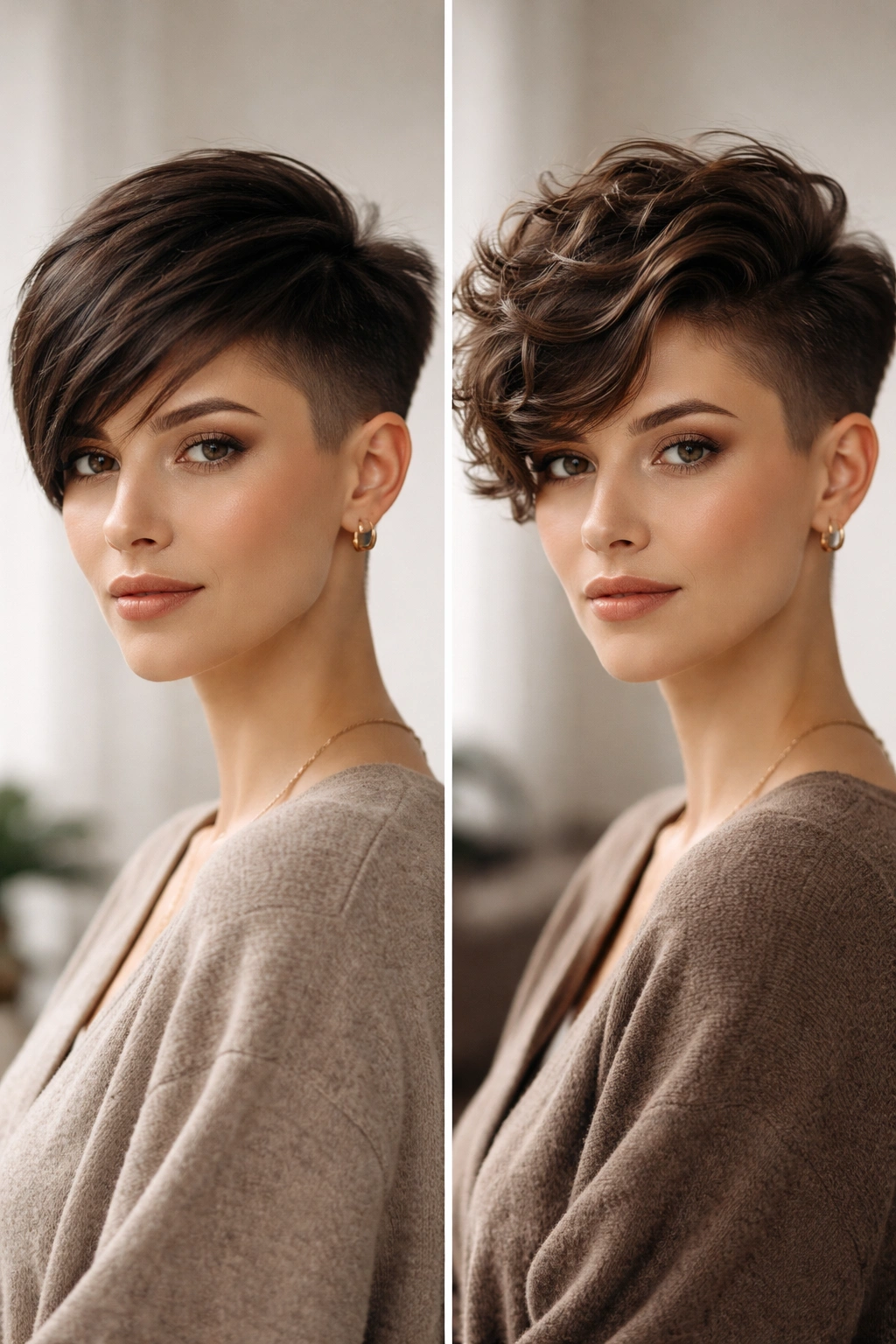
Your hair’s natural texture, density, and growth pattern significantly influence which undercut pixie style will look best and feel most manageable long-term. Straight hair reads clean lines beautifully, making geometric and sharp undercuts stunning choices. Curved and feathered versions also work wonderfully, showing off texture products effectively. Wavy and curly hair thrives with choppy, textured, or feathered versions because the natural curl pattern enhances the layering. Thick hair supports all undercut pixie variations, though some people find that extra-short undercuts read lighter and less bulk-heavy overall.
Fine hair benefits from slightly longer undercuts and fades rather than extremely close shaves, which can reveal scalp and look thinner. Asymmetrical and curved versions work well on fine hair because they create visual interest without requiring density. Consider your hair’s natural growth direction too—some people’s hair naturally wants to fall in ways that either support or fight certain undercut styles. Discuss this with your stylist during your consultation so they can cut accordingly.
Styling Products and Techniques That Work
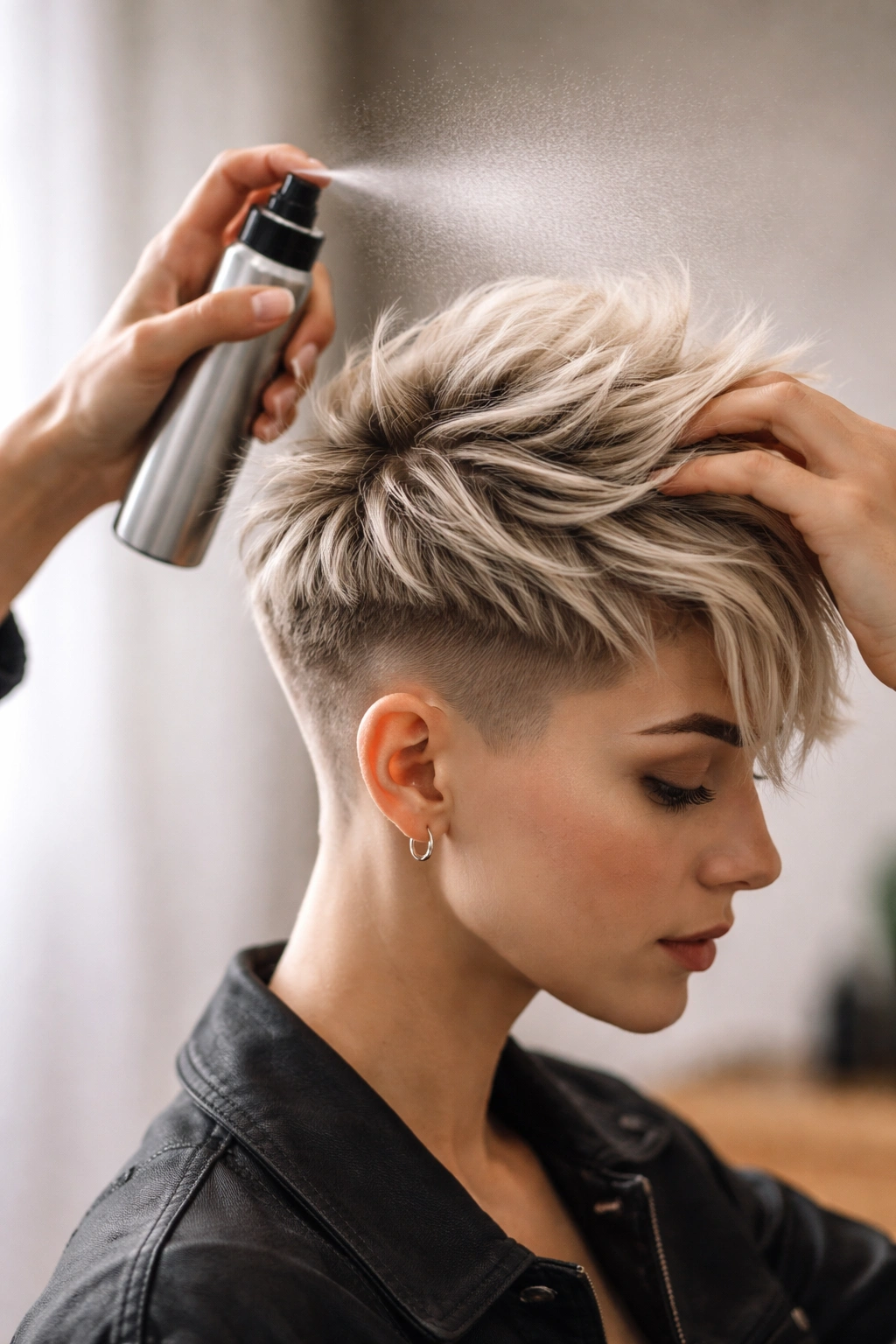
Each undercut pixie variation benefits from specific products and approaches. Texturizing sprays and sea salt sprays enhance choppy and feathered versions beautifully, adding grip and definition. Matte-finish pomades and clay work well on geometric and sharp undercuts, defining lines without adding shine. For faded and curved versions, lighter products like texture paste or dry shampoo often work best, creating movement without heaviness. The key is matching the product weight and finish to your specific cut and hair type.
Blow-drying versus air-drying also shifts the look significantly. Many textured and feathered pixies look best air-dried or finger-dried, letting the natural texture emerge. Geometric and sharp versions often benefit from directed blow-drying with a blow dryer and your fingers, sculpting the top into intentional shapes. Faded and long-top versions work beautifully either way, depending on your preference for that day. Experiment during your first few weeks with the cut to discover what works best for your specific hair and lifestyle.
Maintenance Timeline and Commitment
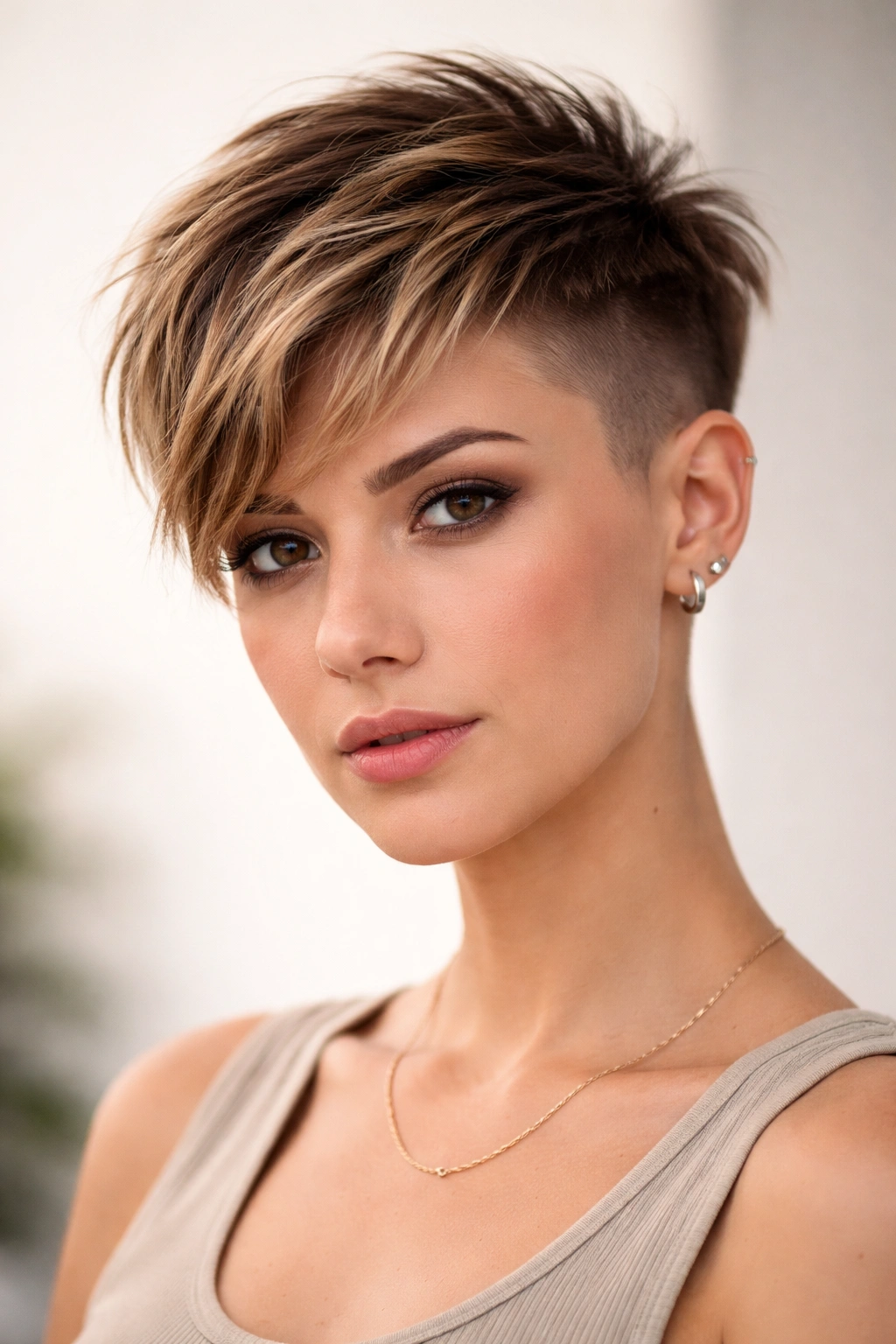
Commit realistically to maintenance before choosing your undercut pixie. Geometric and sharp versions require trims every 4-6 weeks to keep lines crisp and prevent an unkempt appearance. Faded versions need similar timing, with special attention to the fade area. Choppy and textured versions stay intentional-looking slightly longer and can stretch to 6-8 weeks between cuts if needed. Soft feathered versions are among the most forgiving, often looking good for 6-8 weeks as the layers grow in.
Shaved design undercuts require frequent touch-ups—every 2-3 weeks—if you want patterns to remain sharp. Plan your budget accordingly and find a stylist you trust enough to book appointments in advance. Building a relationship with one stylist who understands your specific cut and preferences makes a tremendous difference in how well your undercut pixie looks week-to-week.
Face Shape Considerations and Flattering Angles
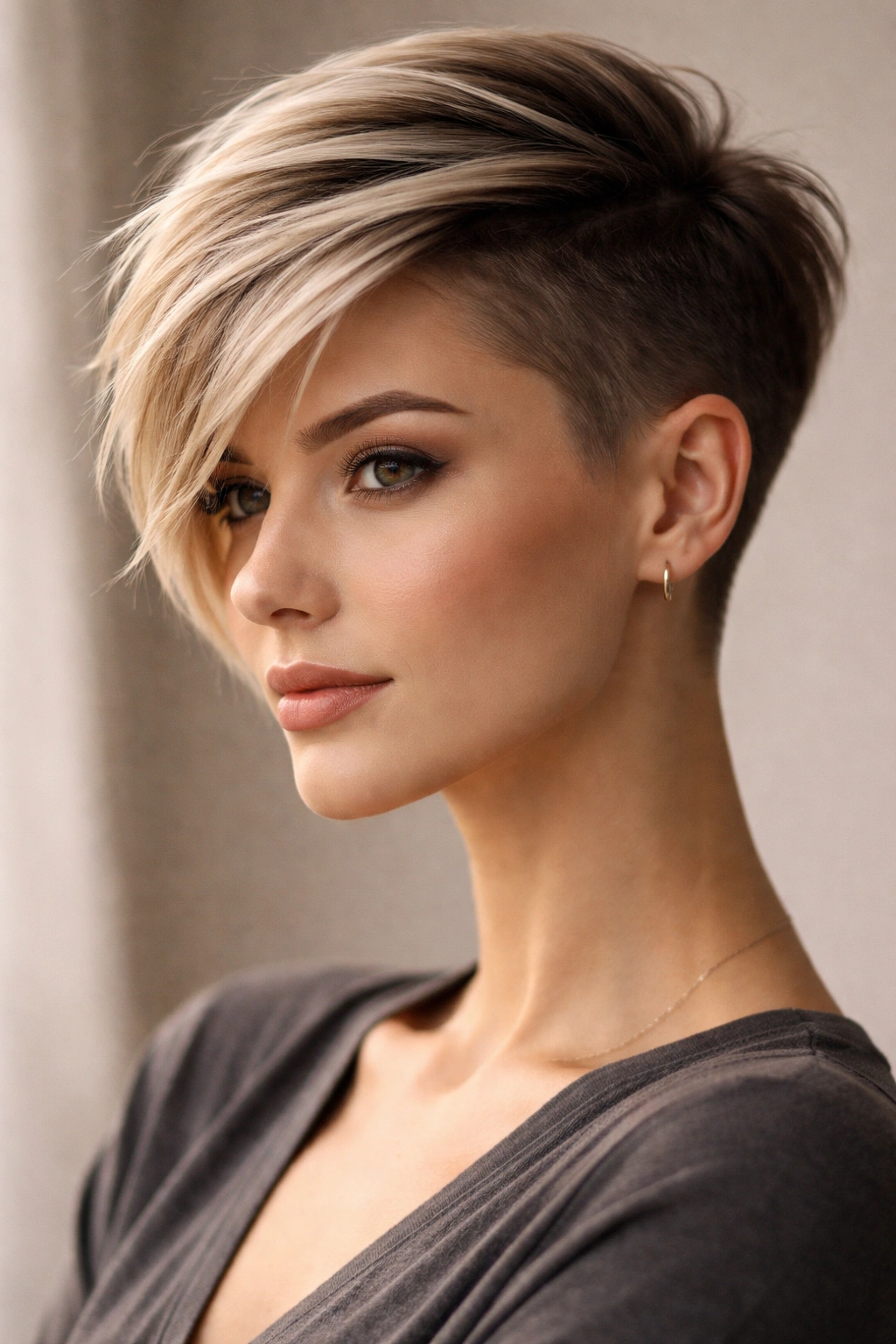
Different undercut pixie styles complement different face shapes in meaningful ways. Round face shapes look beautifully with asymmetrical, long-top, and curved versions that create visual length and angles. Square and angular faces benefit from curved and feathered versions that soften the geometry. Oval faces—the most versatile shape—carry virtually any undercut pixie variation well. Heart-shaped faces often look striking with asymmetrical pixies where more length on one side balances the face shape.
Discuss face shape honestly with your stylist before committing. A good stylist will explain which variations complement your specific proportions and why. They might recommend where to place the longer section of an asymmetrical cut or how to shape the top to create flattering angles. Trust their expertise here; they’re seeing your face in person and can imagine how different variations will read.
Making the Transition to an Undercut Pixie
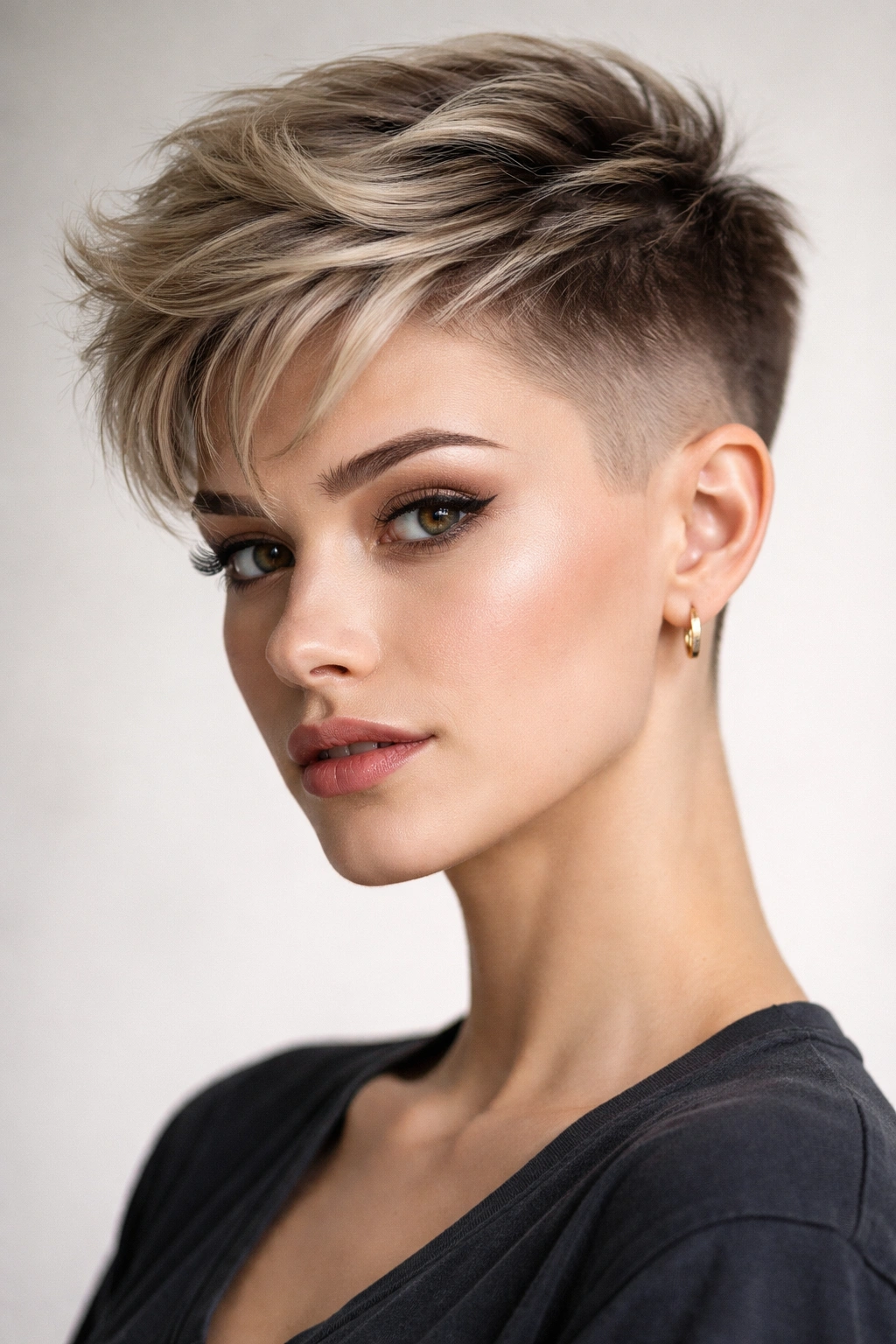
If you’re moving from longer hair, mentally prepare for the dramatic shift. Undercut pixies represent a significant change, and that first moment looking in the mirror is often surprising—even when you’ve wanted the cut. Take photos of the specific style you want and show them to your stylist. Discuss exactly how short the sides will be, where the undercut line will sit, and how the top will be shaped. Clear communication prevents disappointment.
Consider asking your stylist to show you photos of the cut on different face shapes and hair types. This helps you visualize how it will actually look on you, accounting for your specific features. Don’t rush the decision; if you’re uncertain, give yourself a few days to think about it. Once it’s cut, you’re committed for at least 4-8 weeks depending on the style, so be confident in your choice.
Final Thoughts
The beauty of the undercut pixie lies in its adaptability. Whether you’re drawn to soft, romantic feathering or bold, architectural geometry, there’s a version that speaks to your aesthetic and works with your hair. The key is choosing the specific variation that matches both your styling energy and your real-world maintenance commitment—then finding a skilled stylist who understands the nuances of that particular cut.
Your undercut pixie is intensely personal. It becomes part of how the world sees you, and it influences how you feel about yourself. Take time choosing which variation resonates most deeply, have detailed conversations with your stylist about execution, and commit to the maintenance schedule your chosen style requires. The result—whether soft and subtle or sharp and statement-making—can be truly transformative.
