



Finding the right hairstyle when you have a longer face shape can feel frustrating. Many people with oblong or elongated features struggle to find cuts that balance their proportions, accentuate their best features, and actually work with their hair texture and lifestyle. The truth is, a longer face isn’t a limitation — it’s an opportunity to choose strategic styles that add width, soften angles, and create the illusion of a more balanced silhouette.
The key to flattering long face hairstyles lies in understanding what actually works. Styles that create horizontal movement, add volume at the sides, or introduce layers near the cheekbones tend to be infinitely more successful than long, straight cuts that emphasize length. Whether you’re drawn to bangs or prefer a fully open face, the right cut can transform how your features are framed and perceived. The styling choices you make — texture, layers, part placement, and length — all play crucial roles in creating the balance your face shape deserves.
What you’ll notice as you explore these options is that the best long face hairstyles don’t follow a single formula. Some use bangs strategically to interrupt vertical lines, while others rely on layers, volume, and texture to create width. The most successful approaches often combine multiple techniques: think side-swept bangs paired with choppy layers, or a blunt lob with surface movement that catches light. Your hair density, texture, natural curl pattern, and daily styling commitment all matter when choosing which of these styles will actually work for your unique situation.
1. Layered Shoulder-Length Bob With Side-Swept Bangs
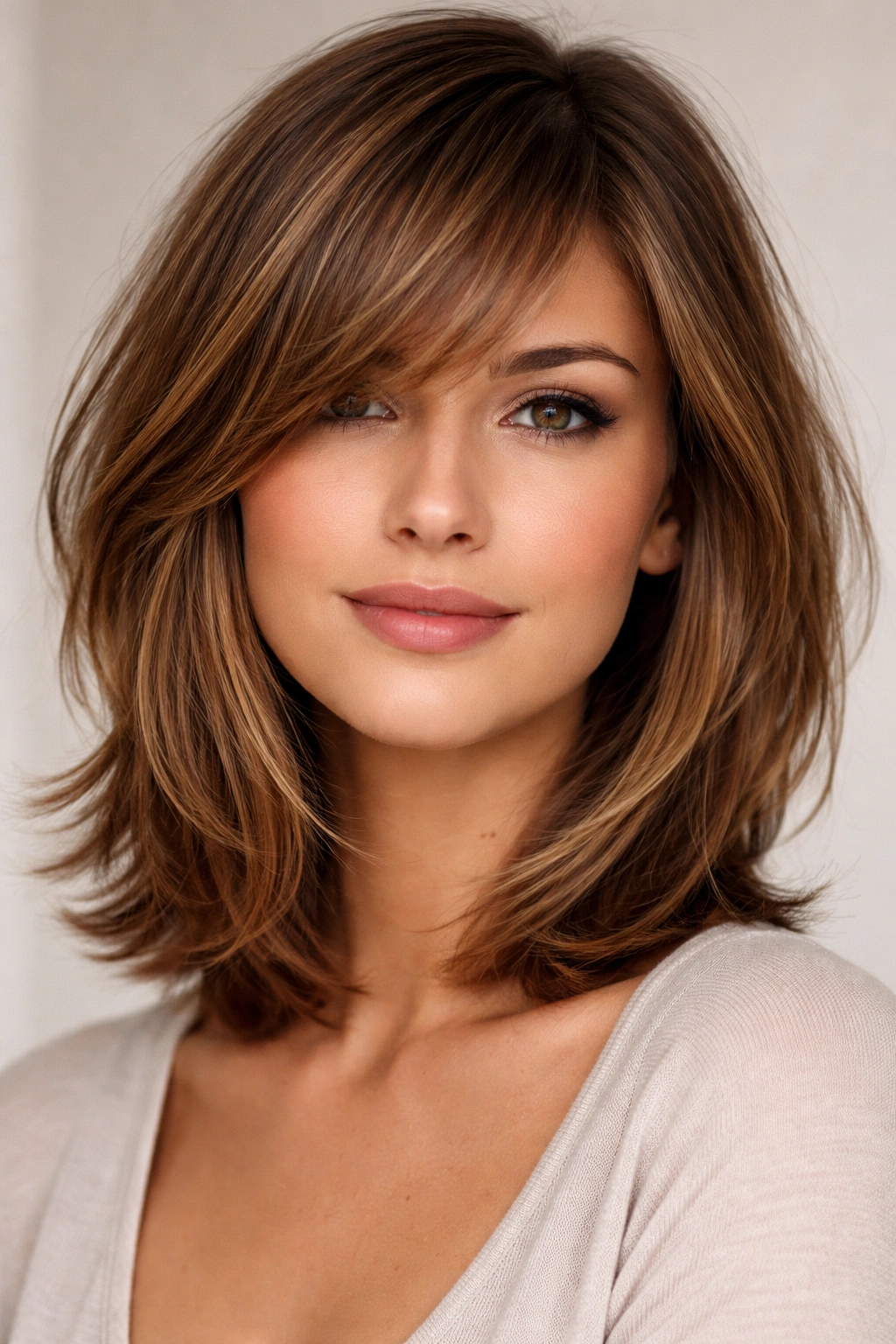
A layered shoulder-length bob with side-swept bangs is one of the most versatile options for longer faces. The cut sits right at the collarbone, adding width exactly where you need it, while side-swept bangs graze the cheekbones and create a diagonal line that interrupts the vertical length of your face. The layers throughout the crown and ends create movement and prevent the style from looking heavy or elongating.
Why This Cut Works for Long Faces
Side-swept bangs draw attention horizontally across the face rather than vertically down it. The shoulder-length placement is strategic — it’s long enough to feel contemporary but short enough that the style doesn’t emphasize length. Layers in the crown add texture and volume without requiring excessive styling effort, and the bangs create a soft frame that breaks up the distance from forehead to chin. This style works beautifully for both straight and slightly wavy hair.
Key Styling Details
- Ask your stylist for longer, wispy layers that start around the cheekbone and get progressively shorter toward the face
- Side-swept bangs should be longer on one side and shorter on the other, creating that soft diagonal movement
- Blow-dry with a round brush for a subtle wave, or use a flat iron to create a sleek finish
- Style with a texturizing spray or light pomade to enhance movement
Pro tip: This style requires trims every 6-8 weeks to maintain the shape and keep bangs at the right length and angle as they grow out.
2. Blunt Lob With Straight Across Bangs
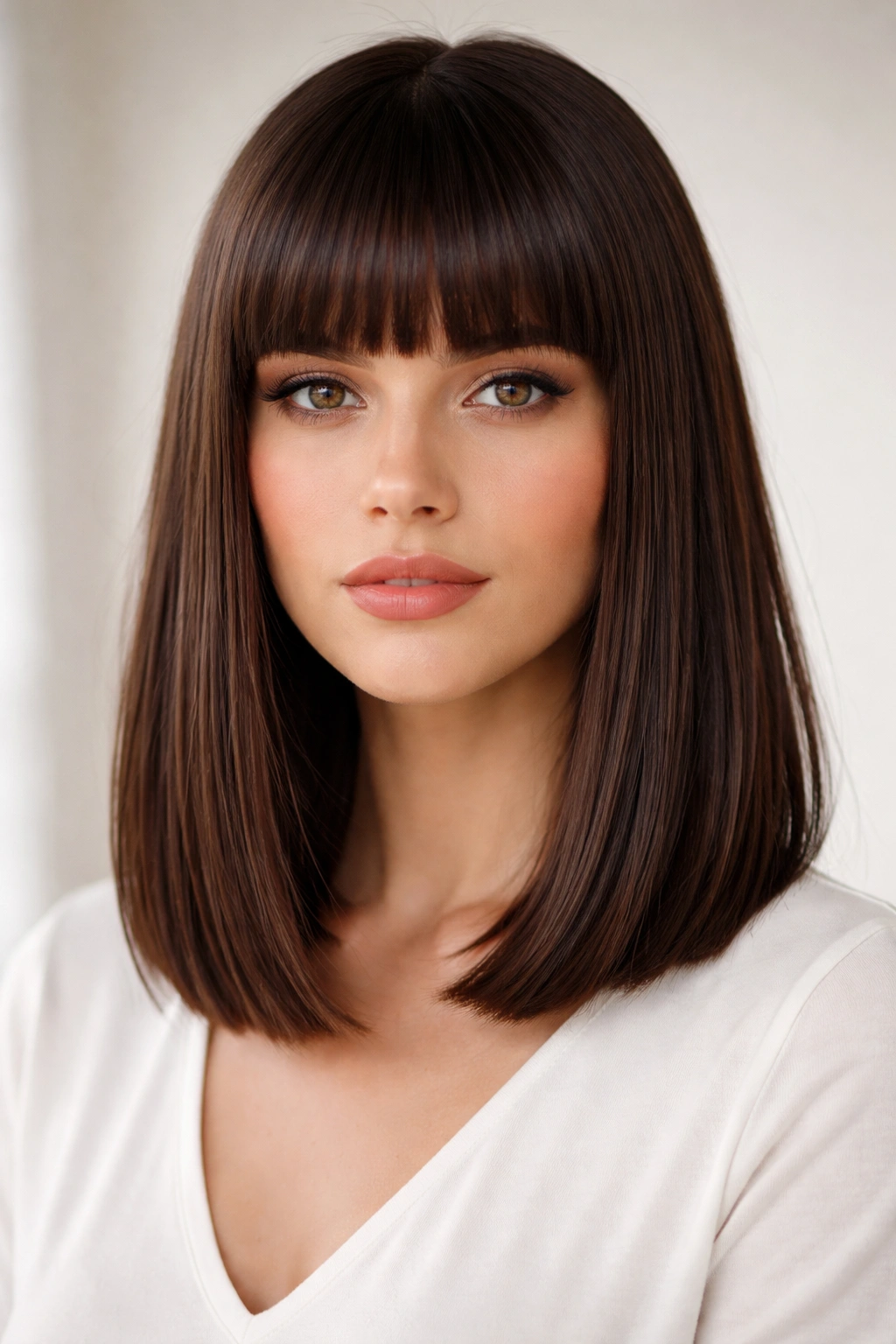
A blunt lob paired with straight-across bangs creates a bold, graphic look that stops horizontal lines directly across the widest part of the upper face. This modern cut works because the blunt ends at collarbone-length add weight and structure without letting the style extend too far down, while the full bangs create a strong horizontal element that visually widens the face.
Why This Works
Straight-across bangs interrupt the vertical lines of a longer face dramatically and immediately. The blunt lob is unforgiving — it shows every layer and styling choice — which means when executed well, it looks polished and intentional. The horizontal line of both the bangs and the blunt bottom edge of the lob creates a balanced frame. This style requires commitment to styling but pays off in impact.
Styling Considerations
- Blunt cuts show texture, so this works best on hair with natural movement or when you’re willing to style regularly
- Bangs must be trimmed every 3-4 weeks; they’re the statement of this style
- Pair with face-framing movement if desired, or keep completely straight for maximum graphic impact
- This style looks striking with either a center or deep side part
Worth knowing: Blunt lobs require healthy, well-maintained ends — any breakage or damage becomes immediately visible.
3. Textured Shag With Long Wispy Bangs
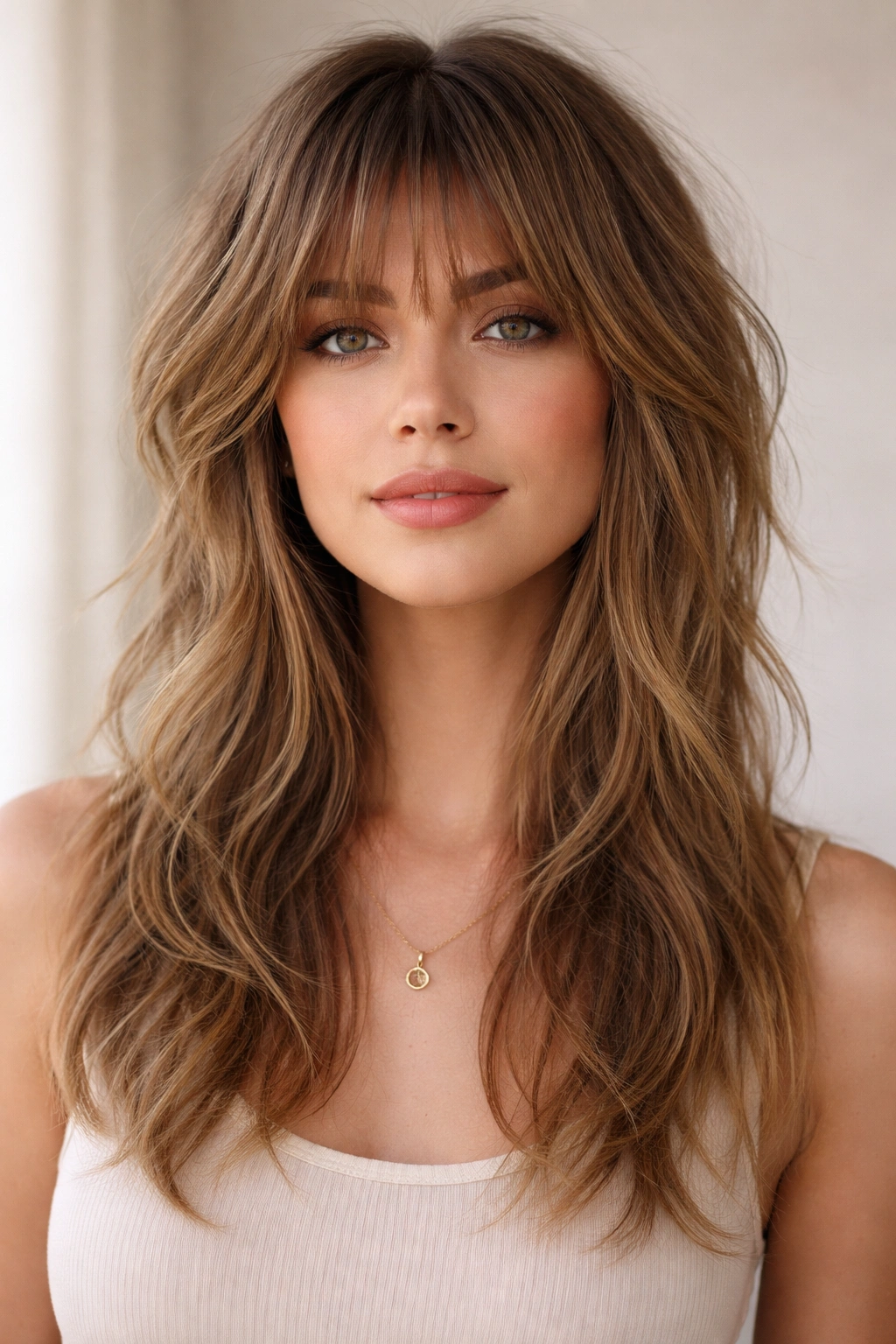
A modern shag hairstyle with long, wispy bangs creates movement in multiple directions at once, breaking up facial length with texture and dimension. The layers throughout the shag move and shift, constantly changing the silhouette, while long wispy bangs create a soft frame that doesn’t obstruct the face but catches light and adds visual interest.
Why Shags Work for Longer Faces
The constant texture and movement of a shag prevent any single line from dominating your face shape. Layers at different lengths create horizontal breaking points throughout the style, and the undone, lived-in quality adds personality. Long wispy bangs are softer than blunt versions, making them easier to style while still creating that essential horizontal element.
Layering and Texture Strategy
- Layers should be choppy and uneven, with shorter layers at the crown for volume and longer layers throughout for movement
- Bangs should graze the eyebrows and be texturized to create that feathered, wispy quality
- Style with a texturizing spray or sea salt spray to enhance the shaggy movement
- Air-dry or blow-dry with fingers for a natural, tousled finish
Pro tip: Shags look best when you embrace the texture — fighting it makes the style look unkempt. If you have straight hair naturally, this might not be your best choice unless you’re willing to add waves with heat tools regularly.
4. Straight Length With Curtain Bangs
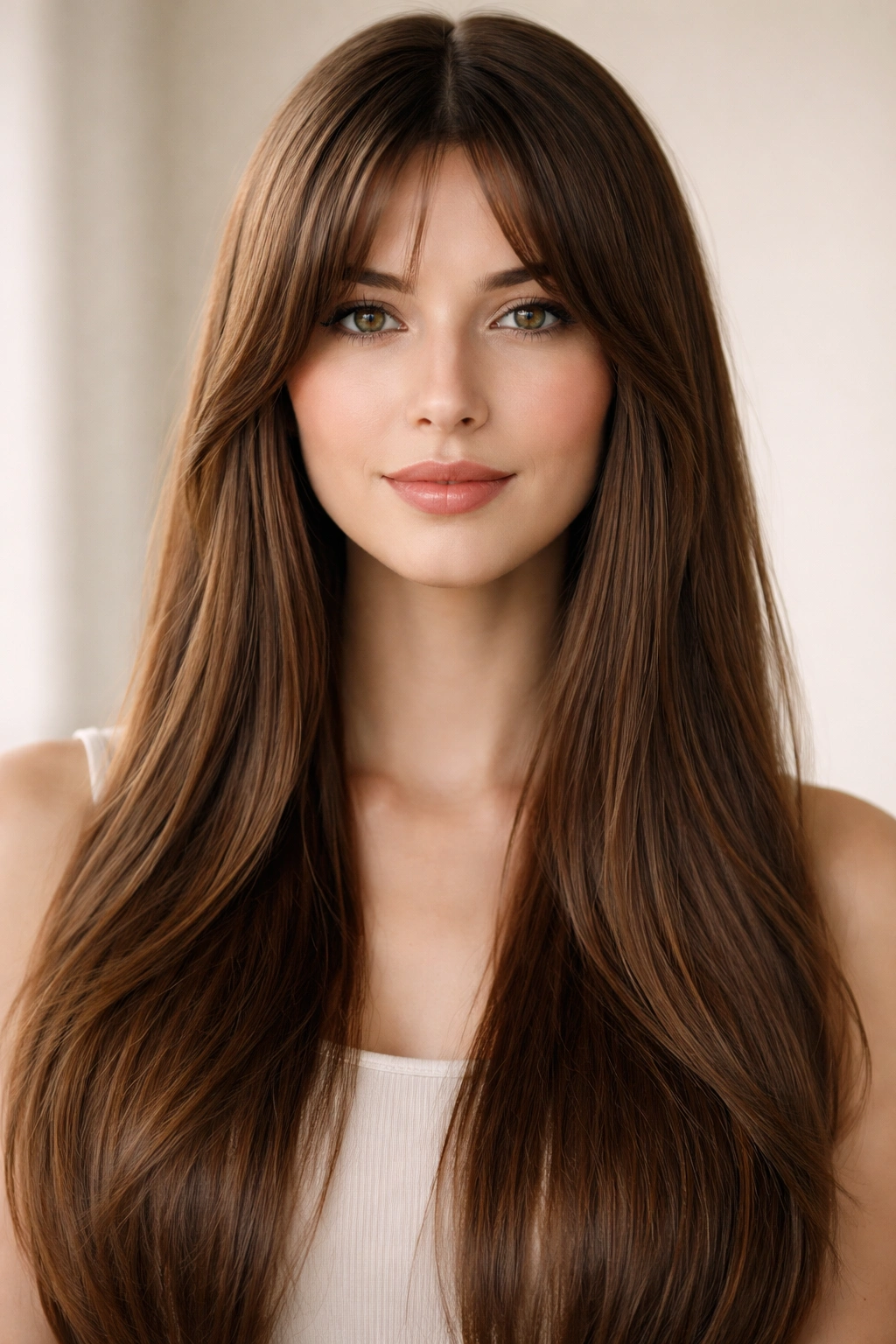
Curtain bangs that frame the face while longer layers hang straight create a romantic, face-framing effect without requiring you to commit to a dramatic length change. The bangs part down the middle and sweep away from the face, creating two diagonal lines that add width while the longer length underneath flows down.
Why Curtain Bangs Are Strategic
Curtain bangs are perhaps the most face-flattering bang option for longer faces because they create diagonal lines rather than vertical ones. The point where the bangs part at the top breaks up forehead length, and the way they frame and sweep outward adds width. You can wear your hair down or up, and the bangs work either way. They’re also infinitely more forgiving than blunt bangs as they grow out.
How to Style Curtain Bangs
- Ask for longer, feathered curtain bangs that start around mid-cheekbone and sweep away from the face
- Blow-dry the bangs away from the face as they dry, using your fingers or a brush to guide the direction
- Use a light texturizing spray to enhance the feathered quality
- The style works on straight, wavy, or curly hair — the bang movement adapts to your natural texture
Quick fact: Curtain bangs were popularized in the 1970s and remain one of the most universally flattering bang styles because they work with almost any face shape and hair texture.
5. Long Wavy Layers Without Bangs
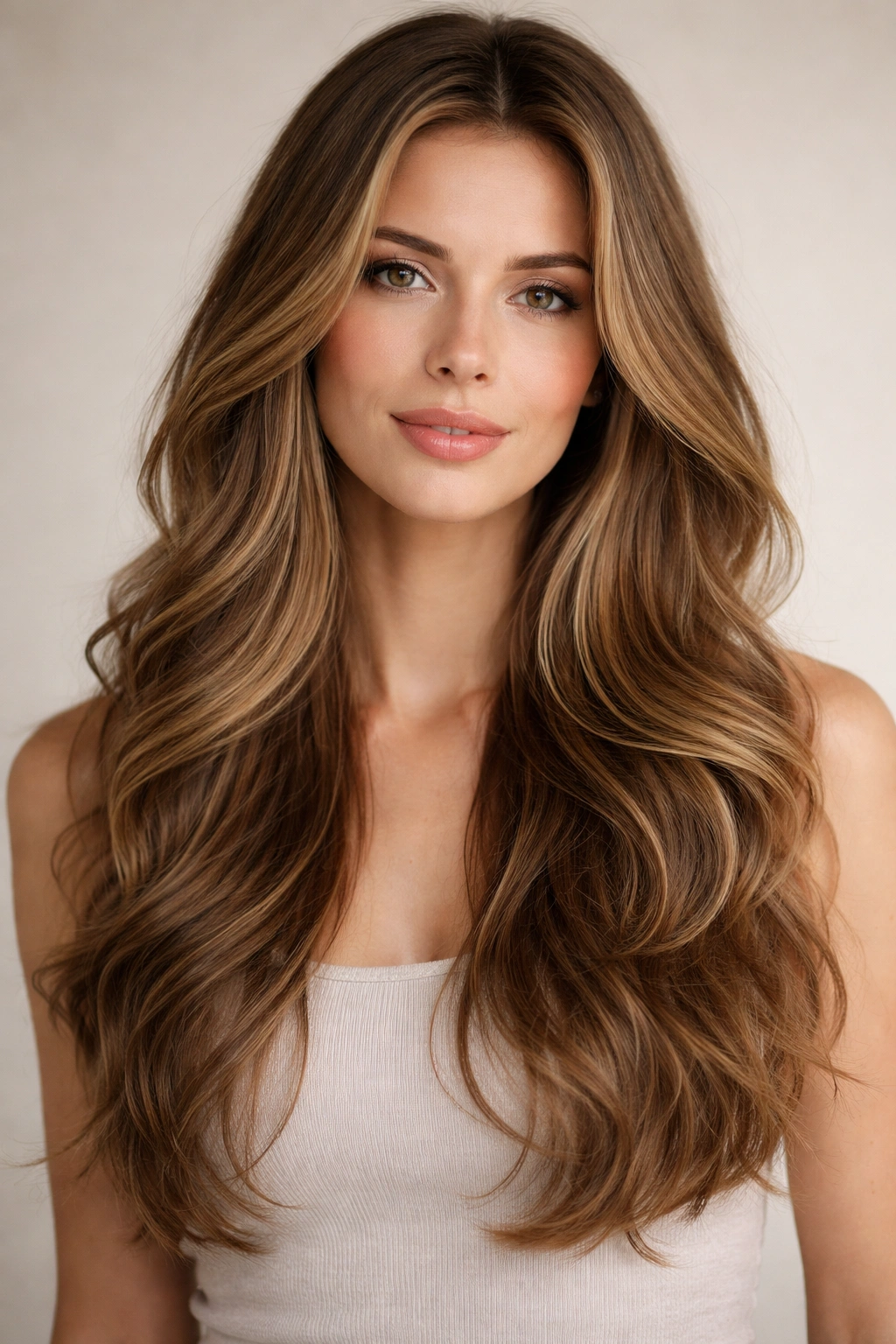
If bangs aren’t your preference, long wavy layers without any fringe can still balance a longer face through strategic layering and movement. Layers throughout the hair create horizontal breaking points, while waves add texture that disrupts the vertical line of length. The key is placing layers at cheekbone height and below to create width at the face level.
Why Layers Replace What Bangs Do
Layers create the same horizontal interruption that bangs provide, just in a different way. By varying the length throughout the hair — with some pieces shorter at the cheekbone and others longer — you create visual movement that shortens the perceived length of the face. Waves amplify this effect by adding texture and creating multiple visual breaking points.
Layering for Length and Movement
- Ask for choppy, piece-y layers starting around the cheekbone and progressing longer toward the bottom
- Shorter layers at the crown add volume without length
- Use a flat iron, waving iron, or diffuser to create waves throughout
- Apply a sea salt spray or texturizing spray before styling to enhance the natural wave pattern
Insider note: This style works beautifully if you have natural texture or are willing to add waves with heat tools 2-3 times per week. If you prefer low-maintenance styles, you might find this frustrating.
6. Blunt Bangs With Layered Mid-Length Hair
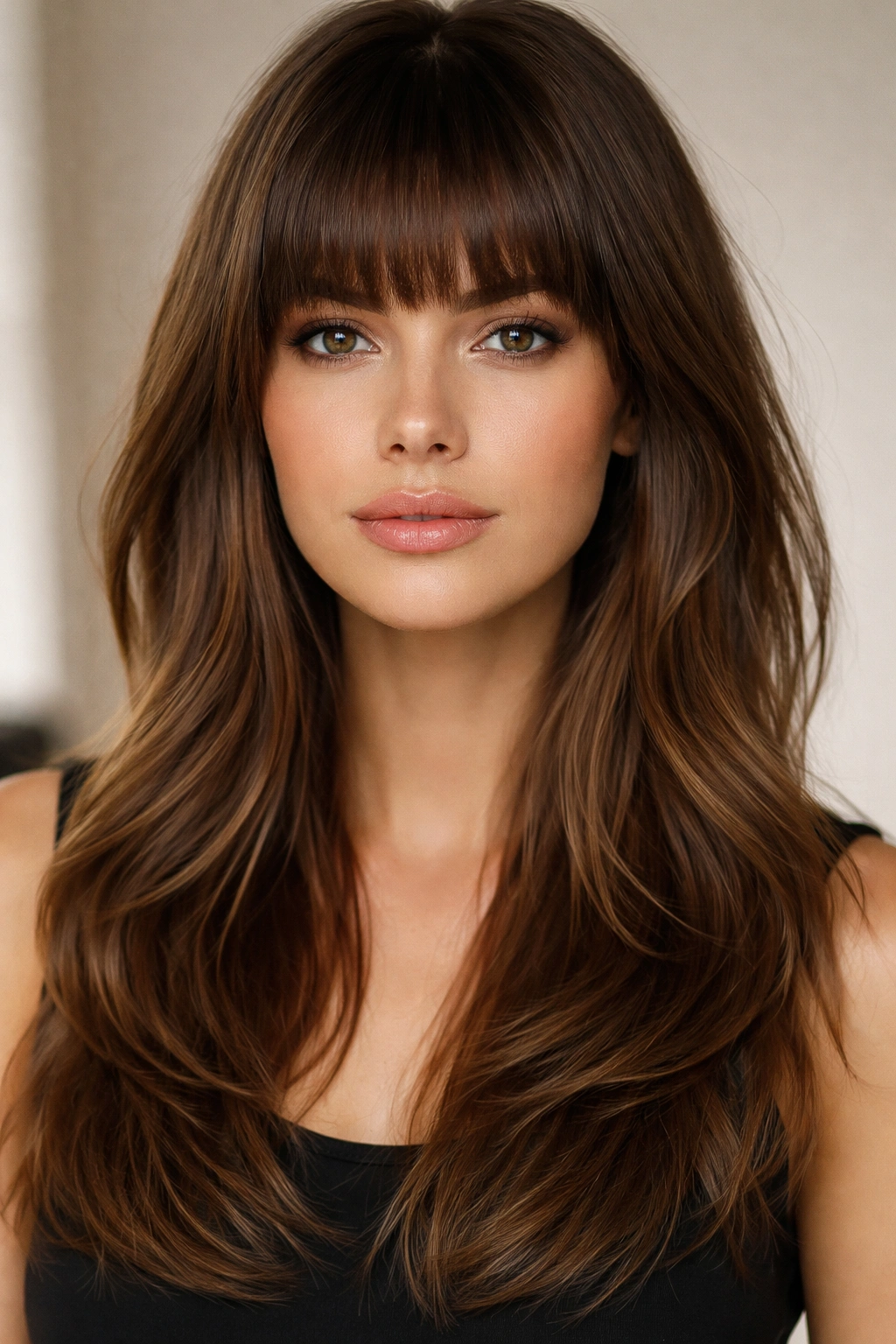
Blunt bangs sitting just above the eyebrow combined with layered hair that ends mid-chest creates a striking contrast. The bangs form a strong horizontal line across the forehead, while the layers below create texture and movement that prevents the style from feeling heavy or elongating.
Why This Combination Works
Blunt bangs make an immediate, undeniable horizontal statement. Paired with layers, they create a style with both structure and movement. The layers mean you’re not fighting the weight of a full-length cut, and the texture keeps the style feeling modern and dynamic rather than harsh or severe.
Styling and Maintenance
- Blunt bangs need precision cutting every 3-4 weeks to maintain their sharp edge
- Layers throughout the rest of the hair should be choppy and uneven for a contemporary feel
- Style with a blow dryer and round brush for movement, or use a flat iron for a sleek finish
- A light pomade or texture spray enhances the definition of the layers
Worth knowing: Blunt bangs show everything — every styling choice, every bit of texture, every imperfect line. If you want a low-maintenance style, this isn’t it.
7. Deep Side Part With Volume at the Crown
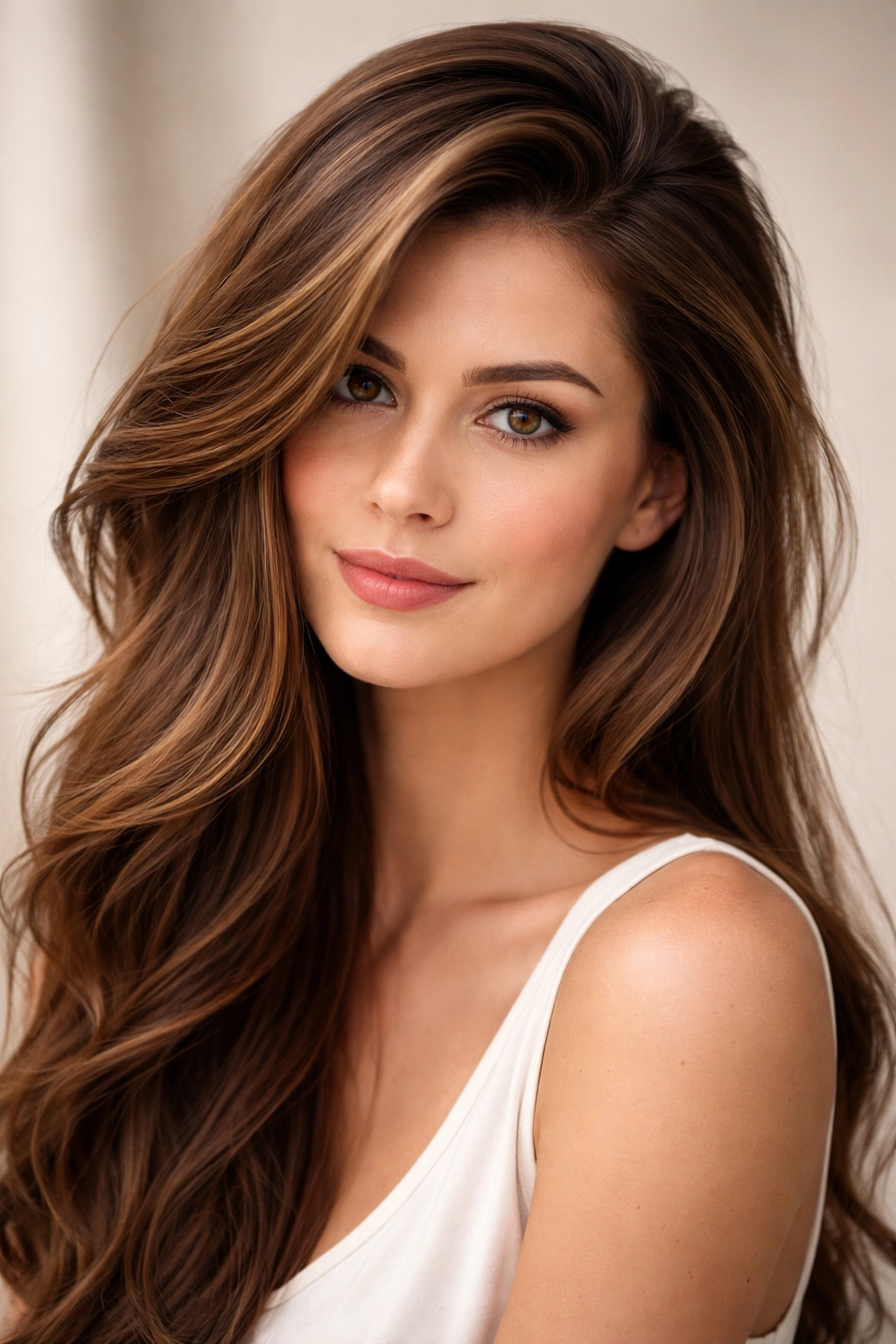
A deep side part combined with significant volume at the crown creates an asymmetrical line that adds width to one side of the face. The volume at the top elongates less than a flat crown would, and the deep part creates a diagonal line that breaks up vertical proportions.
Why Side Parts Matter for Long Faces
A center part draws a literal vertical line down the middle of the face, emphasizing length. A deep side part does the opposite — it creates an asymmetrical, diagonal line that interrupts that vertical movement. Combined with height at the crown, this creates the illusion of a shorter, wider face shape.
How to Achieve Crown Volume
- Blow-dry hair upside down or use a volumizing mousse applied to damp roots
- Once hair is mostly dry, flip it right-side up and direct all hair to one side, creating a deep part
- Use a blow dryer on cool to set the direction and volume
- Tease gently at the crown using a fine-tooth comb to create lasting lift
Quick tip: If you have fine or thin hair, focus volume at the very crown and sides rather than throughout — too much teasing can look overdone.
8. Choppy Pixie-to-Lob Transition
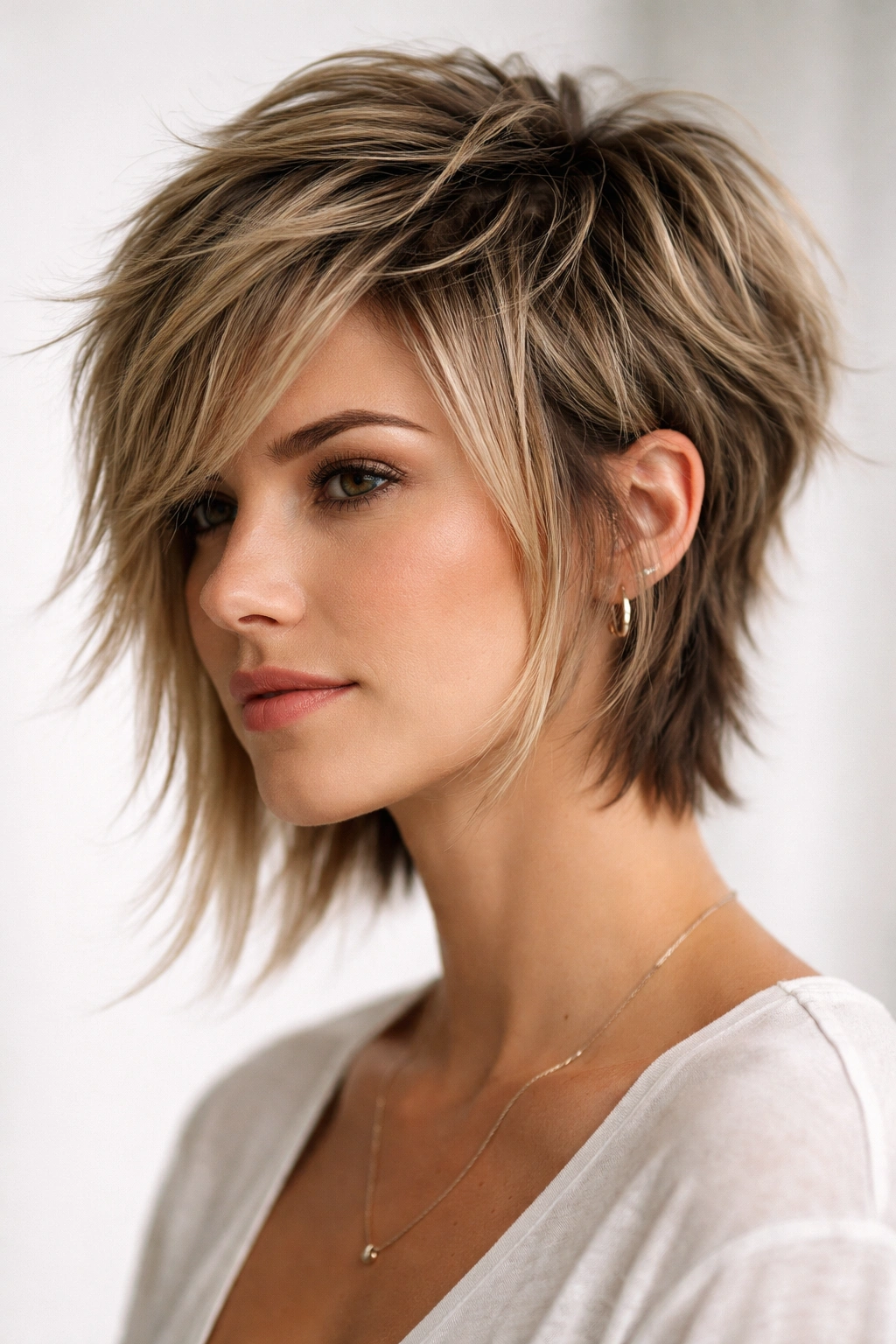
A choppy, textured cut that transitions from shorter at the crown to longer in front creates a face-framing effect without requiring traditional bangs. The shorter, choppy layers at the crown add volume where you need it, while the front pieces frame the face and break up its vertical length.
Why Choppy Transitions Flatter Longer Faces
This cut uses texture and layering to create multiple visual breaking points. The shorter pieces at the crown prevent height from emphasizing face length, while the longer front pieces frame the cheekbones and create a soft line that interrupts the vertical space. It’s a modern alternative to traditional bangs.
Styling This Textured Cut
- Ask for very choppy, piece-y layers throughout, with the shortest layers at the crown and progressively longer layers toward the front
- Use a texturizing spray and blow-dry with fingers for a tousled, undone look
- You can also use a waving iron to add waves throughout the choppy layers
- This style works best on hair with natural texture or willingness to add waves regularly
Pro tip: This cut shows every bit of styling you do (or don’t do). If you prefer a polished look, you’ll need to style it. If you prefer undone texture, it’s perfect.
9. Sleek Ponytail With Face-Framing Pieces
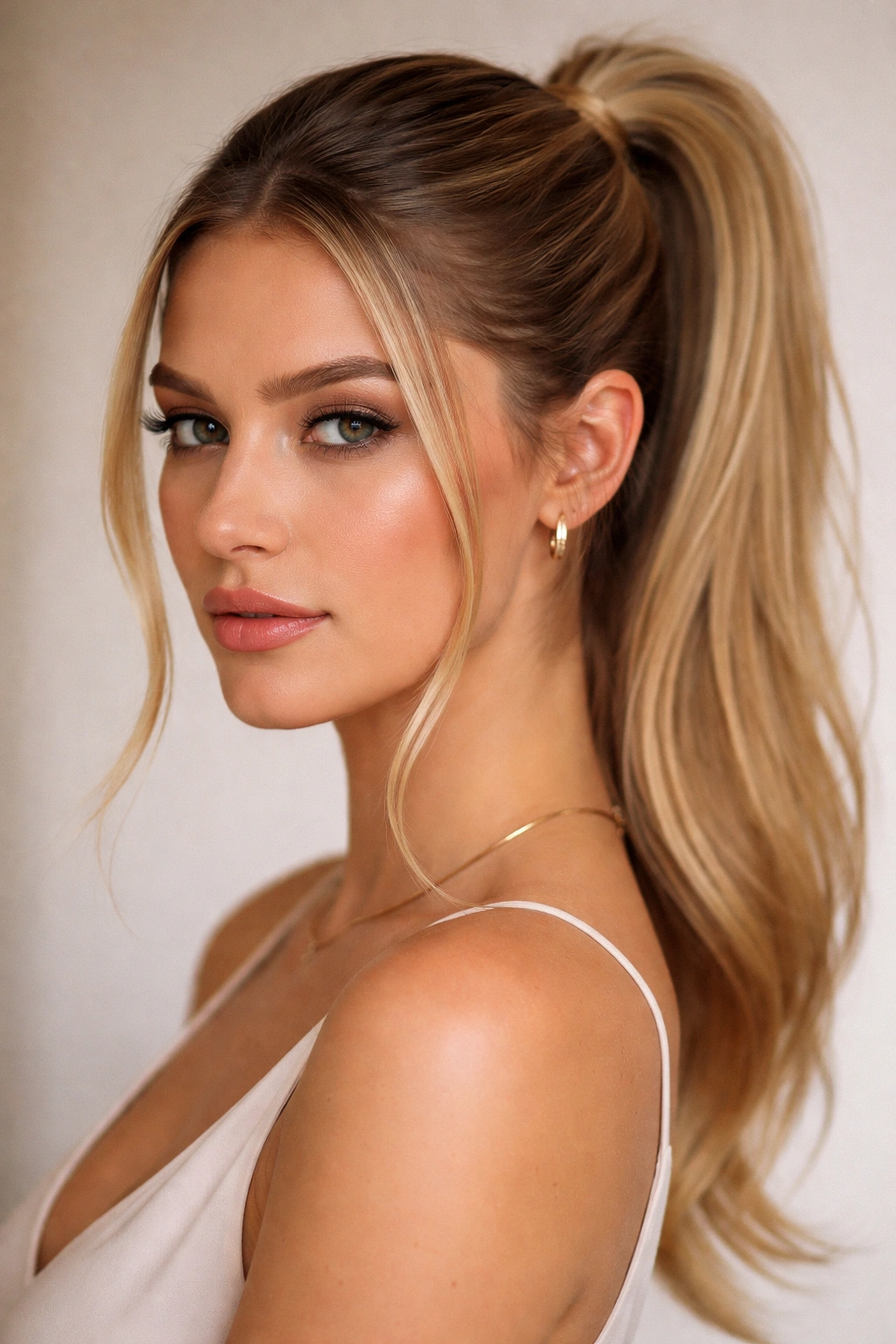
While technically an updo, a sleek ponytail with strategic face-framing pieces can balance a longer face by adding width at the temples and cheekbones. The pulled-back style elongates slightly less than you’d expect because the face-framing pieces create dimension right where you need width.
Why This Works as an Updo Option
Pulling hair back typically emphasizes face length, but when you leave strategic pieces out around the face, you interrupt that effect. The framing pieces should be positioned at the cheekbones and temples, creating width. The sleek back adds polish, while the pieces add softness and dimension.
How to Style It
- Blow-dry hair straight for a sleek look
- Pull hair into a ponytail at the crown or just below
- Use a fine-tooth brush to smooth any flyaways
- Pull out 1-2 pieces on each side of the face and use a waving iron to add subtle waves to these pieces
Worth knowing: This style works for both formal occasions and casual days. The sleekness reads polished, while the face-framing pieces keep it from feeling too severe.
10. Balayage Waves With Strategic Shorter Layers
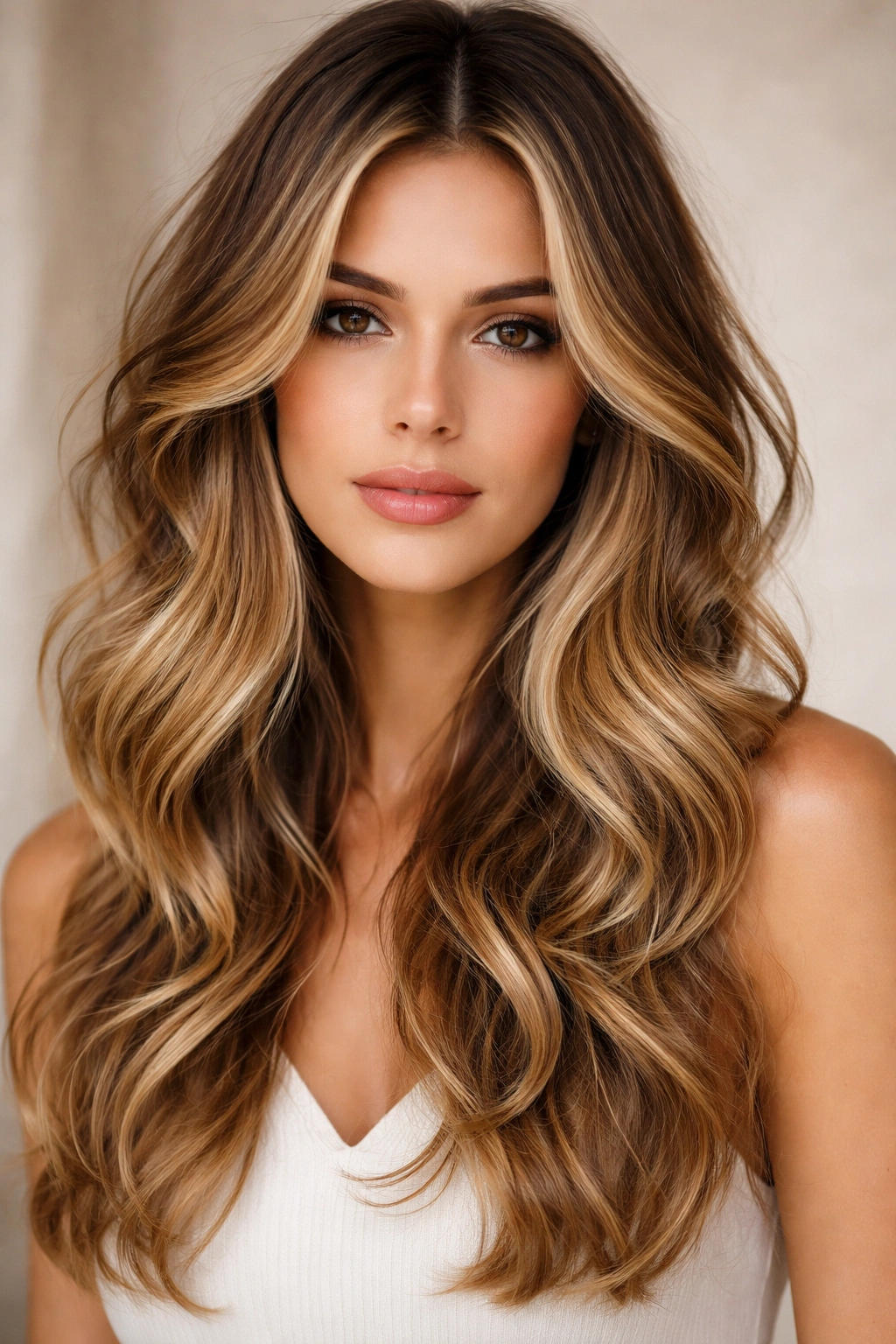
Combining balayage color (with lighter pieces throughout) with strategic shorter layers creates depth and movement that breaks up facial length. The color adds dimension that draws the eye horizontally, while the layers create multiple visual breaking points.
Why Color and Texture Work Together
Lighter pieces throughout the hair catch light and create horizontal movement visually. This combined with layers that vary in length means your face is framed by multiple lines rather than one long vertical line. The effect is subtle but powerful — it’s why this combination works so well.
Layering for Dimension
- Shorter layers around the cheekbone and crown add volume and create width
- Longer layers throughout the rest of the hair create movement
- Balayage highlights should be lighter around the face and throughout the crown
- Style with waves or texture to maximize the effect of both the color and the layers
Pro tip: Even if you’re not interested in coloring your hair, this proves that layering alone can be incredibly effective. You don’t need color to make this work.
11. Soft Waves With Longer Face-Framing Layers
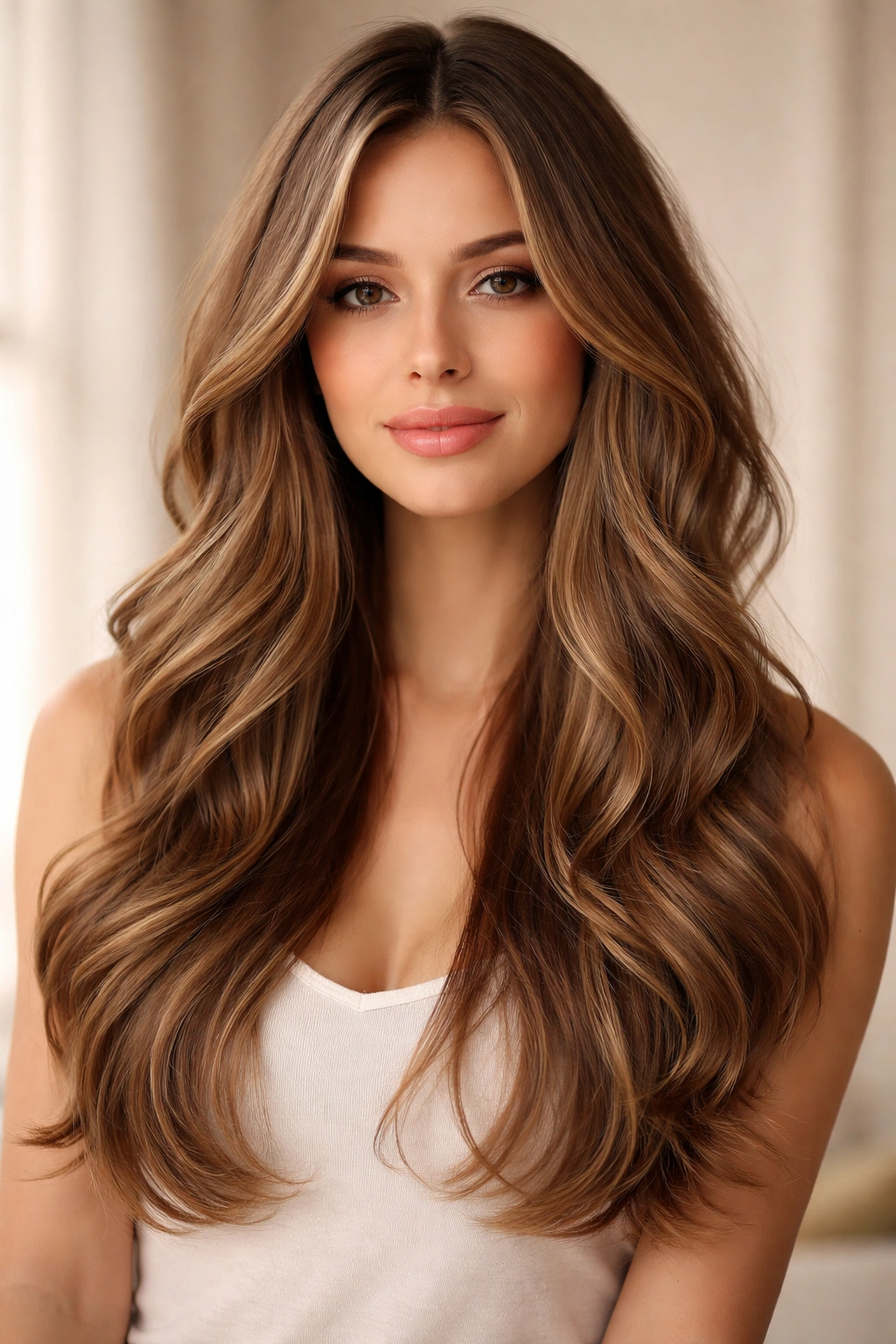
Longer face-framing layers paired with soft waves throughout the hair create a romantic, approachable look that works for longer faces. The layers position shorter pieces right at the cheekbone and temples, creating width, while the waves add gentle texture and movement.
Why This Is Universally Flattering
This style works on almost every face shape and hair texture because it combines multiple flattering elements: layers create horizontal breaking points, waves add texture, and the face-framing pieces create width exactly where needed. The softer approach means it doesn’t feel as dramatic as some other options.
Styling for Soft, Romantic Waves
- Longer face-framing layers should be texturized and choppy, not blunt
- Add waves using a waving iron, curling iron, or overnight braids
- Use a texturizing spray or sea salt spray to enhance the wave pattern
- Soft waves look best when slightly undone — don’t aim for perfect curls
Quick fact: This style was popularized by celebrities like Meghan Markle and Kate Middleton, and it remains enduringly popular because it genuinely works and feels accessible.
12. Micro Bangs With Layered Hair
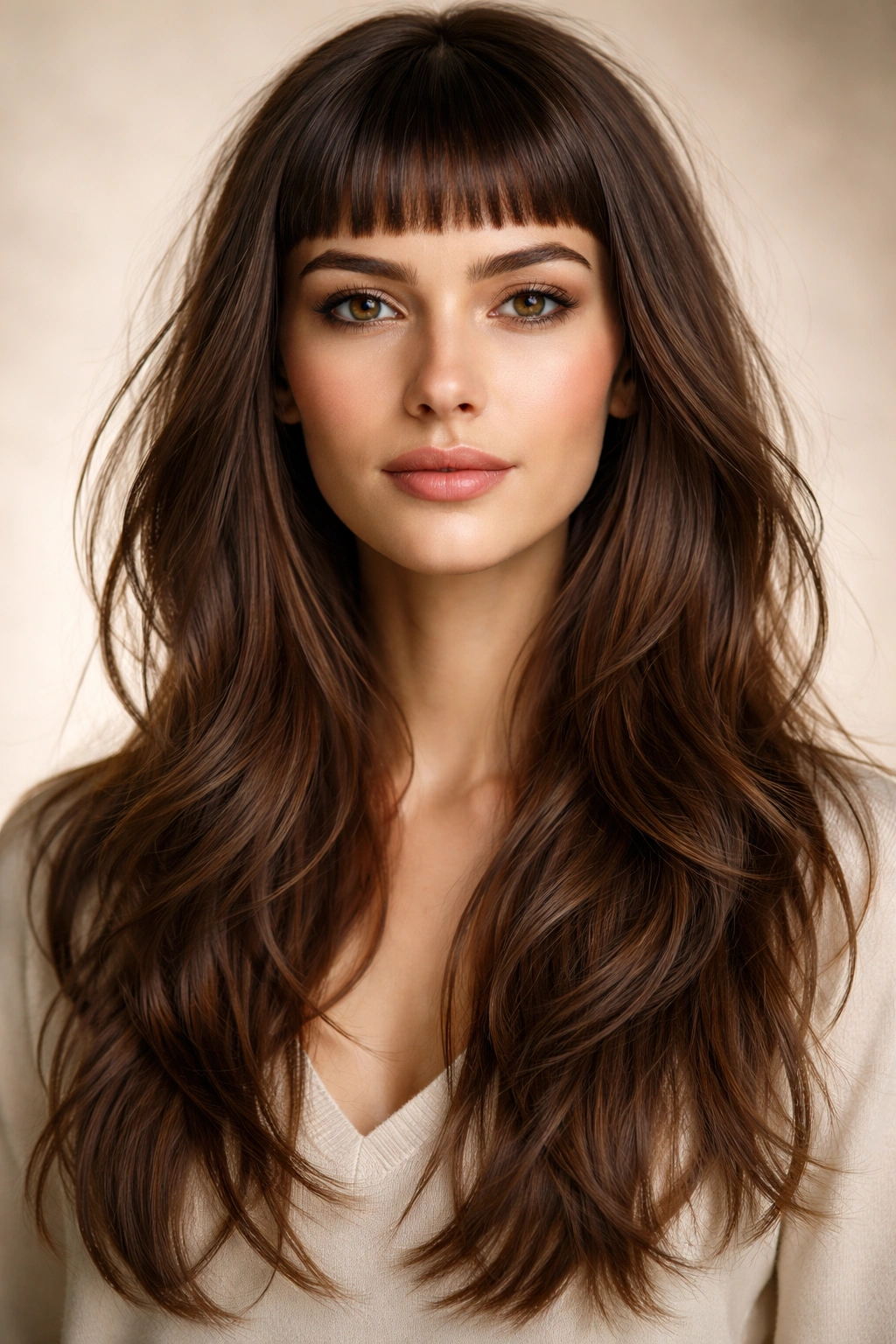
Micro bangs sitting just below the brow line combined with layered hair create a bold, fashion-forward look. The bangs create a strong, playful horizontal statement, while the layers below add movement and prevent the style from feeling too severe.
Why Micro Bangs Make a Statement
Micro bangs are shorter and more dramatic than traditional bangs, creating a pronounced horizontal line. They’re a commitment and a style choice, not a subtle addition. Paired with layers, they create an interesting contrast between the structured top and the textured bottom.
Styling Micro Bangs
- Micro bangs must be trimmed every 2-3 weeks to maintain their shape and length
- Pair with choppy layers throughout the rest of the hair
- Style with a blow dryer for a sleek look or texture spray for a more undone feel
- Consider your styling commitment — these bangs don’t grow out gracefully if you decide they’re not for you
Worth knowing: Micro bangs aren’t for everyone. They require regular maintenance and a confident styling attitude. They look incredible when well-executed but can feel frustrating if you’re not committed.
13. Textured Lob Without Bangs
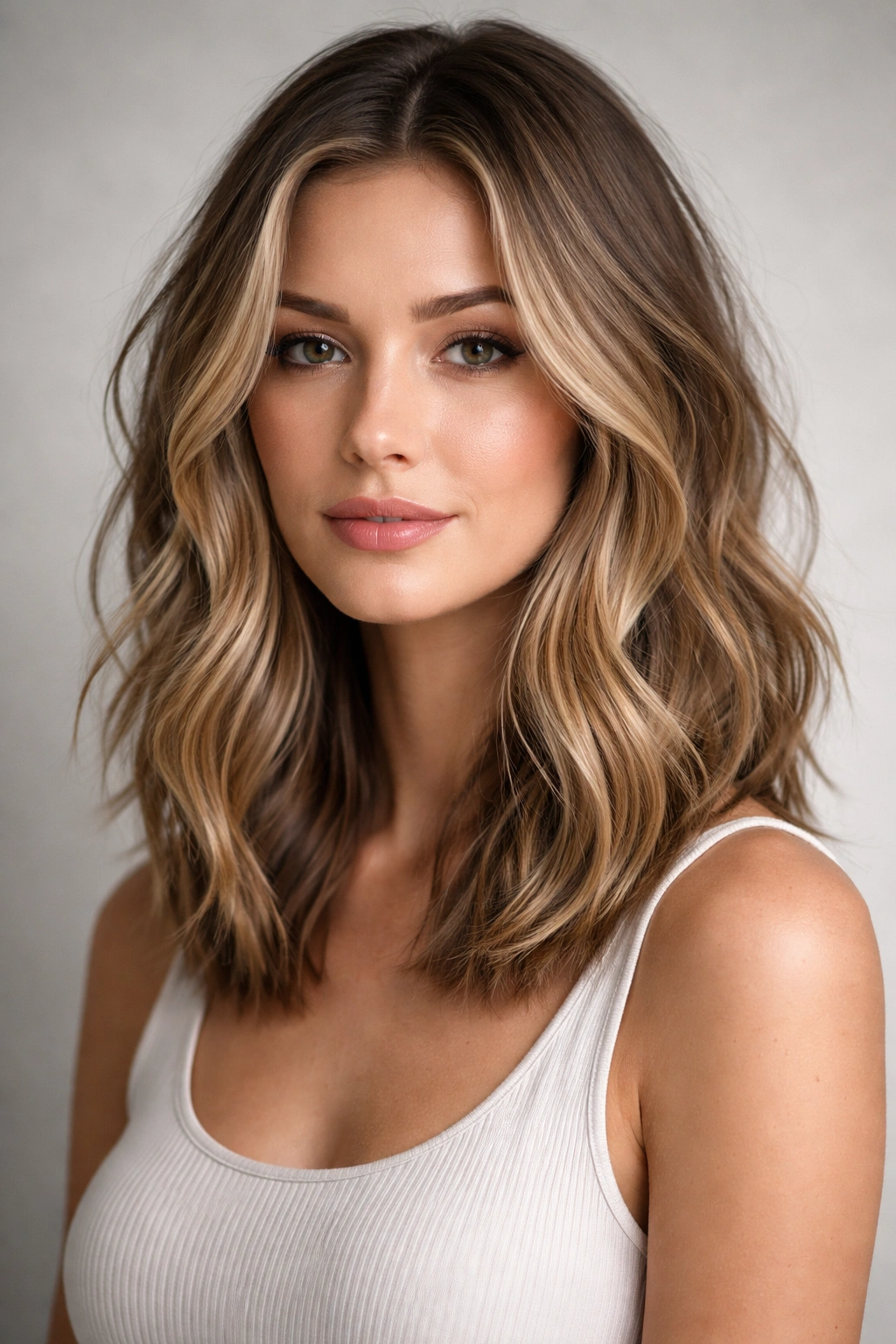
A textured lob that ends around collarbone length works beautifully for longer faces without requiring bangs. The strategic length prevents excessive elongation, while the texture and layers create movement that breaks up vertical lines.
Why Lob Length Is Strategic
A lob falls right around collarbone length — long enough to feel contemporary and manageable, short enough that it doesn’t emphasize face length. The texture is crucial; a blunt, straight lob doesn’t work the same way. Layers and texture create visual breaking points that interrupt vertical proportions.
Creating Texture in a Lob
- Ask for choppy, piece-y layers throughout the lob
- Shorter layers at the crown add volume
- Use a waving iron or curling iron to add waves
- Style with a texturizing spray to enhance the piece-y quality
Pro tip: This style works beautifully with both straight and naturally wavy hair. If you have waves naturally, this cut will enhance them. If you have straight hair, you’ll want to add waves with heat tools.
14. Space Bangs With Choppy Layers
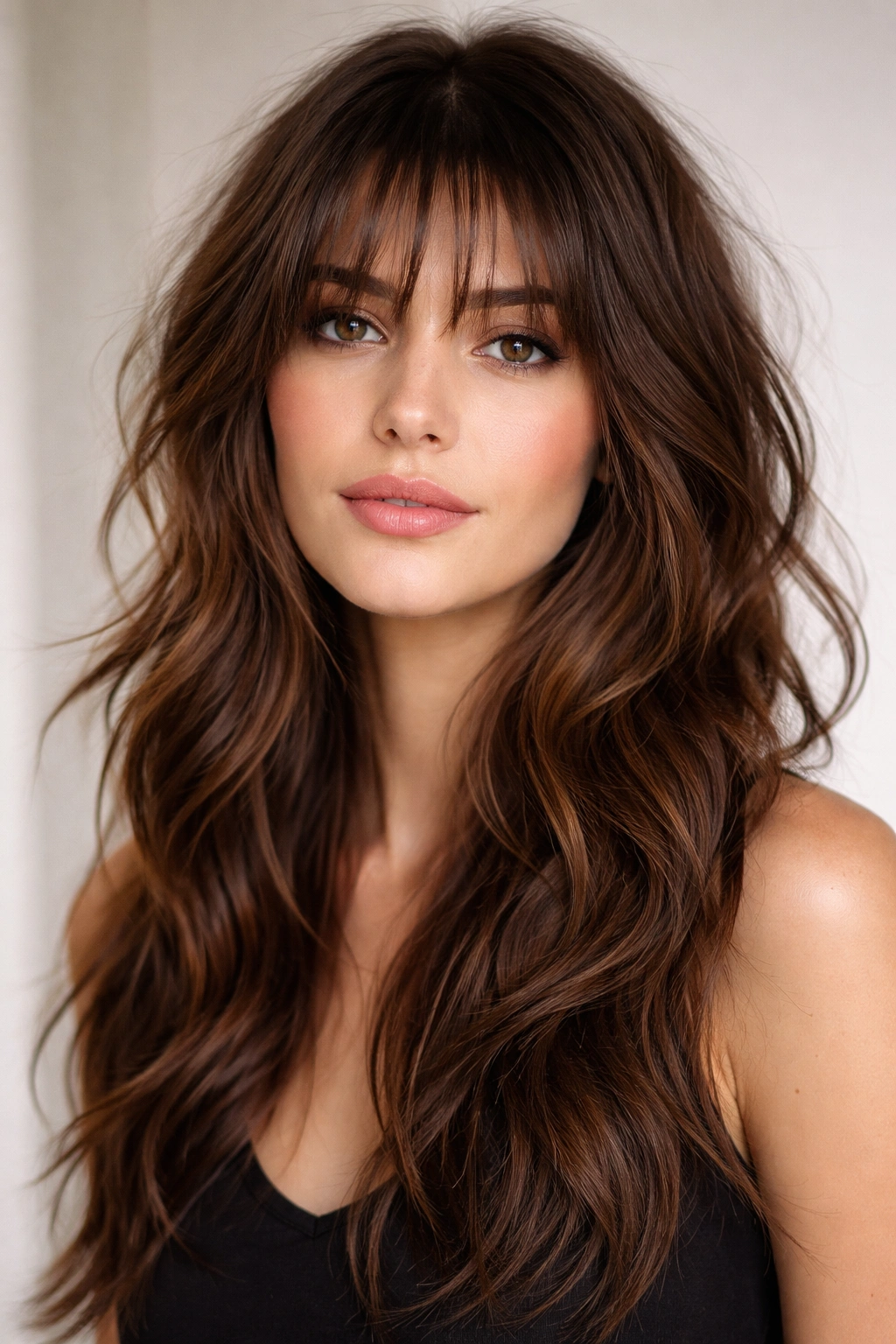
Space bangs (wispy, separated strands across the forehead) combined with choppy layers create a modern, playful look. The individual strands of the space bangs create multiple small horizontal lines rather than one solid line, which is infinitely more interesting and less severe than traditional bangs.
Why Space Bangs Are Clever
Space bangs are essentially curtain bangs’ younger, more playful cousin. Instead of two thick sections, they’re separated strands that create multiple visual breaking points. This is less dramatic than blunt bangs but more intentional than simple face-framing layers.
Styling Space Bangs
- Space bangs should be choppy and separated, not blunt and solid
- Pair with choppy layers throughout the hair for a cohesive look
- Blow-dry the bangs away from the face slightly, or leave them undone
- This style looks great with texture and movement
Quick fact: Space bangs work well on wavy and curly hair because the natural texture enhances the separated, piece-y quality.
15. Sleek Straight Hair With Side-Swept Layers
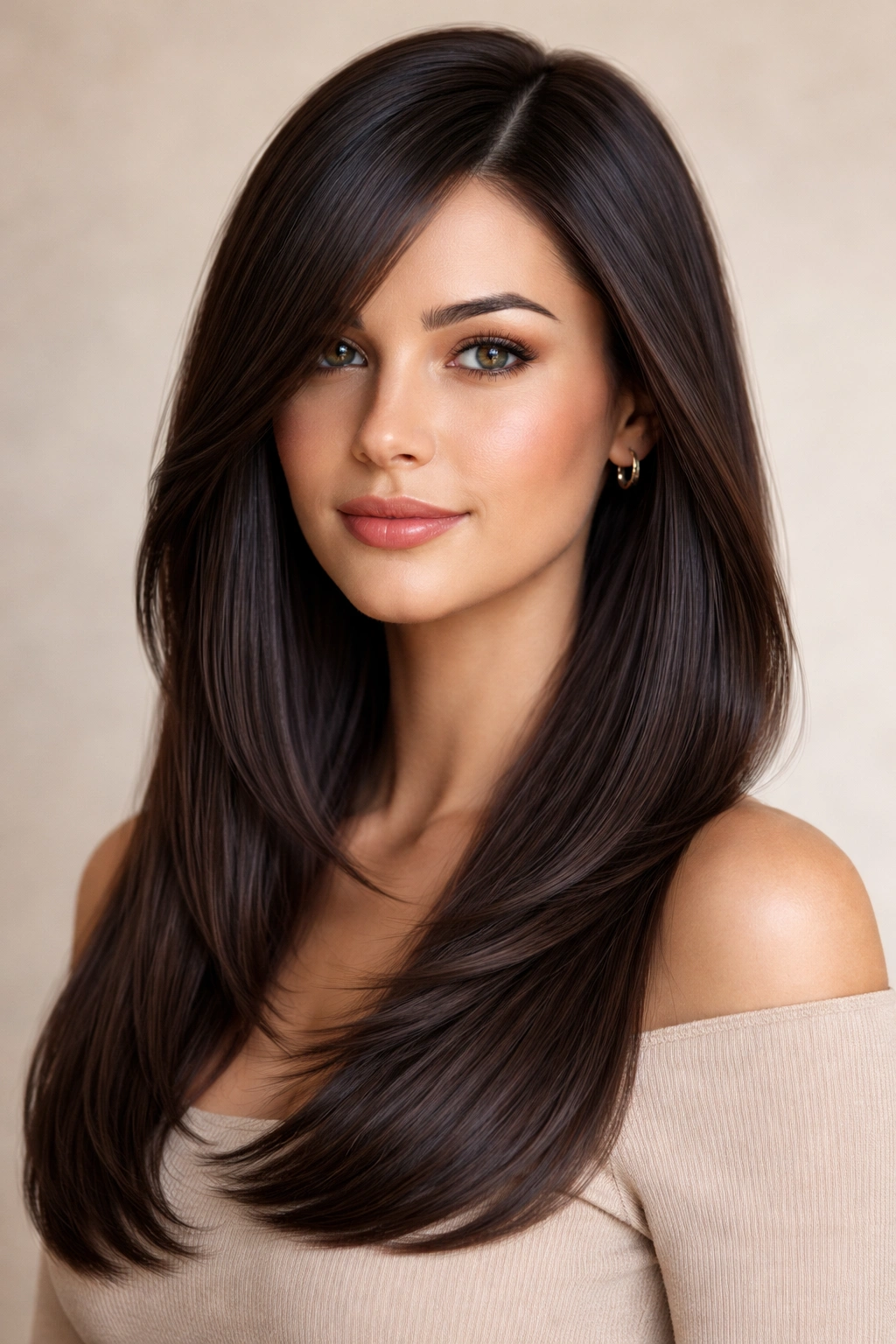
Sleek, straight hair with side-swept layers creates a polished, sophisticated look for longer faces. The straightness creates clean lines, while the side-swept layers add width and prevent the style from feeling too severe or elongating.
Why Sleekness Needs Strategic Layers
Completely straight, blunt hair can emphasize face length, which is why the layers are crucial. Side-swept layers positioned at the cheekbone and temples create width and add dimension. The contrast between the sleek overall look and the layered movement is what makes this work.
Achieving Sleek Straight Hair
- Use a flat iron to straighten hair completely
- Apply a smoothing serum or anti-frizz product for shine and polish
- Blow-dry on a cool setting to seal the hair cuticle
- Side-swept layers should catch light and frame the face
Worth knowing: Sleek hair shows every bit of texture and damage. You’ll need regular trims and healthy hair maintenance for this style to look its best.
16. Curly Hair With Shoulder-Length Definition
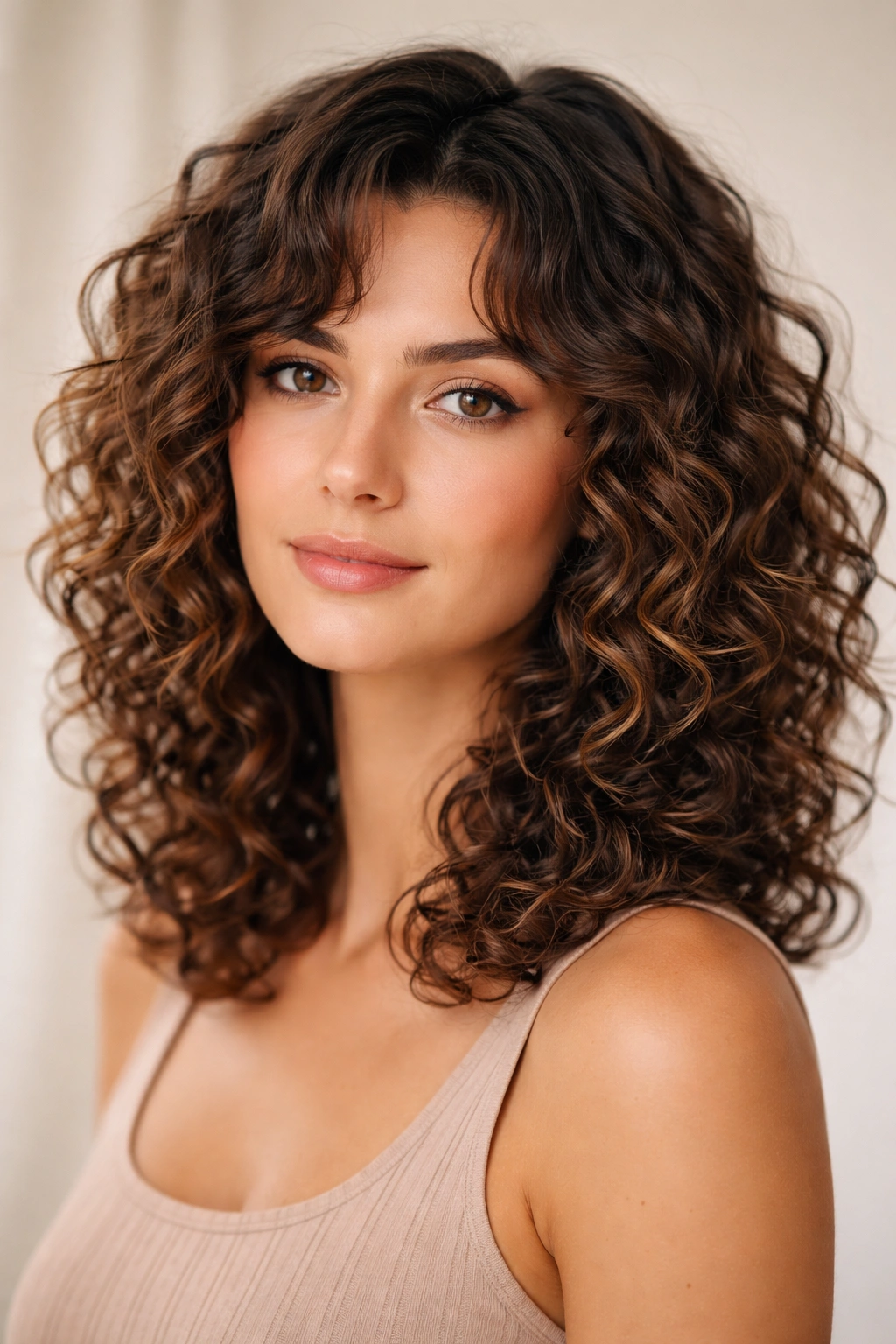
Curly hair cut to shoulder length with layers creates natural width and texture. The curls create multiple visual breaking points, while the shoulder-length placement prevents the style from elongating excessively. Layers throughout the curl pattern add definition and prevent the style from looking heavy.
Why Curls Work for Longer Faces
Curly hair inherently creates width and texture. The coils mean multiple lines of visual interest rather than one long vertical line. Layers throughout a curly cut create even more dimension and prevent the weight from pulling the curls down and elongating the face.
Layering Curly Hair Strategically
- Layers should be cut while hair is curly, not straight
- Shorter layers at the crown add volume
- Layers throughout the mid-length and ends create definition
- Ask your stylist for a curly-specific cut from someone trained in curly hair
Pro tip: Curly hair looks best when cut by a stylist trained specifically in cutting curls. A stylist trained only in straight hair won’t understand how curls shrink up and how layers interact with curl patterns.
17. Faux Bob With Longer Underneath Layers
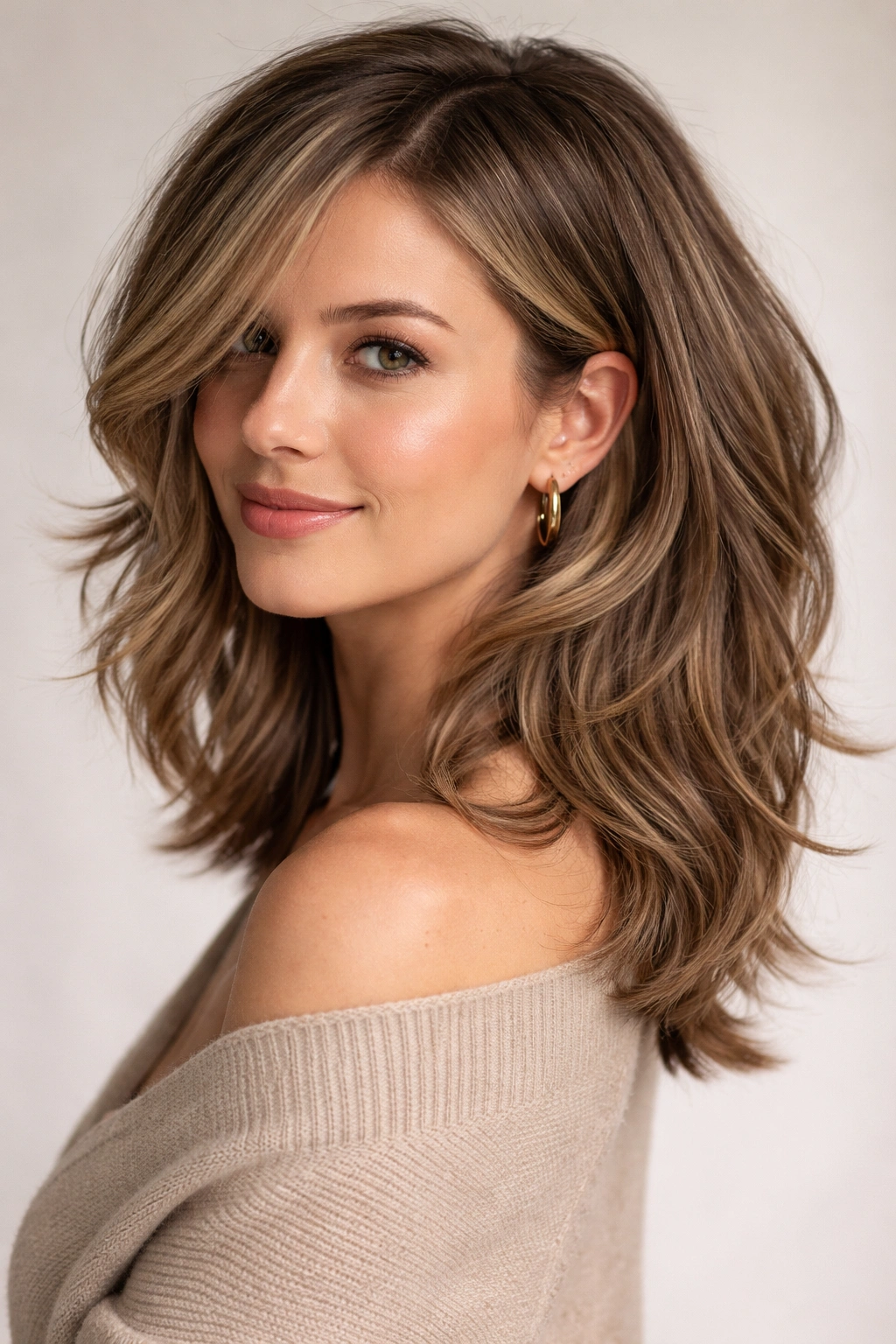
A faux bob that appears short and structured on top but has longer layers hidden underneath creates an interesting illusion. From the front and sides, it looks like a shoulder-length bob, but the longer underneath layers provide length and movement. This style works for longer faces because the apparent shorter length creates the illusion of less face elongation.
Why This Clever Style Works
The faux bob uses visual trickery. From the front, it looks shorter and more structured, which adds width and breaks up vertical proportions. The longer underneath layers provide the length you might want while hiding most of it visually. It’s a great middle-ground option.
Creating a Faux Bob
- The top layers should be cut to around shoulder length
- Underneath layers are cut much longer, often extending several inches past the collarbone
- When hair is down, the longer layers show slightly and create movement
- When styled or when you move, the contrast between the lengths is visible
Worth knowing: This style requires a stylist who understands what you’re trying to achieve. Not all stylists are familiar with the faux bob technique.
18. Wispy Bangs With Textured Crown
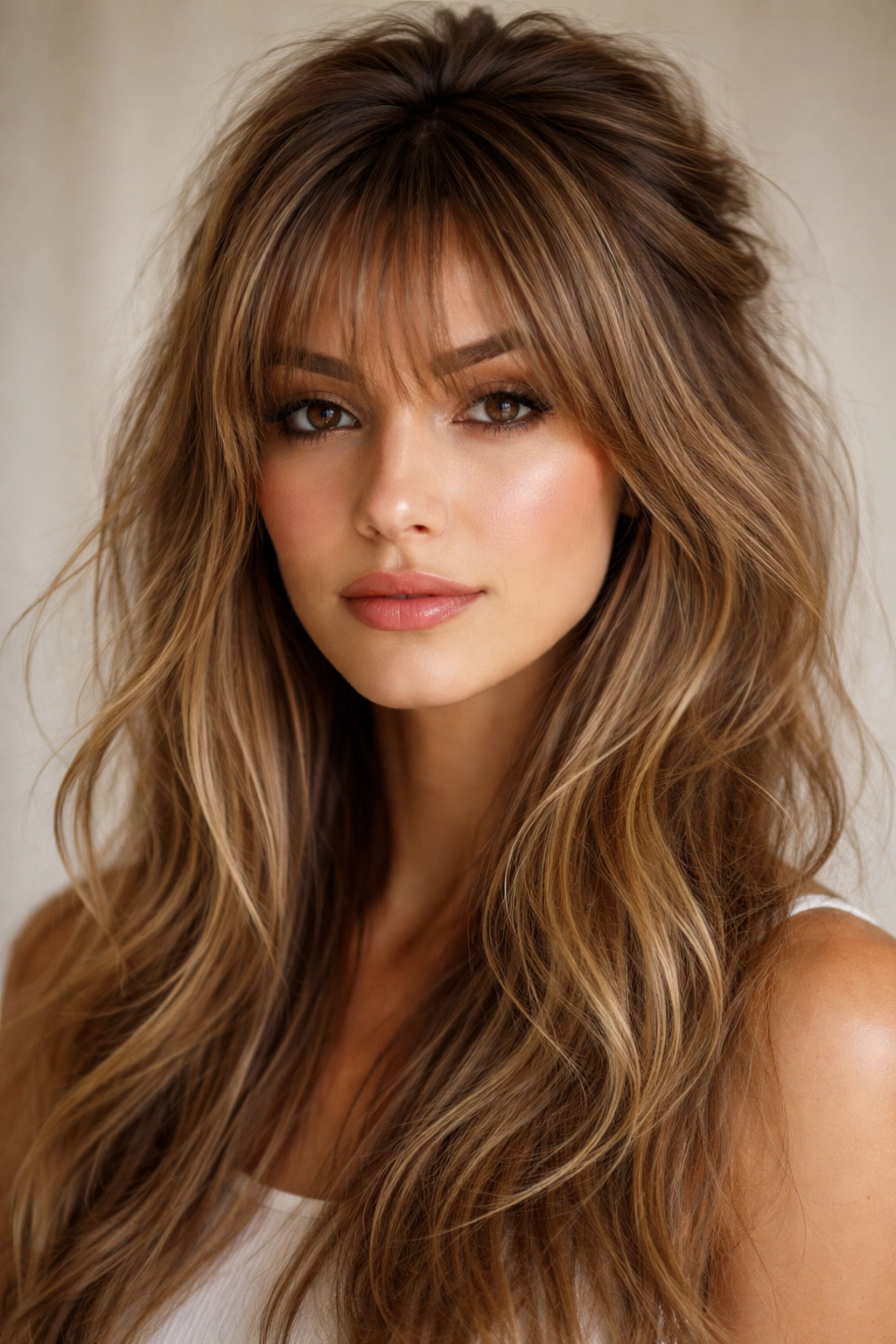
Wispy bangs that are longer and feathered, combined with significant texture and volume at the crown, create a balanced, dynamic look. The longer bangs don’t obstruct the face but still create that essential horizontal element, while the textured crown adds volume without length.
Why Wispy Works Better Than Blunt for Some People
Wispy bangs are softer and more forgiving than blunt versions. They work on more hair types, grow out more gracefully, and feel less severe. When combined with a textured crown, they create interest at the top of the face without heaviness.
Building Texture at the Crown
- Ask for choppy layers specifically at the crown to create height
- Wispy bangs should be longer and separated, not thick or solid
- Blow-dry with volume at the crown using a round brush
- Use a texturizing spray to enhance the piece-y quality throughout
Pro tip: If you’re nervous about trying bangs, wispy bangs are a great starting point because they’re less dramatic and easier to style.
19. Longer Layers With Strategic Undercut
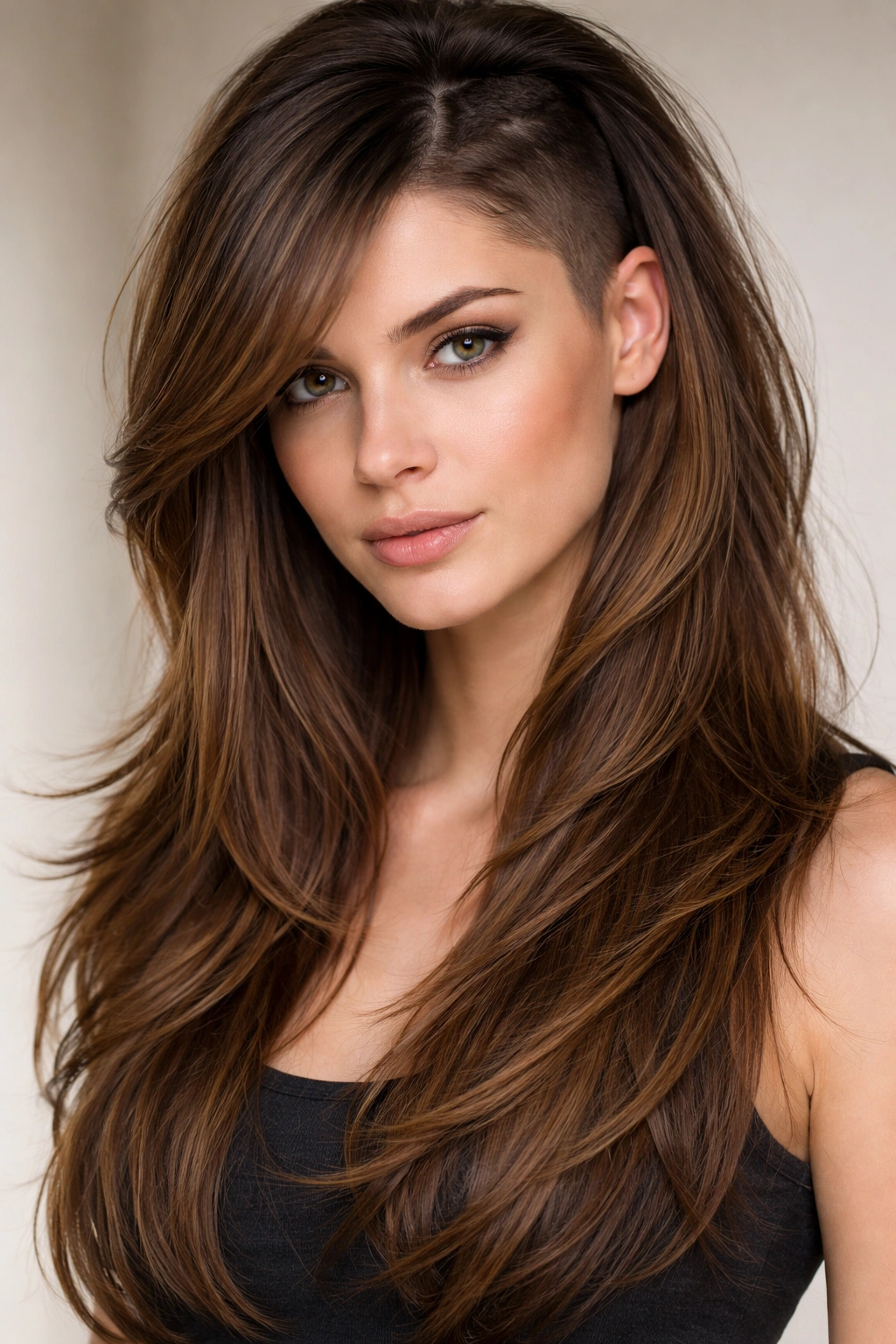
A longer style with strategically placed shorter layers hidden underneath creates visual interest and movement. The undercut pieces catch light and add texture, while the longer top layer maintains length. This works for longer faces because the texture and movement break up vertical proportions.
Why Undercut Layers Add Depth
Undercut layers are typically hidden underneath longer layers, but they become visible when you move or style hair a certain way. They create dimension and prevent the longer style from feeling flat or elongating. The contrast between the lengths is interesting without being obvious.
Creating Undercut Texture
- Shorter layers are cut on the underneath, typically around the crown and sides
- The top layer remains longer and covers the undercut
- When you move or run your fingers through your hair, the texture shows
- Undercut pieces should be textured and choppy, not blunt
Quick fact: Undercut layers are particularly effective on thicker or textured hair that can support the hidden layers without looking too choppy or uneven.
20. Tousled Waves With Full Bangs
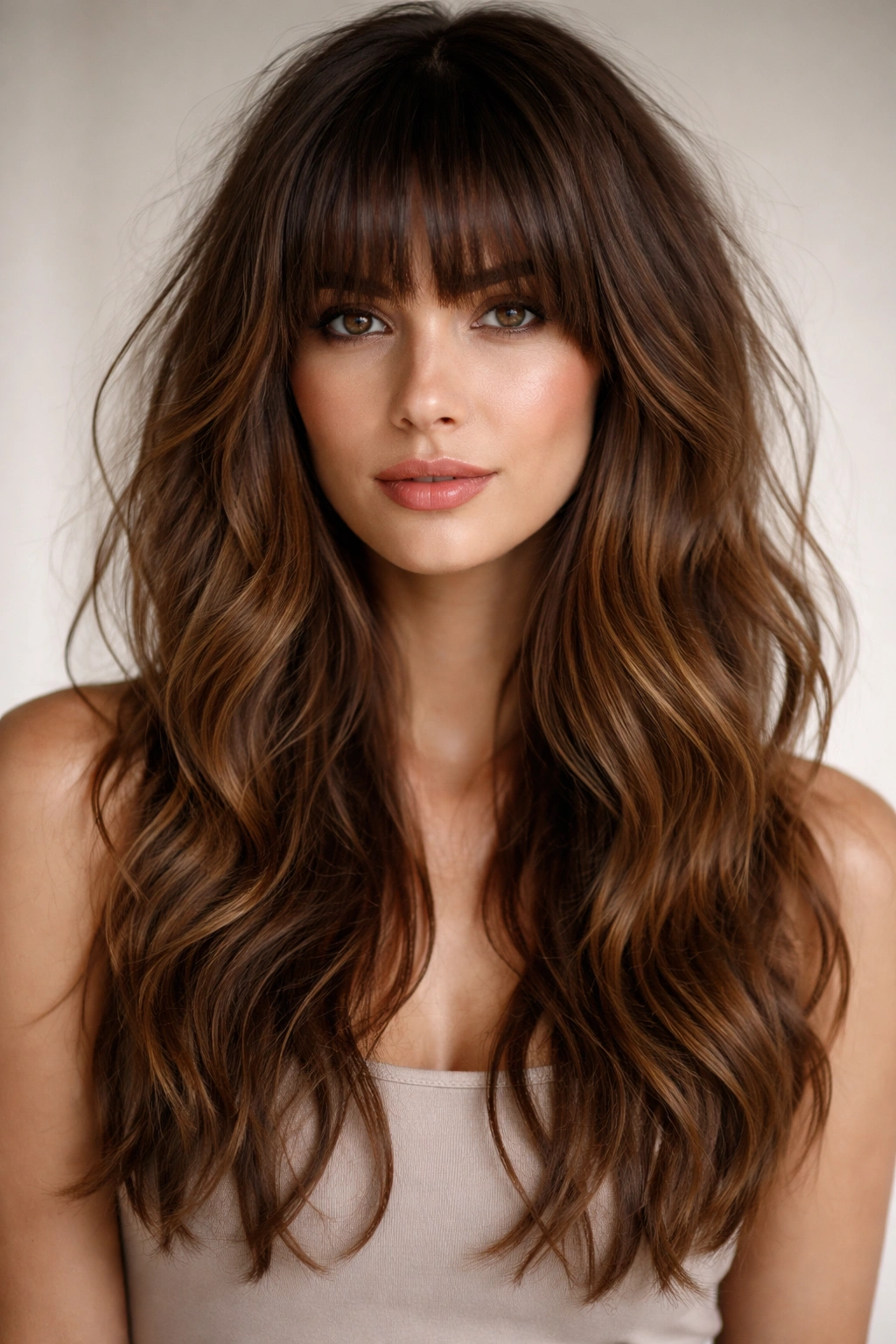
Full, blunt bangs combined with tousled, piece-y waves throughout the hair create a relaxed, effortlessly chic look. The bangs create a strong horizontal statement, while the waves add movement and texture that prevents the style from feeling structured or severe.
Why This Combination Feels Effortless
Full bangs and tousled waves might seem contradictory — one is structured, the other is undone. Together, they create an interesting contrast that feels intentional and modern. The bangs ground the style, while the waves add softness and movement.
Styling Tousled Waves With Bangs
- Full bangs should be blunt and sit just above the eyebrows
- Waves should be piece-y and undone, created with a waving iron or curling iron
- Use a texturizing spray to enhance the tousled quality
- Don’t aim for perfect waves — imperfection is the point
- Blow-dry with fingers or scrunch for a natural, lived-in texture
Worth knowing: This style requires regular bang trims but actually looks better when the waves are slightly undone and imperfect. It’s one of the more forgiving styles in terms of daily styling.
Final Takeaway
The best long face hairstyle is the one that genuinely works with your hair texture, matches your styling commitment level, and makes you feel confident. Whether you choose bangs or prefer your face fully open, the key is creating width and breaking up vertical lines. That might happen through layers at strategic heights, waves and texture that disrupt length, volume at the crown, or careful bang placement — often through a combination of multiple techniques working together.
Pay attention to how different styles feel when you’re styling them, not just how they look. A style that’s stunning but takes forty-five minutes to create every morning might not be sustainable for your lifestyle. Equally, a style that looks incredible when freshly cut but requires maintenance every 3-4 weeks might be worth it to you. The most successful hairstyle choice happens when what flatters your face shape also works with your hair and your daily reality.
