



Platinum blonde platinum has this undeniable power—it catches light differently than almost any other color, turning even the simplest cut into something architectural and striking. Pair that luminous shade with a short cut, and you’ve got one of the most transformative style combinations available right now. The thing is, not every short haircut works equally well with platinum blonde. Some styles demand that glossy, pale tone to hit their full impact. Others lean into contrast and movement in ways that make the color almost beside the point. But when you nail the right cut-and-color pairing? That’s when people stop asking about your hairstyle and start asking your stylist for a direct phone number.
Short platinum blonde cuts have evolved beyond the one-dimensional aesthetics of years past. The cuts that dominate now prioritize texture, movement, and dimension—things that make the hair feel alive rather than flat or artificially perfect. The platinum serves as a canvas that amplifies every technical choice your stylist makes: every layer, every angle, every choppy section becomes more visible and more intentional because of the bright, light-reflective quality of the color. This visibility is both a gift and a challenge. It means your cut has to be good—skilled and precise—because there’s nowhere for imperfection to hide. It also means maintenance matters. Platinum blonde requires dedicated care to keep it looking fresh and vibrant rather than brassy or damaged.
If you’re thinking about going platinum with a short cut, you’re about to enter a world of genuine style versatility. Whether you want something edgy and unexpected, effortlessly cool and undone, or sleek and powerful, platinum blonde short cuts deliver. Here are ten of the most compelling versions women are choosing right now—each one a complete approach to what short-and-platinum-blonde can be.
1. Sleek Pixie Cut
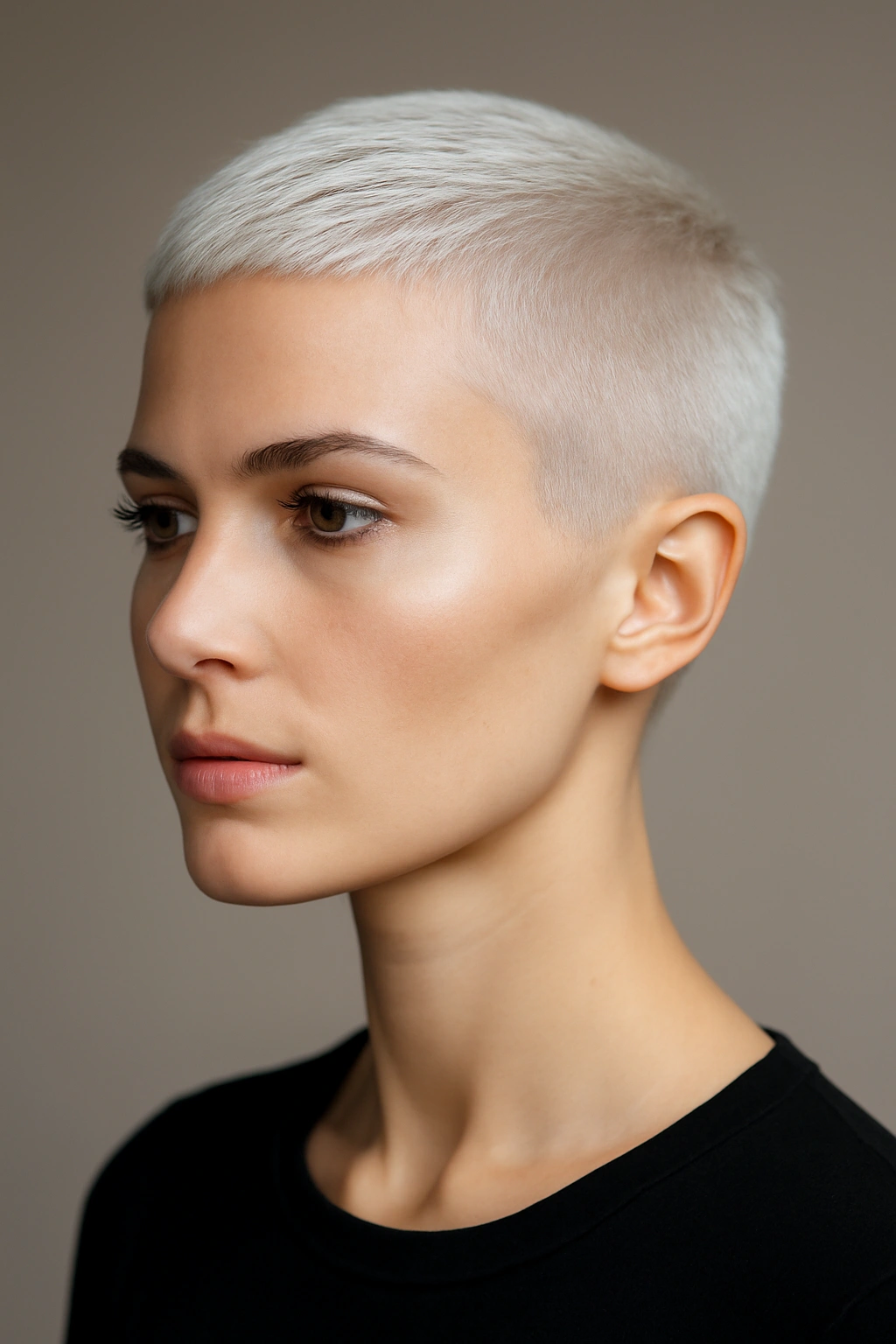
The pixie cut has never left the conversation, but the modern platinum blonde pixie is leaner and more intentional than ever before. This version keeps the cut extremely short overall—think one to two inches on top—with tapered sides that may or may not include skin-faded undercuts, depending on how much edge you want to signal. The top stays longer than the sides by contrast, creating a deliberate longer-shorter ratio that gives the eye something to land on. The platinum blonde amplifies every angle of the cut because there’s essentially no length to hide behind.
Why This Cut Commands Attention
The pixie works because it’s honest. There’s no disguising the shape or the technical skill of the cut itself, which means a great pixie makes a statement about precision and intention. With platinum blonde, that statement becomes almost audible. The color’s reflective quality means every contour of your head shape, every directional line, every textural choice shows. For some people, this is exactly what they want—a cut that proves they’re intentional about their appearance and willing to show their face and head shape fully. The pixie also works beautifully with facial features because there’s nothing competing for attention.
Styling and Maintenance
- Wash and apply a light texturizing spray or paste to damp hair, then blow-dry with your fingers or a brush to encourage movement
- The cut requires a trim every 3 to 4 weeks to maintain its shape, since growth becomes visible quickly on such short hair
- Platinum blonde pixies benefit enormously from purple-toned shampoo and conditioner to keep the color from turning yellow or brassy
- You can style it slicked back for polish, textured upward for edge, or tousled for relaxed cool—the same cut shifts entirely based on styling approach
Pro tip: A great pixie cut is one of the easiest styles to maintain day-to-day, even if salon visits are frequent. You’ll spend maybe two minutes on styling most mornings.
2. Textured Shag
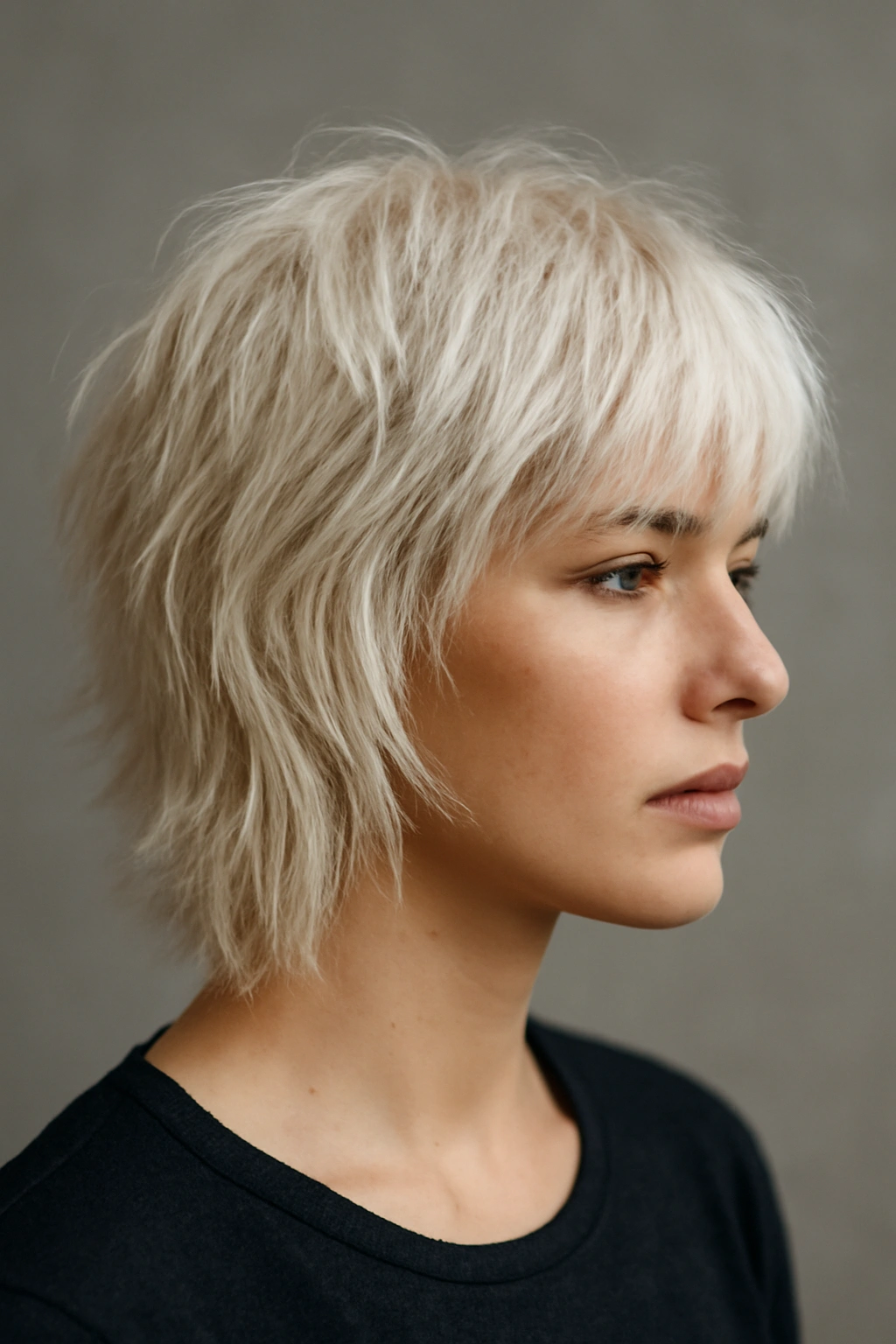
The shag has made a genuine comeback, and the platinum blonde version feels modern rather than retro because of how texture-forward the cut has become. This isn’t the 1970s shag with big fluffy layers and feathered edges everywhere. The contemporary shag is intentionally choppy and layered, with shorter pieces throughout rather than one consistent length. The shortest pieces typically sit around ear length or slightly shorter, while the longest sections in the back can reach shoulder-length or just past. The platinum color makes every layer visible and distinct—you can actually see the movement and shape rather than it reading as one blended mass.
What Makes the Shag Feel Undone (and Why That’s the Point)
The shag’s entire purpose is to look like you don’t try too hard, which is actually a lie—the cut is highly technical and the styling does require intention. But the platinum blonde works in the shag’s favor here because the color itself feels bold and deliberate, which balances out the textured, undone feeling of the cut. You get this interesting push-pull between the striking color and the relaxed movement. The layers in a shag create volume naturally, making it especially flattering for people with thinner hair or flat hair that needs help with shape. The texture also means you can skip blow-drying on many days and still have a recognizable style.
How to Maintain the Textured Look
- Use a texturizing spray or sea salt spray on damp hair, then scrunch-dry with your hands or use a diffuser
- A straightening iron can help define and separate layers if you want more intentional texture rather than just messy texture
- Trims every 6 to 8 weeks keep the choppy layers from getting too blunt or heavy
- Sulfate-free shampoo is essential for platinum blonde, especially with a textured cut where the hair has more surface area exposed to air and styling
- The longer layers in back may benefit from occasional deep conditioning since they see more manipulation
Pro tip: Shags photograph beautifully from the side and back, so if you’re considering this cut, make sure you love how it looks from angles other than straight-on.
3. Choppy Layered Bob
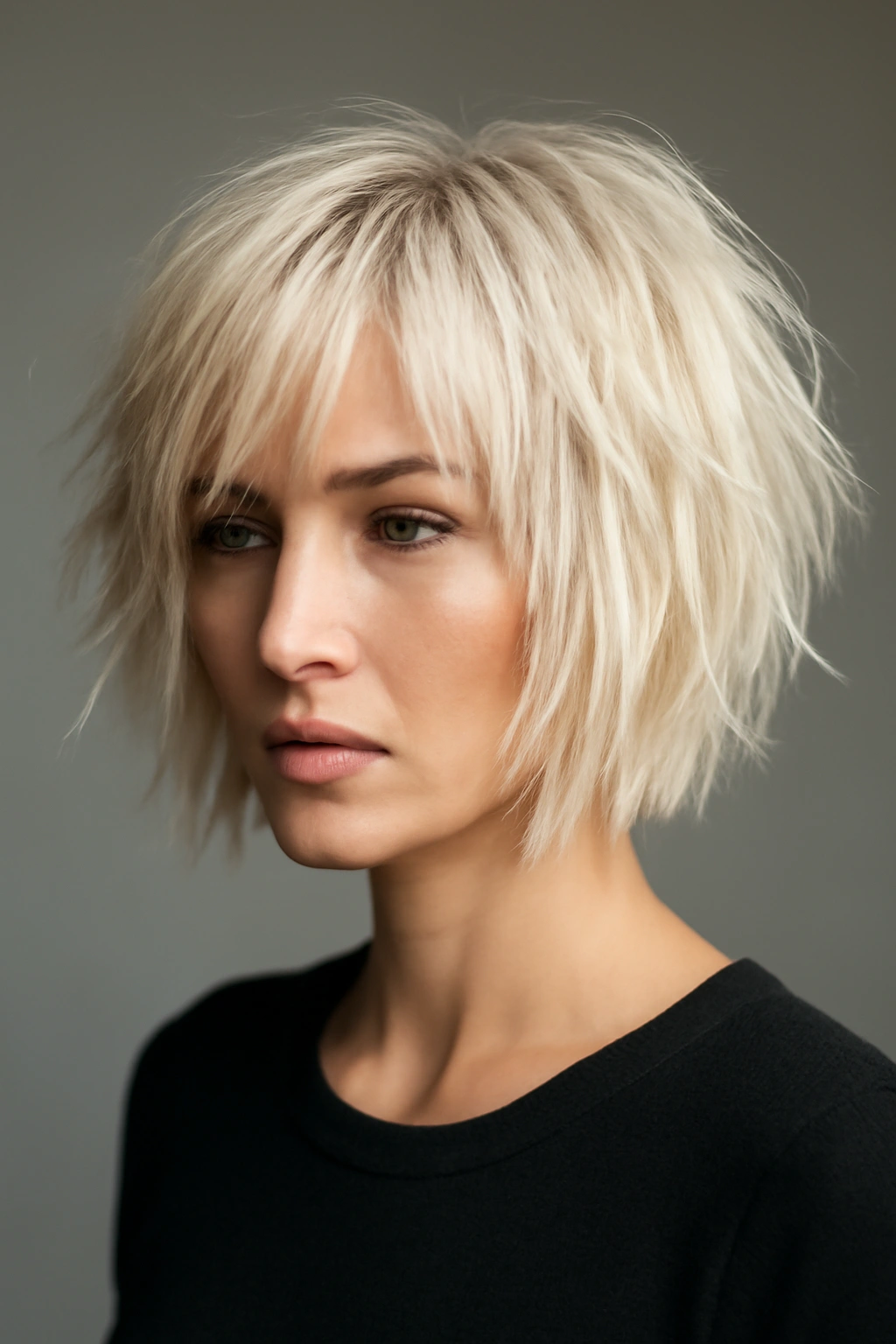
The bob remains one of hairstyling’s most versatile foundations, and when you add aggressive choppy layers to a platinum blonde bob, you get something that feels contemporary and a bit rebellious compared to the refined bobs of previous decades. This version typically sits between chin-length and shoulder-length, with lots of layers throughout that create movement and texture rather than a blunt, solid line. The layers vary in length intentionally—some hitting at the chin, others reaching the shoulders, with consistent choppiness throughout that makes the cut feel deliberate and designed. The platinum tone makes the dimension between layers extremely visible.
The Technical Heart of the Choppy Bob
What separates a choppy layered bob from an accidental disaster is the precision of the layering. Each layer needs to be cut at a specific angle to create movement that flows rather than frizzes. The best choppy bobs have what’s called “point-cutting”—where the scissors point into the ends rather than cutting straight across—which creates texture and helps the layers blend together smoothly even when they’re at different lengths. The platinum blonde amplifies this technical work because you can see every point-cut section distinctly. A skillfully executed choppy bob shows off the artistry. A mediocre one shows off the mistakes equally clearly, which is why finding a great stylist matters enormously.
Styling Strategies for Different Occasions
- For undone texture, apply texturizing spray to damp hair and blow-dry with your fingers, encouraging the pieces to move in different directions
- For a more polished look, blow-dry straight with a round brush, then flatten the ends slightly with a straightening iron and turn them under or out depending on the effect you want
- Styling cream or lightweight pomade can help define individual choppy pieces if you want a more intentional textured look
- The color will stay fresher longer (6 to 8 weeks between touch-ups) if you use color-safe shampoo and rinse with cool water, which helps seal the hair cuticle and lock in color molecules
- Layers do create more surface area, so moisturizing conditioner or a lightweight hair oil on the ends helps prevent dryness
Worth knowing: A choppy layered bob works especially well if you have some natural texture or wave to your hair. Completely straight hair in this cut requires more daily styling to prevent it from just looking wispy.
4. Blunt Micro Bangs
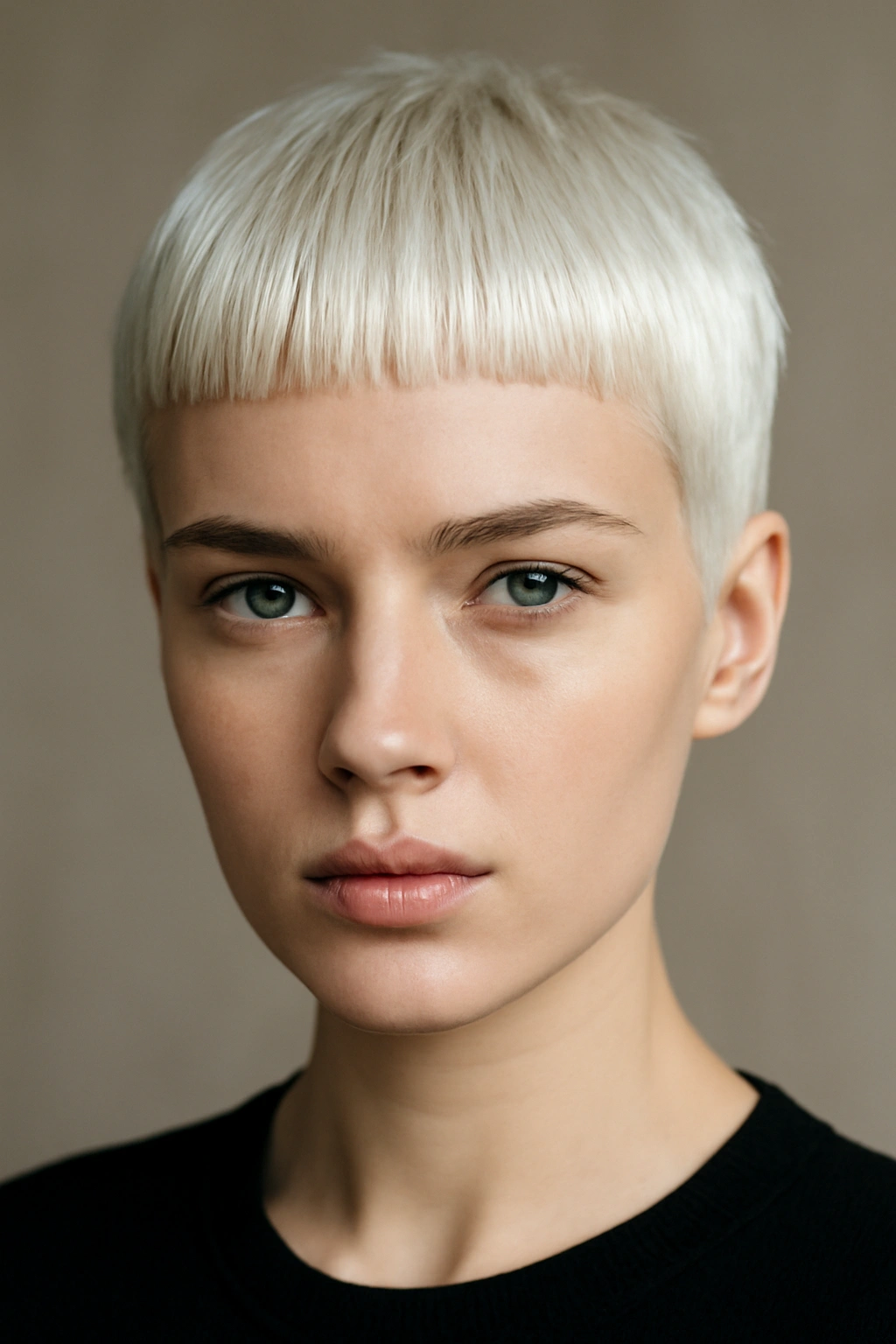
Micro bangs sit so far above the eyebrows that they’re almost in the middle of your forehead, and they’ve become a signature look that absolutely needs that platinum blonde color to feel intentional rather than accidental. The rest of the haircut is usually kept short as well—often a pixie or very close crop—which makes the micro bangs the dominant visual statement. The bluntness of the cut (no feathering, no softening, just a clean straight line) pairs with the platinum to create an almost architectural effect. There’s no ambiguity about this look—it’s deliberate, it’s bold, and it absolutely commits.
Why Micro Bangs Work Psychologically
Micro bangs do something interesting: they draw attention upward to your eyes and forehead, which means the entire composition of your face changes. They work beautifully for people with strong eyebrows, good bone structure in the forehead area, or anyone who wants to make a statement about being stylistically fearless. The platinum blonde backs up that fearlessness—this combination says you’re willing to take risks with your appearance and you own those choices completely. Micro bangs aren’t a safe bet; they’re a confident declaration. They’re not for everyone, but for the people they work for, they become instantly iconic.
Maintenance and Styling Requirements
- Micro bangs require trims every 2 to 3 weeks because they grow out visibly fast and lose their blunt line quickly
- They need to be blow-dried straight to look sharp—there’s no way to style around a blunt micro bang that’s been slept on crooked
- The platinum blonde requires purple shampoo at least twice weekly to prevent brassiness, and this matters more when bangs are right at face level where you see them constantly
- A straightening iron can help maintain the bluntness of the line if your bangs start to curl up naturally
- Styling them when they’re damp and smoothing them into place as they dry helps them set with the right amount of texture
Pro tip: Micro bangs suit people who enjoy frequent salon visits and who genuinely like styling their hair. If you’re looking for a low-maintenance cut, this isn’t it.
5. Feathered Crop
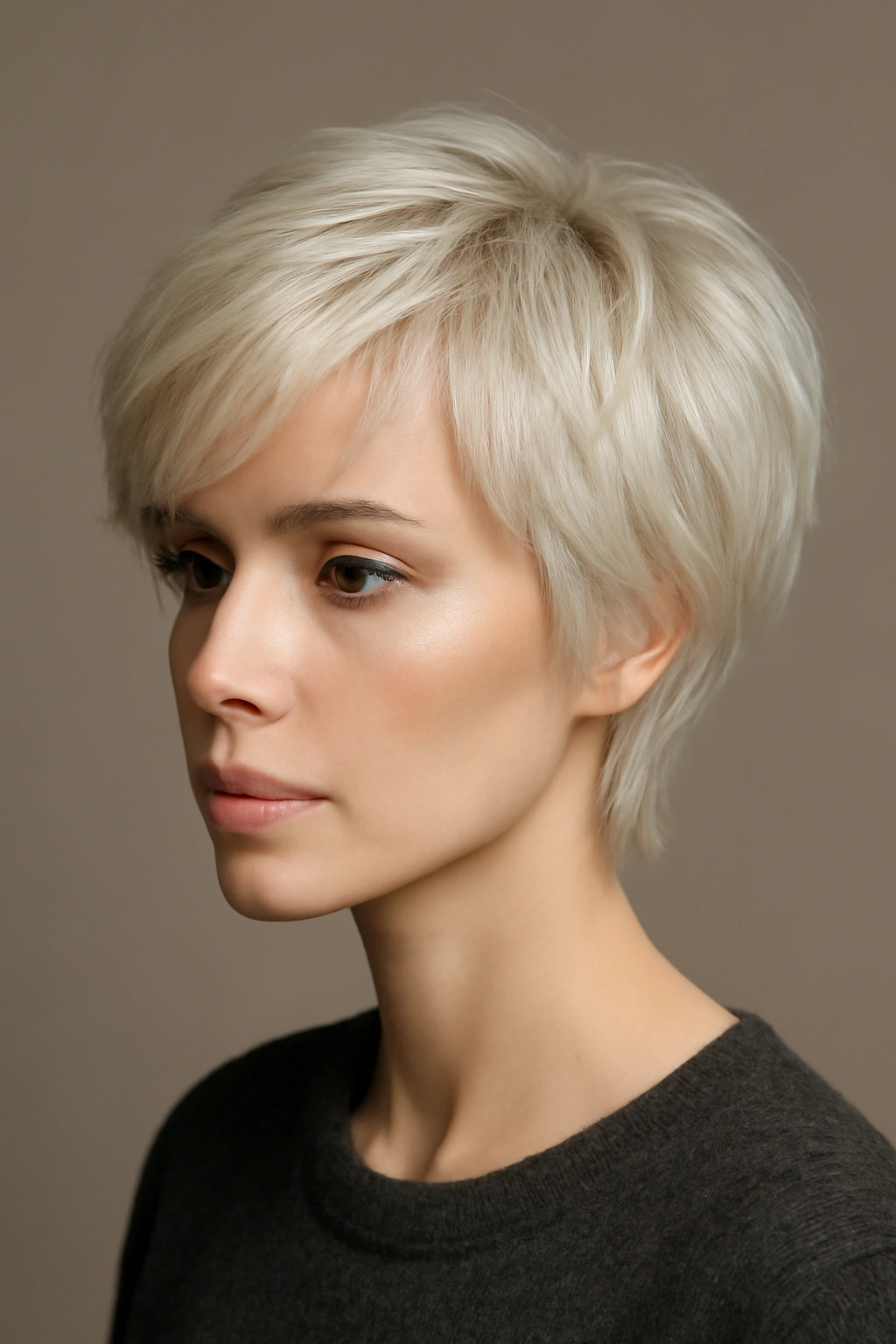
The feathered crop sits at the intersection of the pixie and a textured short cut, with enough length to show movement but short enough to feel bold and cropped close to the head. “Feathered” refers to the technique of cutting the hair in a way that creates soft, layered texture rather than blunt lines. Each section of hair is slightly longer than the one beneath it, creating a feathering effect where the pieces overlap softly rather than sitting heavily. With platinum blonde, the feathering creates this gorgeous interplay of light and shadow as the hair moves—each layer catches light slightly differently.
The Soft Power of Feathering
Feathering is fundamentally different from choppy layering. Where choppy layers are visually distinct and textural, feathering creates a smooth blend where one layer transitions softly into the next. This means the cut reads as unified and intentional rather than chaotic. The feathered crop hits a sweet spot for people who want something clearly short and statement-making, but not as extreme as a pixie, and with more movement than a blunt crop would provide. The platinum blonde makes the feathering visible—you can actually see the directional flow of the layering—without the color competing with the texture for attention.
Creating Soft Texture Without Frizz
- Feathered crops benefit from a light texturizing spray applied to damp roots and mid-lengths, then blow-dried with fingers for natural movement
- A small round brush can help create more defined shape while blow-drying if you want the feathering to have more structure
- Unlike choppy layers that sometimes benefit from being slightly undone, feathered crops look better when they’re styled intentionally—the feathering needs to be worked with, not against
- Purple shampoo twice weekly helps maintain platinum blonde tone and makes the feathering easier to see and appreciate
- A trim every 5 to 6 weeks keeps the feathering from getting too blunt or losing its soft, intentional quality
Worth knowing: A feathered crop works beautifully with most face shapes because the soft layering doesn’t create harsh lines the way blunt crops sometimes do.
6. Geometric Asymmetrical Cut
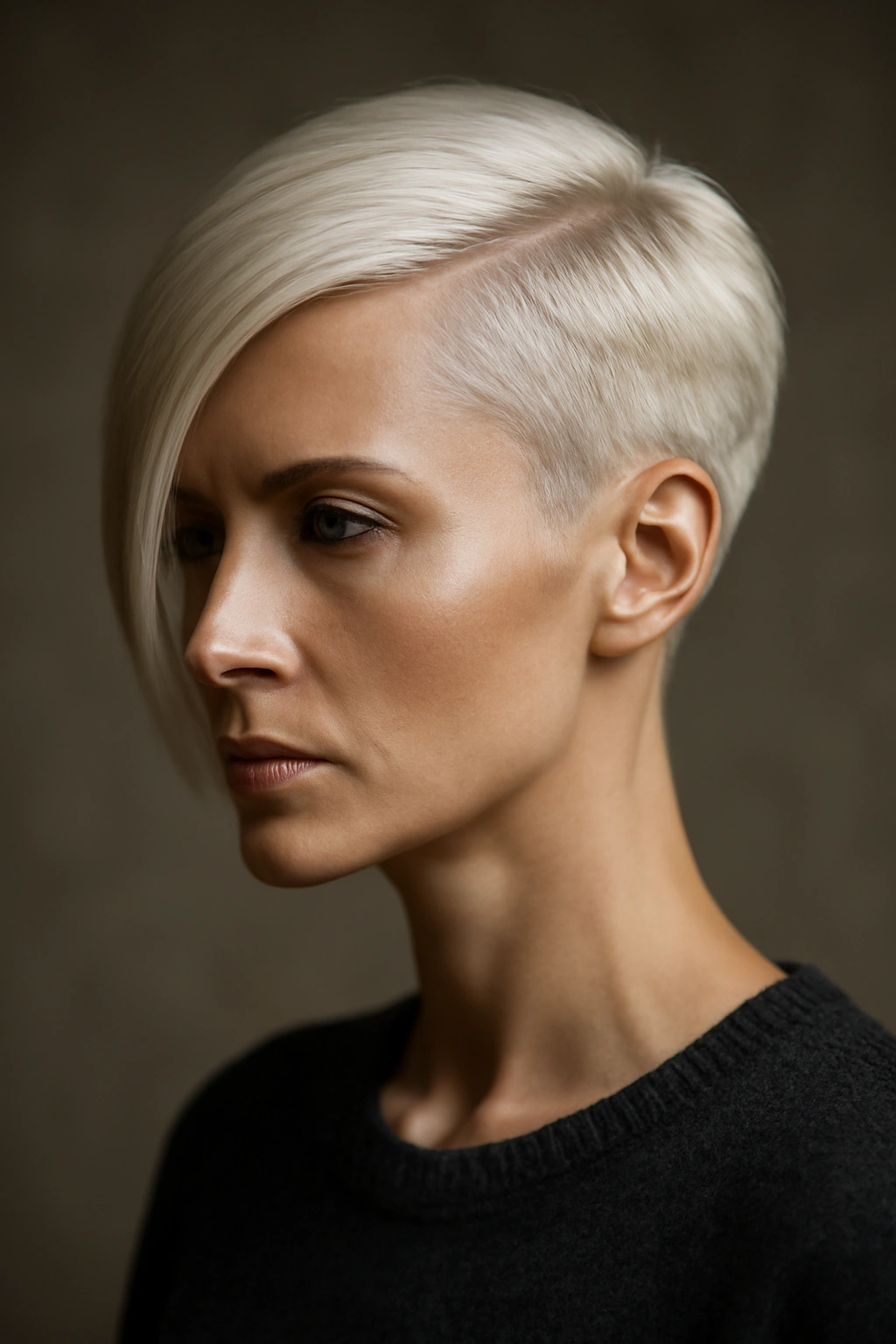
The asymmetrical cut deliberately makes one side of your head significantly different from the other—perhaps one side cropped very short while the other reaches chin-length, or one side heavily layered and textured while the other is blunt and straight. This is an uncompromising style choice that announces you’re thinking about shape, direction, and artistic intention. With platinum blonde, the asymmetry becomes a major visual feature because the color’s reflectivity means you can see the shape shift as the light changes and as you move. The cut essentially becomes a sculpture that changes based on angle and lighting.
The Bold Statement of True Asymmetry
A genuinely asymmetrical cut requires confidence because you’re visibly breaking the principle of balance that most people unconsciously expect from a face and head. This works beautifully for people who love fashion, who think about their appearance as an art project, who have strong features that can handle visual imbalance, or who simply don’t care whether their look matches conventional symmetry. The platinum blonde either amplifies this boldness or, if you’re using it with a more subtle asymmetry, grounds the cut with its own visual statement. Some asymmetrical cuts are quiet and barely noticeable; others are architectural and unmissable.
Styling an Asymmetrical Cut Successfully
- One side typically needs more styling attention than the other—if one side is longer, it may need blow-drying and smoothing while the short side needs nothing
- A straightening iron can help emphasize the architectural lines of the cut if you want the asymmetry to read as intentional and sharp
- Texturizing products work well on asymmetrical cuts because texture helps bridge the visual gap between the two different lengths or densities
- Platinum blonde requires consistent care regardless of cut style, but with an asymmetrical cut where one side is very short and exposed, that side may need extra moisturizing to prevent dryness
- Consider how the asymmetry photographs from different angles—some people love how asymmetrical cuts look from the side but less so straight-on
Pro tip: An asymmetrical cut is one of the few styles that actually looks better with intentional styling. Letting it air-dry usually doesn’t give you the full visual impact.
7. Undercut with Design
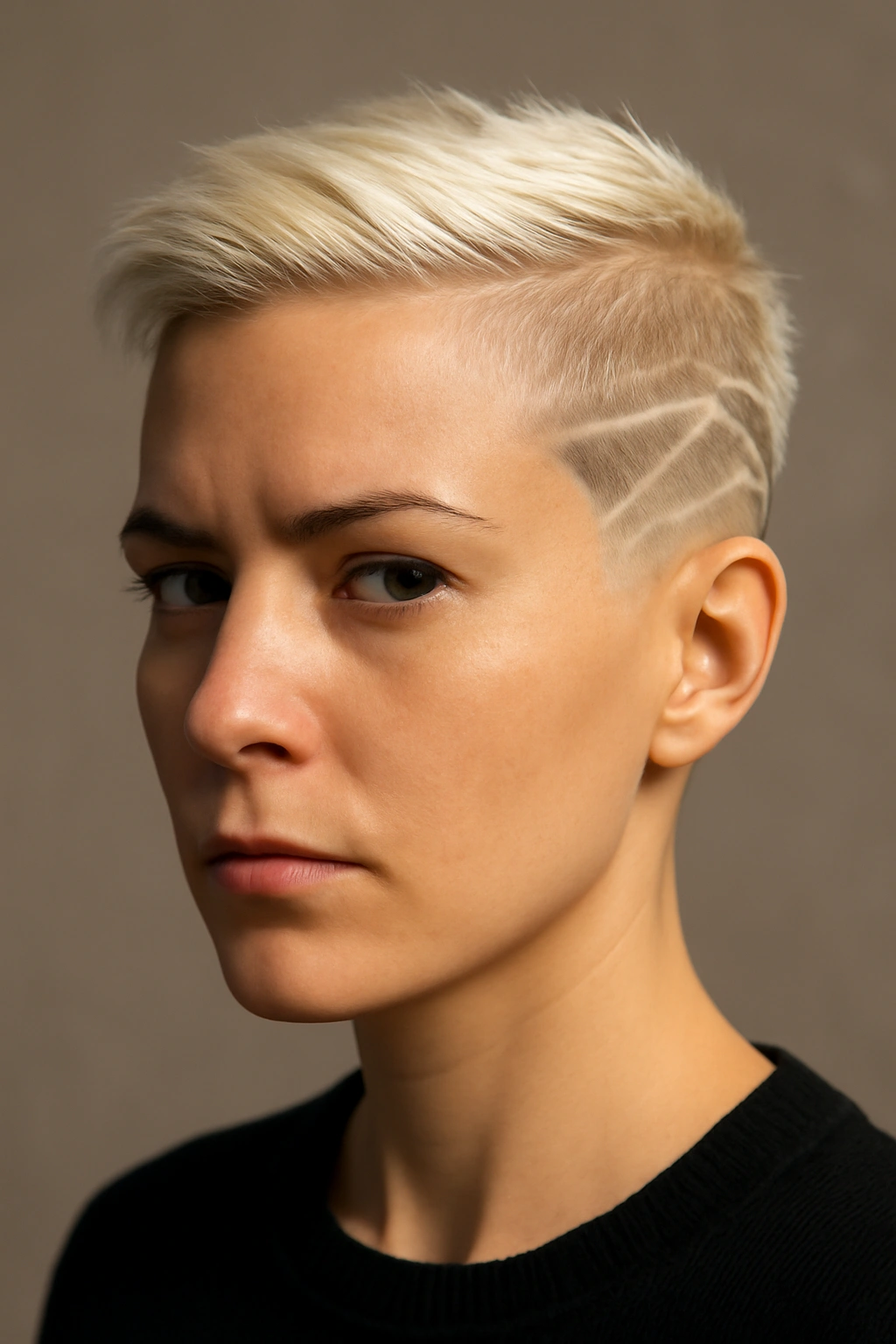
An undercut means the hair is cut extremely short (sometimes to skin) on the sides and back, while the top stays longer and can be styled upward, back, or to the side with dramatic contrast. A “design” refers to patterns, lines, or shaved shapes incorporated into the undercut—this might be a straight line, geometric patterns, or symbolic designs. With platinum blonde on top and shaved or nearly-shaved sides, you get this striking contrast that makes the undercut extremely visible. The designs become like jewelry for your head—they add another layer of visual interest and personalization.
Undercuts as Personal Expression
An undercut with a design is fundamentally about individual expression. You’re literally carving your style into your hair, which is about as committed as personal style gets. The platinum blonde amplifies this—the color’s boldness matches the cut’s boldness, creating a cohesive statement that says you know who you are and you’re not apologizing for it. The designs can be anything from delicate lines to complex geometric patterns to meaningful symbols. Some people change the design regularly; others keep it permanent. Either way, it’s a conversation starter.
Maintaining Undercuts and Design Details
- The shaved portion requires trims every 2 to 4 weeks to maintain clean lines and prevent the design from getting fuzzy or growing out
- The longer hair on top can be styled in many ways—slicked back for polish, textured upward for edge, pushed to one side for movement—giving you versatility despite the bold undercut
- Clippers with guards maintain the undercut cleanly at home between salon visits, but you’ll want a professional for the design work
- Platinum blonde on the longer sections needs purple shampoo regularly, but the shaved sections need only regular cleansing
- The transition between the undercut and the longer hair on top looks cleanest when both are freshly maintained—let either grow out too long and the contrast becomes less striking
Worth knowing: Undercuts are easier to maintain than you might think, but they do require you to be comfortable with very frequent haircuts. If you don’t like being in the salon chair often, this might not be the style for you.
8. Tousled Wolf Cut
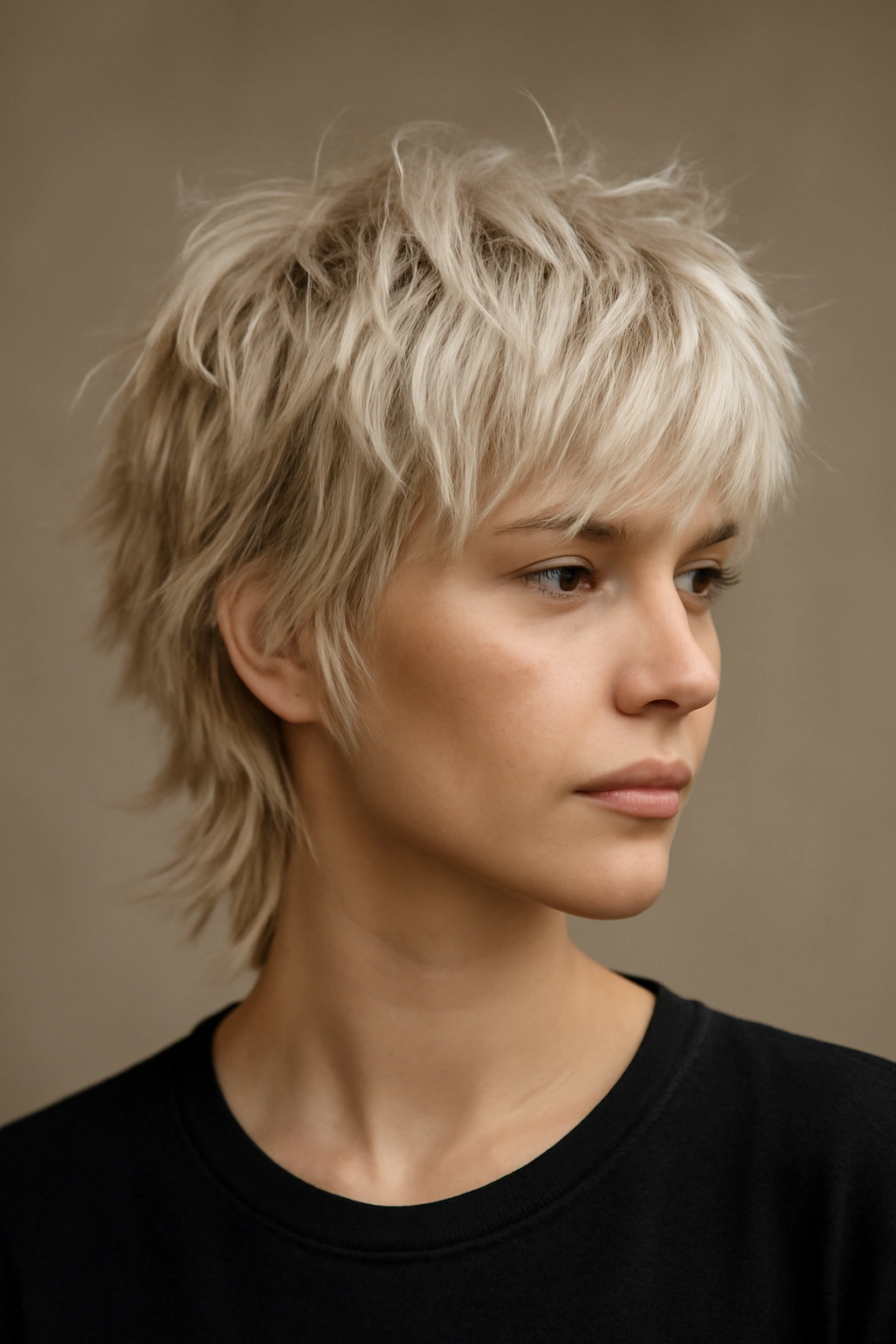
The wolf cut is essentially a hybrid between a mullet (business in front, party in back) and a shag, with a cropped, textured front and longer, shaggy layers in back. “Tousled” means the entire cut is designed to look slightly undone and textured rather than polished. The front is typically very short—often pixie or crop length—with choppy layers, while the back reaches shoulder-length or longer with wispy, feathered layers. With platinum blonde, the tousled texture becomes this gorgeous interplay of light and movement. The color makes the layers visible without the cut needing to be blunt or harsh.
The Appeal of Intentional Undone-ness
There’s something appealing about a style that looks effortless but actually requires intention to achieve. The tousled wolf cut falls into this category. It’s short enough to feel modern and edgy, long enough in back to feel like you have some length, and textured enough to look like you’re not trying too hard even though achieving that “undone” texture usually requires texturizing products and some blow-drying. The platinum blonde supports this duality—it’s a bold, high-commitment color that pairs with a cut that looks low-effort. That contrast is part of the appeal.
Styling Tousled Texture Successfully
- Texturizing spray or sea salt spray applied to damp hair is essential—this creates the tousled texture that defines the cut
- Blow-dry with your fingers or a diffuser rather than a brush, which helps encourage the textured, undone look rather than smoothing it into submission
- The front can be styled multiple ways—tousled upward, pushed back, swept to the side—giving you versatility throughout the week
- Trims every 6 to 8 weeks keep the choppiness intentional rather than letting it grow into a shapeless mass
- Purple shampoo twice weekly helps maintain platinum tone, especially since the tousled texture means more of the hair’s surface is exposed to styling heat and products
Pro tip: A tousled wolf cut photographs beautifully because the movement and texture create visual interest from every angle.
9. Slicked-Back Minimalist
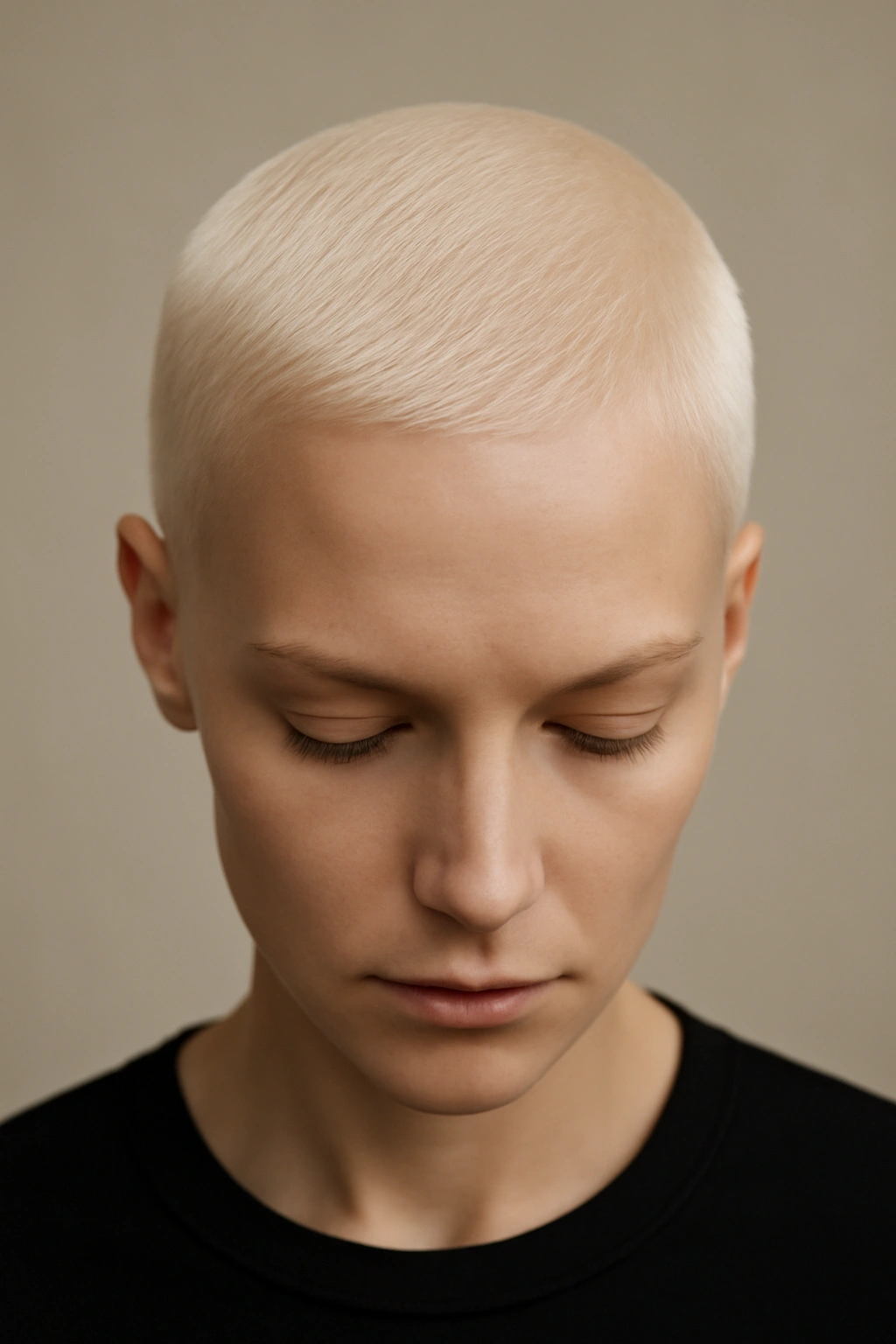
The slicked-back minimalist is essentially an extremely short crop—sometimes just half an inch all over—that’s styled smoothly back against the head with minimal styling products. There’s no texture, no layers, no drama—just the pure shape of your head and the smooth plane of platinum blonde hair. This is about as minimal as a short haircut can get, which means it requires absolute confidence in your head shape, facial features, and commitment to the look. There’s nowhere to hide with this cut. It’s all exposure and honesty.
The Confidence Required for True Minimalism
A slicked-back minimalist cut works for people who are genuinely comfortable being seen completely. This might be people with beautiful head shapes they want to show off, people with strong faces that don’t need framing, people with such confidence in their personal style that they don’t need a cut to make a statement, or people who simply love the simplicity and ease of the shortest possible hair. The platinum blonde makes this even bolder—you’re not hiding behind length or texture. You’re showing off the color and the shape in their purest form.
The Surprising Ease of Ultra-Short Hair
- This cut requires a trim every 2 to 3 weeks to maintain the exact short length, but styling takes literally seconds—just smooth the hair back with a tiny bit of gel or pomade
- Platinum blonde at this length is actually easier to maintain in terms of day-to-day care because there’s so little hair to get tangled, damaged, or product-heavy
- The main maintenance is keeping the color fresh—purple shampoo weekly prevents brassiness in such short, visible hair
- You can shower and go most days without any blow-drying or additional styling
- The cut requires zero product if you don’t want shine—you can just wet it and smooth it back with your hands
Worth knowing: This cut works best if you have relatively straight or wavy hair. Very curly hair in such a short length can read as puffy rather than sleek unless you’re willing to use smoothing products daily.
10. Textured Mullet
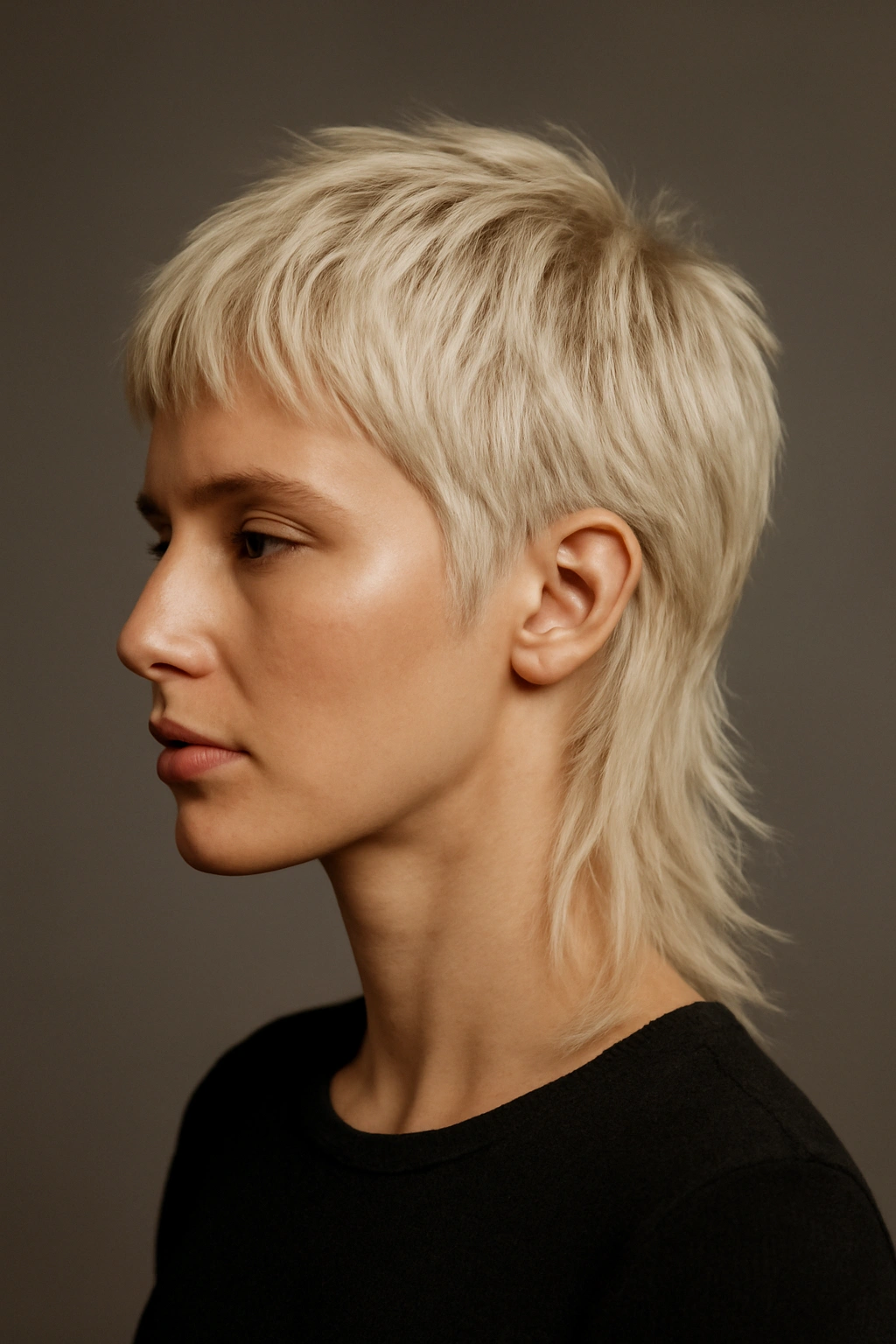
The mullet has absolutely made a comeback, but the modern version looks nothing like the 1980s original. A contemporary textured mullet keeps the sides and front shorter—often cropped to ear-length or shorter—while maintaining significantly longer hair in the back. The “textured” part means the entire cut has choppy layers and intentional movement rather than blunt sections. It’s a playful cut that breaks conventional balance while still feeling deliberate and fashionable. With platinum blonde, the textured mullet becomes a statement about being willing to play with style and not take yourself too seriously.
The New Mullet Aesthetic
The modern mullet is genuinely fun in a way that encourages personality and playfulness. It’s short enough in front to feel cool and current, long enough in back to feel like you’re making a choice (not just cutting your hair short), and textured enough throughout to avoid looking costumey or retro. The platinum blonde works beautifully here because the color itself is bold enough that you don’t need the cut to carry all the visual weight. The combination feels balanced—a striking color paired with a playful cut—rather than either element overwhelming the other.
Styling and Maintaining Textured Movement
- The front sections benefit from texturizing spray and blow-drying upward or back, depending on which direction emphasizes the crop
- The back layers can be styled with the same texturizing spray and dried with movement, or smoothed out for a different vibe entirely
- The contrast between front and back means you have flexibility in styling—go textured everywhere for full impact, or smooth the back out for a slightly softer approach
- Trims every 6 to 8 weeks keep the choppy layers defined and prevent the cut from blending into an indistinct shag
- Platinum blonde requires purple shampoo twice weekly regardless of cut style, but the textured layers in a mullet mean more surface area exposed, so deep conditioning weekly helps keep the ends from getting dry
Pro tip: A textured mullet is one of the few short cuts that actually improves photographically from the back, so if you love how your hair looks from behind, this cut will make you happy.
Final Thoughts

Platinum blonde short haircuts work because they combine two equally bold choices—a striking color and a decisive cut—in one cohesive statement. The best version for you depends entirely on how much maintenance you’re willing to do, how bold you want to feel, and what kind of styling appeals to you. Some of these cuts barely need a blow-dryer; others require intentional styling most days. Some are loud and demand attention; others are quiet and let your features shine.
What matters most is choosing a style that genuinely aligns with how you want to move through the world. Platinum blonde has this built-in intensity—it announces itself regardless of what you do. Pairing it with a short cut that actually reflects your personality and lifestyle means the whole package feels authentic rather than like you’re playing a character. A great stylist can help you figure out which of these cuts matches your daily life, your face shape, and your style sensibilities. Show them photos of multiple styles, talk honestly about how much time you want to spend on hair maintenance, and trust the guidance of someone who knows how to work with platinum blonde. When you get it right, the combination becomes genuinely transformative.
