



A shaved pixie is the ultimate statement—bold, fearless, and undeniably sharp. Whether you’re going for edgy sophistication, artistic flair, or clean minimalism, the way you work with shaved sides, undercuts, and cropped lengths completely transforms the entire look and your overall aesthetic. What makes pixie styling so compelling is that the shaved elements aren’t just about removing hair; they’re about creating contrast, defining structure, and letting the top section do the work with texture, length, and styling intention.
The real power of a shaved pixie lies in the interplay between what you keep and what you remove. A close fade on the sides might showcase intricate shaving patterns, geometric designs, or clean gradients that draw the eye upward to a textured crown. The top length can range from closely cropped to longer and piece-y, offering flexibility for different face shapes and personal style preferences. What matters most is understanding which shaved pixie variation aligns with your hair texture, facial structure, and styling commitment.
These ten styles represent the sharpest, most intentional takes on the shaved pixie—each one engineered to look polished whether you’re heading to work, out for the evening, or just living your everyday life. Some lean into architectural precision with hard parts and geometric fades; others embrace texture and movement. All of them prove that a shaved pixie isn’t a compromise—it’s a deliberate choice that commands attention and confidence.
1. Classic High and Tight Undercut
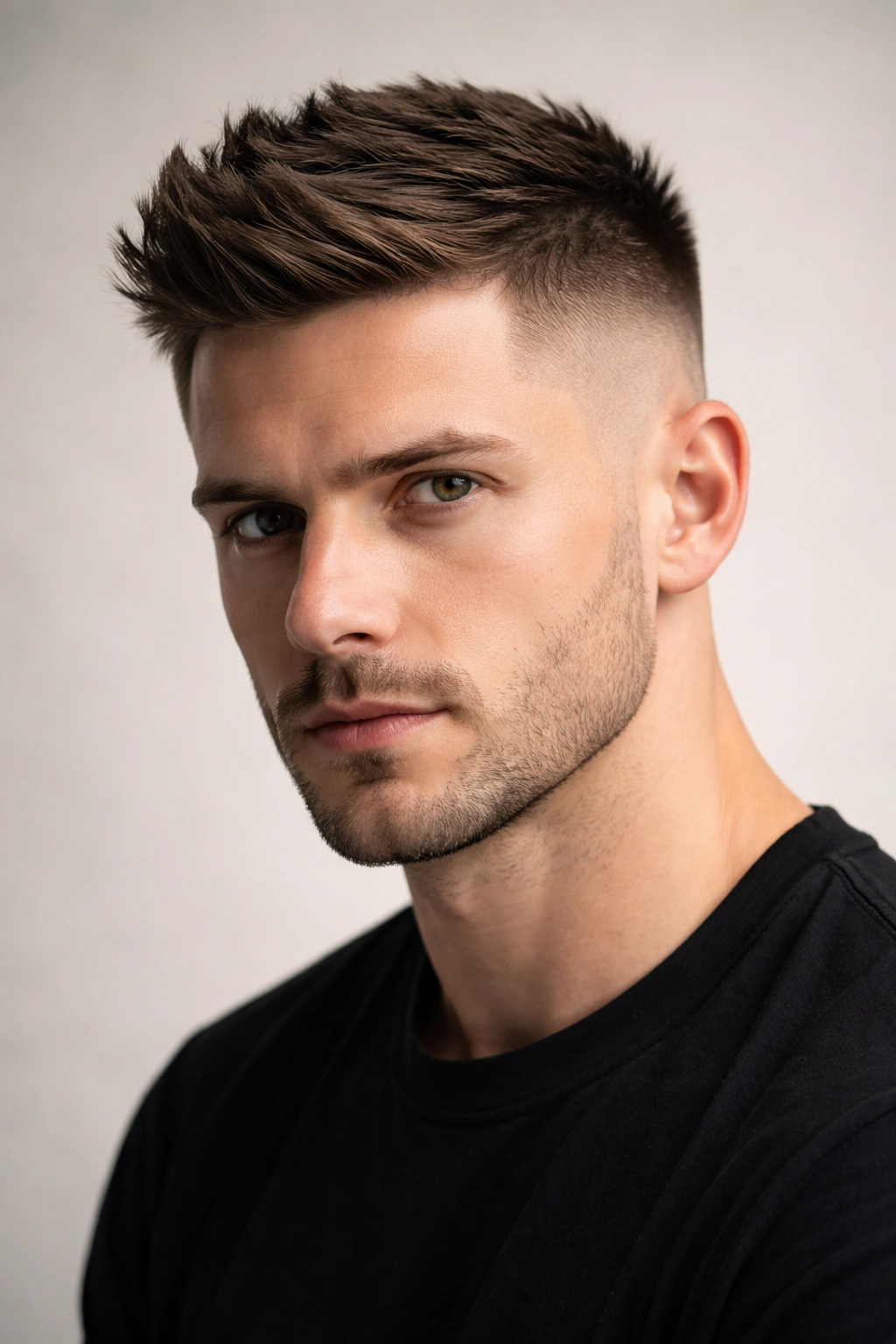
The classic high and tight undercut is the foundation that everything else builds from—and it remains absolutely timeless for a reason. This style keeps the sides and back shaved extremely close to the scalp (usually a skin fade or zero guard), while the top is left intentionally longer, typically 2 to 3 inches, allowing room for styling and texture. The contrast between the shaved sections and the longer crown creates instant visual impact and emphasizes facial structure beautifully.
Why It Stands Out
The genius of the high and tight is its versatility paired with sharp definition. Because the top is noticeably longer, you can texture it with your fingers and product for a piece-y, undone look, or you can slick it back for something more polished and structured. The shaved undercut creates a frame around the face that’s flattering on most face shapes, and it requires minimal maintenance if you’re comfortable with regular touchups every 2 to 3 weeks.
How to Style It
- Apply a light-hold styling cream or matte product to damp hair for a textured, separated look
- Run your fingers through the top while it dries to encourage natural movement and separation
- For a sleeker variation, use a firmer pomade or gel and comb the top back with a subtle fade from front to back
- The sides and back require no styling—simply keep them clipped or shaved every few weeks
Who It Works Best For
This style flatters pretty much everyone, but it’s especially sharp on people with strong facial bone structure where the contrast between shaved and longer hair really shows. It works beautifully on straight, wavy, and textured hair types; the styling options just shift slightly based on your natural texture.
Pro tip: If you’re new to the shaved pixie, start with a high and tight undercut—it’s forgiving, unfussy, and gives you room to experiment with the top length as your confidence grows.
2. Textured Top with Skin Fade
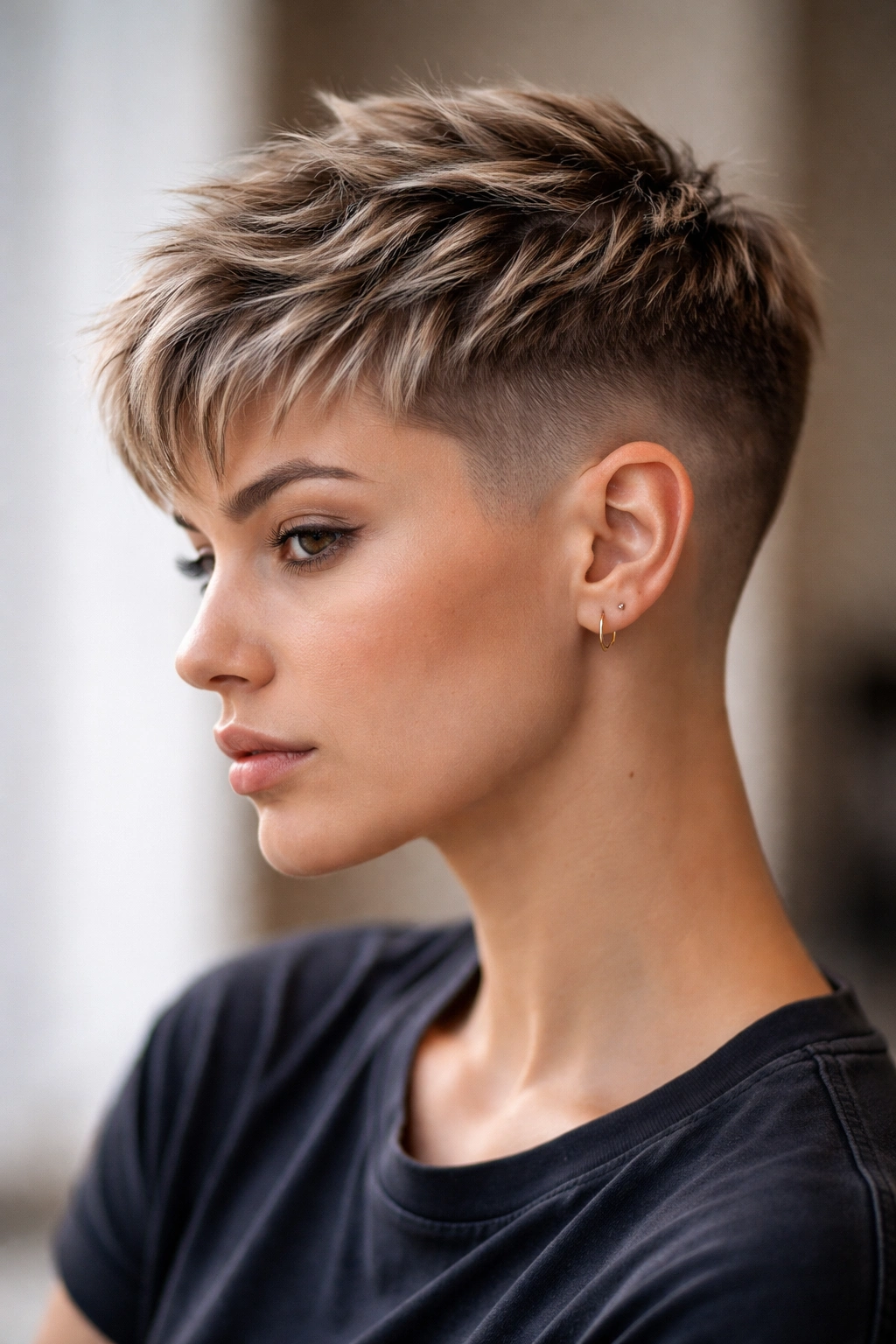
This variation takes the high and tight concept but amplifies the texture element on top, creating a piece-y, disconnected aesthetic that feels modern and intentional. The sides and back are taken down to a skin fade (essentially zero guard), while the top is cut into distinct, choppy layers that naturally separate and point in different directions. The result is a pixie that looks effortlessly tousled rather than neat and controlled.
Why It Stands Out
The textured top creates visual interest and movement that makes the style feel alive rather than static. Each hair catches light differently, giving the cut dimension and a sculptural quality that photographs beautifully. This version works especially well if you have naturally wavy or curly hair, because the texture works with your hair’s natural pattern rather than against it—your hair does half the styling work for you.
How to Style It
- Use a lightweight, texturizing cream or sea salt spray on damp hair to enhance separation
- Scrunch or finger-comb through the top while drying to encourage pieces to stand and separate
- Avoid heavy pomades or slick products; instead, opt for matte finishes that add grit without weight
- Let the top air dry whenever possible for the most natural, lived-in texture
Who It Works Best For
This style shines on people with wavy, curly, or textured hair who want a wash-and-go option. It also works brilliantly on straight hair if you’re willing to use product and a bit of styling effort—the choppy layers will still create natural texture even on straight strands.
Worth knowing: The textured top requires a skilled stylist who understands how to cut layers that work with your specific hair type and growth pattern. It’s worth booking someone experienced rather than trying to DIY or go to someone unfamiliar with texture cutting.
3. Disconnected Crown with Hard Part
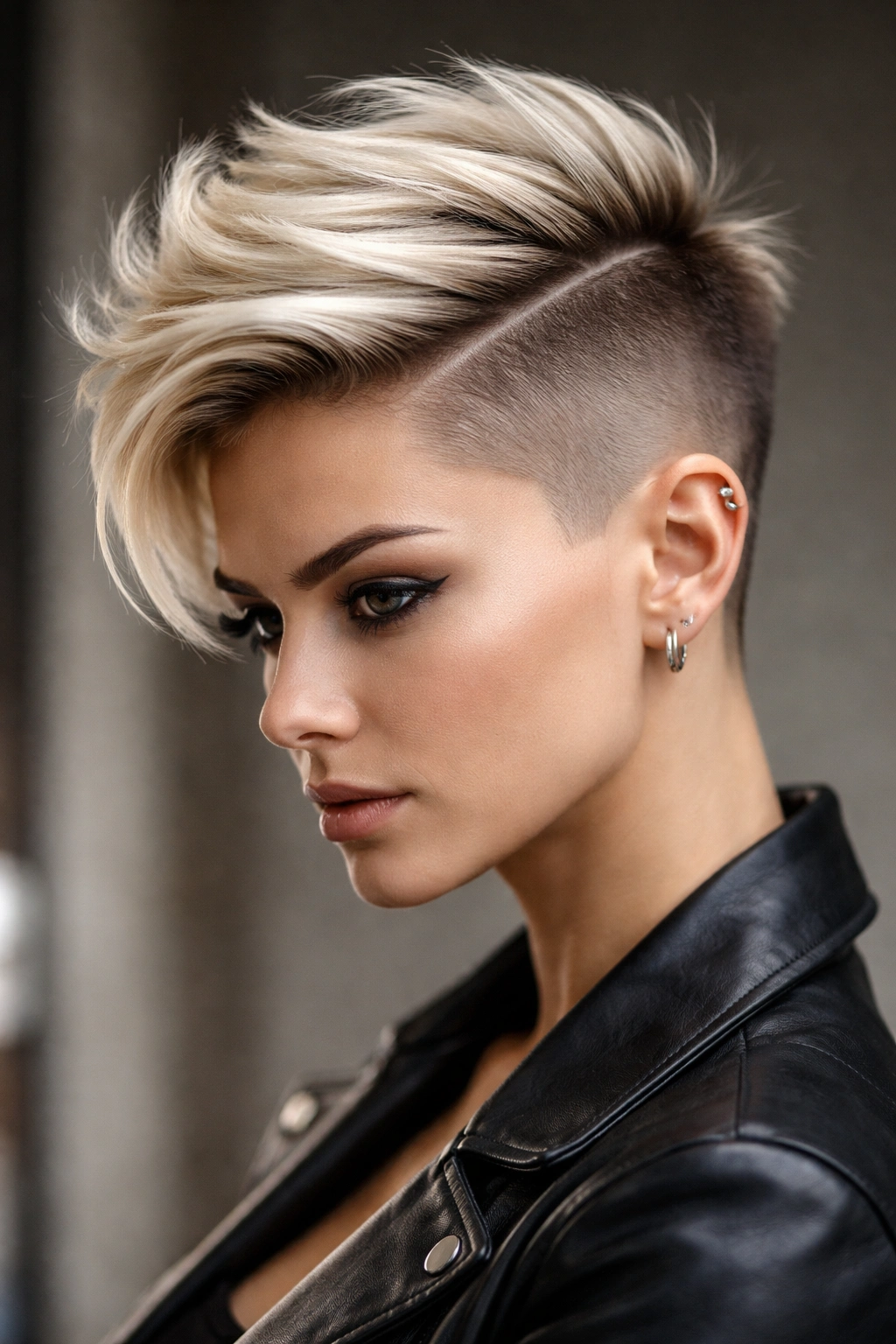
This style pushes the contrast further by creating a sharp, defined line—a hard part—that runs from one temple back toward the crown. The sides and back are shaved clean, and the top is left longer (usually 2 to 4 inches), but the hard part creates a visual break that makes the style feel architectural and very deliberate. It’s bold, and it makes a statement about intentionality and precision.
Why It Stands Out
The hard part adds structure and creates a visual line that many people associate with sharp tailoring and thoughtful grooming. It transforms a simple undercut into something more designed, more sculptural. The hard part also creates an optical illusion of more volume on top, making it especially flattering if you’re concerned about hair density or thinning.
How to Style It
- Keep the hard part sharp by maintaining a defined line with a clipper or precise razor—this requires a skilled hand or regular barbershop visits
- Style the longer top sections on either side of the part with a firmer hold product to keep each section in place
- You can comb one side back and over, or style both sides forward, depending on the effect you want
- The hard part works beautifully slicked, piece-y, or with soft texture—the styling options are flexible
Who It Works Best For
This style looks sharp on pretty much any face shape, but it’s especially stunning on rectangular or longer faces where the hard part can balance proportions. It also works beautifully for people who have straight hair and enjoy a polished, groomed aesthetic. Fair warning: the hard part is maintenance-heavy and requires commitment to keep it looking intentional rather than growing out and looking sloppy.
Insider note: If you’re going to commit to a hard part, establish it early and keep it religiously. Once established, it becomes your signature—skipping maintenance weeks will make it look unintentional.
4. Faded Geometric Angles
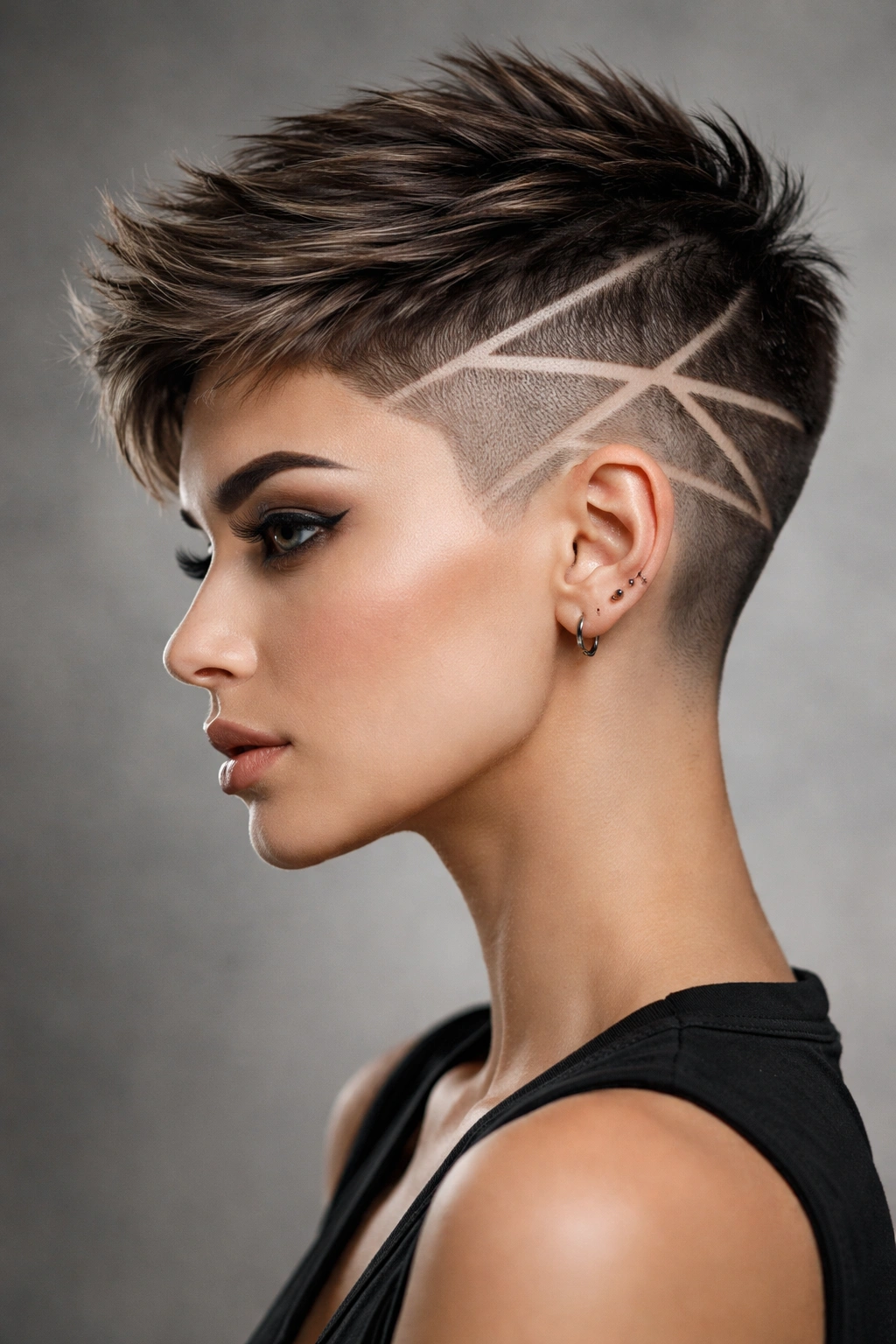
For those seeking pure artistic expression, a geometric fade takes the shaved pixie into creative territory. Instead of a simple skin fade, this style incorporates precise lines, angles, or shapes—think chevron patterns, diagonal lines, triangles, or waves—shaved into the sides or back. The top is typically kept longer and textured, allowing the geometric pattern to be the starring detail while the top provides contrast and movement.
Why It Stands Out
Geometric designs turn your haircut into wearable art. The precision required to execute clean lines, sharp angles, and intentional patterns speaks to a stylist’s technical skill and your own style confidence. These patterns catch light and shadow beautifully, creating visual depth and movement even when the hair is kept short. Every angle changes the overall look and how it catches light throughout the day.
How to Style It
- Keep the top textured and slightly tousled to provide contrast with the geometric precision below
- Use products with medium to light hold to let the top move naturally while the patterns on the sides remain the statement
- Avoid slicking the top back completely, as this competes visually with the geometric design
- The geometric pattern is self-styling—your job is to keep the top looking intentionally textured
Who It Works Best For
Geometric shaved designs work on anyone willing to commit to regular touchups (every 2 to 3 weeks) and confident enough to wear a statement-making style. They look particularly stunning on people with darker hair, where the contrast between shaved and unshaved sections is crisp and the patterns are highly visible.
Real talk: This style requires finding a barber or stylist specifically skilled in geometric line work and design. Not every barber has the artistic eye for clean, intentional patterns—research portfolios and ask for references before committing.
5. Long Top with Closely Cropped Sides
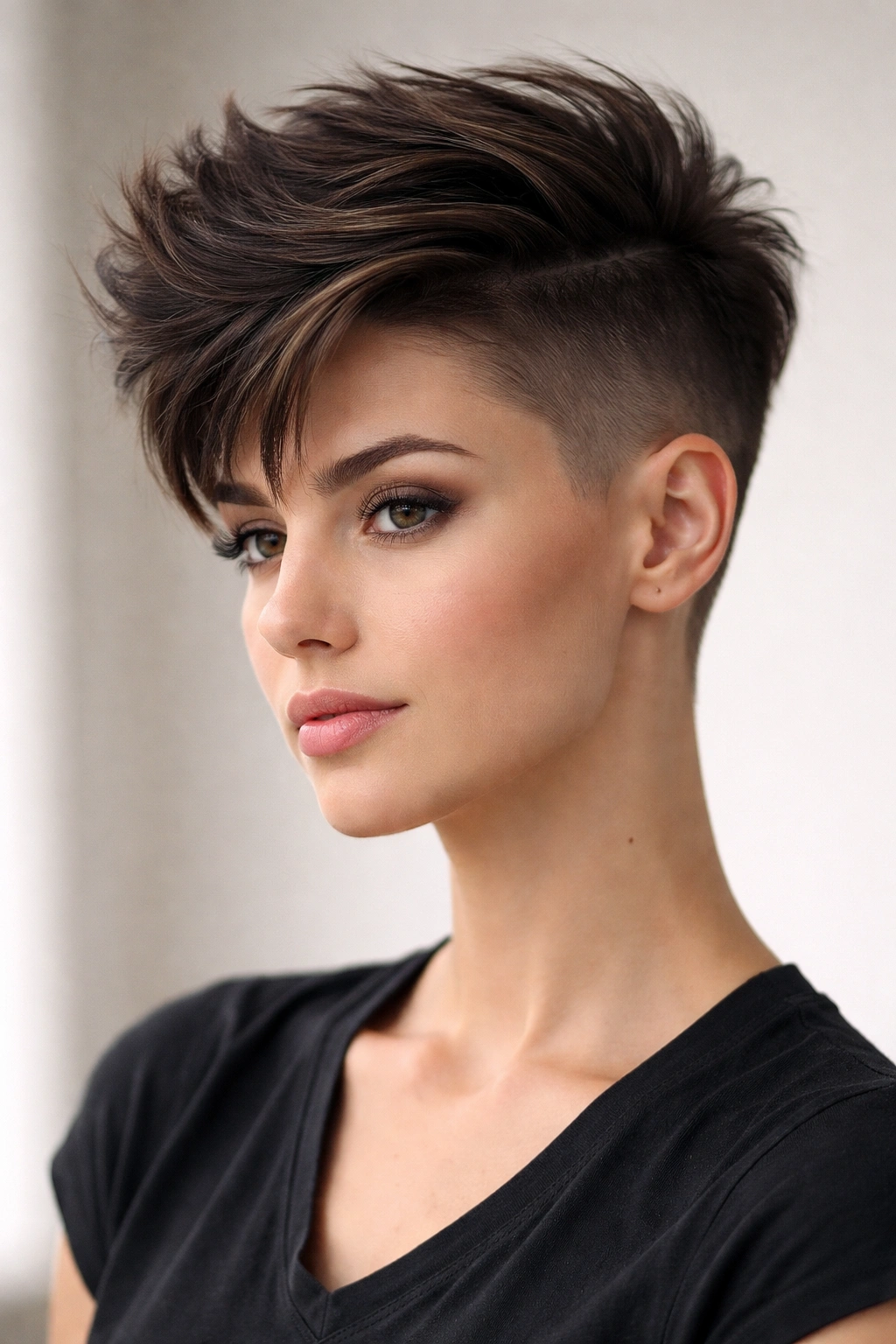
This variation pushes the top length significantly longer—sometimes 4 to 6 inches—while keeping the sides and back shaved down to a very close #1 or #2 guard. The resulting contrast is dramatic: a mop-top on top with clean, minimal sides. This style walks the line between pixie and a more traditional undercut, giving you much more styling flexibility and coverage on top while maintaining that sharp, defined shaved aesthetic below.
Why It Stands Out
The longer top gives you room to experiment with styling—you can part it, comb it back, flip it to the side, or wear it piece-y and textured. The closely cropped sides provide clean definition without going all the way to skin. This version offers the best of both worlds: a statement haircut that still allows versatility in how you present it day to day. You could wear it polished one day and tousled the next with completely different vibes.
How to Style It
- For a sleek look, use pomade or gel and comb the top back or to one side with a defined part
- For a textured look, use matte cream or sea salt spray and finger-style while drying
- You can even air dry and spike the top forward for a completely different aesthetic
- The longer top truly lets you play with multiple styling options
Who It Works Best For
This style works beautifully on people who want the edge of a shaved pixie but with more styling options and coverage. It’s ideal if you have straight or wavy hair and enjoy styling versatility. It also works well if you’re not ready to commit to a super short pixie but want to try the shaved element.
Pro tip: The transition from the longer top to the closely cropped sides is crucial—ask your stylist for either a subtle fade or a clean line, depending on whether you want a smooth gradient or sharp contrast.
6. Stippled Gradient Fade
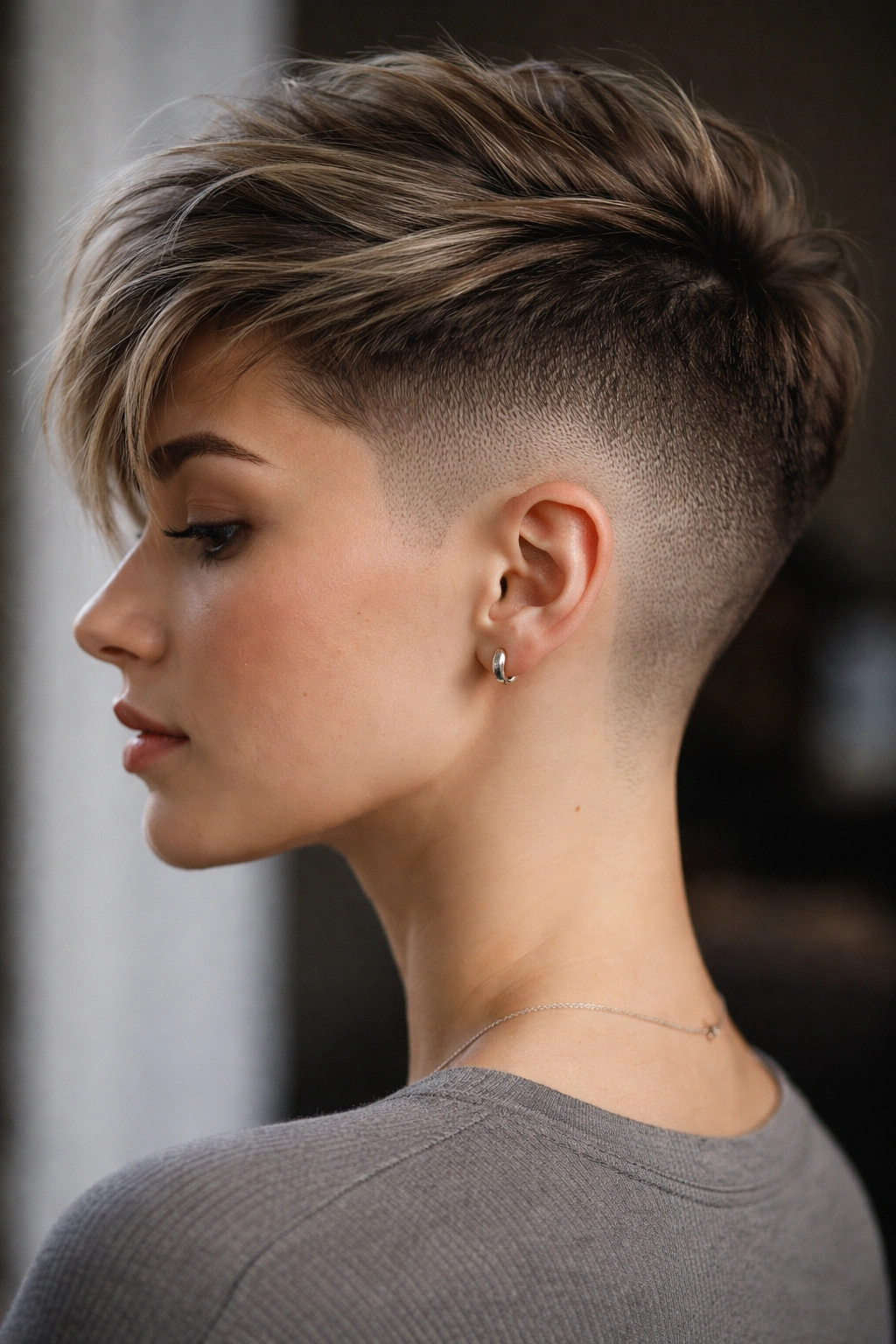
A stippled gradient fade incorporates tiny, closely spaced marks or dots that fade progressively from fully shaved at the base to full hair length at the crown. Instead of a smooth fade, the shaved sections are textured with small geometric stippling patterns that create visual interest and catch light beautifully. The effect is more artistic and textured than a standard fade while still maintaining sharp definition.
Why It Stands Out
Stippling transforms a standard fade into something sculptural and intentional. The tiny marks and dots create shadow and texture that wouldn’t exist with a smooth fade, giving the cut depth and visual complexity. Under different lighting—from bright sun to indoor lighting—the stippling creates completely different effects. It’s the kind of detail that makes people stop and ask about the design.
How to Style It
- The stippled fade is primarily a “look” rather than something that requires styling work
- Keep the top textured and slightly tousled so it complements rather than competes with the stippling
- The fade itself does the visual work, so minimal product is typically needed
- Let the design speak for itself rather than over-styling the top
Who It Works Best For
Stippled fades work especially well on people with darker hair, where the contrast between shaved skin and hair with the added texture of the stippling is most visible. They require finding a barber with the artistic skill and patience to execute precise stippling patterns—this isn’t something every barber can do well.
Worth knowing: Stippled designs require touchups every 2 to 3 weeks to keep them looking intentional and sharp. As they grow out, they can start looking messy rather than artistic, so commitment to regular maintenance is essential.
7. Reverse Fade with Volume
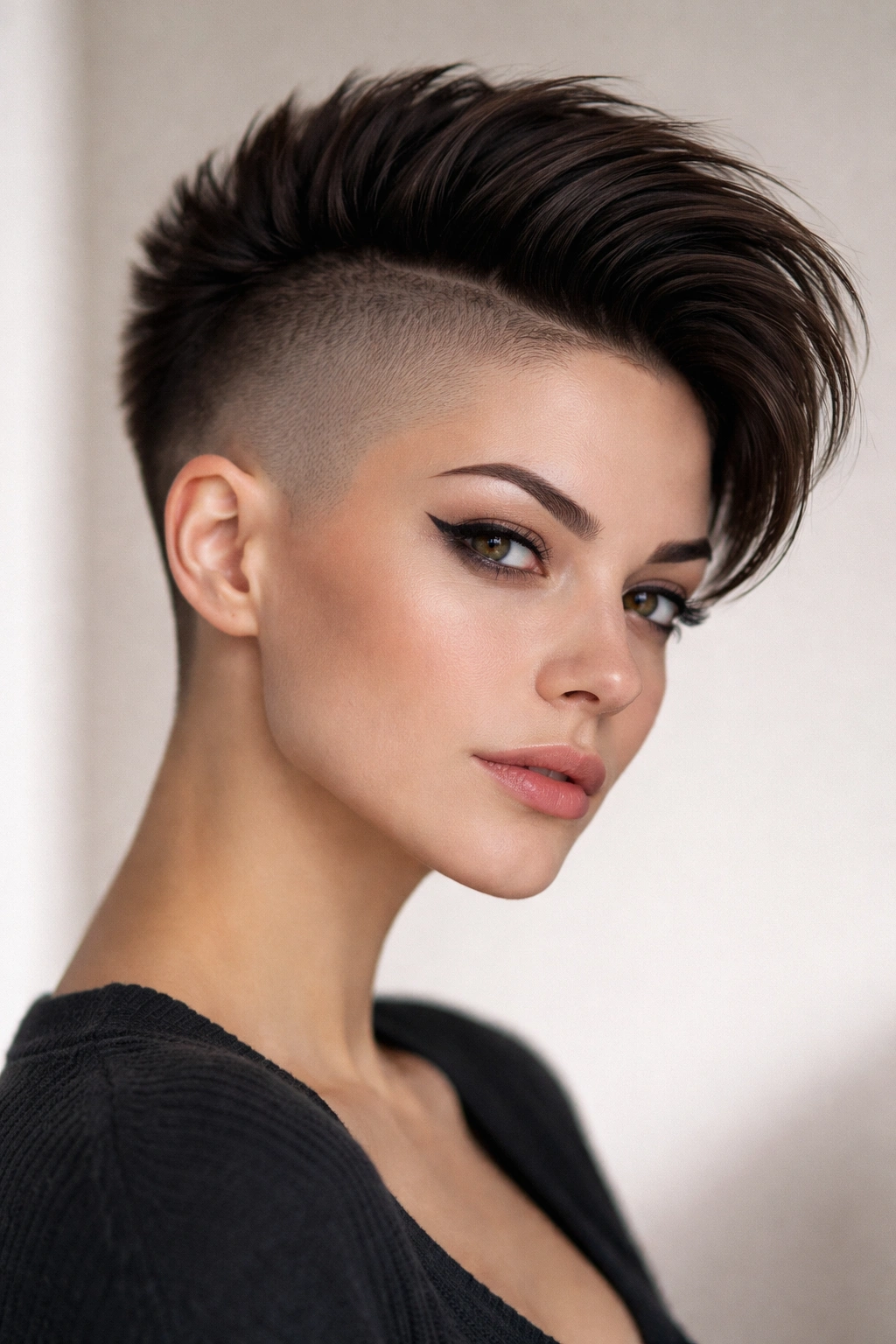
A reverse fade flips the traditional undercut concept—instead of longer on top and shaved on the sides, this style keeps the sides and back fuller while shaving or taking down the very top and crown area. The result is an inverted silhouette with shaved sections on top and volume on the sides, creating an unconventional but absolutely stunning visual impact. It’s bold, unexpected, and impossible to ignore.
Why It Stands Out
The reverse fade is inherently theatrical and statement-making. It flatters face shapes that benefit from width and draws attention upward to the forehead and eyes. The shaved top creates a halo effect, while the fuller sides frame the face. This style proves that you’re confident enough to wear something completely unexpected. It’s the opposite of what most people expect from a pixie, which is exactly what makes it so striking.
How to Style It
- The side volume typically style itself thanks to the longer length; just make sure hair is healthy and layered to encourage movement
- The shaved top needs no styling—it’s the focal point as-is
- Keep the sides and back textured with layers so they flow naturally rather than looking blunt or blocky
- A bit of volumizing product at the roots of the fuller sides can enhance the effect
Who It Works Best For
This style requires confidence and the right face shape to pull off beautifully. It works best on people with narrower faces or those who want to create the illusion of more face width. It also requires excellent hair health on the sides, since that’s where all the volume and length is concentrated.
Fair warning: This is not an everyday style for most people—it’s a bold choice that announces your style confidence. It works beautifully for people who love standing out and appreciate unconventional beauty.
8. Asymmetrical Shaved Design
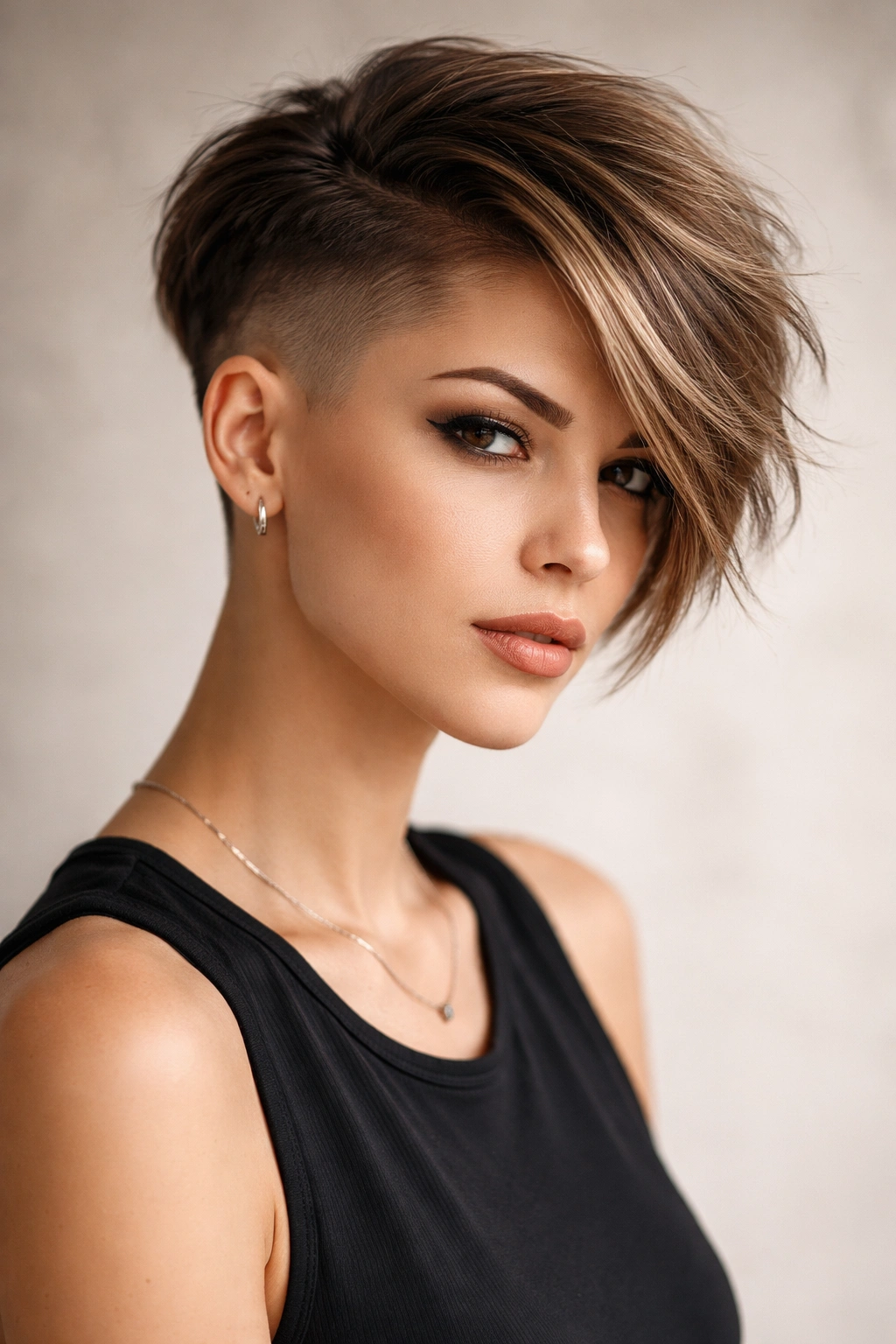
An asymmetrical shaved pixie deliberately creates imbalance—one side might be shaved completely while the other retains longer hair, or the shaving pattern might be off-center with intentional asymmetry rather than mirror-image symmetry. The top can also be cut asymmetrically, with longer hair on one side and shorter on the other. This creates visual movement and breaks traditional beauty conventions in the best possible way.
Why It Stands Out
Asymmetry creates movement and energy that symmetrical cuts simply can’t replicate. The eye moves across the face differently when one side is shaved and the other isn’t, creating dynamic visual interest. Asymmetrical cuts photograph beautifully from certain angles and tell a story about intentional style choices rather than default aesthetics. They prove that sharp doesn’t always mean perfectly balanced.
How to Style It
- Let the longer side move naturally with minimal product, or style it for drama
- The shaved side requires no styling—it’s the statement piece
- You can flip the longer side across toward the shaved side for completely different looks depending on your mood
- The asymmetry does the styling work for you; restraint on product is typically best
Who It Works Best For
Asymmetrical cuts work beautifully on people who enjoy standing out and have the face shape to pull off off-center proportions. They work especially well if you have naturally wavy or curly hair on the longer side, as the texture adds to the dynamic movement. This style is perfect for creative types, performers, or anyone who sees their haircut as artistic expression rather than just practical grooming.
Insider note: Asymmetrical cuts can look fantastic or unintentionally sloppy depending on the execution. Find a stylist who has a strong portfolio of asymmetrical work before committing.
9. Sleek Polished Pixie Crop
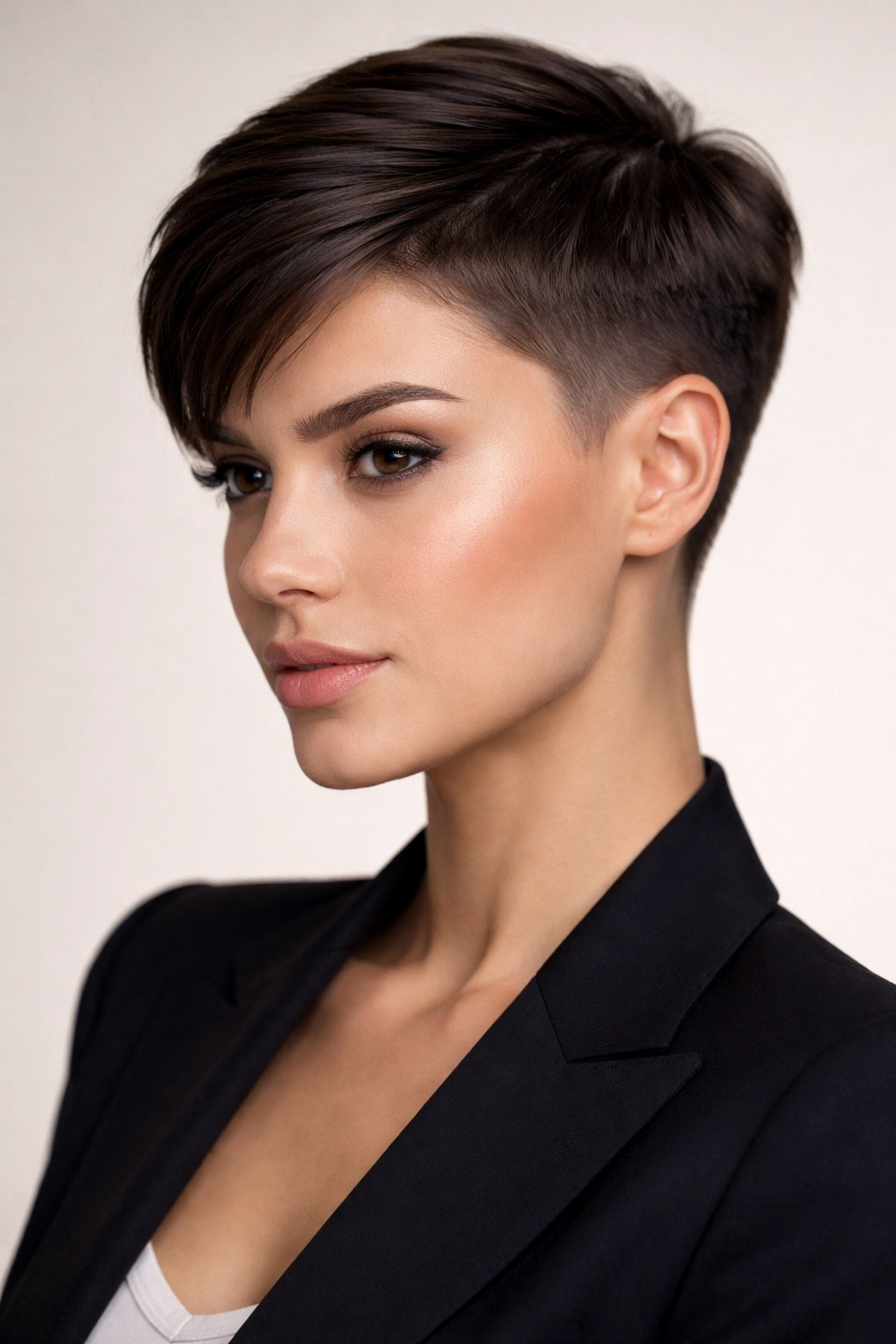
This is the ultimate sharp, groomed option—a tightly cropped pixie that’s shaved on the sides and back but keeps the top closely trimmed (usually just 1 to 2 inches of length). There are no layers, no texture, no asymmetry—just clean, precise lines and a polished silhouette. It’s the grown-up, boardroom-ready version of the shaved pixie, still edgy but absolutely refined.
Why It Stands Out
The sleek polished pixie reads as serious, intentional, and highly groomed. It’s the perfect hybrid between masculine-influenced barbering and contemporary femininity. The minimal styling requirements make it ideal for people who want a bold cut but minimal daily maintenance. One quick slick with pomade and you’re done. It’s timelessly chic, works in any professional setting, and flatters most face shapes with its clean, simple lines.
How to Style It
- Apply a light pomade or hair cream and comb back smoothly for a sleek, polished look
- Alternatively, finger-style with a matte product for a slightly more relaxed but still refined aesthetic
- Some people prefer no product at all—the cut is clean enough that it looks intentional even unstyled
- Styling typically takes under two minutes
Who It Works Best For
This style is perfect for people with professional roles, anyone who values minimal maintenance, and those with strong facial bone structure where a close-cropped cut is maximally flattering. It works on any hair type but looks particularly striking on straight, fine, or naturally wavy hair where the clean lines are most visible.
Pro tip: The sleek polished pixie requires precise cutting and regular trims every 3 to 4 weeks to keep the lines clean and intentional. The styling is easy, but the maintenance is non-negotiable.
10. Defined Texture with Subtle Shave
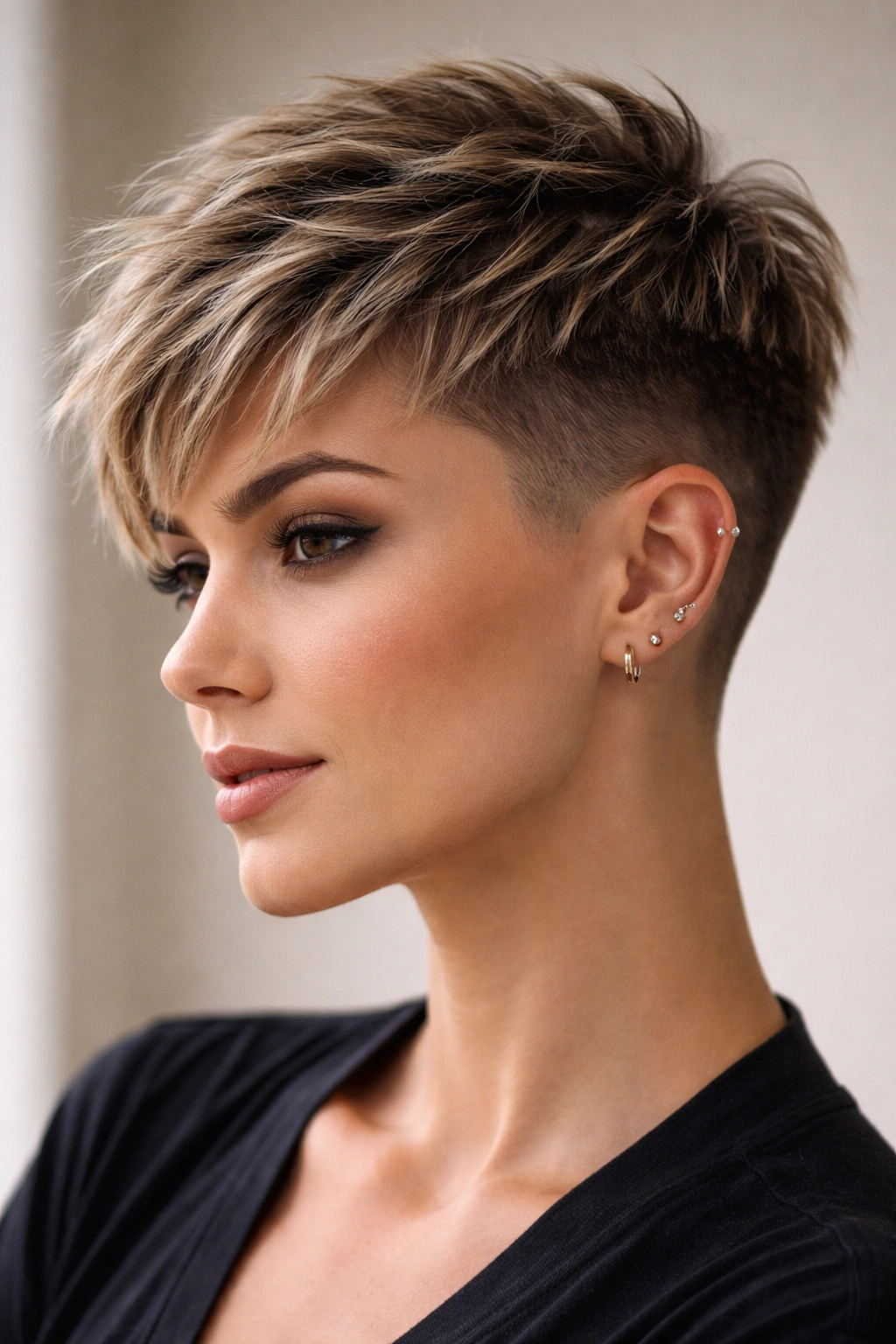
This final style bridges the gap between shaved and not-fully-shaved—the sides aren’t completely shaved clean but rather cut very short and faded subtly, while the top is left with significant length (3 to 4 inches) and deliberately textured with choppy, separated layers. The overall effect is a pixie that feels modern, textured, and intentionally styled rather than severe or architectural.
Why It Stands Out
This version delivers the edge and style of a shaved pixie without committing fully to the shaved element. The subtle fade and textured top create visual interest from multiple angles. It’s fashion-forward without being intimidating, sharp without being severe. The texture makes the cut feel organic and movement-friendly, especially if you have naturally wavy or curly hair. It’s the version that balances boldness with wearability.
How to Style It
- Use texturizing cream or sea salt spray on damp hair and scrunch to encourage definition
- Finger-style while drying or use a diffuser if you have curly or wavy hair
- The layers do most of the work—the cut is designed to look good with minimal styling effort
- Avoid heavy products; instead opt for matte finishes that add texture without weight
Who It Works Best For
This style is perfect for people who want the aesthetic of a shaved pixie but prefer some hair on the sides. It works beautifully on wavy, curly, or textured hair types where the layers create natural separation and movement. It’s also ideal if you’re transitioning from longer hair and want something bold without going all-in on a full shave.
Worth knowing: This version requires less frequent touchups than a full shave-fade (every 4 to 5 weeks instead of 2 to 3), making it more maintenance-friendly while still delivering the sharp aesthetic.
Final Thoughts
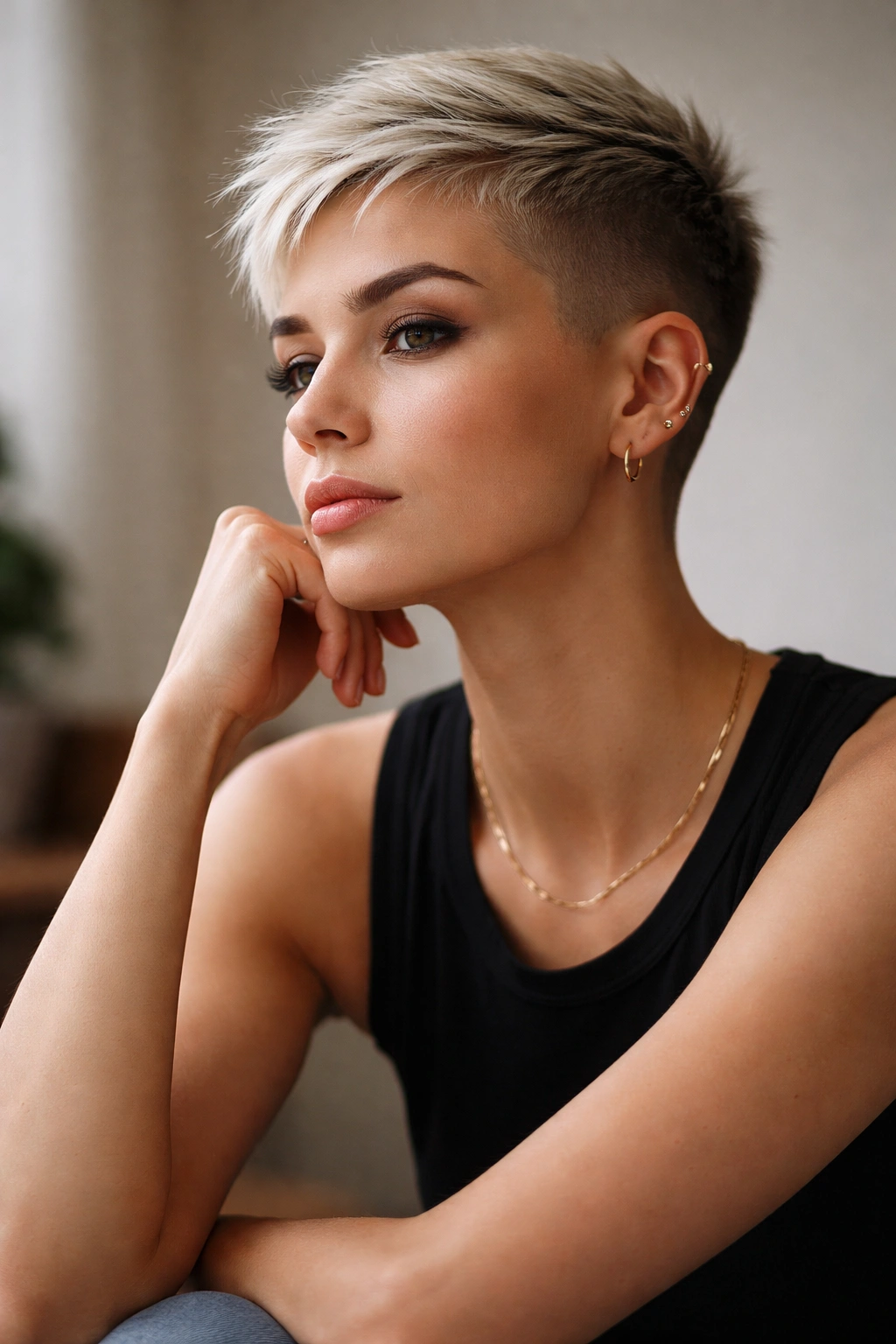
Every shaved pixie style here proves that sharp doesn’t mean one-dimensional—it means intentional, it means present, it means you’ve thought carefully about your appearance and decided to make a statement. Whether you’re drawn to the clean precision of geometric designs, the polished simplicity of a sleek crop, or the textured movement of a piece-y top, there’s a shaved pixie that aligns perfectly with your aesthetic and personality.
The real secret to a shaved pixie that looks sharp rather than severe is finding the balance that works for your specific face shape, hair texture, and lifestyle. A high and tight undercut requires different styling commitment than a textured top; a geometric fade requires different maintenance frequency than a subtle fade. Before committing, ask your stylist which variation will work best for your hair and face, and be honest about how much maintenance you’re willing to handle.
Ultimately, a shaved pixie is a choice that radiates confidence. Once you’ve made it, own it completely—the sharpness comes not just from the cut itself, but from wearing it with intention.
