



If you’ve got natural curls and you’re tired of bobs that either disappear into frizz or sit flat against your scalp, you’re not alone. Most standard bob cuts were designed with straight hair in mind, which means they often leave curly-haired people feeling frustrated and stuck with styles that don’t actually work with their texture. The good news? Angled bobs are having a serious moment, and they’re genuinely transformative for curls.
An angled bob works with your natural curl pattern instead of against it. The strategic angles and layers give curls the room they need to spring up naturally while the shorter front creates movement and dimension that makes your hair look intentional and polished rather than just, well, curly. The key is choosing an angle that actually suits your specific curl type, face shape, and the way your curls behave when they dry.
The angles matter more than people realize. A subtle 1-2 inch angle creates movement without being dramatic. A more pronounced 3-4 inch angle gives you bold, face-framing depth that works especially well for tighter curls. The placement of the layers determines whether your curls will blend smoothly or stack with texture. And the longer you keep the back, the more weight you preserve to help your curls hang properly rather than puffing out sideways. Finding the right combination of angle degree, layer placement, and overall length is what transforms a mediocre haircut into something that makes you actually excited to style your curls.
1. The Taper Front Angled Bob
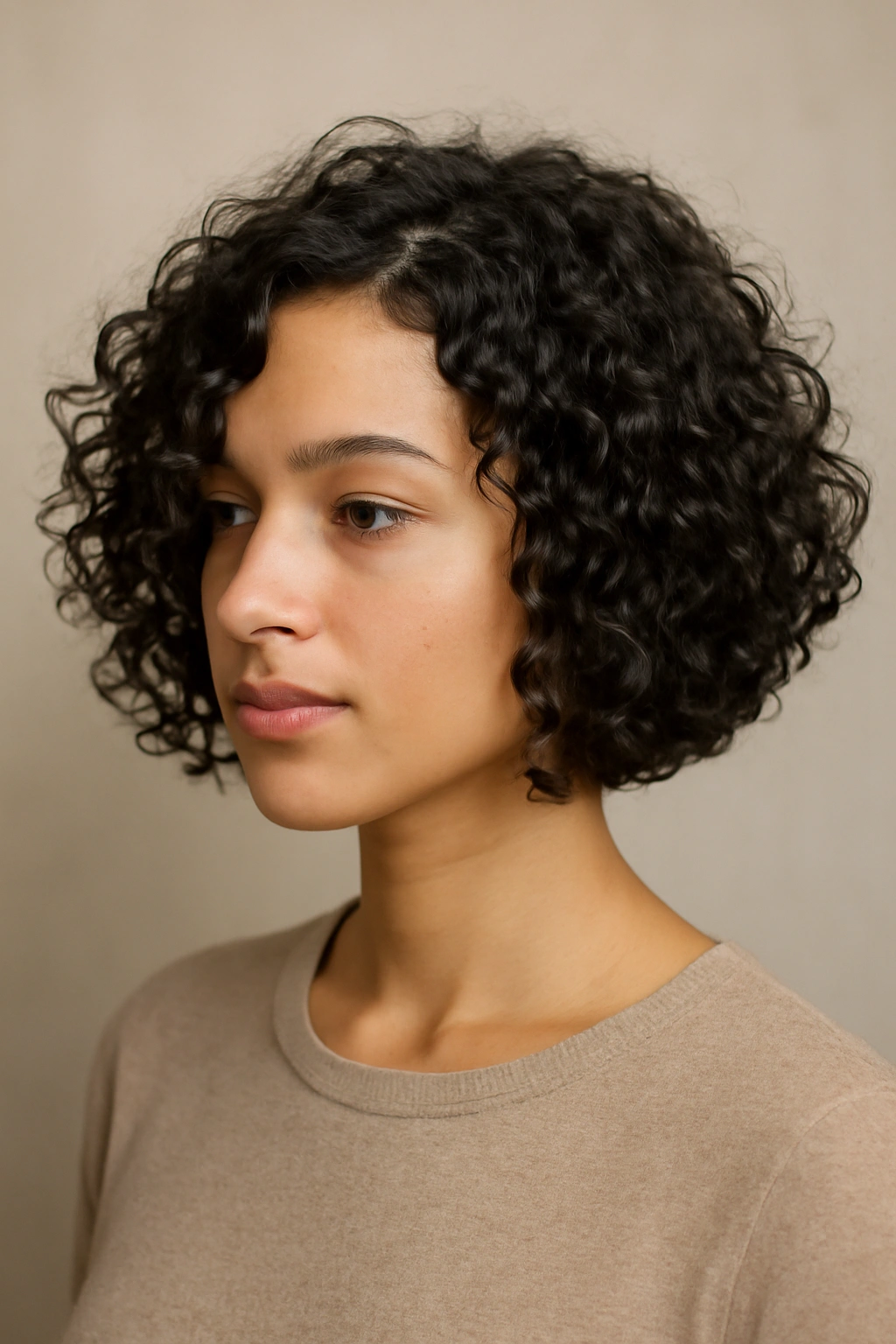
This style features a gradual 2-3 inch angle from the back to the front, with subtle layers throughout that encourage curl definition rather than disrupting it. The front tapers gently, so you get movement around your face without the sharp, choppy feeling of an ultra-short pixie-bob hybrid. The back stays longer and more blunt, which gives your curls the weight they need to avoid puffing upward.
Why This Works for Curly Hair
The taper front keeps length exactly where you need it for framing your face, while the intact back preserves the density that helps curls stay cohesive. Curls naturally want to shrink upward when they’re too short, so keeping the back longer counteracts that. The subtle layers blend seamlessly with your natural curl pattern instead of creating obvious chunky sections.
Best For
- Medium to loose curls (waves through coily textures)
- People who want movement without losing significant length
- Anyone with a rounded or oval face who benefits from face-framing softness
- Curl patterns that hold definition well and don’t require excessive layering to look shaped
Pro tip: Ask your stylist to point-cut the taper rather than blunt-cut it. Point-cutting creates softer, more blended lines that work beautifully with curls instead of creating harsh demarcation lines that fight against your texture.
2. The Layered Textured Bob
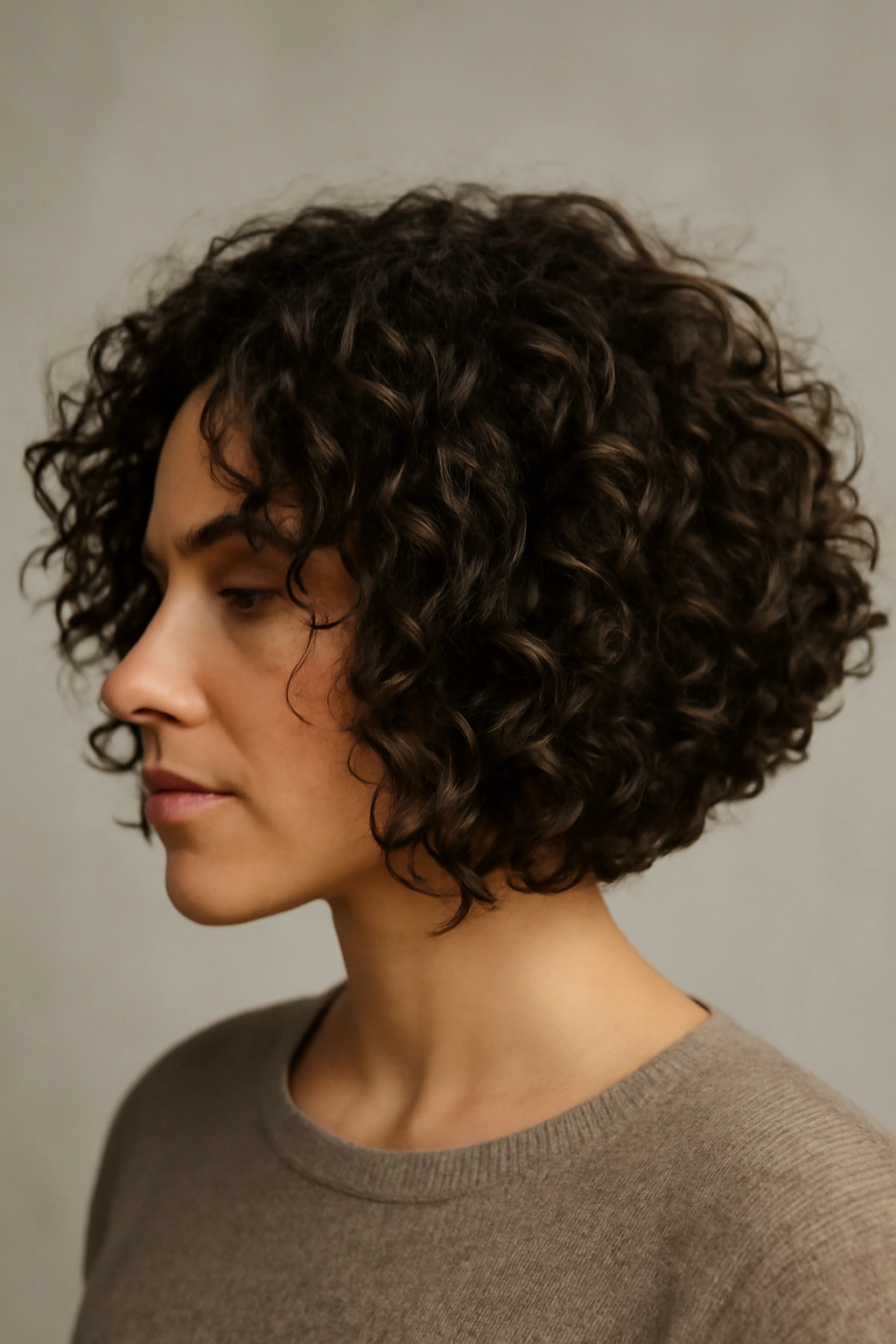
This version incorporates multiple shorter layers throughout, stacked intentionally to create volume and texture rather than leaving the hair flat. The angle is there but less dramatic—maybe a 1-2 inch difference—because the layers themselves create the movement and dimension. Each layer is cut to land at a slightly different point, so when your curls dry, they create a bouncy, textured silhouette that looks fuller and more shaped.
The Architecture Behind the Layers
Layering is the secret weapon for curly hair that needs more shape. Instead of relying solely on length and weight, you’re using shorter pieces to create lift exactly where you want it. The key is spacing the layers thoughtfully—too many layers too close together and you get frizz and lack of density. Too few layers and your curls look one-dimensional and limp. A skilled stylist will space layers about 1-2 inches apart, cutting each one slightly shorter than the one below.
What To Discuss With Your Stylist
- How many layers your specific curl type can handle without looking frizzy
- Whether you want denser, chunkier layers or softer, blended ones
- Which areas need more layers (typically the crown and sides need more texture than the nape)
- Whether your curl pattern benefits from point-cutting versus blunt-cutting each layer
Insider note: Layered textured bobs require a bit more styling attention than a simple angled cut, but the payoff is serious volume and shape that makes your curls look intentional rather than accidental.
3. The Asymmetrical Choppy Bob
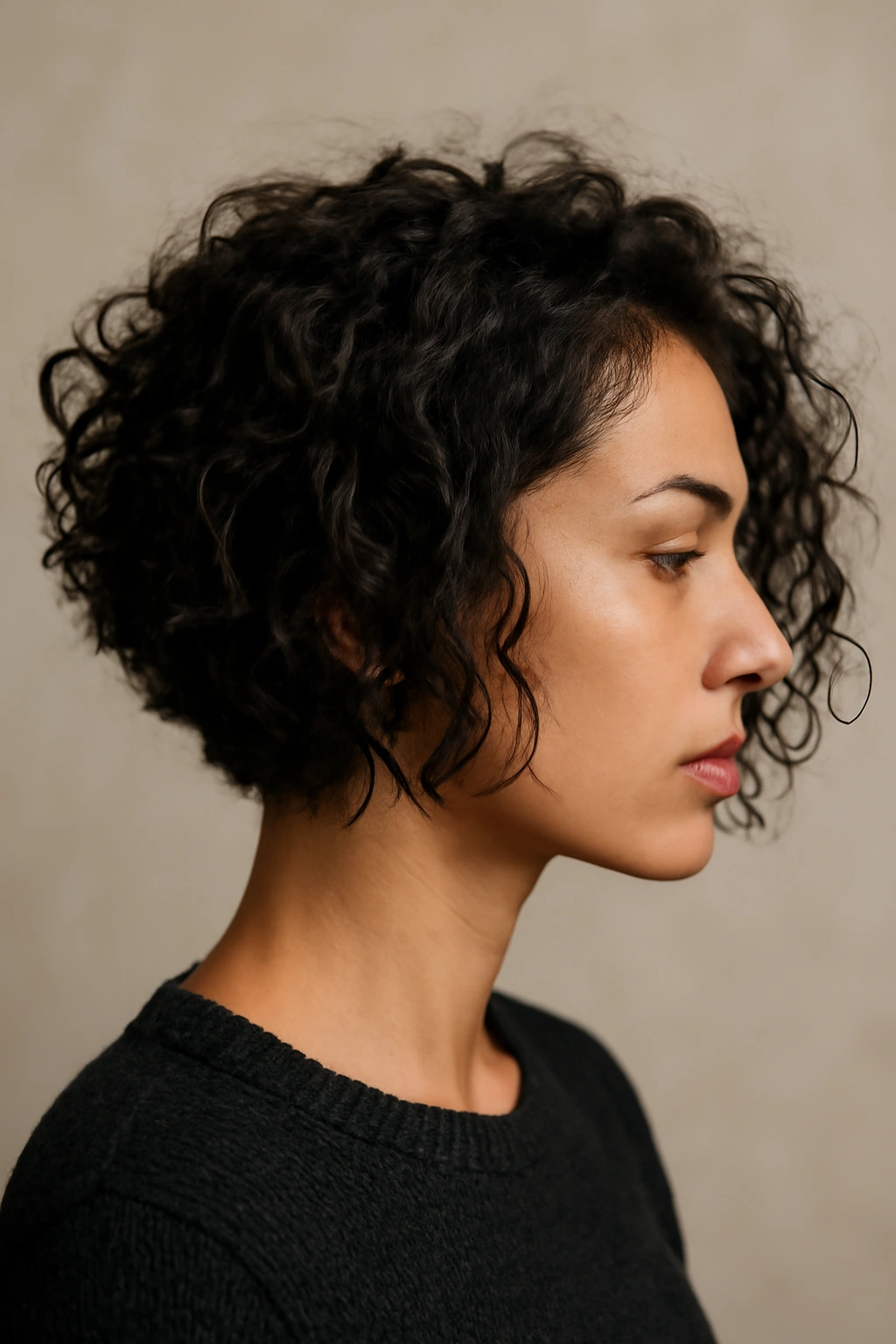
Here’s where things get daring. An asymmetrical bob has one side noticeably shorter than the other—think 2-3 inches difference minimum—with choppy, disconnected layers throughout. The shorter side is typically cut to about ear-length while the longer side extends to chin-length or beyond. The choppy layers are what make this work with curls; they prevent the style from looking top-heavy on one side.
Making Asymmetry Work With Curls
Most people think asymmetrical cuts would look chaotic with curls, but the opposite is true. Because the layers are choppy and disconnected, each curl piece sits independently, which actually makes the asymmetry feel intentional and edgy rather than accidental. The shorter side shows off curl definition and shape, while the longer side gives you options for styling and movement.
Key Styling Consideration
- The shorter side will show the most curl definition and texture—great if you want a bold, edgy look
- The longer side can be styled smoother or more defined depending on your mood
- Asymmetrical bobs require a stylist who really understands how to cut curls; this isn’t the time to go to someone who only knows straight hair
Worth knowing: Asymmetrical bobs are high-impact. You’re making a style statement, and that’s exactly the point. If you love standing out and your curls have decent definition, this is a seriously cool option.
4. The Side-Swept Angled Bob
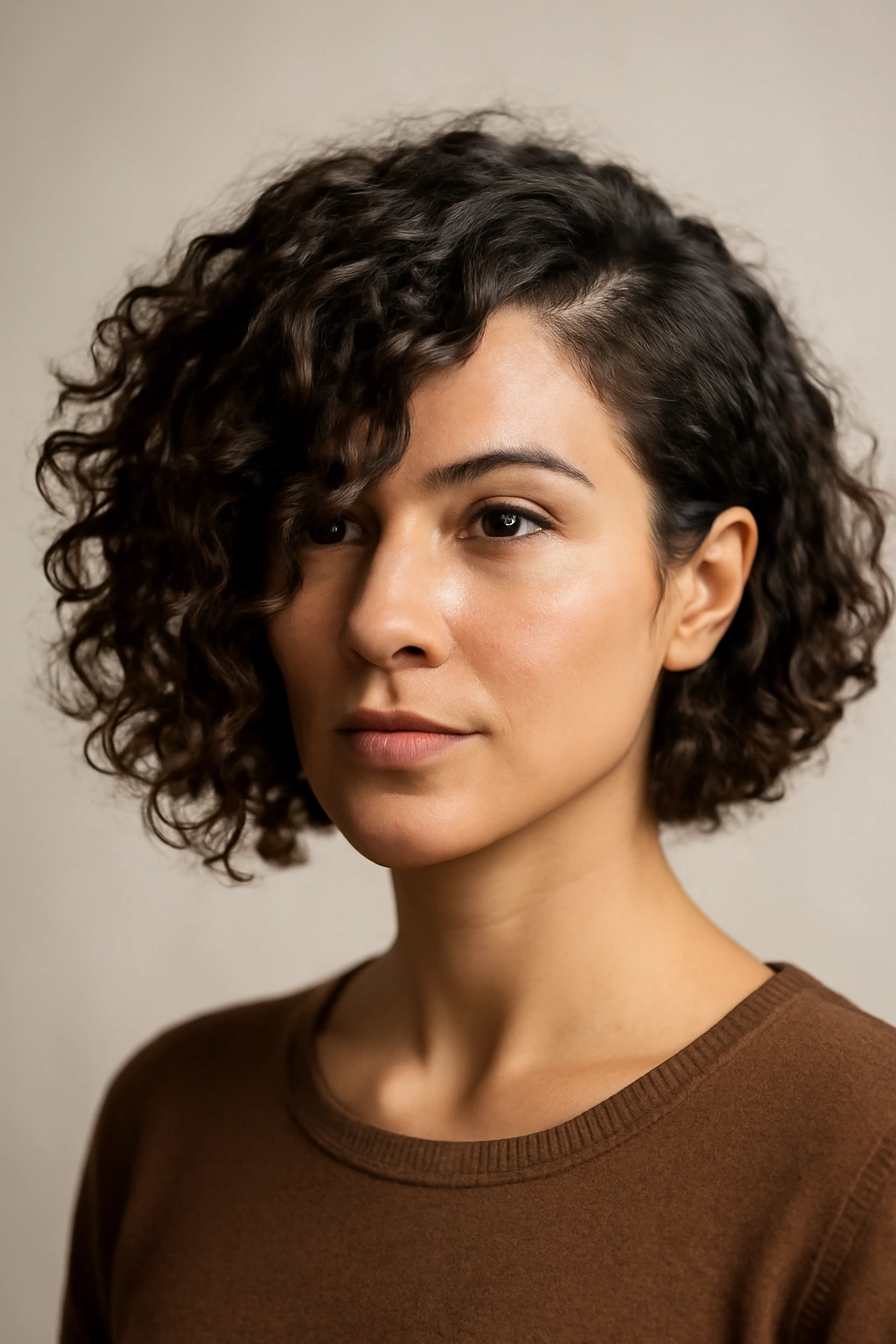
This cut keeps the back relatively intact while sweeping one side longer toward the face, creating a side-part situation that’s both flattering and practical. The angle is more pronounced on one side than the other, typically 4-5 inches of difference between the back and the longer front side. The hair naturally falls to one side, framing your face dramatically on that sweeping side.
Why Side-Swept Works for Curls
Side-swept angles give you options for styling. On days when your curls are behaving, you can sweep them dramatically across your face. On days when you want less fuss, you can brush them back and get a different silhouette entirely. The longer side has enough length that your curls can show definition, while the shorter back gives you the density needed to prevent puffing.
Styling Versatility
- Works as a side-part with curves sweeping forward
- Can be flipped to the other side for a completely different look
- Great for showing off your curl definition on one side while keeping the other side softer
- Pairs well with subtle layers that enhance movement without disrupting curl cohesion
Pro tip: If you’re considering a side-swept angle, get your stylist’s opinion on whether your hair naturally wants to fall to one side or the other. Fighting your hair’s natural fall pattern makes styling a daily battle.
5. The Stacked Back Bob
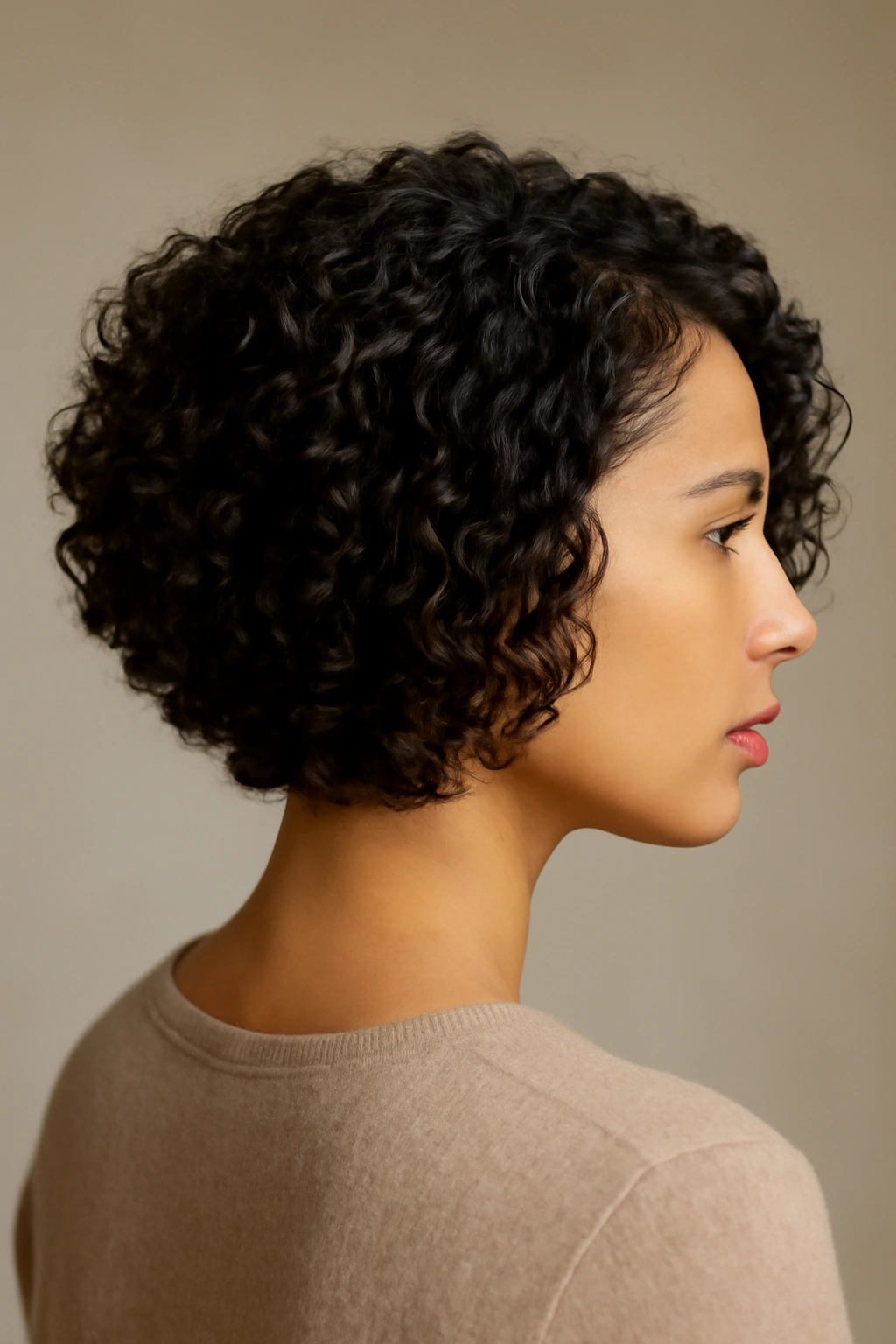
This style keeps the back shorter and more densely layered while angling gradually longer toward the front. The stacked layers in the back create serious volume and height at the crown, which is perfect for curls that need all the help they can get. The longer front creates an elegant frame without sacrificing the density that prevents your curls from exploding outward.
The Power of Stacking
Stacked layers in the back literally build height and volume using the hair you already have. Each layer underneath is slightly longer than the one above it, so when you dry your curls, they stack on top of each other and create lift from the roots. This is especially powerful for people whose curls tend to sit heavy and flat against their head.
What Makes It Different
- The back has maybe 3-4 more layers than the front, creating intentional density and shape
- The front stays smoother and less layered, so you keep length without sacrificing sophistication
- The angle at the front is moderate—usually 2-3 inches—because the stacking provides the movement
- Works best on curls that have some natural body and bounce
Real talk: If your curls are naturally dense and thick, stacked layers can sometimes feel like too much texture. A good stylist will assess your curl density and adjust the number of layers accordingly.
6. The Shaggy Angle-Cut Bob
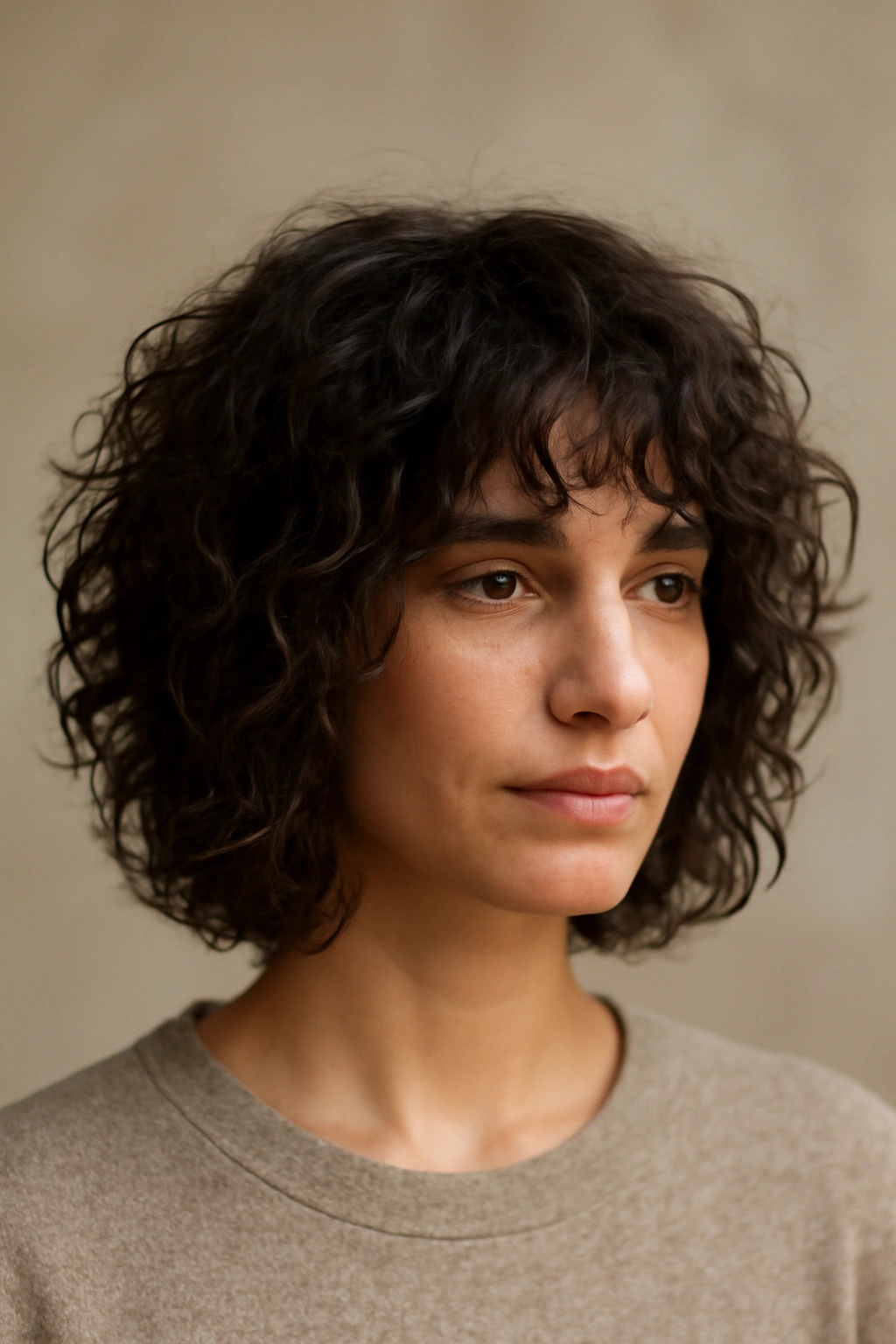
This is the meeting point between a shag and a modern angled bob—longer layers throughout that create a lived-in, textured look rather than a polished, blunt silhouette. The angle is subtle because the shag-style layers create all the movement you need. You’re getting chin-length or longer in the front with layers stacked throughout the entire cut, creating a shaggy, tousled vibe that feels effortless and cool.
The Shag Appeal for Curls
Shag cuts were designed to work with texture, and that includes curls. The layers encourage movement and prevent the heavy, flat look that plagues some longer bob styles. Your curls have space to breathe and layer on top of each other naturally, which creates dimension without you having to do anything special.
Styling the Shaggy Angle
- Looks best when curls are defined and separated rather than clumped together
- Requires regular product application to keep the shag looking intentional rather than unkempt
- Works especially well for spiral curls, coily textures, and waves
- Shows curl definition beautifully because the layers are stacked throughout
Insider note: Shaggy angle bobs were HUGE in the 70s and 80s, and they’re making a legitimate comeback. If you love a relaxed, textured aesthetic, this might be your perfect cut.
7. The Curly Pixie-Bob Hybrid
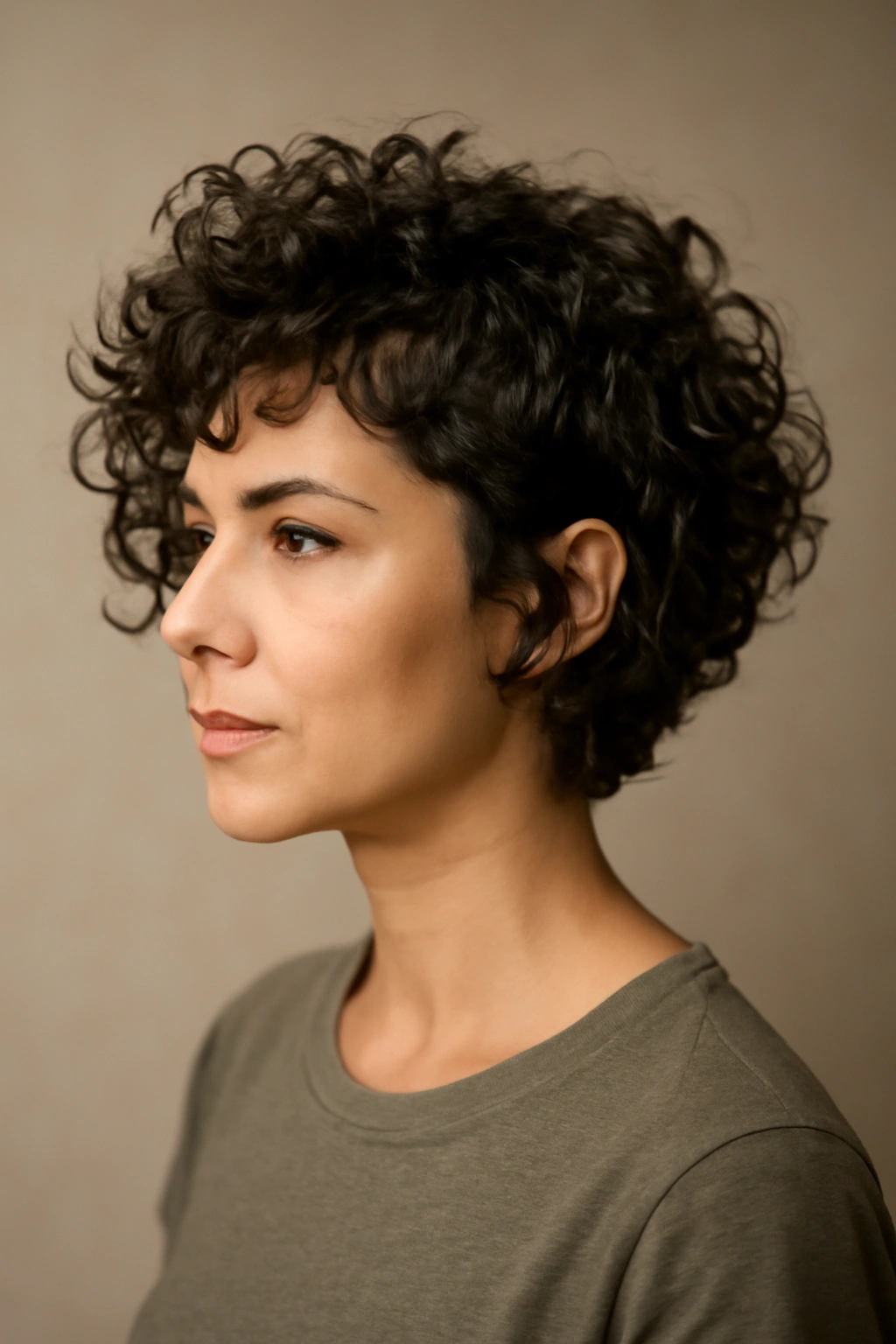
This is a bold choice: shorter on top with textured, choppy layers, but longer in the back and sides, giving you some of the edge of a pixie with the substance of a bob. The front is much shorter—maybe 2-3 inches on top—while the back extends to chin-length or beyond. It’s dramatic, it’s shape-forward, and it works beautifully if your curls have good definition and bounce.
Who Pulls This Off
This hybrid needs curls with genuine spring and definition. Tighter curls, coils, and spirals show this style off best because the texture on top creates intentional shape rather than looking like you just haven’t grown it out. Looser waves might need more frequent styling to make the hybrid look sharp rather than just uneven.
The Risk and the Reward
- You’re committing to a conversation-starting, eye-catching style
- The shorter top means your curl definition is front and center
- You need a stylist who specializes in curly hair and understands how to cut pixie-bob hybrids
- Maintenance involves more frequent trims on the shorter sections to keep the shape clean
Worth knowing: This cut is not for the faint of heart. It’s a style statement, and it requires confidence. But if you’ve got the curls and the personality for it, this look is absolutely stunning.
8. The Micro Bangs Angled Bob
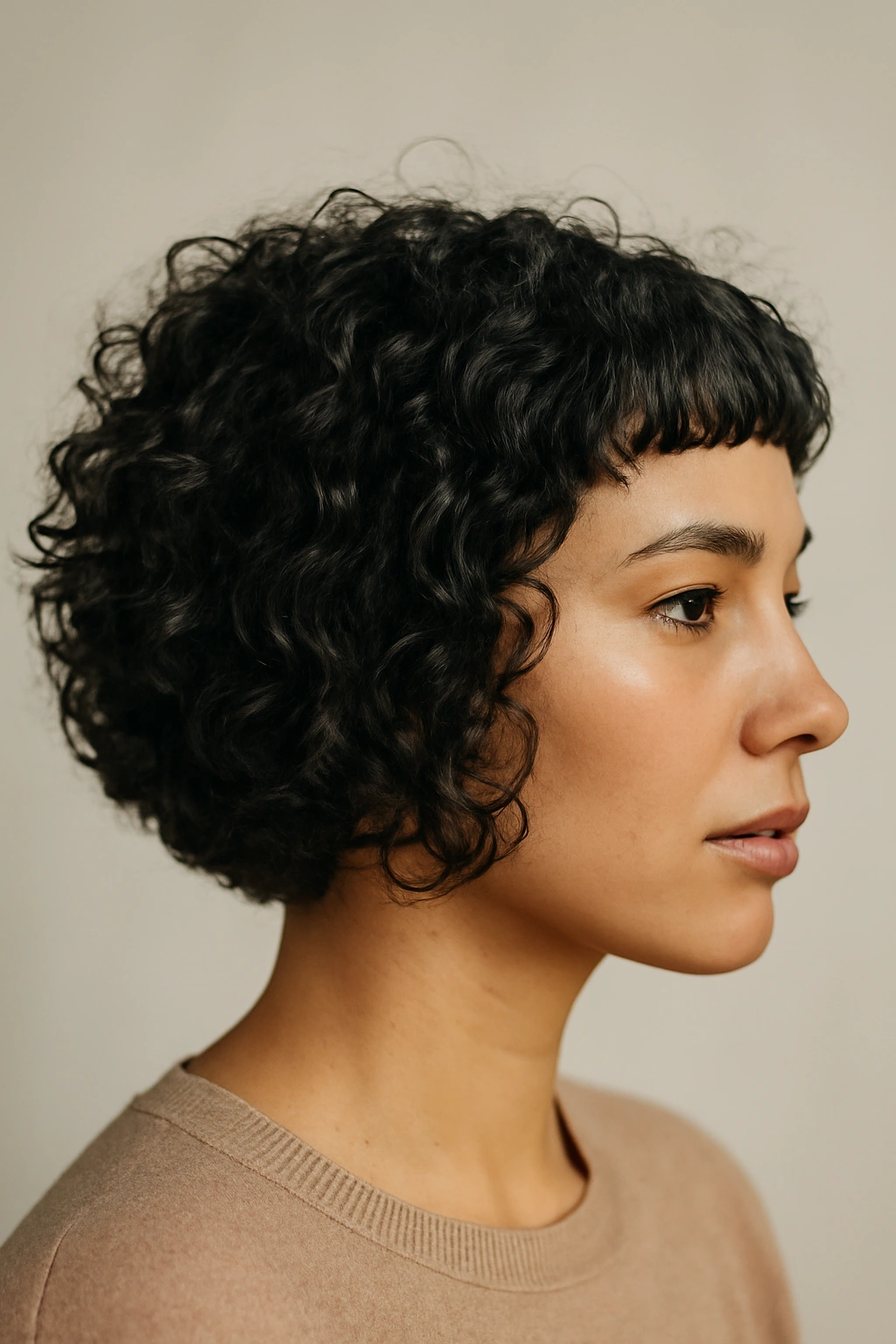
This cut combines an angled bob with very short, blunt micro bangs (or baby bangs, depending on your terminology)—we’re talking 1-2 inches of length right at the hairline. The rest of the bob angles from back to front as usual, but the bangs are the star of the show. The contrast between the short bangs and the longer bob creates a playful, fashion-forward vibe that’s definitely bold.
Making Micro Bangs Work With Curls
Here’s the tricky part: micro bangs on curly hair are a commitment. Straight hair keeps them neat and precise. Curly hair requires styling every single time you wash. The bangs will curl upward, so they need product and possibly heat styling to stay as short and blunt as the cut intends. This is why you see micro bangs on naturally straight-haired people or people who blow-dry their hair.
If You’re Considering It
- You need to be willing to style the bangs every time you wash
- Tighter curls will show the curl more obviously in the bangs, which might not match your intent
- Wavy or loose curly hair shows less curl in short bangs and maintains a cleaner look
- This is very trendy right now but might not be timeless
- Work with a stylist experienced in cutting bangs for curly hair
Pro tip: If you love the idea of micro bangs but worry about commitment, try a hybrid where you get shorter bangs but not ultra-short ones—maybe 3-4 inches. You get the face-framing effect with more forgiving styling requirements.
9. The Long Angled Lob
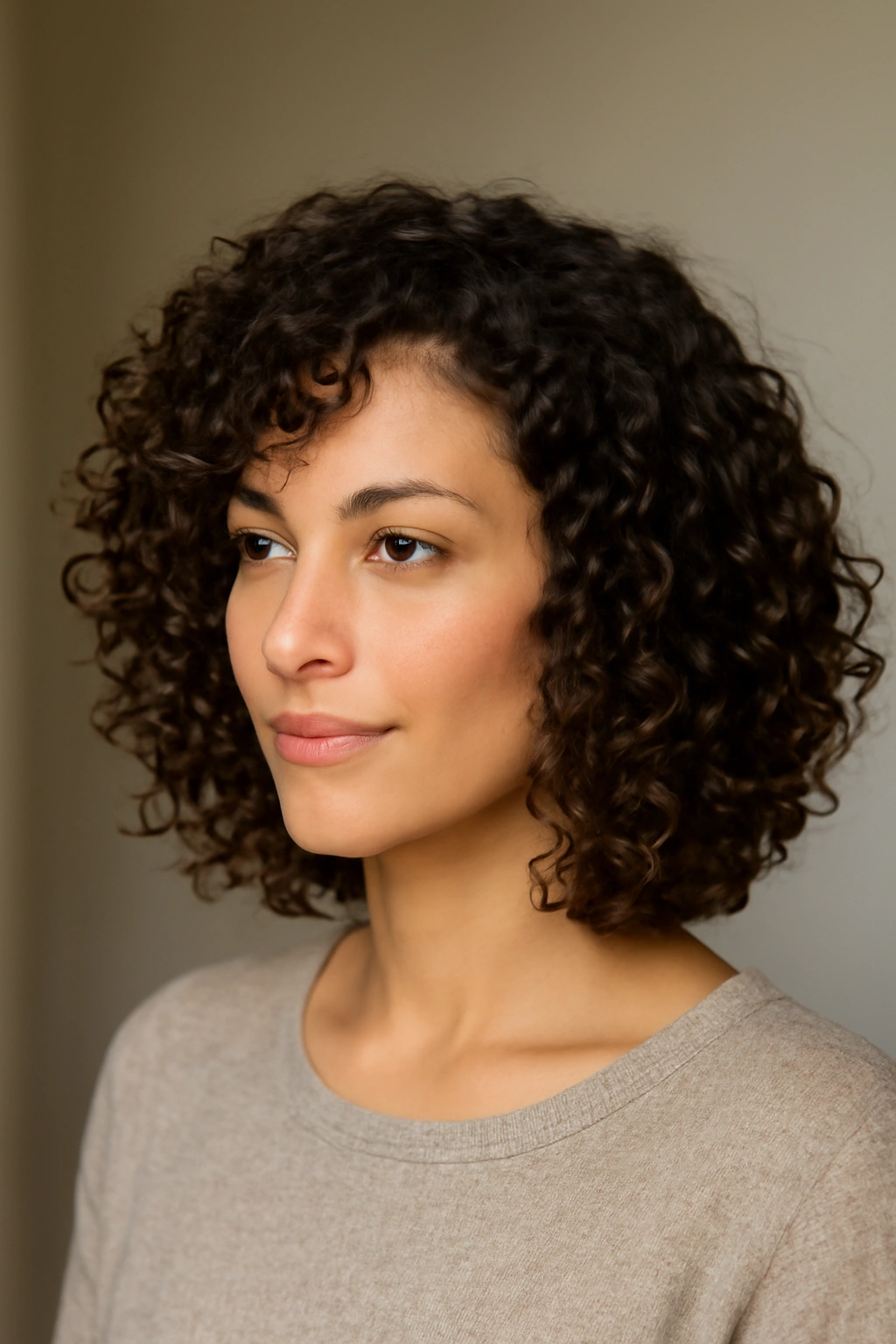
Sometimes you don’t want to go full short bob. A lob (long bob) with a pronounced angle gives you length while maintaining the movement and sophistication of an angled cut. The front extends to collarbone length or beyond while the back is shorter, creating a 3-4 inch angle that gives dimension without sacrificing significant length. You get the shape of a bob with the versatility of longer hair.
Why Lobs Work for Curls
Longer hair gives curls more weight, which means they hang better and show definition more elegantly. An angled lob prevents the one-length style from looking flat or severe. The angle and subtle layers create movement while the overall length preserves the density and flow that makes curls beautiful.
Styling Flexibility
- Can be worn down and wavy for a romantic, textured look
- Can be worn half-up for a polished style that shows off your length
- Works with or without layers depending on how much texture you want
- Gives you enough length that you can style in multiple directions
Real talk: Lobs are the safer version of the bob if you’re not ready to go short. You get the benefits of an angled cut without fully committing to short hair.
10. The Blunt Undercut Bob
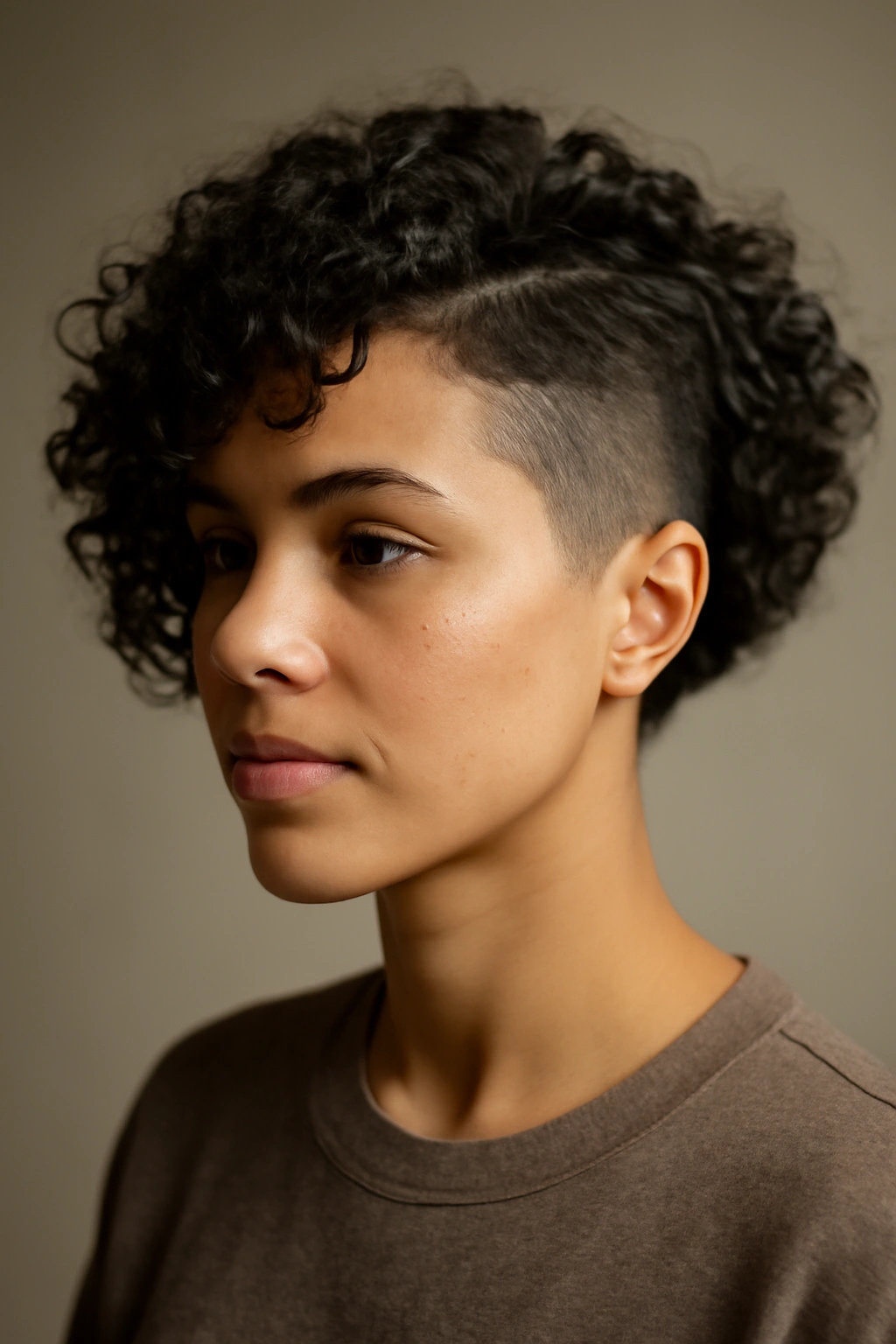
This cut features a blunt, angled front (maybe 2-3 inches shorter in the front) with an undercut underneath—shorter sections hidden underneath that create volume and lightness when you move. From the top, it looks like a sleek angled bob. From the underneath, you’ve got a secret undercut that prevents the heaviness that sometimes comes with longer bob styles.
How Undercuts Benefit Curls
An undercut removes weight from underneath without obviously shortening the top, which is a smart move for curly hair that tends to get heavy. The undercut layers create airflow beneath your curls, which helps them dry faster and with better definition. You’re not sacrificing any visible length, but you’re solving the weight problem that makes some bobs look flat.
What to Know
- The undercut is hidden, so from most angles people just see a sleek angled bob
- You’ll notice the difference in how your curls feel and dry, even if others don’t see it
- Works especially well for dense, thick curly hair that tends to clump
- Requires a stylist who knows how to execute undercuts cleanly
Insider note: Undercuts are the secret weapon that separates a mediocre curly-haired bob from one that actually looks effortlessly beautiful. The weight reduction makes a massive difference.
11. The Textured Wavy Bob
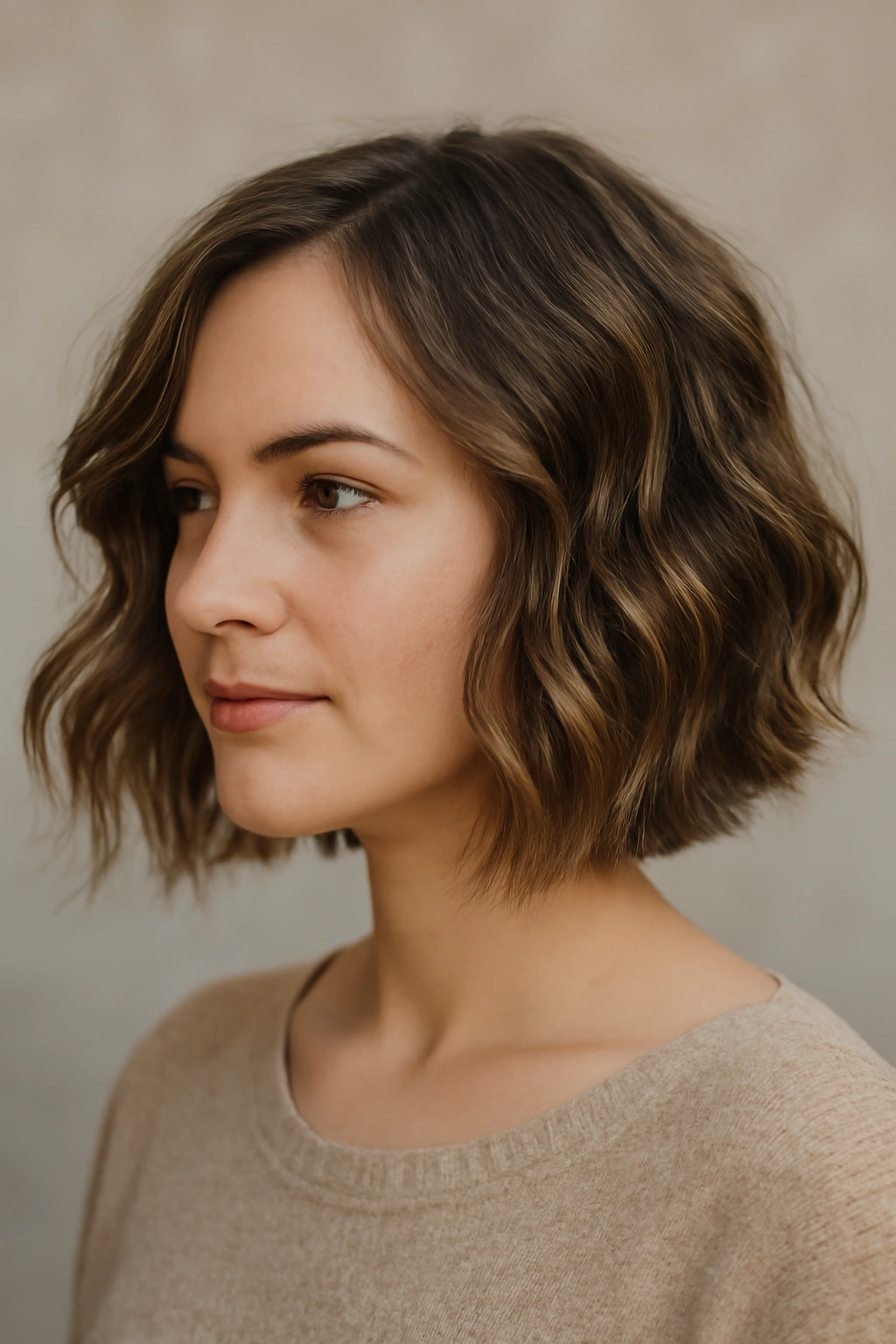
This style is specifically designed for people with waves or looser curls who want a more casual, beachy vibe. The angle is gentle—maybe 1-2 inches—and the layers are subtle and blended rather than choppy. You’re aiming for a soft, textured silhouette that looks naturally tousled rather than carved and precise. The shorter front waves gently, and the back provides density without looking heavy.
Perfect For Looser Texture Types
If your curls are more waves than coils, if you love a relaxed aesthetic, or if you want your bob to feel effortless rather than sculpted, this is it. The subtle angle and blended layers work with your natural wave pattern instead of fighting it. Product is minimal, styling is quick, and the vibe is fresh and modern without being high-maintenance.
The Styling Approach
- Works best with a curl cream or lightweight product that defines without crunching
- Requires minimal blow-drying; mostly air-dry or diffuse on low heat
- Best for waves that air-dry nicely without a ton of frizz
- Creates a soft, romantic silhouette rather than an edgy one
Pro tip: If your waves need help staying defined, ask your stylist about the best product recommendations specifically for wavy bobs. A good wave cream makes all the difference.
12. The Piecey Choppy Curl Bob
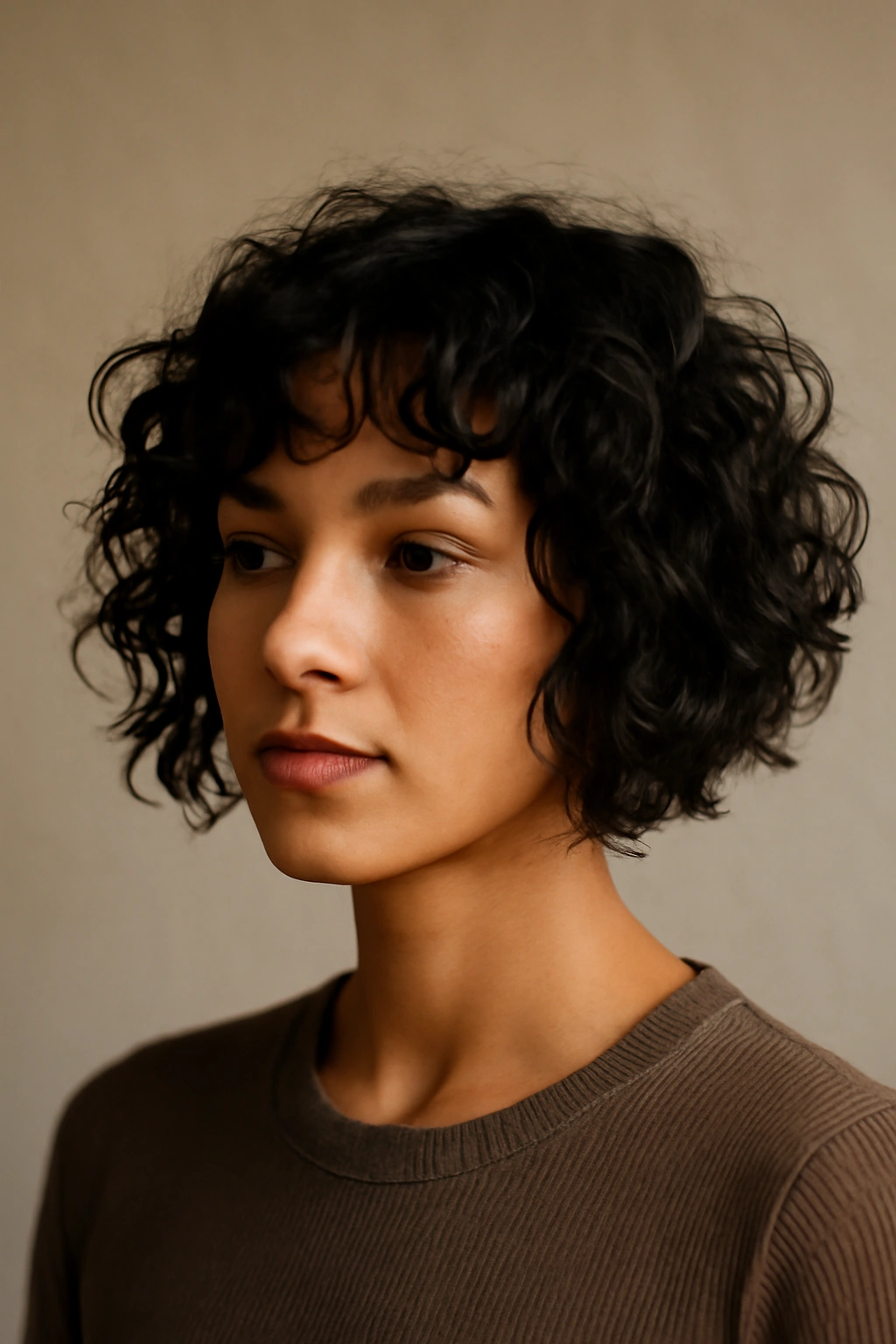
This final style is all about disconnected, choppy layers that create a piecey, textured silhouette where each curl sits individually and visibly. The angle is there but less important than the choppy cutting technique. Every layer is intentionally choppy, point-cut to create separation and definition. This style celebrates your individual curls rather than trying to blend them into a cohesive shape.
Embracing Individual Curl Definition
This cut is for people who love their curls and want them front and center. Instead of trying to blend everything into a polished bob shape, you’re using technique to make each curl a distinct, beautiful element. The choppy layers give you volume without weight, and the shape is determined by how your individual curls fall rather than the blunt lines of a traditional bob.
Making It Work
- Best for curl patterns with genuine definition and spring
- Requires regular styling with product to keep curls separated and defined
- Works beautifully for coily, kinky, or tightly curled textures
- Might look frizzy or undefined on waves without significant styling effort
Worth knowing: This is not a wash-and-go style unless your curls are naturally super defined and bouncy. But if you love the process of styling your curls and showing them off, this cut is absolutely gorgeous.
Final Thoughts
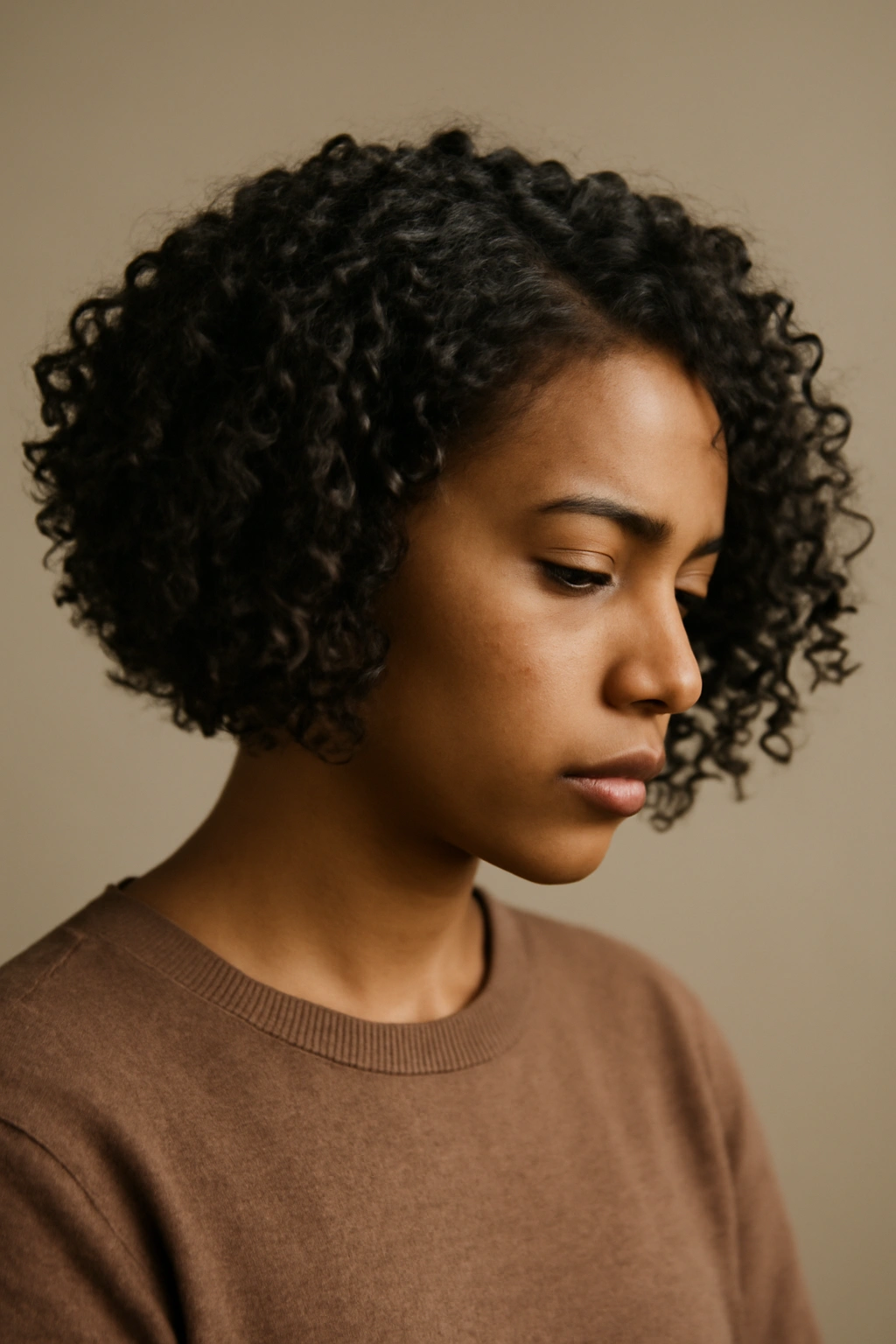
The right angled bob isn’t just about the angle—it’s about understanding how that specific angle, layering strategy, and overall length work with your unique curl pattern. What looks stunning on someone with tight coils might feel too choppy on loose waves, and what works for someone with dense, thick hair might overwhelm someone with fine, delicate curls.
The most important step is finding a stylist who genuinely understands curly hair and isn’t just applying straight-hair cutting techniques to your texture. Bring photos of styles you love, describe your styling habits and preferences honestly, and be willing to discuss your curl pattern, density, and how your hair behaves when it’s dry. The cut is only half the equation—the right products and styling technique complete the picture.
Remember that most of these styles will look different on you than they do in photos, and that’s not a failure. Your curls are unique, your face shape is unique, and your hair’s natural fall pattern is unique. A great angled bob is one that works with all three, not against them. Give yourself at least two weeks and a few wash cycles to really see how a new cut settles into your routine before deciding if it’s the one.
