



Latina women have been reclaiming their relationship with short hair for years now — ditching the expectation that long locks are the only option and stepping into cuts that feel bold, authentic, and distinctly theirs. Whether it’s the texture-enhancing layers of a choppy cut or the sleek sophistication of a tapered fade, short hair on Latina women isn’t just a trend; it’s a statement of confidence and self-definition. The thing that makes these haircuts work so well for Latina hair is that they’re designed with texture in mind — not fighting against natural curls, coils, and waves, but celebrating them.
What’s different about this moment is that the conversation has shifted. It’s no longer about choosing between “embracing your natural texture” and “looking polished and professional.” The short haircuts Latina women are asking for now do both at once. They work beautifully on thick, voluminous hair. They showcase textured curls without requiring three hours of styling. They photograph well at 6 a.m. before work and at midnight when you’re out with friends. And critically, they respect the cultural and personal significance that hair holds in Latina communities — where style choices are never just about aesthetics.
The cuts in this guide represent what stylists are seeing in their chairs week after week: the texturized shapes that flatter face shapes while honoring natural curl patterns, the low-maintenance styles that still look intentional, and the cuts that work equally well worn slicked back or tousled forward. These are the haircuts that make women walk out of the salon and immediately feel like themselves — just a sharper, more confident version.
1. The Textured Pixie Crop
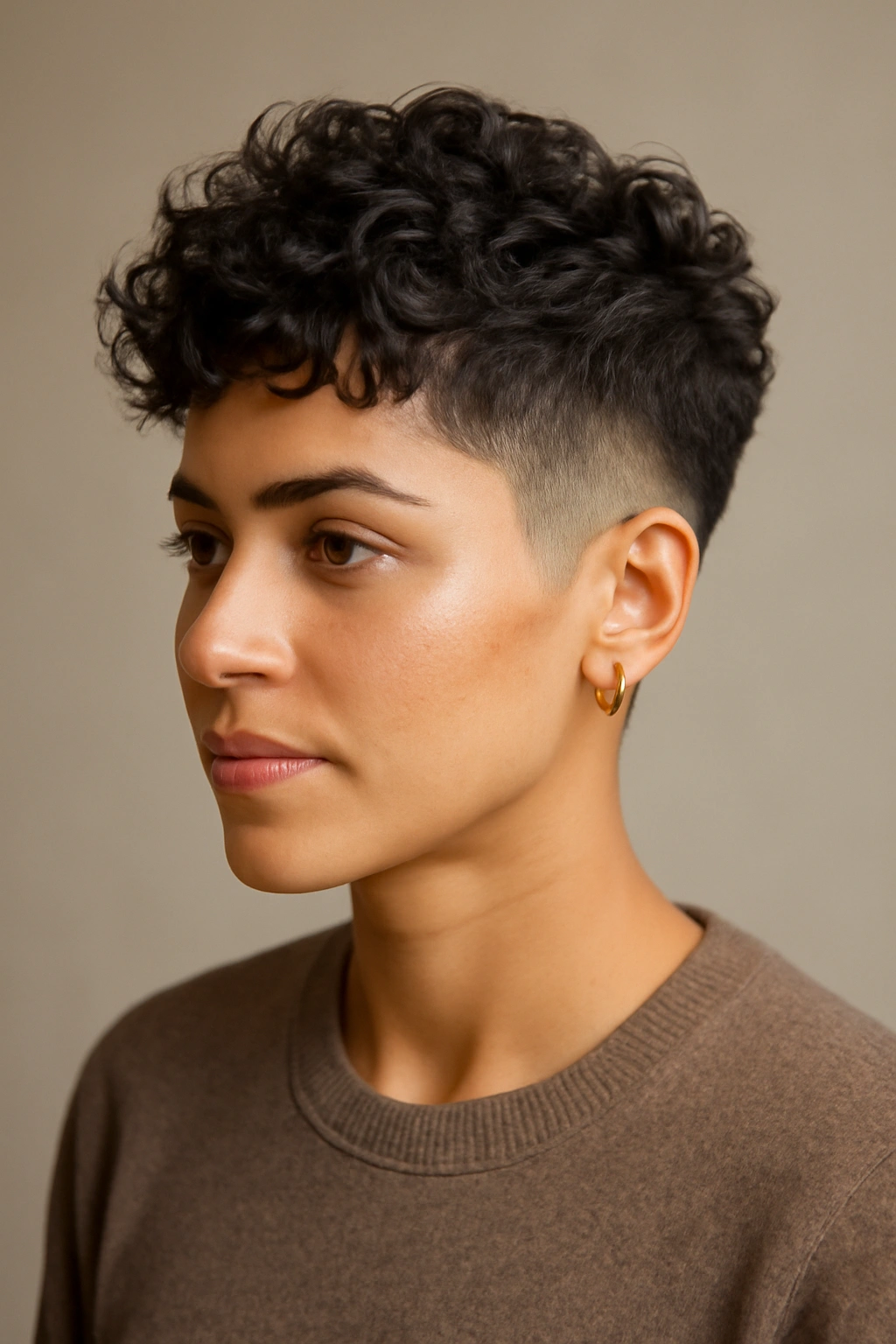
The modern textured pixie isn’t the severe, short, one-length crop from decades past. It’s a cut that works with curls and coils instead of fighting them, creating a shape that’s both short and shapely. The hair on top is left longer — typically 1.5 to 2 inches — and texturized with choppy layers, while the sides and back are faded or undercut. This creates natural height and movement that looks intentional rather than bedhead.
Why Textured Pixie Crops Work So Well for Latina Hair
The layering in a textured pixie is specifically designed to work with curly and coily hair textures. When your stylist cuts choppy, disconnected layers into the top section, those layers sit at different angles, which means each curl has space to live without being compressed into a flat, stunted shape. The fade on the sides and back shows the natural curl pattern and adds visual interest without requiring the top to be super short. This cut celebrates volume rather than fighting it.
What to Know Before Booking
- Styling time varies wildly depending on how textured you want it to look on a given day — anywhere from 5 minutes (apply a curl cream and go) to 15 minutes (diffuse dry if you want more definition)
- Frizz management requires a good curl cream or gel, but because the cut is so short, you’re using significantly less product than you would on longer hair
- Grow-out timing is roughly 4-6 weeks before you notice the shape getting away from you; many women find they actually prefer the pixie once it grows out slightly
- Undercut maintenance means visiting your stylist every 3-4 weeks if you want the sides to stay crisp, or allowing them to blend softly if you’re more low-maintenance
Real talk: This cut requires a stylist who genuinely understands how Latina hair textures work. Bring reference photos of pixies on women with similar hair texture to yours, not just women with straight hair in the style.
2. The Choppy Layered Bob
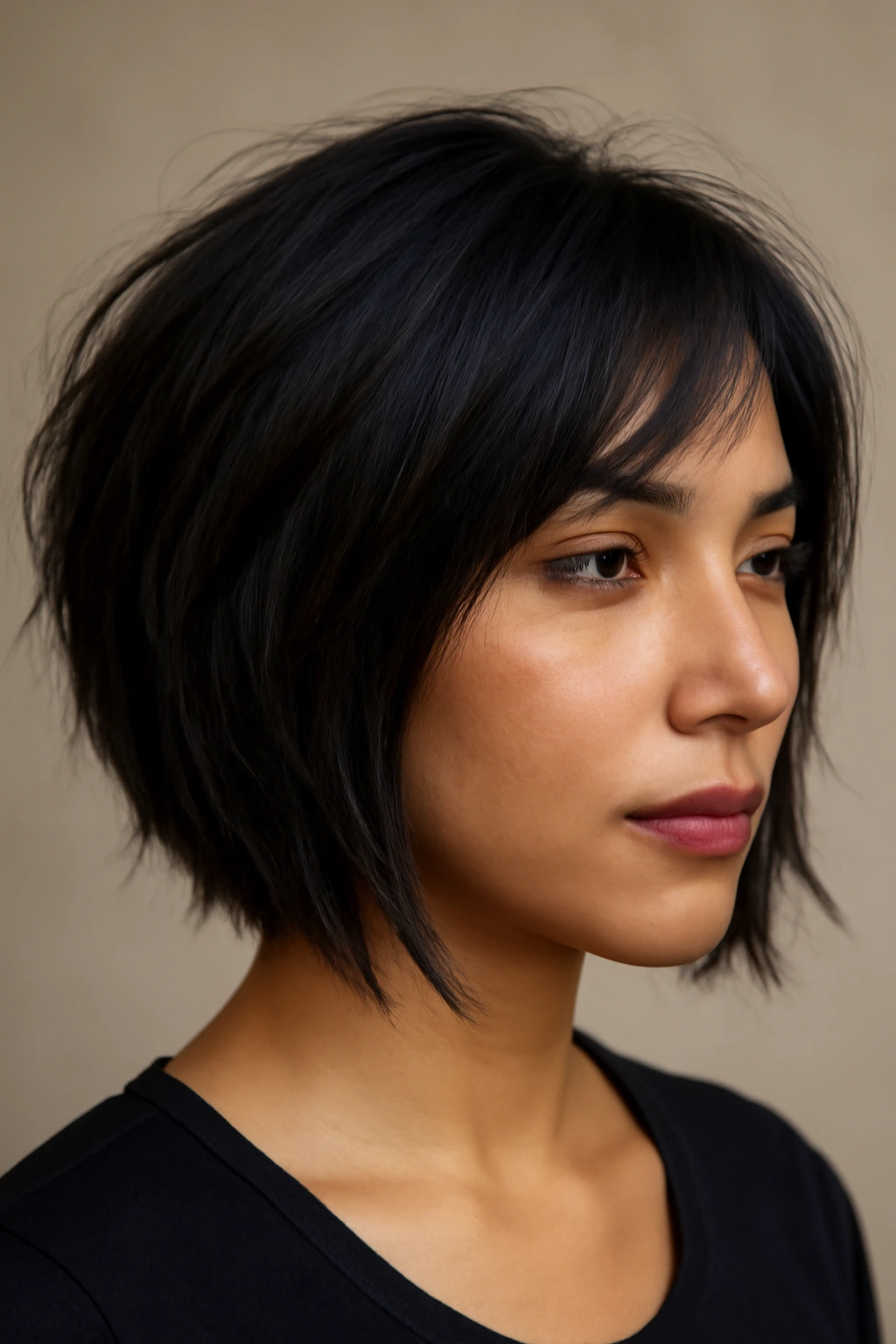
The choppy layered bob sits right at chin length and is completely alive with movement. Rather than the blunt, structured bob of previous eras, this version has choppy, disconnected layers throughout that create texture and prevent the cut from looking heavy or stationary. On Latina women with thick hair, this cut is a game-changer because it removes weight while maintaining length and creates the illusion of movement even when hair is bone-straight.
The Shape That Makes Choppy Bobs So Flattering
A choppy layered bob typically has slightly longer layers in the front (framing the face) that transition into shorter layers toward the back. The layers aren’t uniform — some are 1 inch apart, others 2 inches, creating that deliberately undone texture. This variation means the cut works beautifully on most face shapes because the front-to-back length difference can be customized. The choppiness also prevents that “helmet head” feeling that can happen when thick hair is cut all one length.
Key Details That Change Everything
- Angle and movement come from how your stylist cuts the layers — they should be cutting at angles, not straight across, to encourage pieces to flip outward and upward
- Texture products like volumizing sprays, texturizing sprays, and sea salt sprays become your best friends; they enhance the choppy effect and add dimension
- Blow-drying technique matters more than you might expect — each section needs to be dried in the direction you want it to sit, which takes maybe 10 minutes but completely changes the final look
- Face-framing pieces should hit right at your jawline or just below to create the most flattering proportion
Pro tip: Ask your stylist to cut the layers into wet hair while it’s in its natural state — whether that’s curly, wavy, or straight. This prevents them from cutting it shorter than intended when your hair dries and the texture engages.
3. The Textured Shag
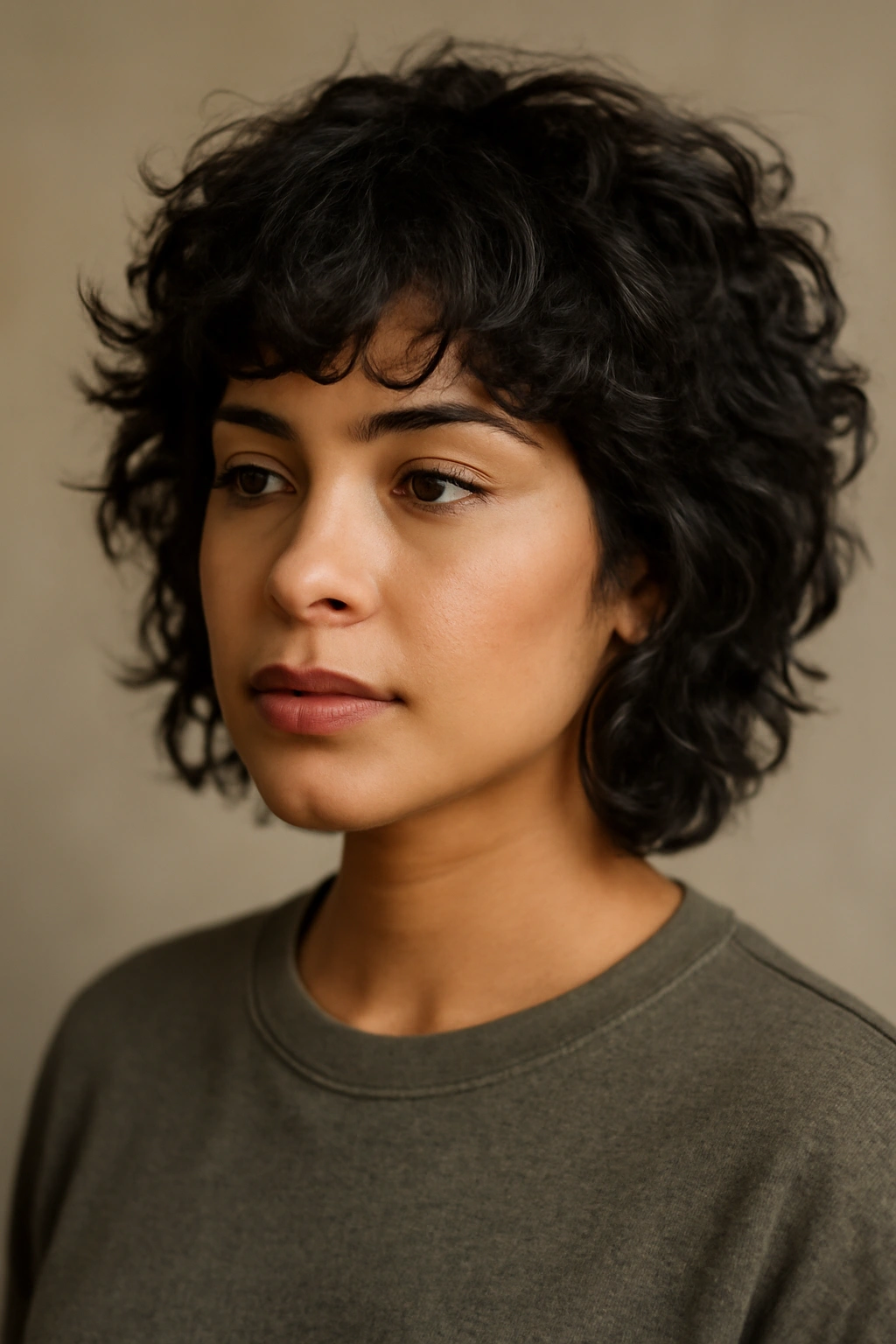
The shag is having a genuine renaissance, and for good reason. Unlike the rock-and-roll shags of the ’70s, modern textured shags are refined and intentional. The cut features shorter layers throughout, creating a multidimensional shape with built-in movement. On curly and textured hair, a good shag is pure wizardry — it removes weight while creating definition and reducing frizz-prone bulk.
Why Shags Thrive on Curly Textures
A shag’s whole philosophy is that multiple shorter layers create better movement than one long length of heavy hair. When you have natural curls or waves, those layers work with your curl pattern to create a shape that’s naturally textured and defined. The individual layers sit at different angles, which means your curls can form around those layers rather than being smooshed down by the weight of one solid length. It’s almost like your haircut is pre-doing the work that your curls were always trying to do anyway.
The Styling Reality
- Wet and go styling is possible if your curls are well-established and you use the right cream, but most people find a quick diffuse dry gives the best definition
- Scrunching products in while damp and letting them air dry works beautifully and saves time, though diffusing speeds up the process considerably
- Second-day texture actually looks better than day-one on most shags — the curls set and the shape tightens up overnight
- Refresh spray between washes becomes your maintenance tool; a light mist and quick scrunch refreshes the curl pattern
Worth knowing: A shag on curly hair typically looks better (and less “choppy-for-choppy’s-sake”) if you get it cut by someone who specializes in curly hair. Straight-hair specialists often cut shags too short or with too much layering on curly texture.
4. The Sleek Tapered Fade
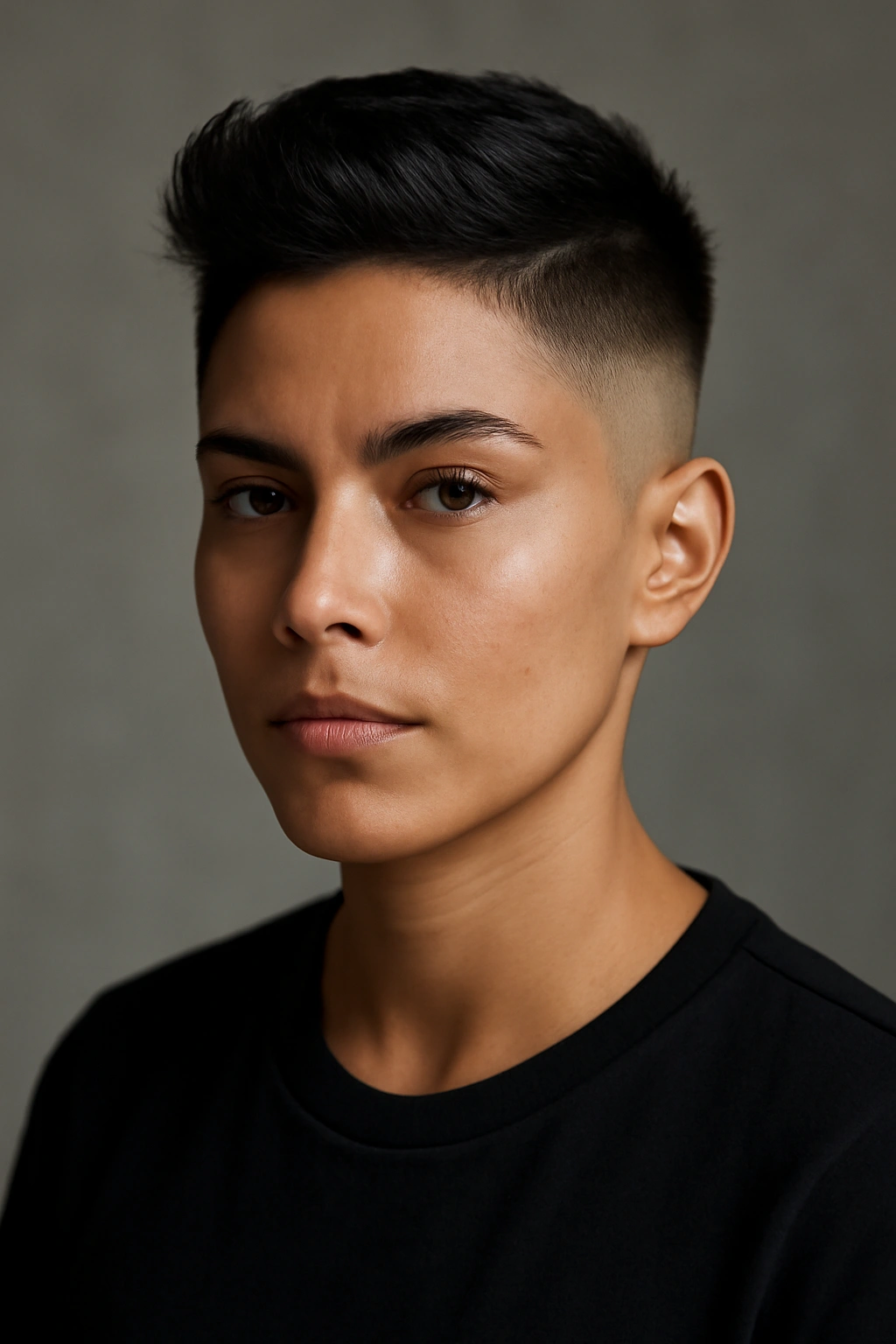
The tapered fade is the sharp, low-key-rebellious option that’s absolutely having a moment. Hair on top is left at a medium length (1.5 to 2.5 inches) and styled with volume, while the sides gradually fade down to skin or near-skin. On Latina women, this cut hits different — it’s professional enough for boardrooms but edgy enough to feel like a personal statement. It works on straight hair, wavy hair, and textured hair, though the styling approach differs significantly.
The Professional-Edge Factor
A tapered fade is undeniably sharp and pulls off that rare balance of “I take myself seriously” and “I don’t take fashion conventions too seriously.” The fade is clean and requires maintenance, which signals intentionality. The medium length on top allows for styling versatility — you can wear it slicked back, tousled, or textured depending on your mood. What makes it particularly compelling for Latina women is that it reads as confident without trying too hard, which is honestly the energy many people want to project.
Styling and Maintenance Breakdown
- Top styling can be done with pomade for a slicked-back look, or with a texturizing cream for a more undone feel — both work beautifully
- Fade maintenance requires a trim every 2 to 3 weeks to keep the gradient clean and sharp; if you go much longer, it starts to blur
- Texture enhancement on the top is easier the courser your hair — if you have finer hair, you might need volumizing powder or spray to get the lift you want
- Wash-and-go styling isn’t really the vibe here; this is a cut that benefits from intentional styling
Insider note: The best tapered fades come from barbers rather than traditional hair salons, and specifically barbers who understand how to work with textured Latina hair. Ask for referrals if you’re not sure where to go.
5. The Curly Crop Kick-Out
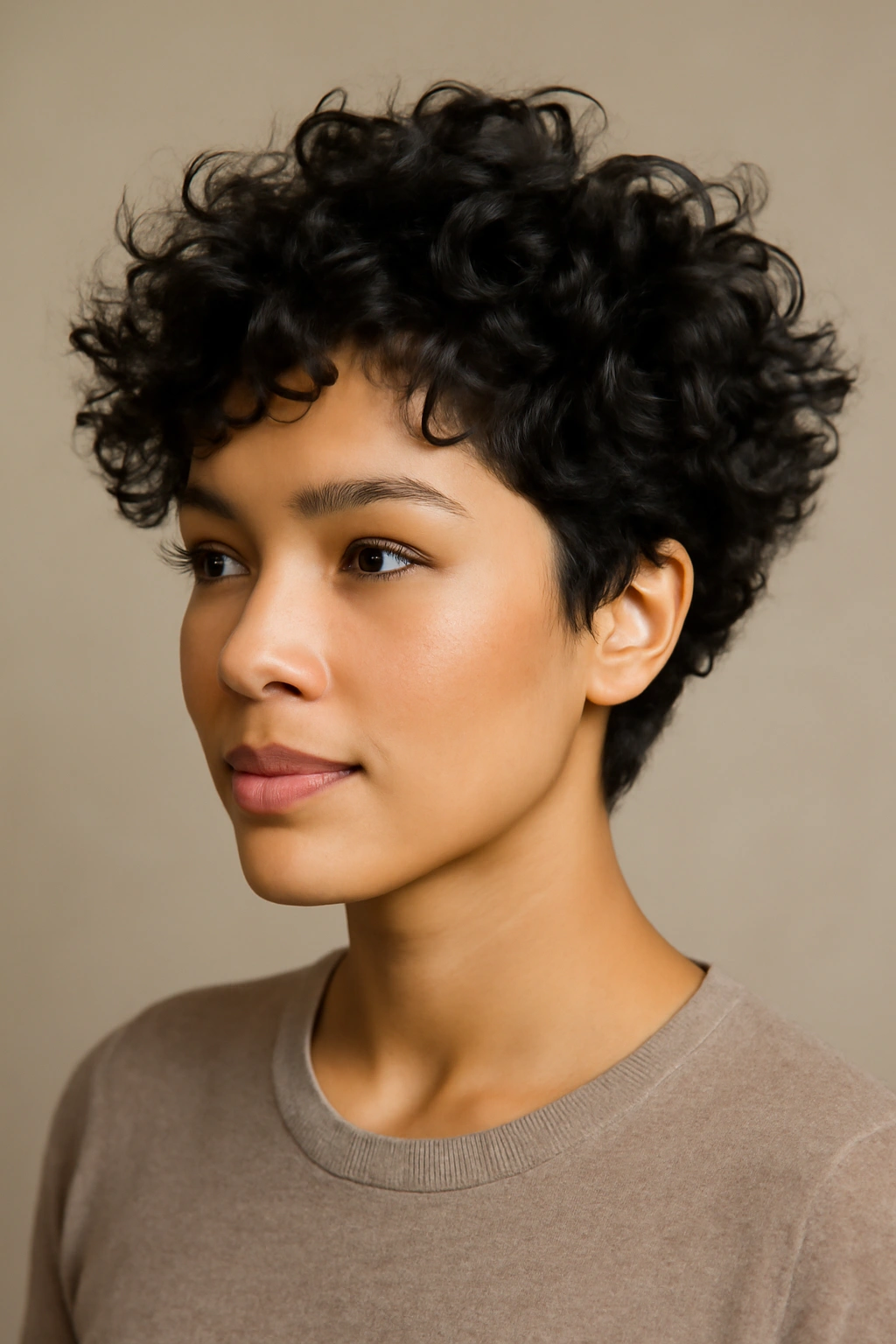
This is the cut that sits somewhere between a pixie and a full crop, with curls that kick out rather than up. The layers are choppy and intentionally shorter, but the styling focuses on letting curls extend outward in all directions rather than standing straight up. It’s a cut that celebrates the width of natural curls rather than just the height. On women with medium to tight curls, this cut is magic.
The Science Behind the Kick-Out Shape
When you cut choppy, layered sections into curly hair and then let those curls extend outward (rather than diffuse-drying them straight up), you create a shape that feels effortless but is actually quite deliberately cut. Each curl layer sits at a slightly different angle, and when those angles are encouraged outward, you get a shape that reads as intentional, textured, and lived-in. This is the cut that looks like you just threw a product in your curls and went — except your stylist spent 45 minutes engineering that effect.
The Curly Crop Routine
- Product application is usually a leave-in conditioner, curl cream, and maybe a gel if you want extra hold — applied to soaking-wet hair
- Air drying is the move here; let your curls dry naturally and they’ll settle into the shape the cut created
- Refresh days between washes need just water and a curl cream; no need to do the full routine every day
- Scalp health is crucial with short textured cuts, so find a shampoo that cleanses well without stripping your curls
Quick truth: This cut requires less styling time than longer curly hair, but it does require good hair health. Your curls need moisture and definition for this cut to really sing.
6. The Blunt Textured Cut with Undercut
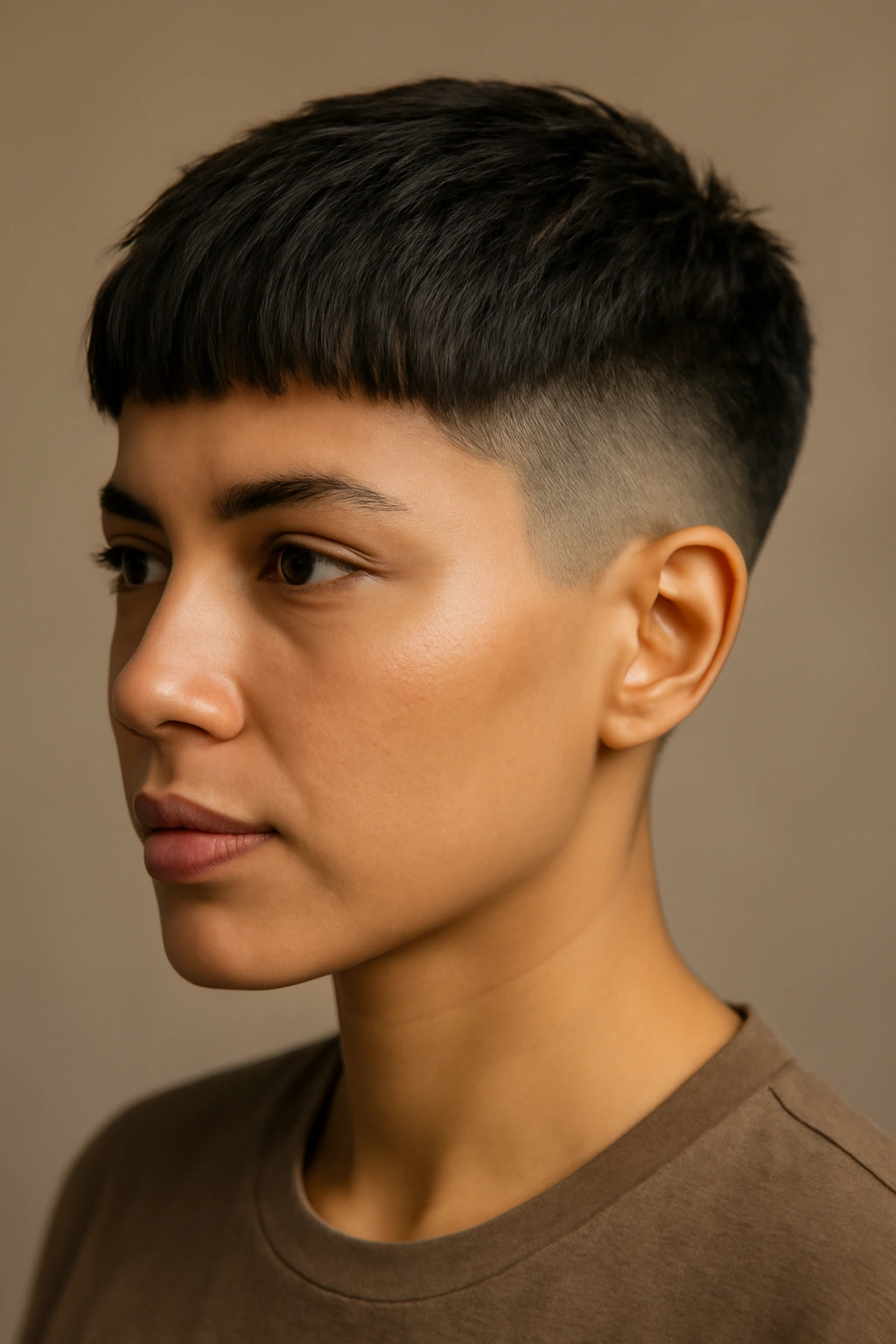
This cut pairs a blunt or slightly textured top section (hitting at chin length or slightly shorter) with an undercut on the sides and back — usually faded or left longer depending on preference. It’s architectural and intentional, creating visual drama while keeping the overall style wearable. The undercut adds an element of surprise and personal style without requiring extreme commitment.
Why the Blunt-and-Undercut Combination Works
The blunt section on top creates a defined, structured shape that reads as intentional and polished. The undercut (whether faded, shaved, or blended) adds visual interest and prevents the cut from feeling too one-dimensional. Together, they create a look that’s both sharp and textured, both structural and creative. On Latina women, this cut particularly resonates because it creates a strong silhouette while still allowing room for personality (you can undercut it more heavily or more subtly depending on your vibe).
The Details That Matter
- Top texture can be completely blunt, slightly choppy, or fully textured depending on your hair type and styling preference — discuss this specifically with your stylist
- Undercut style options include a tight fade, a longer undercut that blends into the top, or even an undercut with a design shaved in — your choice, your vibe
- Styling the top usually involves a volumizing product and either air-drying or blow-drying for shape; the undercut requires minimal styling
- Scalp visibility depends on how tight you cut the undercut, which affects how often you need maintenance trims
Pro tip: The undercut is where you can take risks with design — geometric patterns, lines, even micro-braids fit beautifully under the longer top section and give you a private element of creative expression.
7. The Tousled Wave Crop
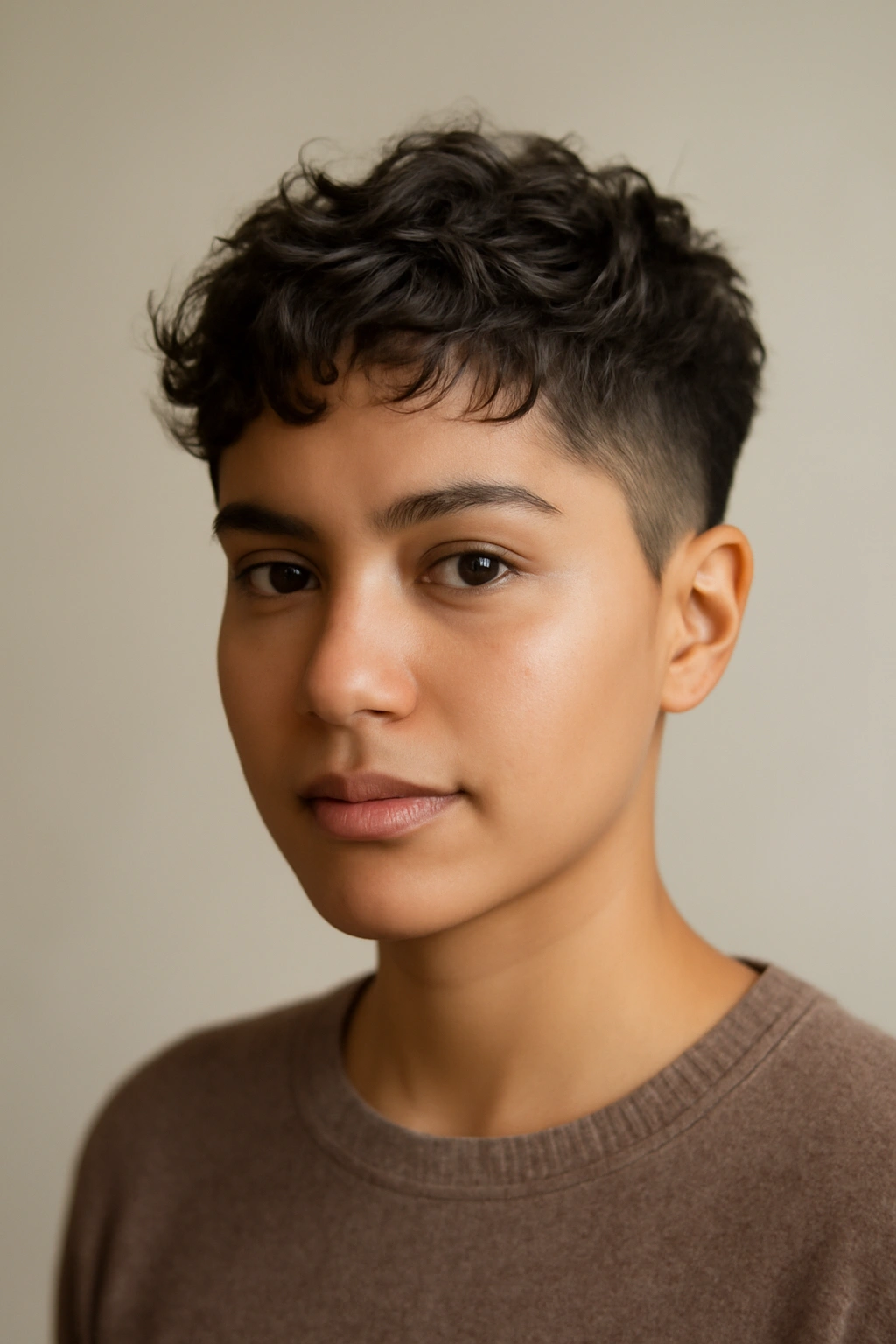
This cut sits very close to the head overall but is styled to enhance natural waves rather than fight them. The cut is quite short (0.5 to 1 inch) with slightly longer texture on top that can be tousled or swept. It’s low-maintenance styling-wise but requires a good understanding of your wave pattern and the right products. This is the cut for women who want seriously short hair but still want movement and personality.
How Short Hair Can Still Have Movement
The key is understanding that movement doesn’t require length — it requires texture. By cutting the top slightly longer than the sides and using choppy, disconnected layers, you create places for waves to form and rest. When you apply product to damp hair and either air-dry or quick-diffuse, those waves have a structure to follow. The result is a cut that’s short enough to be maintenance-friendly but textured enough to feel intentional and styled.
The Practical Breakdown
- Product is crucial — without the right cream, gel, or mousse, this cut can look a little thin or shapeless; with the right product, it looks intentional
- Styling time is legitimately just 5-10 minutes on most days — apply product, rough-dry or diffuse-dry, done
- Wash frequency can be higher because you’re not shampooing long lengths of hair; many women with this cut wash every other day or even daily
- Growth timeline means you’ll need a trim every 3-4 weeks to maintain the shape, because longer hair on this cut starts to lose the tousled effect
Worth knowing: This cut shows every ripple of wave texture and every product application, which means it requires good technique and the right products. It’s not a wash-and-neglect cut, but it is genuinely low-effort.
8. The Disconnected Textured Layers
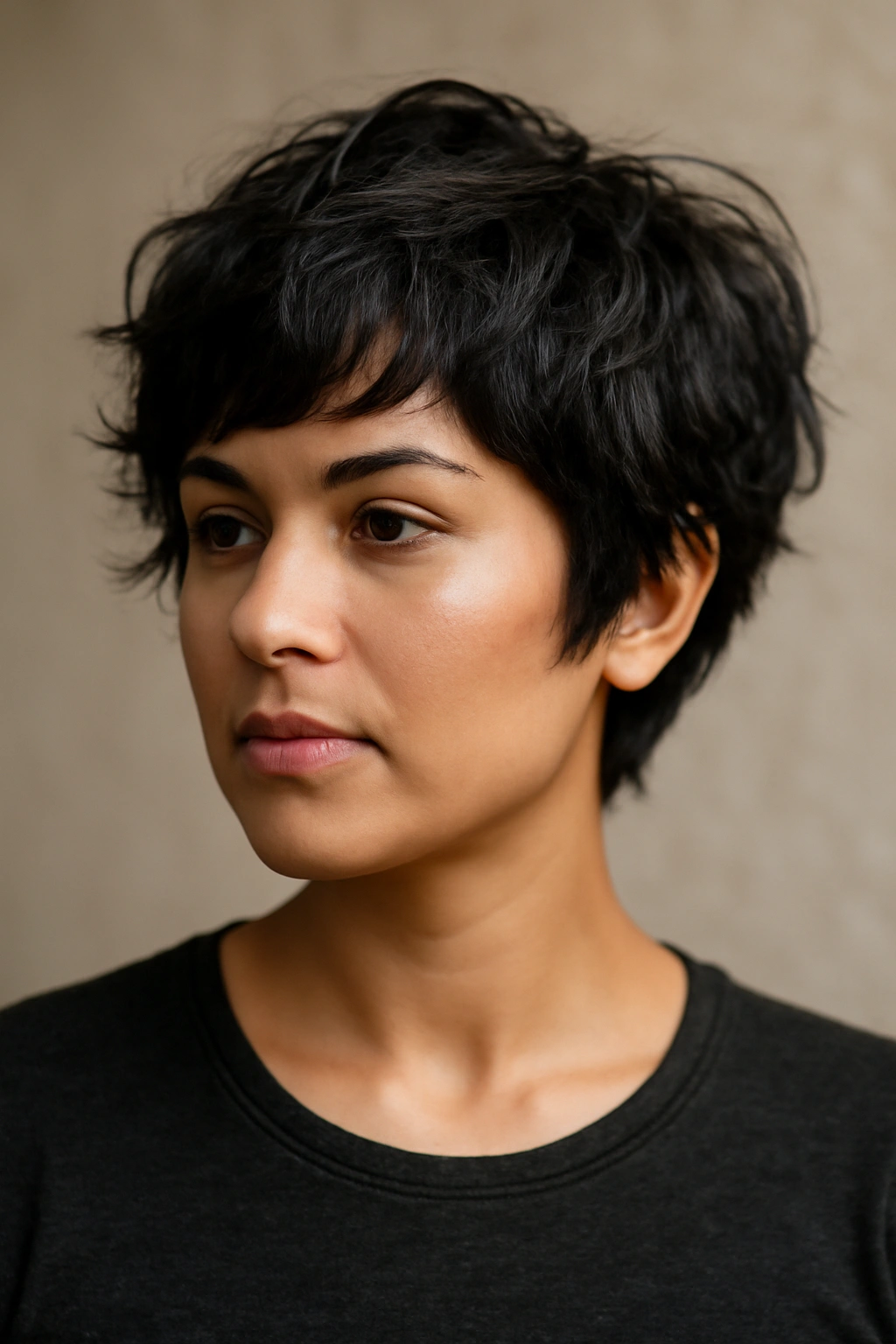
This cut features distinctly separated, choppy layers throughout, creating an almost shaggy texture without being a full shag. Layers start shorter near the top and gradually get longer toward the bottom, but they’re deliberately disconnected — meaning you can see the separation between layers rather than a smooth gradient. It’s textured, modern, and works especially well on thick or wavy Latina hair.
The Appeal of Disconnected Layers
Disconnected layers create visual interest and texture without requiring you to commit to either a full-on shag or a blunt cut. Each layer sits slightly independently, which creates dimension and prevents the cut from looking flat or one-note. On Latina women with thick, wavy, or curly hair, this approach removes weight while maintaining volume and creating shape. The layers literally create pockets for curls to sit in, which means your natural texture can actually breathe.
Styling and Definition
- Layering is what creates the texture, so ask your stylist to cut clearly visible, intentional layers (not subtle graduation)
- Product application to damp hair — whether it’s a curl cream, mousse, or sea salt spray — emphasizes the layers and creates definition
- Blow-drying (or diffuse-drying if you have curls) each section separately helps the layers sit away from each other rather than falling flat
- Second-day styling often looks better than day-one because the product sets and the layers have settled into their shape
Real talk: This cut requires a stylist who’s comfortable with choppy technique and who understands how textured hair sits. A stylist trained only in blunt-cut techniques might not execute disconnected layers well.
9. The Sculpted Fade with Length
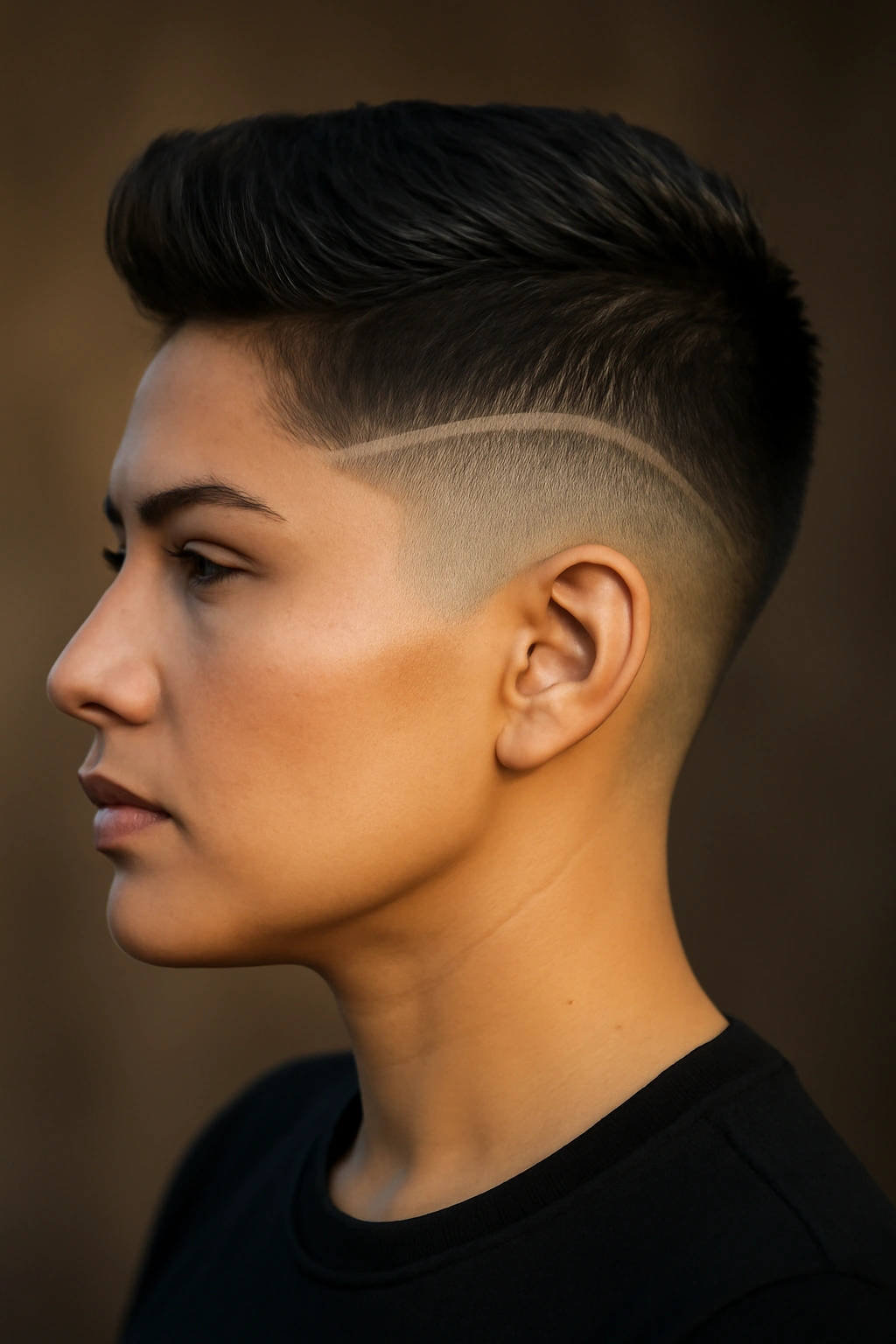
This cut keeps medium length on top (2 to 3 inches) with a sculptural, often artistic fade on the sides and back — sometimes with designs, lines, or specific shaping that turns the fade into artwork. It’s high-maintenance in terms of regular trims and precision, but the payoff is a cut that’s genuinely unique and personally expressive. It’s the option for women who want their haircut to be part of their overall creative statement.
The Artistic Element
A sculpted fade goes beyond basic fade maintenance — your barber is creating visual lines, depth, and geometry that complements your face shape and personal aesthetic. This might mean geometric patterns, clean architectural lines, or a fade that’s shaped to create a specific silhouette. On Latina women, this approach is increasingly popular because it combines cultural appreciation for barbering artistry with contemporary style. The fade isn’t just practical maintenance; it’s part of the design.
What Sculpted Fades Require
- Barber expertise is absolutely essential — this isn’t a general salon cut; you need a barber trained in precision fading and design work
- Maintenance visits every 2 to 3 weeks are non-negotiable if you want the sculpted element to stay crisp and intentional
- Top styling can range from pomade to textured cream depending on your vibe, but the fade is the focal point
- Design options are essentially limitless — work with your barber to create something that feels uniquely you
Insider note: The best sculpted fades come from barbers in communities with strong barbering traditions. If you’re looking for an artist-level barber, ask around in your community for referrals.
10. The Textured Pixie with Side Sweep
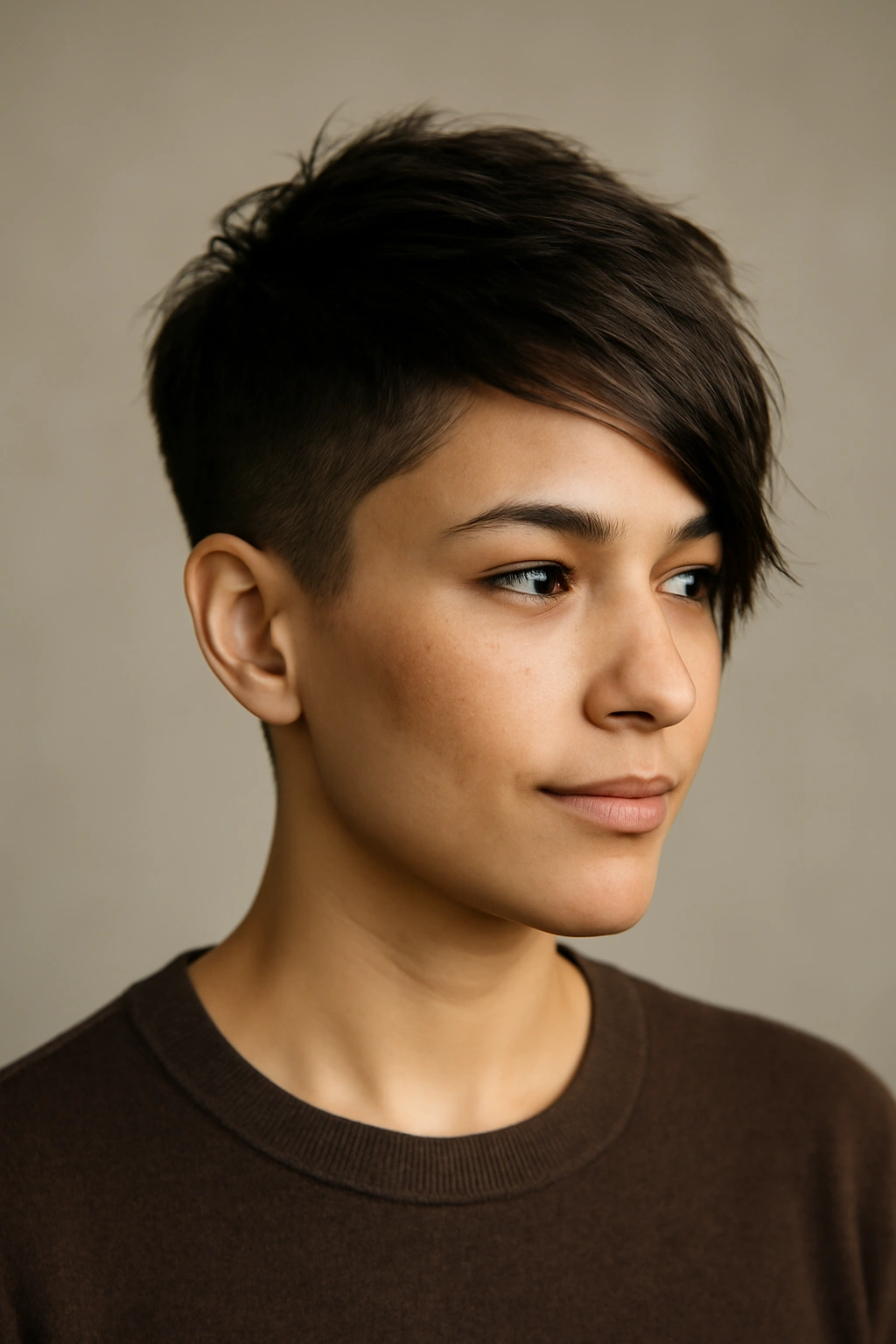
This is a pixie that’s styled with a deliberate side sweep rather than standing straight up. The back and one side are faded or quite short, while the other side is left slightly longer and styled to sweep across. It adds asymmetry and personality to the pixie shape while maintaining the short, low-maintenance vibe of the cut. It works beautifully on Latina women who want something bold but still practical.
Asymmetry as a Design Element
The side sweep transforms a pixie from merely short into something with intentional directional styling. Rather than having all the visual weight centered, the sweep creates movement and guides the eye across your face. This asymmetry can actually be very flattering depending on your face shape — a longer side-sweep can balance a narrower face, or draw attention to a particular feature you want to highlight. It’s short enough to be easy, but shaped enough to feel intentional.
The Styling Approach
- Product in the sweep section creates the directional flow — a texturizing cream, pomade, or light gel works depending on your vibe
- Blow-drying is usually necessary to set the direction and get the sweep to stay where you want it
- Maintenance includes regular trims on the faded side (every 3-4 weeks) to keep that clean contrast
- Refresh styling between washes just needs product and your fingers or a brush to redirect the sweep
Pro tip: The side you choose to sweep is completely your call — it doesn’t have to be one specific side. Work with your stylist to determine which direction most flatters your face shape and feels most natural to you personally.
11. The Curly Mullet (Modern Version)
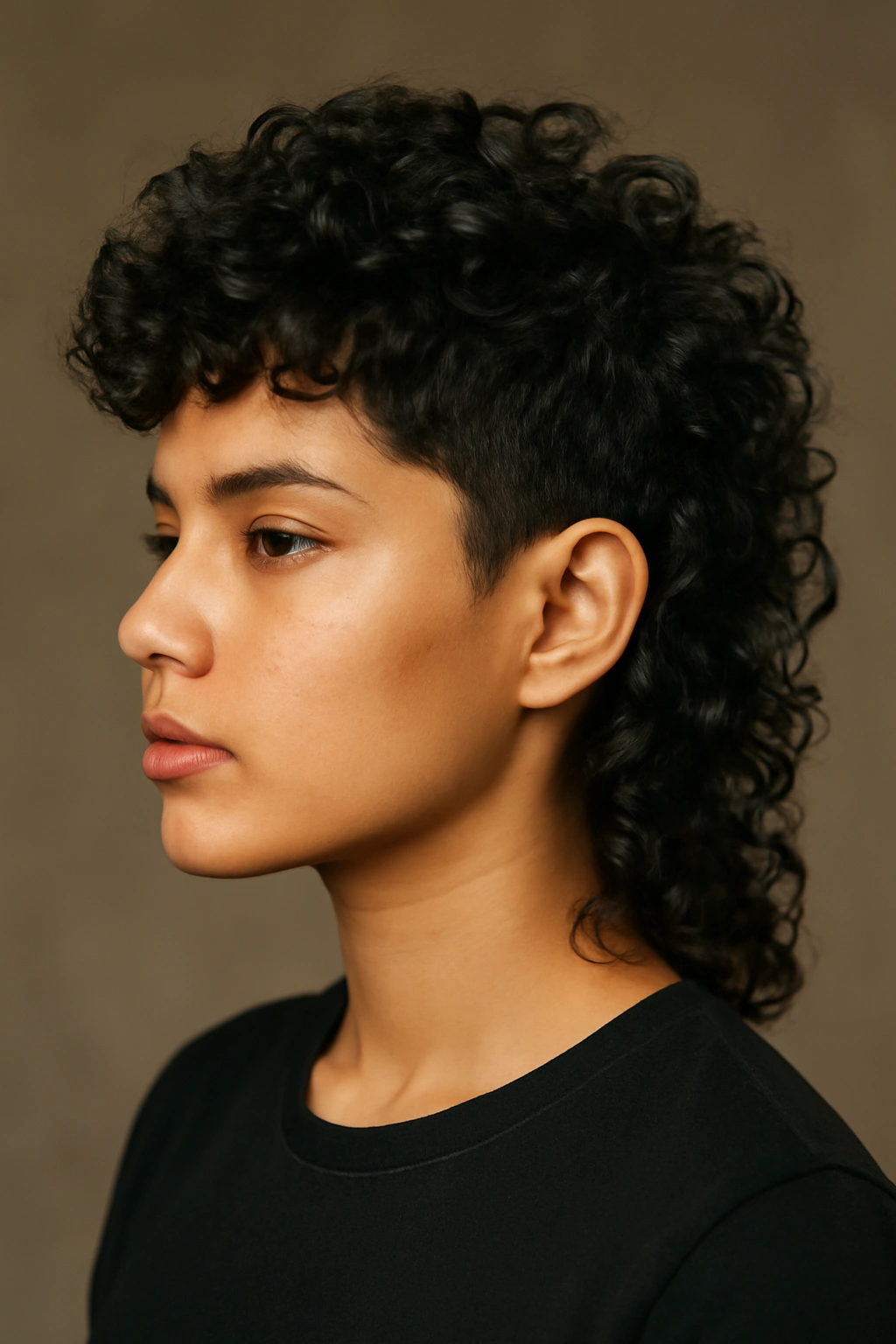
Yes, mullets are back, and the modern curly mullet is absolutely a statement look. Short and textured on top and sides with noticeably longer length in the back, the mullet combines practical short-hair styling with personality and edge. On curly-haired Latina women, a modern curly mullet is genuinely playful while still reading as intentional and styled.
The Contemporary Mullet Aesthetic
The modern mullet isn’t the ’80s caricature — it’s a thoughtful cut that plays with proportion and creates visual interest. On curly hair specifically, the shorter front and sides prevent the bulk that comes with long curly hair everywhere, while the longer back gives you room for curl expression and movement. It reads as bold and creative while being surprisingly practical because the parts you interact with most (face, sides) are short and easy to style.
The Mullet Reality
- Styling the top and sides is quick — short textured hair takes 5-10 minutes to style
- Back length creates styling options — you can wear it curly, you can do braids, you can pin it up depending on occasion or mood
- Maintenance visits mean regular trims on the short sections (every 4-5 weeks) to maintain the proportion and prevent the short sections from looking grown-out
- The statement factor is real — a mullet reads as confident and creative, which is exactly the energy many women want to project
Real talk: A mullet is a commitment to having an opinion about your own hair. It’s not a “blend in” cut. But for women who want to own their style and make a statement, it’s genuinely brilliant.
12. The Barely-There Undercut with Length
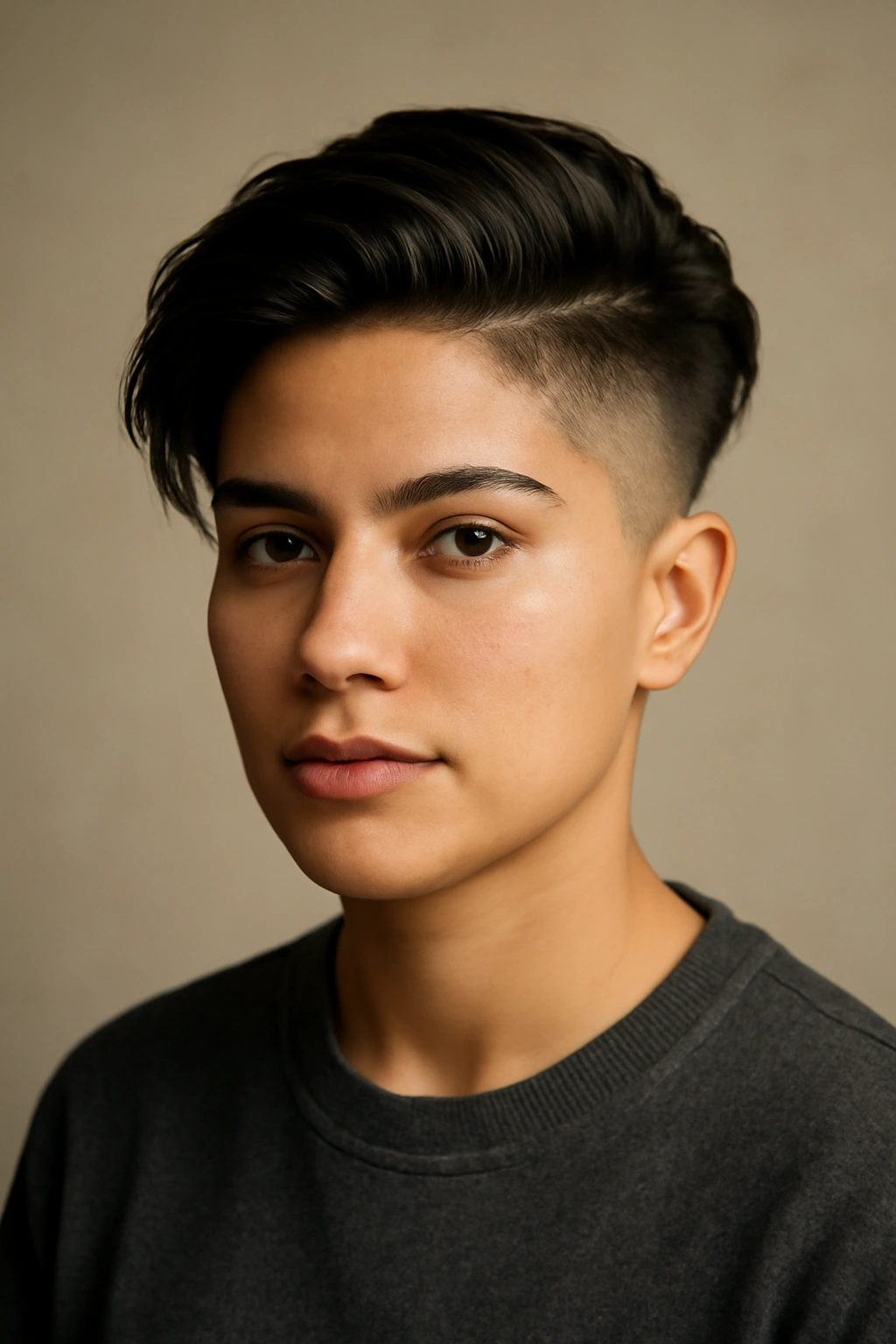
This is the option for women who want short sides but are committed to keeping meaningful length on top. An undercut with 4+ inches on top creates the contrast and drama of an undercut while still giving you versatility in how you style and wear that length. You can slick it back to show the undercut, wear it down to hide it, or style it anywhere in between. It’s short enough to feel edgy but long enough to feel genuinely wearable day-to-day.
The Flexibility Factor
With this much length on top, you have serious styling versatility. You can wear your undercut visible or hidden, textured or sleek, pinned up or down. This makes it a genuinely practical cut for women who work in environments that might not embrace the most radical styles, because you can downplay the undercut when needed. But when you want to show it, the cut is bold and creative.
Styling Versatility
- Slicked back shows the undercut fully and looks polished and intentional
- Worn down covers the undercut and looks like a regular textured cut with great movement
- Half-up styling balances the two — showing enough undercut for personality while keeping hair off your face
- Braids and twists work beautifully on the longer top section, and the undercut creates contrast when you do updo styles
- Product options range from sleek pomades to textured creams depending on the vibe you want on any given day
Worth knowing: This cut requires precision on the undercut side (maintenance every 3-4 weeks) and regular trims on the top to maintain length and shape, but the styling flexibility makes the maintenance worthwhile for many women.
Final Thoughts
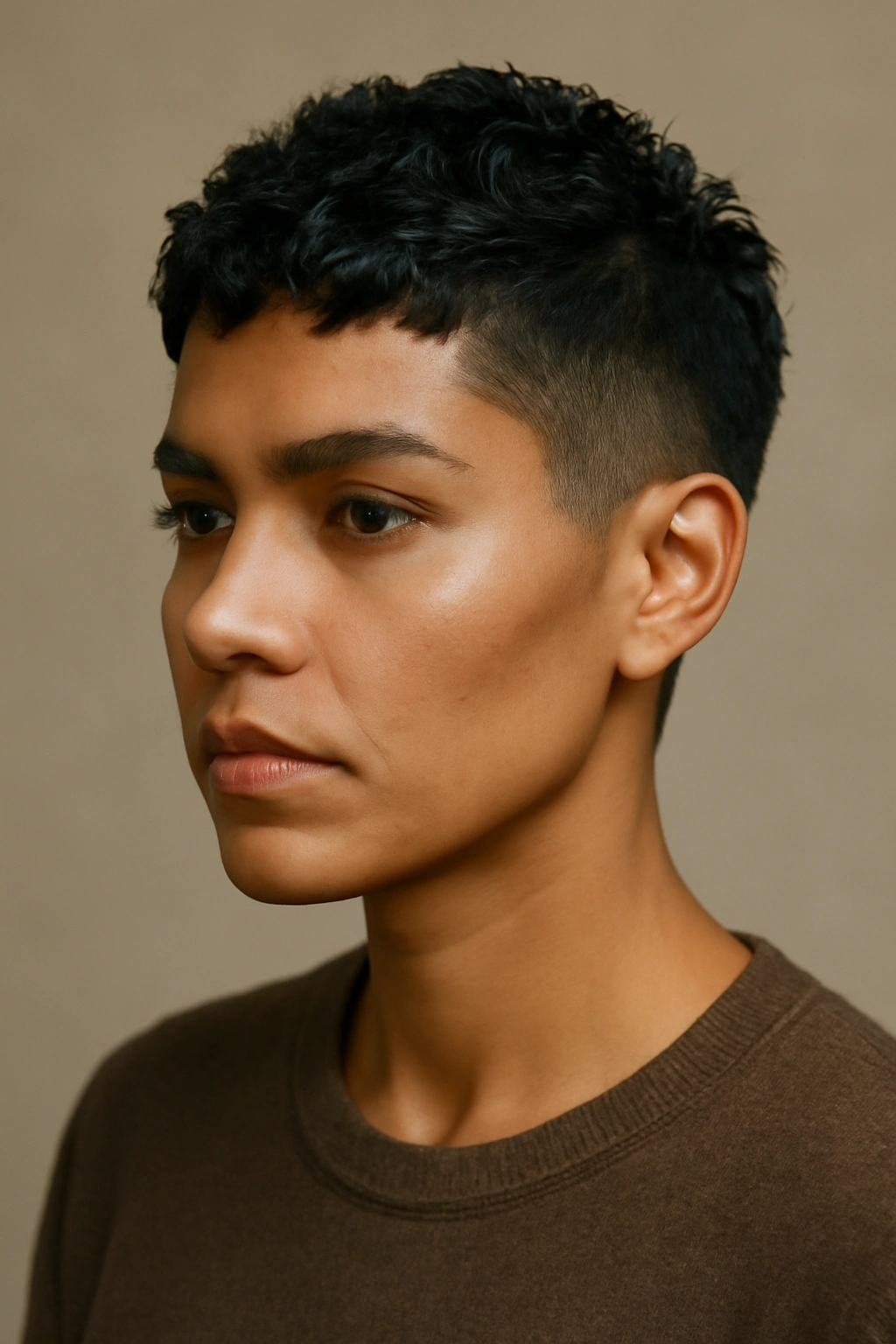
The short haircuts Latina women are choosing right now aren’t about following a trend — they’re about self-definition. Whether you’re drawn to the low-maintenance ease of a textured pixie, the bold statement of a sculpted fade, or the creative expression of a modern mullet, the point is that you get to decide what “short” means for you. Your hair texture, your face shape, your personal style, and your lifestyle all matter in which cut will make you feel most like yourself.
The most important move you can make is finding a stylist who actually understands Latina hair textures and who listens to what you want rather than pushing you toward what’s easiest for them to cut. Bring reference photos of women with similar hair texture to yours, be specific about maintenance commitment (some of these cuts require trims every 3 weeks; others can go longer), and don’t be afraid to say “that’s not what I imagined” if the result doesn’t match your vision.
Short hair is freedom — freedom from the expectation that length equals femininity, freedom from spending hours on styling, freedom to take up space and make a statement exactly as you are. Whether you’re going short for the first time or switching between different short styles, the cut you choose should make you feel confident, comfortable, and genuinely you.
