



Finding the perfect short haircut when you have fine hair as a Black woman requires understanding how texture, density, and cut precision work together. Fine hair can feel tricky to style—it’s prone to laying flat, showing scalp, and losing shape quickly—but the right short cut actually plays to your strengths by minimizing weight that drags down delicate strands and allowing your natural texture to show definition without bulk. The key is choosing styles that create the illusion of fullness through strategic layering, texture, and cut angles rather than relying on density you might not have.
Short haircuts also offer a major practical advantage: they’re low-maintenance, quick to style in the morning, and easier on your hair health since you’re dealing with less length to protect and moisturize. With fine hair specifically, shorter cuts mean less breakage from handling, less product buildup at the ends, and better control over frizz. The styles that work best for fine-haired Black women focus on texture definition, precision cutting, and strategic styling techniques that make those delicate strands work harder for you.
The following ten short haircuts are designed specifically with fine hair in mind—each one accounts for how fine textures behave, how to cut them so they stay shaped, and how to style them for maximum impact. Whether you’re drawn to bold geometric cuts, textured crops, or tapered styles, there’s a short cut here that will flatter your face shape while actually celebrating what fine hair can do when it’s cut and cared for properly.
1. Pixie Cut
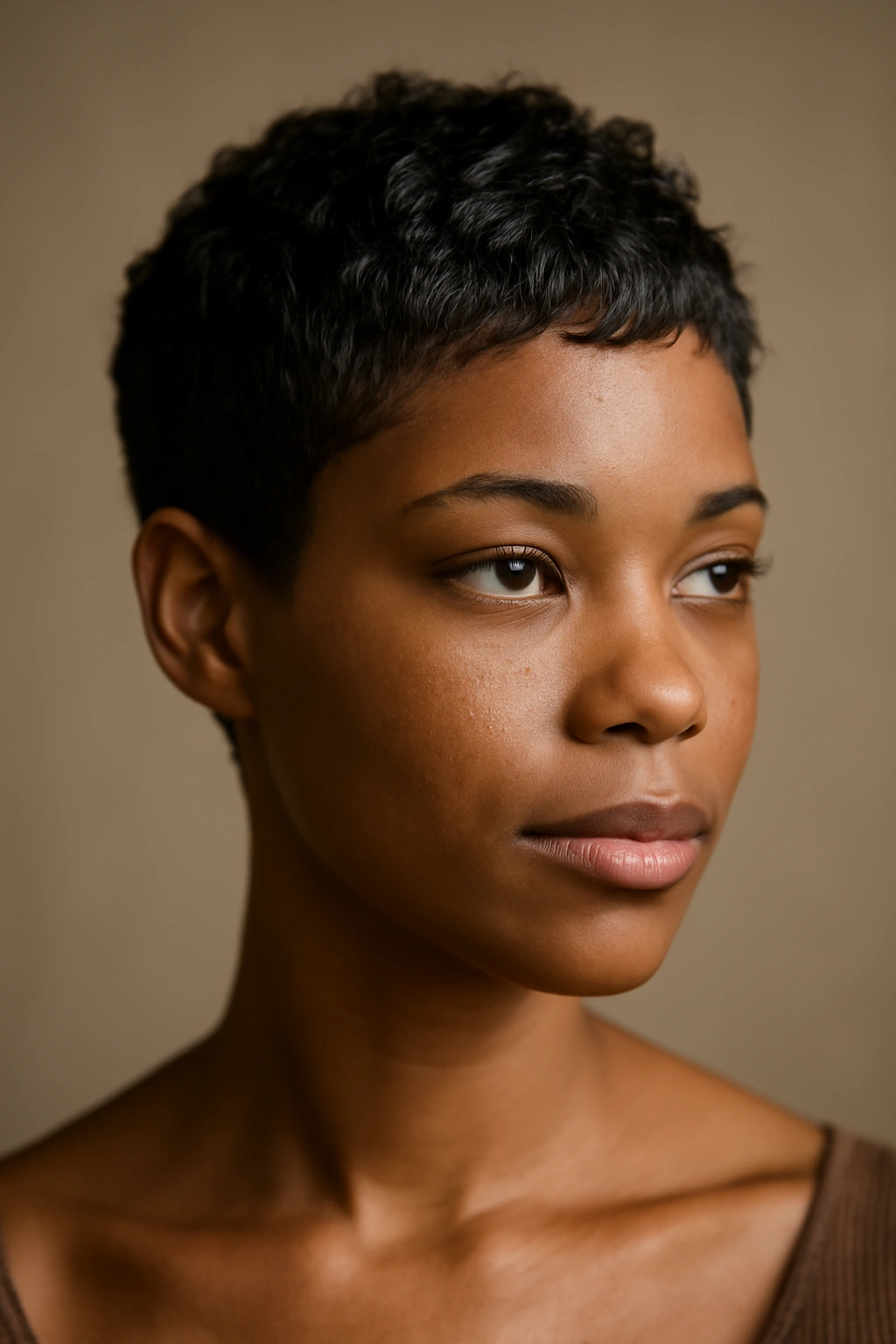
The pixie cut is a classic short style that works beautifully on fine hair because the length sits so close to the scalp that gravity can’t pull the strands down and flatten them. Instead of fighting against the weight of longer hair, a pixie lets your natural curl pattern and texture show definition right at the root. The key to making a pixie work with fine hair is asking your stylist for textured layers rather than blunt ends—this creates movement and the visual illusion of density by breaking up the cut into different lengths that catch light differently.
Why a Pixie Suits Fine Hair Textures
Fine hair needs styles where each strand can exist independently without being weighed down by adjacent hair. A pixie cut accomplishes this by design. The short length means your curls, coils, or waves have room to express themselves without compacting into a flat mass. You’ll also notice that a pixie is incredibly forgiving with styling—you can finger-comb it into place in seconds, and because the strands are short, they’re harder to bend or break during daily handling.
How to Style and Maintain Your Pixie
- Keep the cut refreshed every 4 to 6 weeks; fine hair shows new growth quickly and the shape can lose definition fast
- Use lightweight leave-in conditioners rather than heavy creams, which will flatten your hair against your head
- Sleep with a silk bonnet or pillowcase to prevent unnecessary friction that breaks fine strands
- Style while your hair is slightly damp; fine hair sets faster than coarser textures and tends to hold shape better with a bit of moisture
Pro tip: Ask your barber or stylist to cut the sides and back shorter than the top crown, which creates a flattering illusion of height and volume exactly where fine hair needs it most.
2. High Fade With Tapered Top
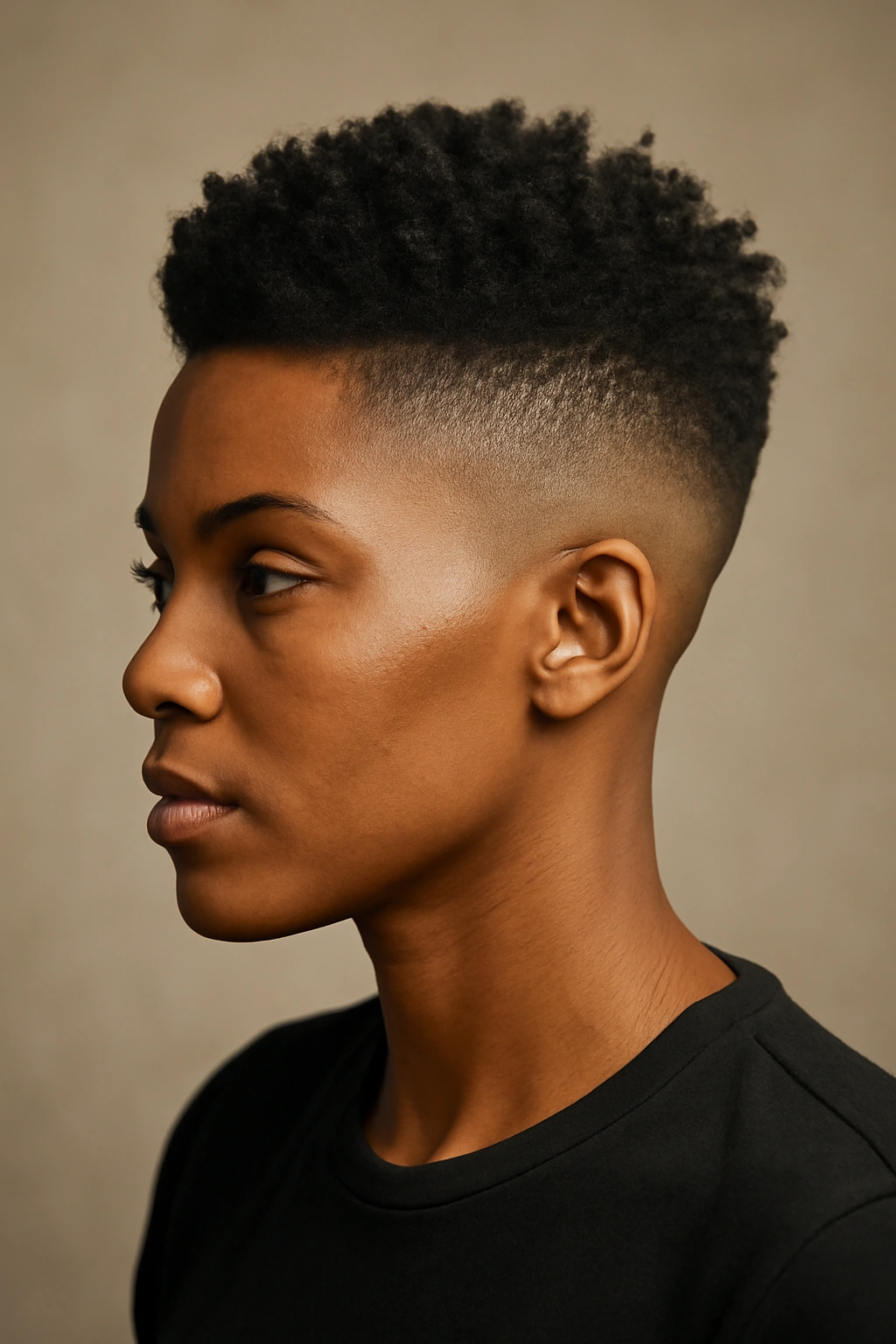
A high fade creates dramatic contrast between the very short, nearly shaved sides and back with a longer, fuller crown—and this contrast is exactly what fine hair needs to look its absolute best. The fade removes the weight that would drag down fine strands on the sides, while the longer top gives you room to work with texture and create actual dimension. A tapered top (where the length graduates rather than sitting blunt) works especially well because it adds texture without requiring density you might not have.
The Structural Advantage of Fades for Fine Hair
When you remove hair from the sides and back, you’re not just changing your silhouette—you’re eliminating the weight that would pull down the fine strands on top. This is why fades look so sharp on fine-haired clients: the contrast between the clean sides and textured crown makes the top look fuller and more defined than it actually is. The visual trick works even when your hair isn’t particularly dense because the eye is drawn to the longer section with the faded backdrop.
Getting the Fade Right for Your Texture
- Communicate the exact line where you want the fade to start; typically this sits somewhere between mid-ear and ear-level for a “high fade”
- Request a skin fade (completely clipped down) rather than a shadow fade if you want maximum contrast and definition
- Ask for soft, tapered edges at the nape so the fade looks intentional rather than choppy
- Plan for a retouch every 3 to 4 weeks as the fade grows out; fine hair makes new growth visible quickly
Worth knowing: A high fade works on nearly every face shape, but it’s especially flattering on round or square faces because the height draws the eye upward.
3. Tapered Undercut
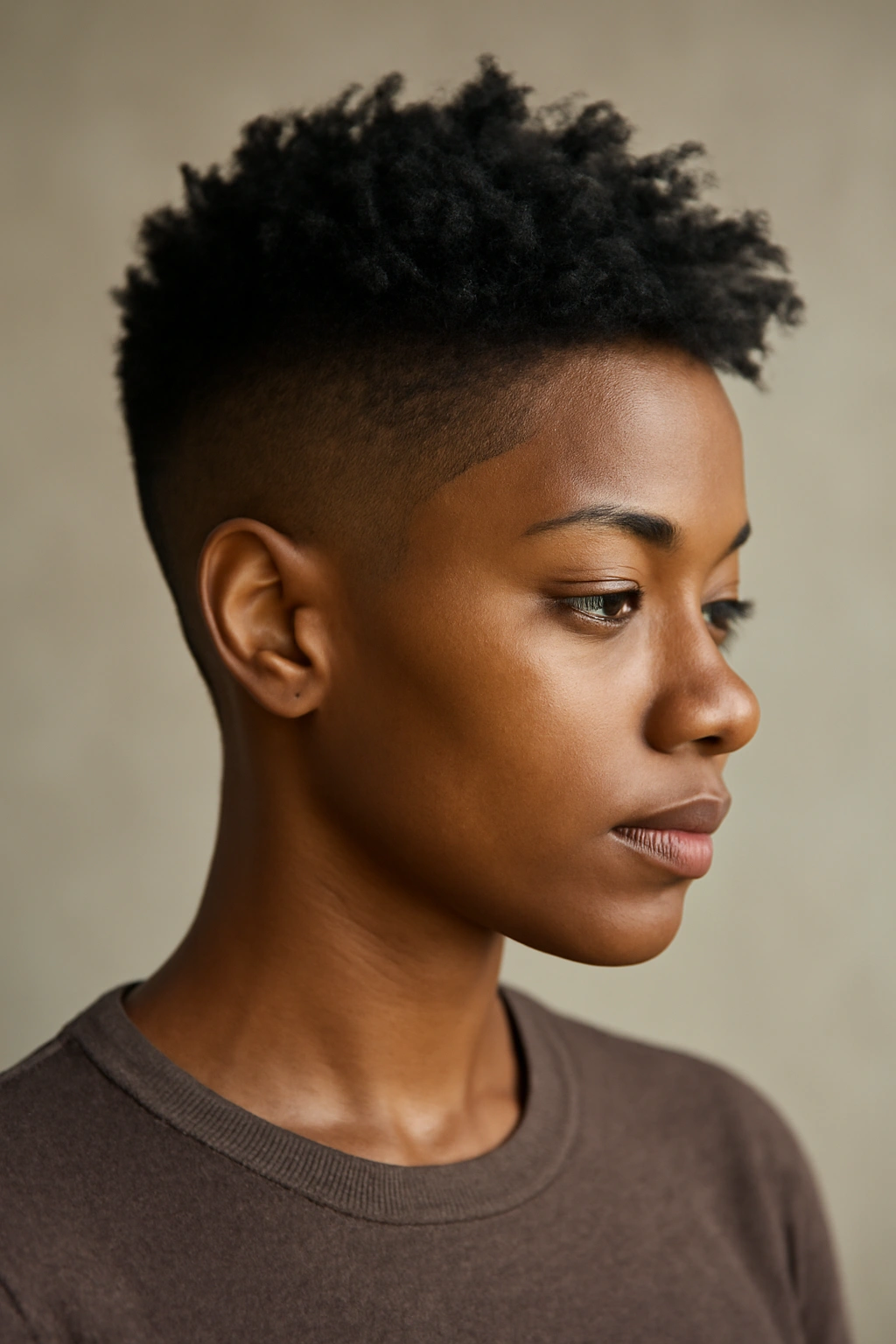
An undercut means longer hair on top with very short or closely clipped hair underneath—but unlike a fade, the transition is more defined and dramatic rather than gradual. This cut is absolute magic on fine hair because it lets you keep some length on top for styling versatility while removing the weight underneath that would flatten everything. A tapered undercut (where the top gradually gets longer rather than sitting blunt) gives you movement and texture without the heaviness of longer layers.
Why Undercuts Showcase Fine Hair Texture
The undercut design forces attention upward to your crown and the texture you’ve created there. Because the sides and back are so short, there’s no weight pulling down from below, which means any curl, coil, or wave you have on top gets to express itself fully. Fine hair responds to this cut by looking noticeably fuller and more dimensional than it would in a traditional all-one-length cut or even a regular fade.
Styling an Undercut When Your Hair Is Fine
- Start with a moisturizing shampoo and conditioner routine; undercuts show your hairline clearly, so scalp health and hydration matter more
- Use a curl cream or styling butter on damp hair and scrunch upward to encourage texture; fine hair benefits from products that add definition without weight
- A light mousse applied to damp roots creates lift that lasts longer than heavier products
- Sleep on a silk pillowcase; fine hair tangles easily and can break against rough cotton
- Refresh the undercut every 4 weeks to keep the contrast sharp and the longer top from looking stringy against the short sides
Insider note: Ask your stylist to taper the top gradually rather than creating a harsh line—this modern approach is way more flattering and easier to grow out between cuts.
4. Short Locs
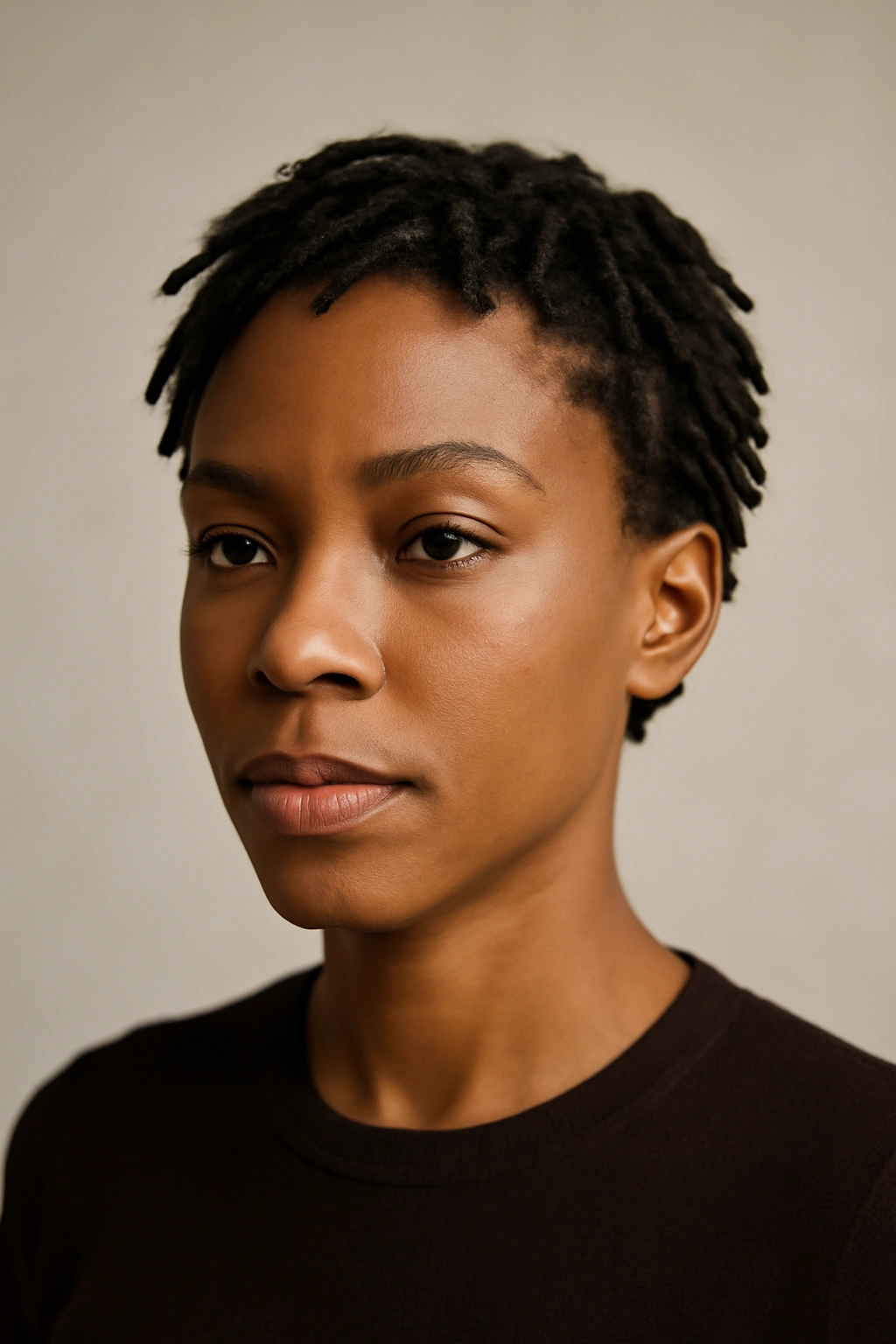
Short locs are a gorgeous choice for fine hair and represent a totally different approach to this list—if you’re open to locking your hair, short locs can actually be easier to maintain than trying to manage fine loose hair. Locs create structure and hold shape naturally because each loc is essentially a self-contained unit. For fine hair, shorter locs mean you’re working with less weight per loc, less stress on the scalp, and the ability to style them in versatile ways without the frizz issues that loose fine hair sometimes presents.
Why Short Locs Work for Fine Textures
Fine hair that’s locked becomes much more manageable because you’re no longer fighting individual strands falling flat or breaking. Each loc, even if it’s thin because your hair is fine, holds its shape and definition. Short locs sit right at the nape of your neck or just touching your shoulders, which is long enough to have styling options but short enough that they don’t become heavy or require extensive maintenance. Many people find that locking actually feels easier on fine hair than managing loose curls or coils.
Maintaining Short Locs on Fine Hair
- Retwist every 6 to 8 weeks using the two-strand twist method or interlocking to keep your locs neat and defined
- Use lightweight oils rather than heavy butters; fine locs can look weighed down with too much product
- Wash every 1 to 2 weeks with a diluted loc shampoo to prevent buildup while keeping locs clean and fresh
- Sleep with a silk bonnet to prevent your locs from rubbing against your pillow, which can cause frizz and breakage
- Keep your edges well-moisturized with a light edge control; fine hair can show hair loss at the hairline if edges are tight or products are too heavy
Pro tip: Some folks with fine hair find that crochet locs (pre-made locs installed into braided cornrows) are easier to start with than going fully natural because they give your edges time to rest while you’re getting used to loc maintenance.
5. TWA (Teeny Weeny Afro)
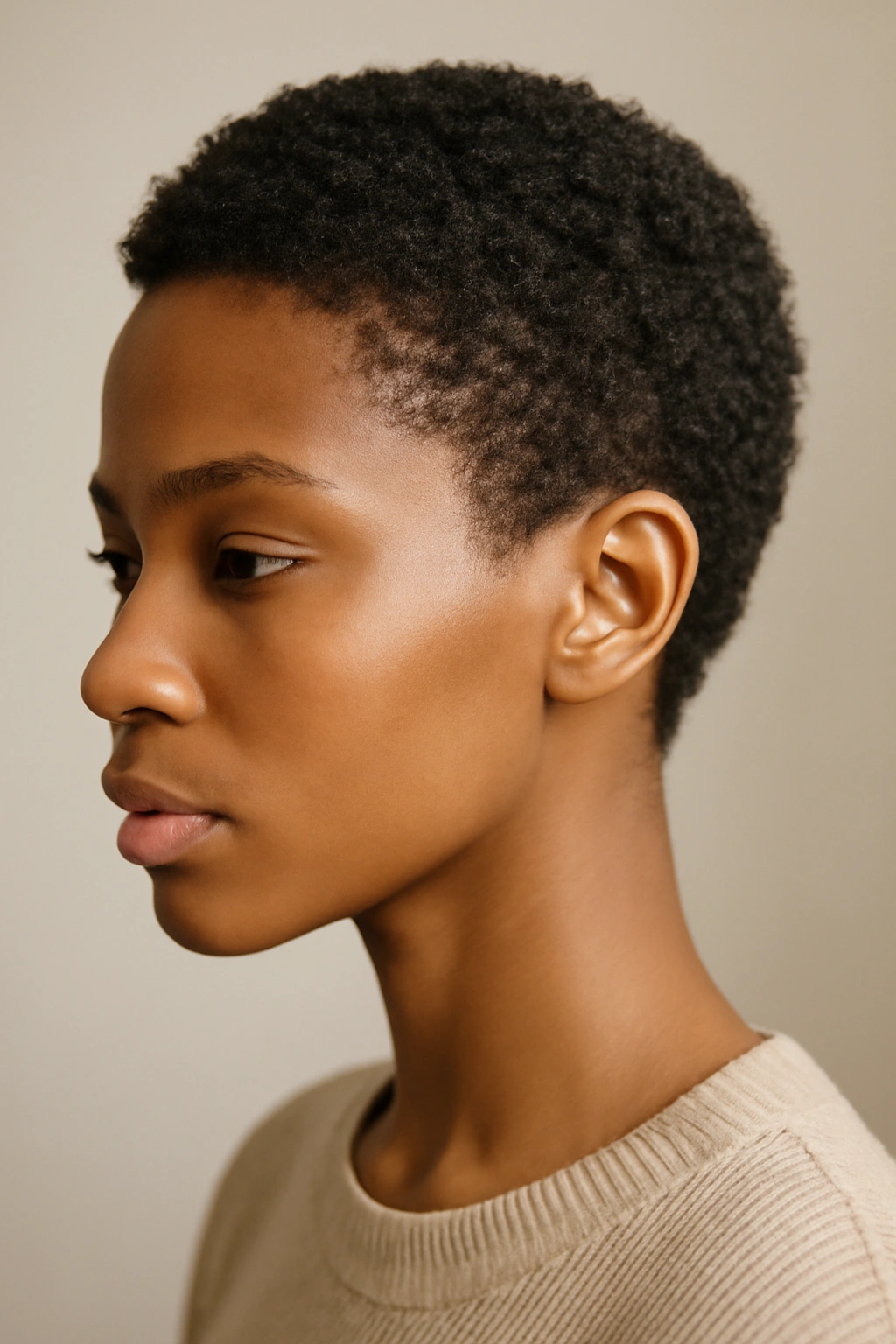
A TWA is short, natural, uncut hair worn in its coily or wave state—typically anywhere from a quarter-inch to maybe two inches of length depending on how much you want to lean into the mini-fro aesthetic. For fine hair, a TWA is liberation. You’re working with your natural texture in its rawest form, no manipulation, no damage from heat or chemicals, and no trying to force length that your hair type might not naturally maintain. Fine hair in a TWA looks delicate and intentional, not thin or sparse, because you’re celebrating the actual texture rather than trying to fight it.
The Confidence Boost of Embracing a TWA
A TWA makes a statement: you’re choosing your hair texture intentionally, and you’re confident doing it. This is actually empowering when you have fine hair, because you stop trying to create the illusion of density and instead embrace the texture you actually have. Fine hair in a TWA has a soft, feathery quality that coarser hair can’t quite achieve. The cut is also the ultimate low-maintenance option—wash, air-dry or style with fingers, and you’re done.
Caring for a Fine-Haired TWA
- Wash weekly with a gentle shampoo designed for textured hair; fine hair gets dirty more easily because strands are thinner but also dries out faster
- Deep condition every 1 to 2 weeks with a moisturizing mask; this is non-negotiable for fine natural hair
- Moisturize daily with a light leave-in conditioner; fine hair needs hydration but gets weighed down by heavy products
- Avoid heavy creams, butters, and oils; stick to sprays, gels, or lightweight serums
- Skip the brushing and combing—finger-detangle under the shower while conditioning to minimize breakage
Worth knowing: The health of a TWA is entirely dependent on moisture and gentle handling, not on length or density, so focus your energy there and your hair will thrive.
6. Textured Crop
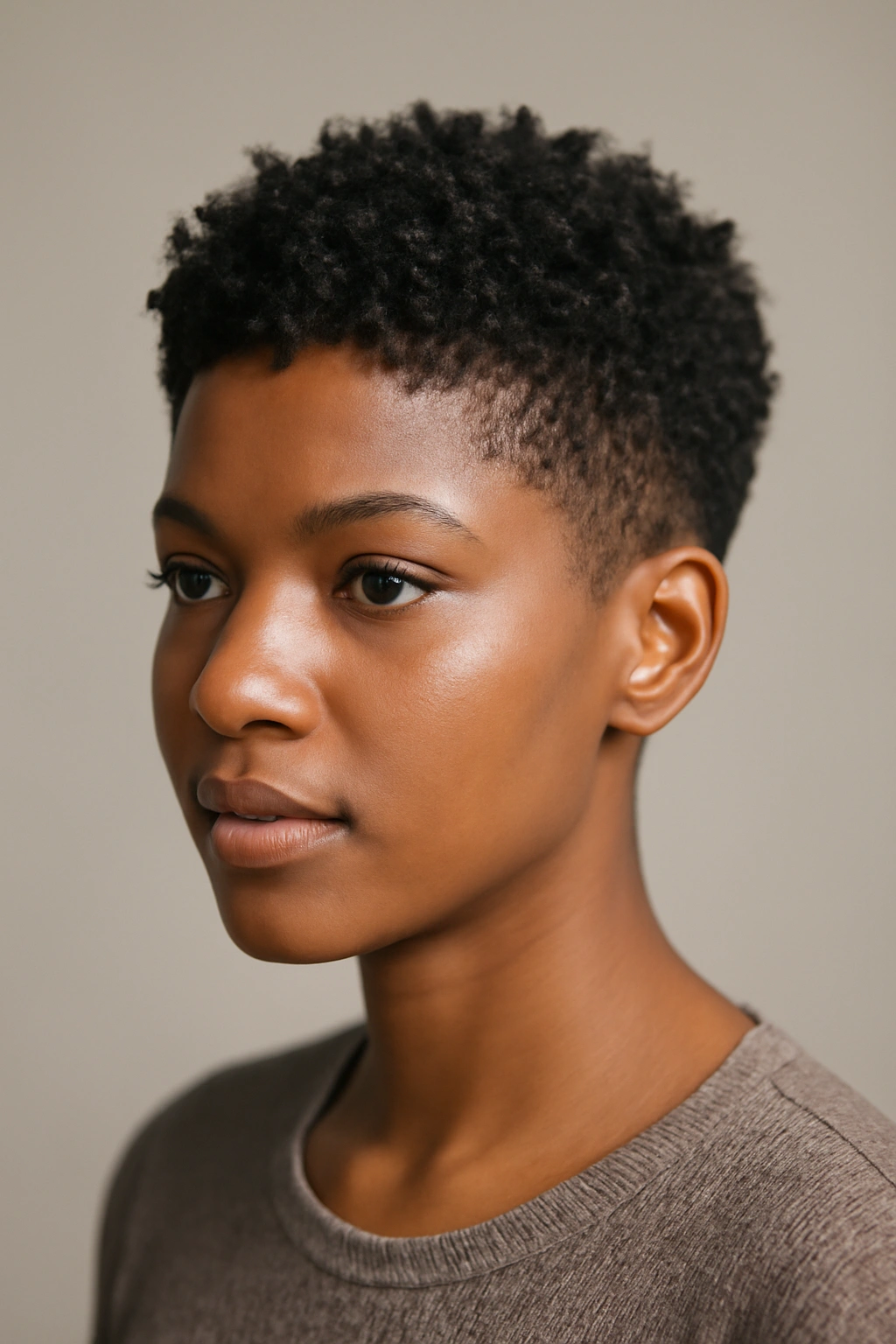
A textured crop is a short cut (usually 1 to 2 inches on top) that embraces your curl or coil pattern by using strategic layering and cut angles to create texture and movement rather than trying to smooth everything flat. This is the sweet spot between a TWA and a tapered cut—you have enough length to create some shape and styling options, but short enough that fine hair stays defined and doesn’t look thin. The layering is what makes this cut work; each layer sits at a slightly different length, which means the eye sees depth and movement even if individual strands are fine.
How Layering Creates the Illusion of Fullness
When a stylist cuts your textured crop, they’re not just removing length—they’re creating stepping-stones of texture throughout the cut. Fine hair in multiple layers looks fuller because light hits different surfaces, and the layers create visual density. A textured crop on fine hair actually looks like it has more volume and dimension than a blunt, single-length cut ever could, even though the texture-crop version might technically have fewer total hairs.
Styling Your Textured Crop for Maximum Impact
- Apply a lightweight curl cream or defining gel to damp hair and scrunch upward; this encourages your texture to express itself rather than lay flat
- Use a diffuser attachment on low heat if you blow-dry, or simply air-dry and finger-style for minimal heat damage
- Refresh your curls overnight using the pineapple method (loosely gathering your hair on top of your head in a soft tie) to maintain definition
- Refresh your cut every 4 to 6 weeks to keep the layers crisp and the texture defined
- Use a microfiber towel or plopping method to dry your hair gently; rough toweling breaks fine strands
Pro tip: Ask your stylist to cut your crop when your hair is dry and in its natural state; this ensures they can see your actual texture and cut accordingly, rather than guessing how it’ll look once it dries.
7. Shaved Sides With Crown Length
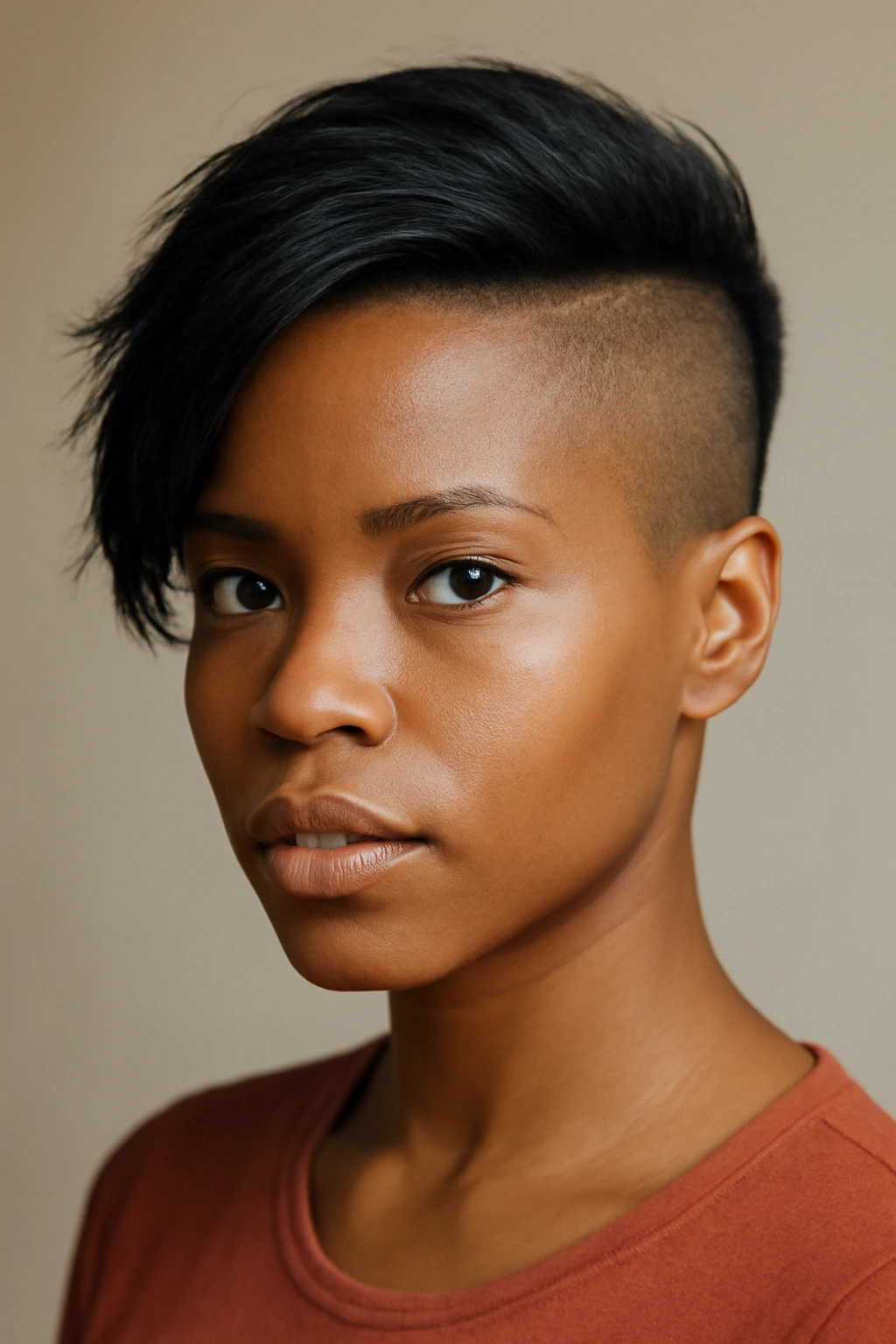
This style keeps your crown area longer—somewhere between chin-length and shoulder-length—while shaving the sides of your head completely bare or nearly bare. It’s bold, it’s flattering, and it solves the fine-hair problem by removing all weight from the sides while concentrating your hair exactly where you want focus. The longer crown area gives you room to style, curl, or braid, while the shaved sides create drama and definition. For fine hair specifically, this cut is genius because the contrast makes the crown section look fuller than it would if you had equal density all around.
The Confidence Factor of Shaved Sides
Beyond the technical hair benefits, shaved sides make a statement. They show off your scalp (which should be healthy and glowing), your face shape, and your bone structure. Fine hair sometimes reads as fragile or thin, but shaved sides deliberately choose a bold aesthetic that says you’re not trying to hide anything—you’re creating art. This is especially powerful if you style your crown in locs, braids, twists, or coils, which create beautiful contrast against the bare sides.
Maintaining Shaved Sides While Growing Your Crown
- Keep shaved sides moisturized and SPF-protected; exposed scalp burns easily and dry scalp looks ashy
- Trim your crown every 4 weeks to keep it looking intentional and prevent the longer section from looking shaggy
- Deep condition your crown section frequently since it’s exposed to more manipulation than covered hair
- Use a silk scarf or bonnet at night; the longer crown section tangles more easily when it’s longer on one area
- Style your crown section in protective styles when possible—braids, twists, or locs reduce daily wear on fine strands
Insider note: If you’re nervous about shaving your sides, start with a very high fade instead and gradually go shorter as you get comfortable with the look.
8. Short Curly Bob
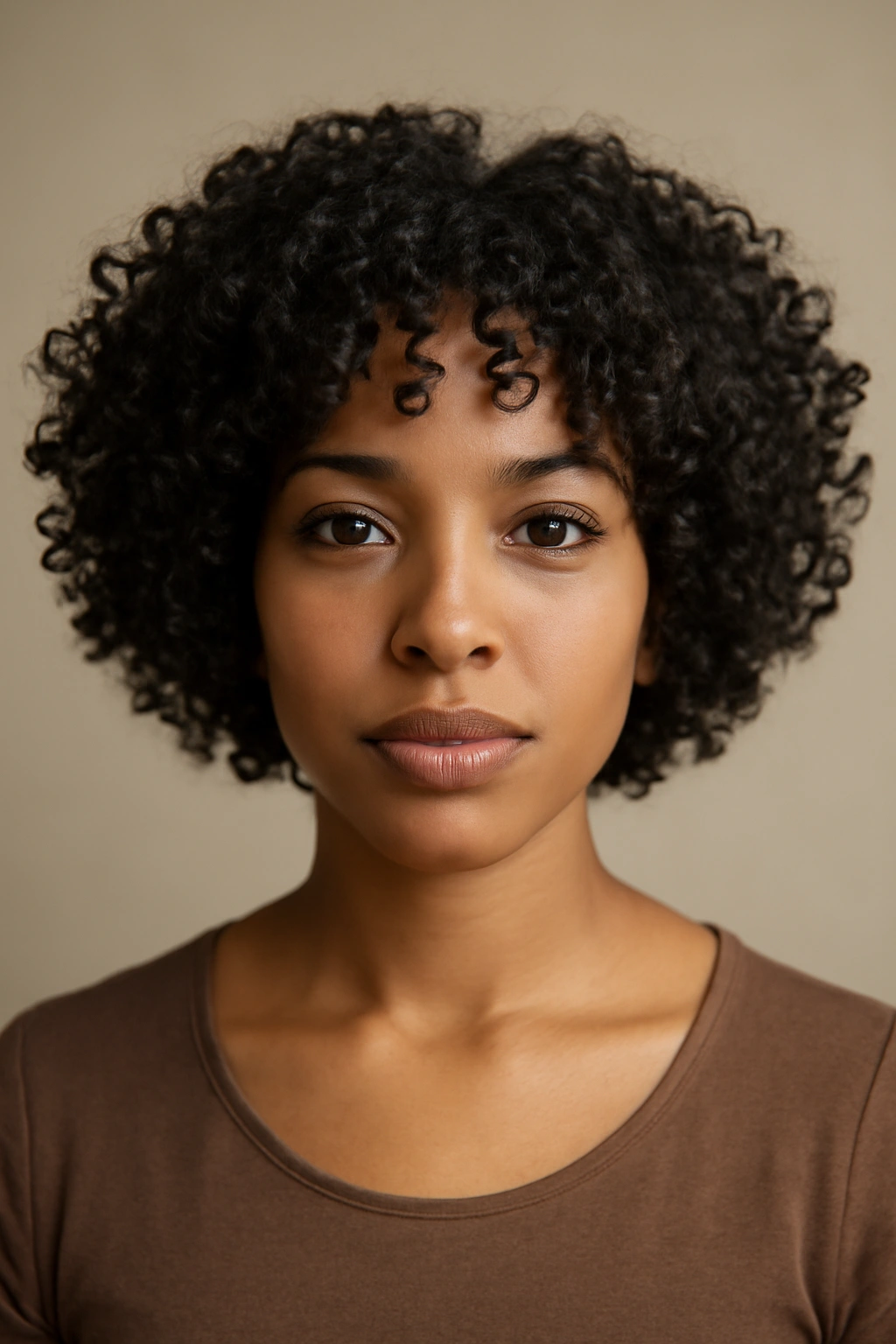
A curly bob is cut while your hair is dry in its natural curl state, typically landing somewhere between your ear and shoulder (though “short” curly bobs can sit higher). The cut is shaped to follow your curl pattern rather than fight it, with shorter layers that encourage your curl to form defined coils rather than stretch out. For fine hair, a curly bob is wonderful because it gives you enough length to create shape and styling versatility, while the layered cutting technique makes fine hair look fuller and more textured.
Why Curly Bobs Flatter Fine Hair Texture
A curly bob cut dry in your actual curls means the stylist is creating a shape that works with your texture, not against it. Fine curls in a layered bob look bouncy and full because the layers create lift and separation. Each curl sits independently rather than compacting together into one dense mass. This is why curly bobs often look like they have more volume than the person’s actual hair density—it’s all about how the cut creates space and movement within your texture.
Styling and Maintaining Your Curly Bob
- Wash every 5 to 7 days with a moisturizing shampoo; fine curly hair gets product buildup faster than coarser curls
- Apply leave-in conditioner and curl cream to dripping-wet hair, then plop or micro-plop with a microfiber towel
- Air-dry when possible; if you blow-dry, use a diffuser on low speed to avoid disrupting your curl pattern
- Refresh your curls overnight using the pineapple method or by spritzing with a refresh spray and scrunching
- Get a cut every 6 to 8 weeks to maintain shape; curly bobs lose definition as they grow out
- Sleep on a silk pillowcase or bonnet to prevent frizz and breakage
Worth knowing: A curly bob requires you to find a stylist who’s trained in cutting curly hair dry—this is non-negotiable if you want a cut that actually works with your texture.
9. Asymmetrical Short Cut
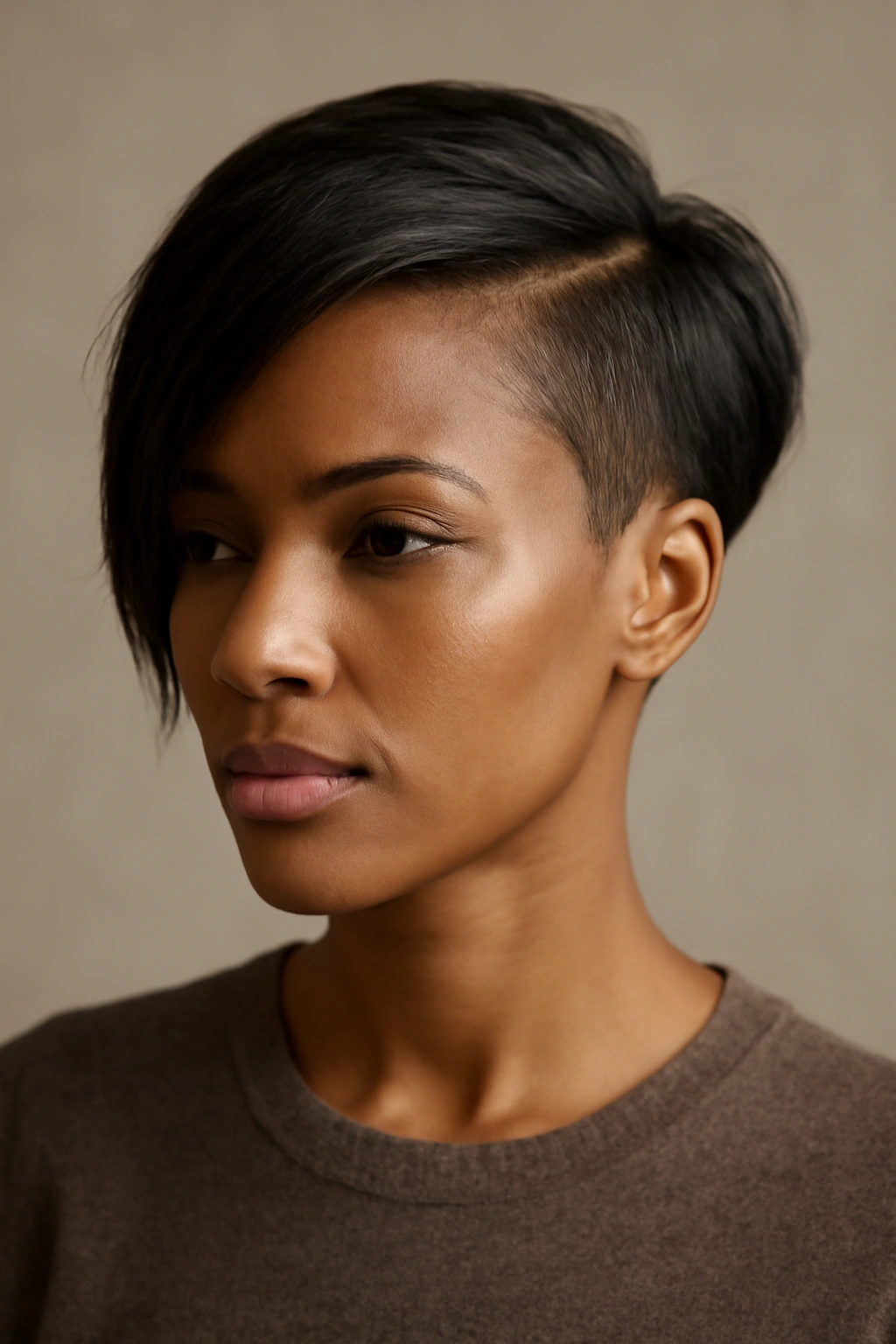
An asymmetrical short cut has different lengths on different sides—typically one side cut very short (almost shaved) and the other side longer, or a longer piece in the front that tapers shorter in the back. It’s edgy, modern, and absolutely fantastic for fine hair because the varying lengths create visual interest and movement. Fine hair can sometimes look one-dimensional, but asymmetry forces the eye to follow the cut’s lines and see dimension and intention rather than thinking “thin hair.”
How Asymmetry Creates Visual Fullness
When a cut has different lengths on each side, the viewer’s eye travels along those lines and sees shape rather than focusing on density. An asymmetrical cut on fine hair makes the style look intentional and artistic rather than like you’re trying to hide something. The shorter side might be buzzed or faded while the longer side is textured or even braided—the contrast between the two creates perceived fullness.
Styling an Asymmetrical Cut for Fine Hair
- The asymmetrical shape means one side does most of the heavy lifting for styling; invest in good product for that longer section
- Moisturize the shaved or very short side regularly; exposed scalp needs hydration and sun protection
- Style the longer side in braids, twists, or coils for added dimension and to reduce daily manipulation
- Refresh your cut every 3 to 4 weeks to keep the asymmetry sharp and the contrast defined
- Sleep on the shorter side flat against your head and protect the longer side with a bonnet
- Use lightweight products on the longer section so it doesn’t look limp or thin compared to the intent of the style
Pro tip: Start with a less dramatic asymmetry if you’re nervous about committing to a bold look—a one-inch difference in length between sides is still asymmetrical but way easier to live with as you adjust.
10. Buzz Cut With Design
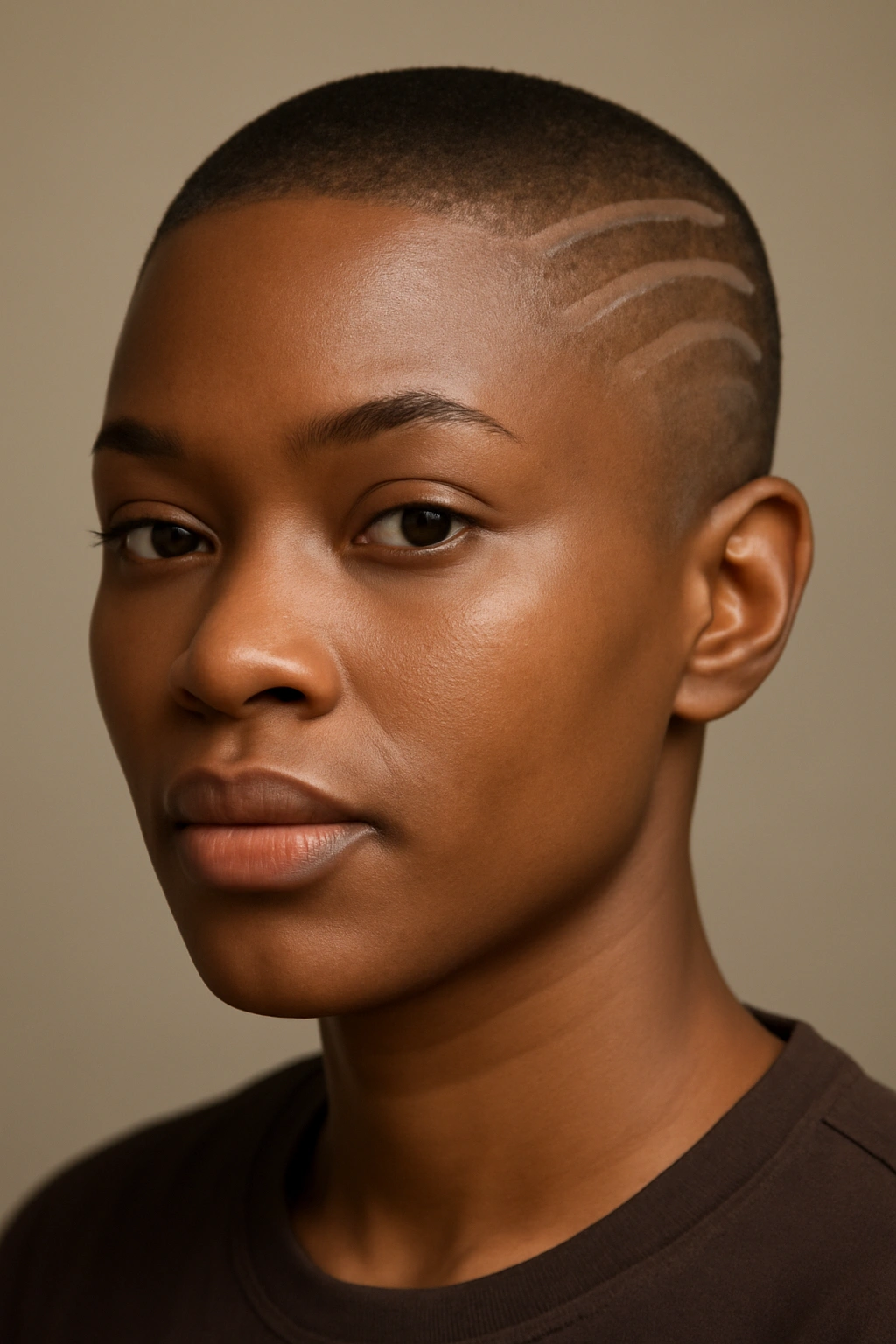
A buzz cut means clipping your hair very short all over (typically a #1, #2, or #3 guard length—roughly ⅛ inch to ⅜ inch). But here’s where the style becomes creative: you can add designs, lines, or patterns into your buzz cut either with the clippers themselves or by shaving specific sections down even closer. A buzz cut with design is the ultimate confidence move, and it’s absolutely flawless on fine hair because it removes the weight issue entirely—what you’re left with is clean lines, a healthy scalp, and total ease of maintenance.
The Liberation of a Buzz Cut on Fine Hair
Fine hair sometimes makes people anxious about thinness or showing scalp, so a buzz cut might seem counterintuitive. But here’s the reality: a buzz cut embraces your scalp and makes it a feature rather than something to hide. When clipped uniformly, even fine hair looks intentional and sharp. Adding designs or patterns elevates a buzz cut from basic to artistic. You’re celebrating your hair texture for what it is, not apologizing for it. The maintenance is also unreal—wash, let dry, done.
Maintaining a Buzz Cut and Keeping Designs Fresh
- Buzz cuts need touching up every 2 to 3 weeks as hair grows out; the line becomes visible faster than longer styles
- Moisturize your scalp daily with a lightweight oil or scalp spray; fine hair means thin, delicate scalp skin that needs hydration
- Protect your scalp from sun exposure with sunscreen or hats; exposed scalp burns quickly
- If you have designs clipped in, request touch-ups at the same frequency as your regular cut so the lines stay crisp
- Sleep however you want—no protective styling needed—and let your scalp breathe
- Use a silk pillowcase anyway to keep your scalp from getting irritated by friction
Insider note: A buzz cut is actually the most affordable haircut option because you’re not paying for length, layering, or complexity—just precision clipping. Perfect for folks who want to look sharp without the cost or time investment.
Final Thoughts
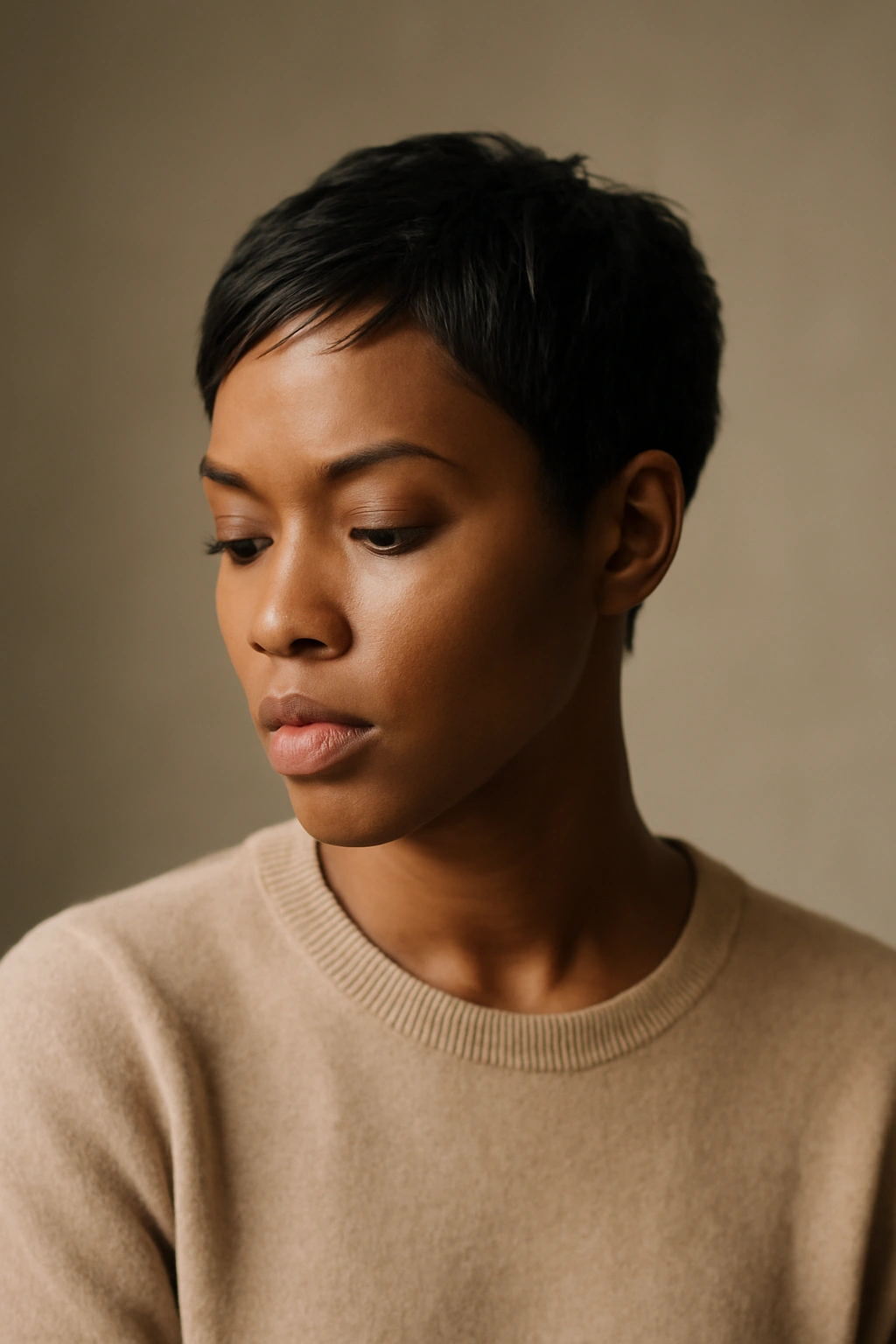
The right short haircut for fine hair isn’t about fighting your hair’s nature or trying to create density you don’t have. It’s about choosing a style where fine texture becomes an asset—where short length, strategic layering, deliberate contrast, or embracing your natural curl pattern make your hair look its absolute best. Whether you’re drawn to the boldness of a pixie, the edge of shaved sides, the artistry of an asymmetrical cut, or the liberation of a buzz, each of these styles works because of how they handle fine hair, not in spite of it.
The key across all these cuts is finding a stylist who understands fine hair specifically—someone who knows that your strands need precision cutting, lightweight products, and styling techniques that create lift and definition rather than weight. Bring reference photos, be clear about your hair’s texture and density, and don’t be afraid to ask questions. A good cut will make your morning routine easier, make your hair look fuller and healthier, and let you feel confident every single day. Short hair on fine strands, when it’s cut right, is genuinely low-maintenance and undeniably gorgeous.
