



Short haircuts with long layers have become the go-to choice for people who want movement, texture, and that effortlessly polished look without the daily styling commitment of longer hair. The beauty of this combination is that it offers the best of both worlds—the ease and low-maintenance appeal of a short cut paired with the dimension and flow that longer layers provide. These haircuts work across different face shapes, hair types, and lifestyle preferences, which is why they’ve remained such a reliable trend in the world of modern hairstyling.
The real magic happens when a stylist understands how to layer shorter hair with intention. Rather than chopping off all length and creating a blunt, stiff look, strategic layering creates gaps and movement that allow hair to fall naturally and frame the face beautifully. Whether your hair is straight, wavy, or curly, thick or fine, there’s a short layered cut out there that will enhance your natural texture and make morning styling feel effortless. The layers add lightness and bounce, preventing that heavy, helmet-like feeling that sometimes comes with shorter styles.
What makes these cuts so appealing is their versatility. You can wear them sleek and polished for professional settings, tousled and textured for a casual weekend look, or even styled with a bit of product for extra definition and movement. They transition seamlessly across seasons and age groups, adapting to how you want to present yourself without requiring frequent trims to maintain their shape. Understanding which variation works best for your face, hair texture, and personal style is the first step toward finding your perfect layered short cut.
1. The Choppy Pixie Bob
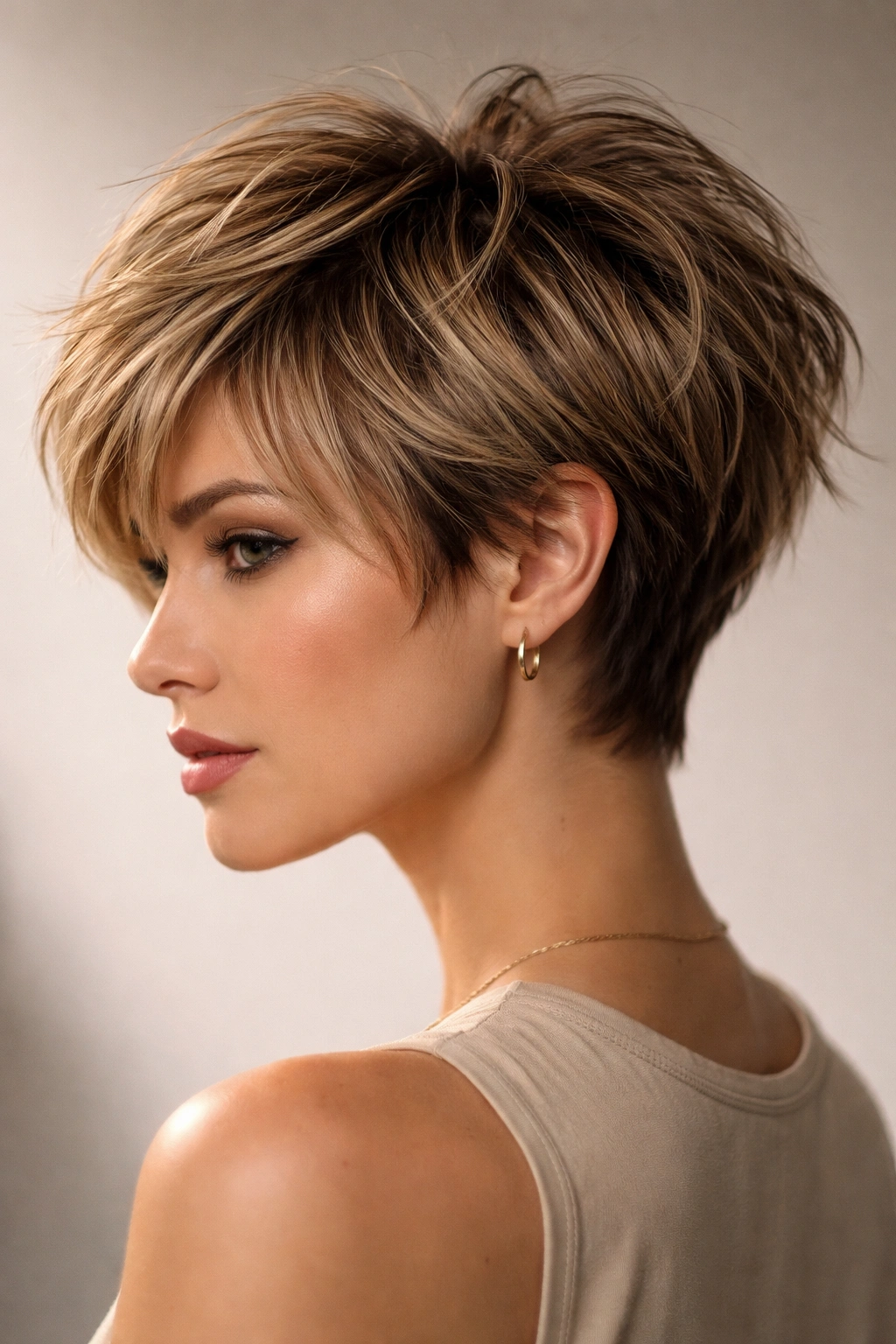
The choppy pixie bob sits right at that sweet spot between a pixie cut and a bob, featuring shorter layers on top that add tons of texture while longer layers in the back create movement and dimension. This style is perfect if you want something modern and a bit edgy without going full pixie. The shorter pieces on top are cut at jagged angles, which keeps hair from looking flat and gives you natural volume even if your hair is fine or straight.
Why This Cut Creates Instant Movement
The choppy texture is specifically designed to break up the weight of your hair, allowing each layer to sit slightly forward and independently from the others. This means your hair doesn’t cling to your head or fall in one heavy line—instead, it separates and moves with every head turn. Even without styling products, the layers create an airy, lived-in texture that looks intentional and cool.
How to Style and Maintain
- Use a lightweight texturizing spray or sea salt spray to enhance the choppy layers and add grip
- Blow dry with your fingers or a round brush, directing the shorter pieces upward for volume
- The cut works beautifully with minimal styling—even air-dried, it has movement
- Schedule trims every 4 to 6 weeks to maintain the choppy edge and prevent the layers from growing out unevenly
2. The Shaggy Crop
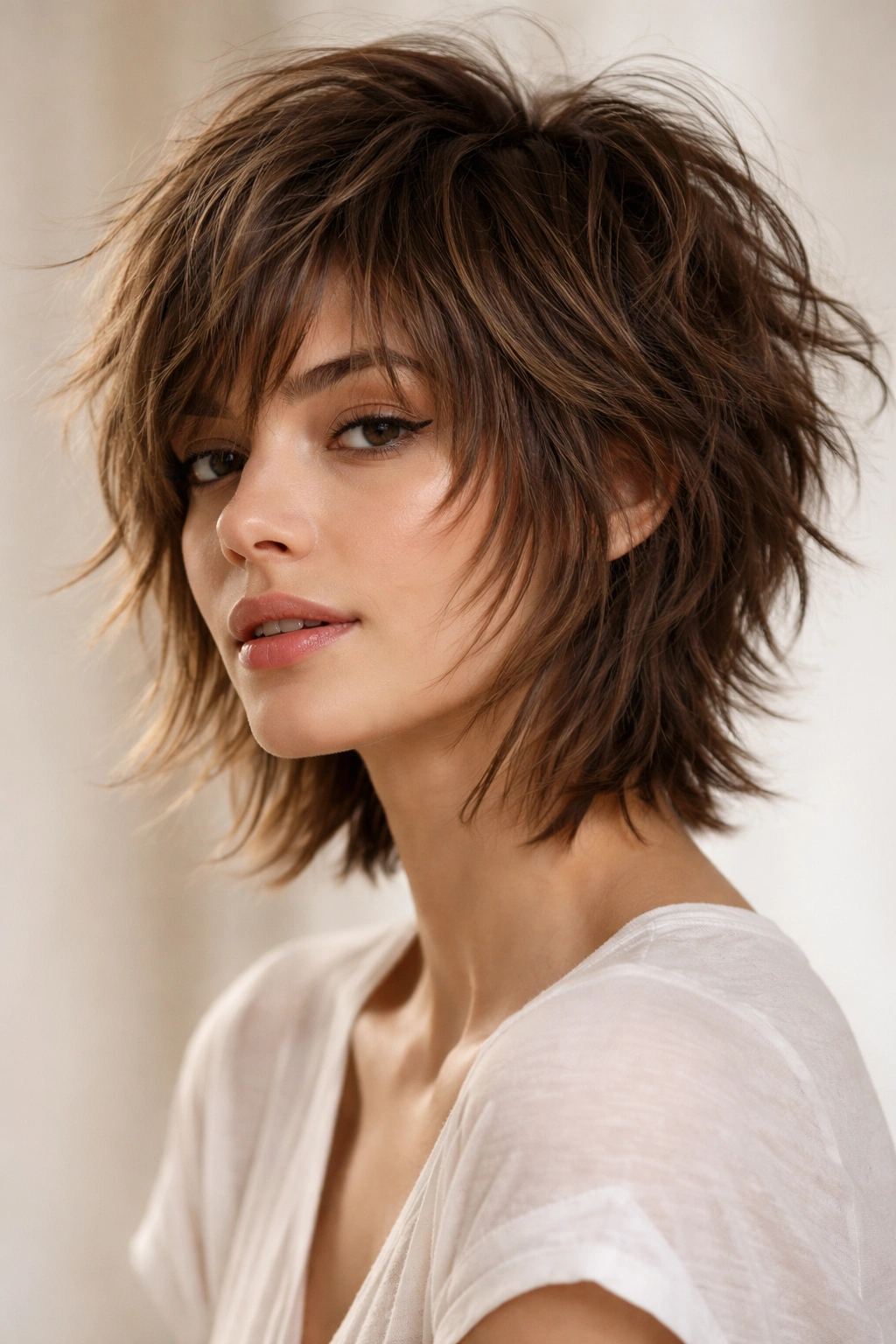
The shaggy crop is all about that rock-and-roll, undone aesthetic that somehow looks effortlessly cool. Shorter throughout the back and crown with longer, wispy layers that frame the face, this cut works especially well if you have naturally wavy or textured hair that embraces a bit of wildness. The layers are cut at varying lengths, creating peaks and valleys that give maximum movement and that signature shaggy charm.
What Makes Shaggy Layers Different
Unlike blunt short cuts, a shaggy crop intentionally leaves irregular lengths and choppy edges. The longer layers aren’t just at the bottom—they’re distributed throughout the crown and around the face, creating piecey texture from root to tip. This prevents the cut from looking manicured or stiff, which is exactly the point. It’s a cut that actually improves when your hair gets a little tousled and textured.
Best Styling Approach for Maximum Flow
- Apply a curl-enhancing cream or mousse to damp hair before air drying for natural texture definition
- If you want extra volume, flip your head upside down while blow drying to create lift at the roots
- A texturizing spray applied to dry hair throughout the day refreshes the shag and adds grip
- This cut actually benefits from slightly greasy, lived-in hair—so you can skip a wash day without losing the effect
3. The Piece-y Lob With Undercut
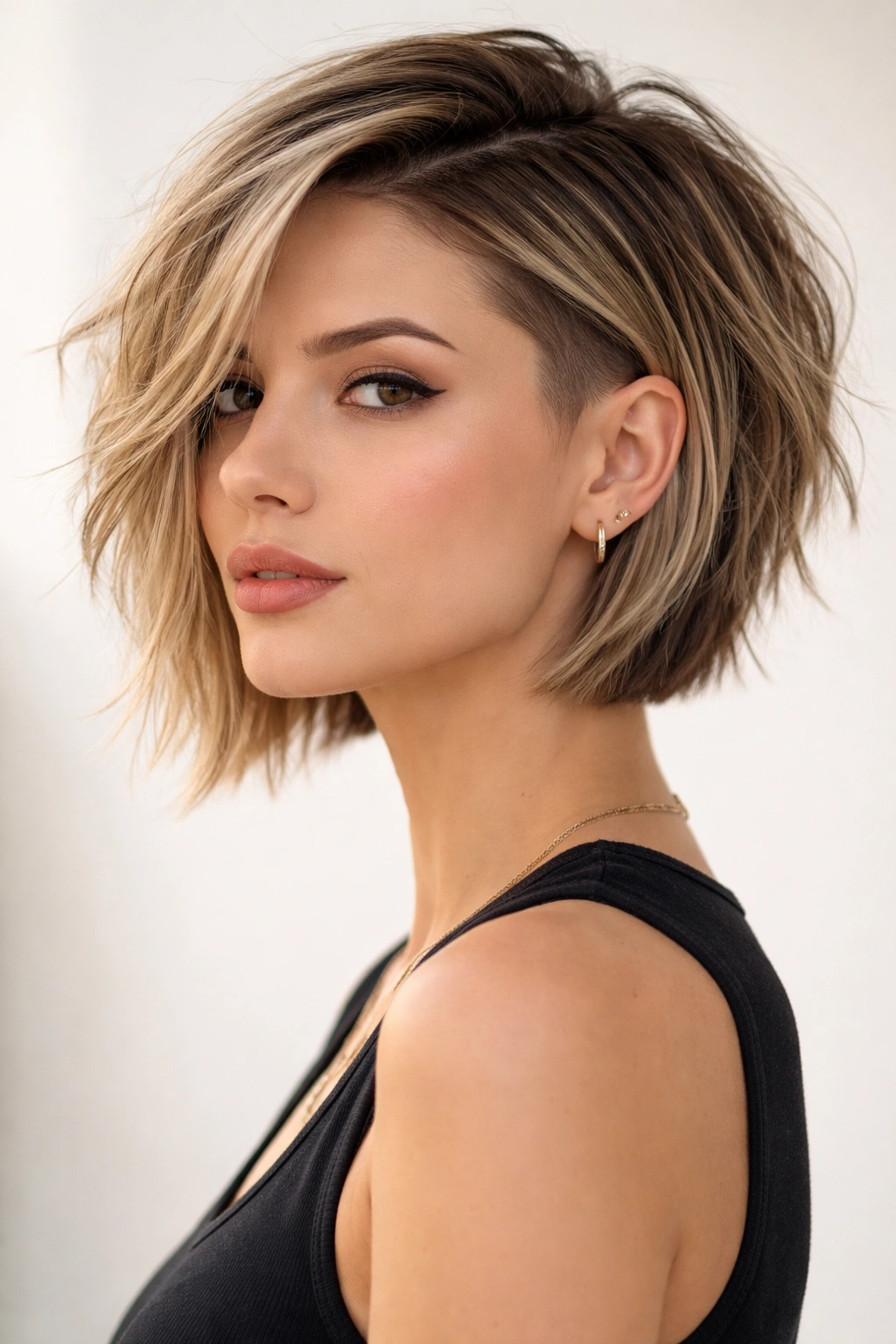
The piecey lob with undercut combines longer layers (typically chin-length or slightly below) with shorter, textured layers throughout and sometimes an undercut along the sides or back for extra edge. This style gives you the sophistication of a longer cut with the modern edge and movement of shorter layering. The undercut can be hidden or visible, depending on how bold you want to be, and it creates incredible dimension when styled.
Why Undercuts Transform Short Layered Cuts
An undercut removes bulk from underneath, allowing the longer top layers to sit lighter and move more freely. It also creates visual contrast and interest—when you put your hair up, the undercut becomes visible as a design element, and when it’s down, the longer layers have even more freedom to shift and flow. This is especially effective for people with thick hair or those who want an extra boost of movement and texture.
Styling Tips for Maximum Impact
- Use a flat iron on just the top layers for a sleek, polished look while keeping the sides textured
- Blow dry the undercut area forward and out for a shaggy, tousled appearance
- Apply texturizing spray to enhance the piecey quality and make layers pop
- The contrast between short and longer layers means you can create multiple looks with the same cut
4. The Textured Curtain Cut
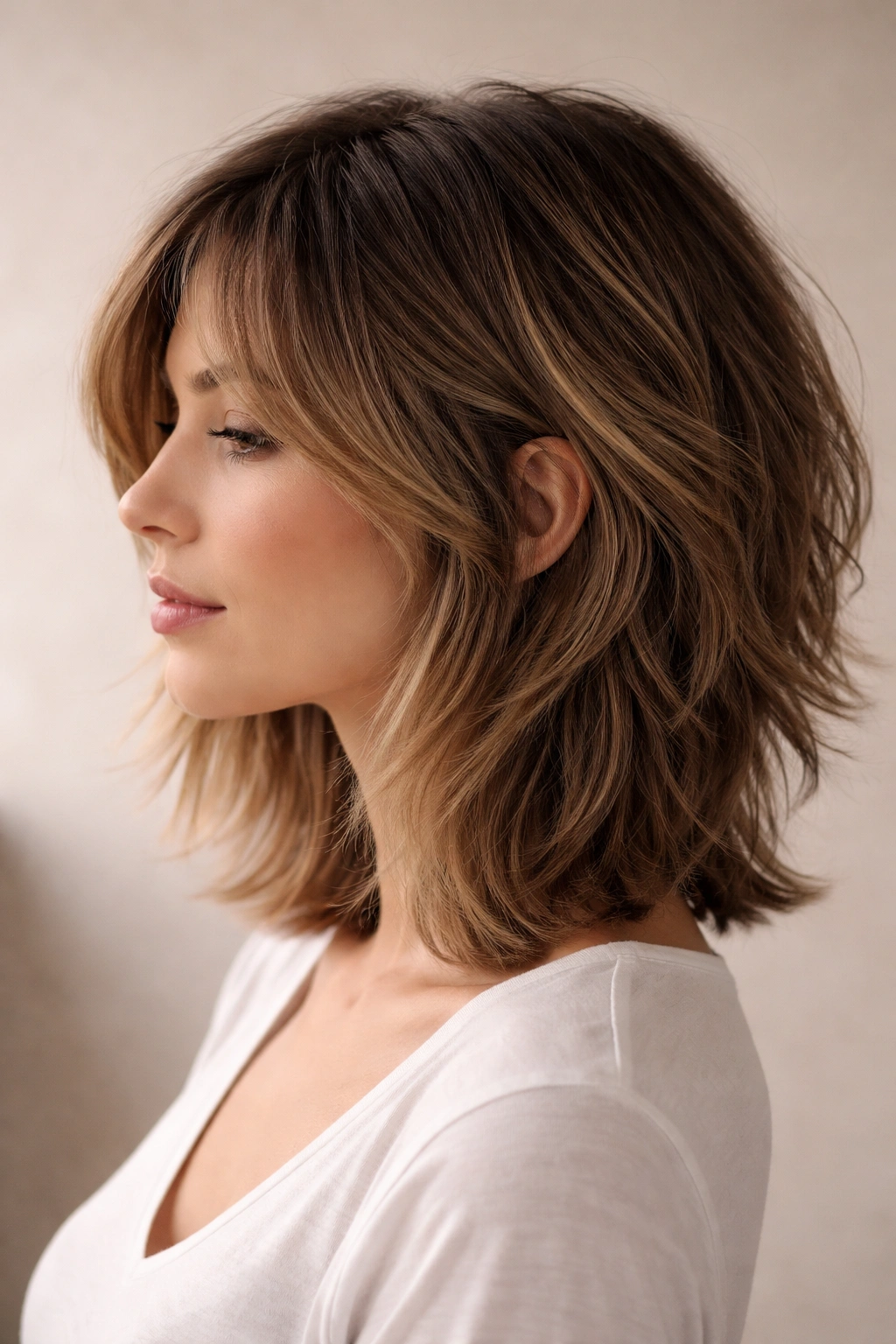
The textured curtain cut features longer layers that naturally fall away from the face like curtains, with shorter, choppy layers throughout that create texture and prevent the style from looking flat or overly formal. This cut bridges the gap between a modern short style and the romantic flow of longer hair, giving you softness and movement without the maintenance burden. The layers are strategically placed to frame the face while longer pieces in the back create that coveted flow.
How Curtain Layers Frame Your Face
Curtain cuts work by creating longer pieces around the face that naturally part and fall outward. These longer layers have the flexibility to be tucked behind the ears for a polished look or left loose and textured for something softer and more undone. The shorter layers throughout the rest of the head provide volume and structure, preventing the whole style from looking limp or one-dimensional. This is especially flattering for round or angular face shapes, as the layers can be customized to create balance.
Achieving the Signature Flow
- Blow dry with a round brush, directing the curtain pieces away from the center part
- Use a light hairspray to encourage movement without weighing layers down
- A texturizing product applied to damp roots before styling adds grip and helps layers fall exactly where you want them
- The cut looks intentional but not overdone, so embrace a slightly imperfect, lived-in texture
5. The Modern Shag With Disconnected Layers
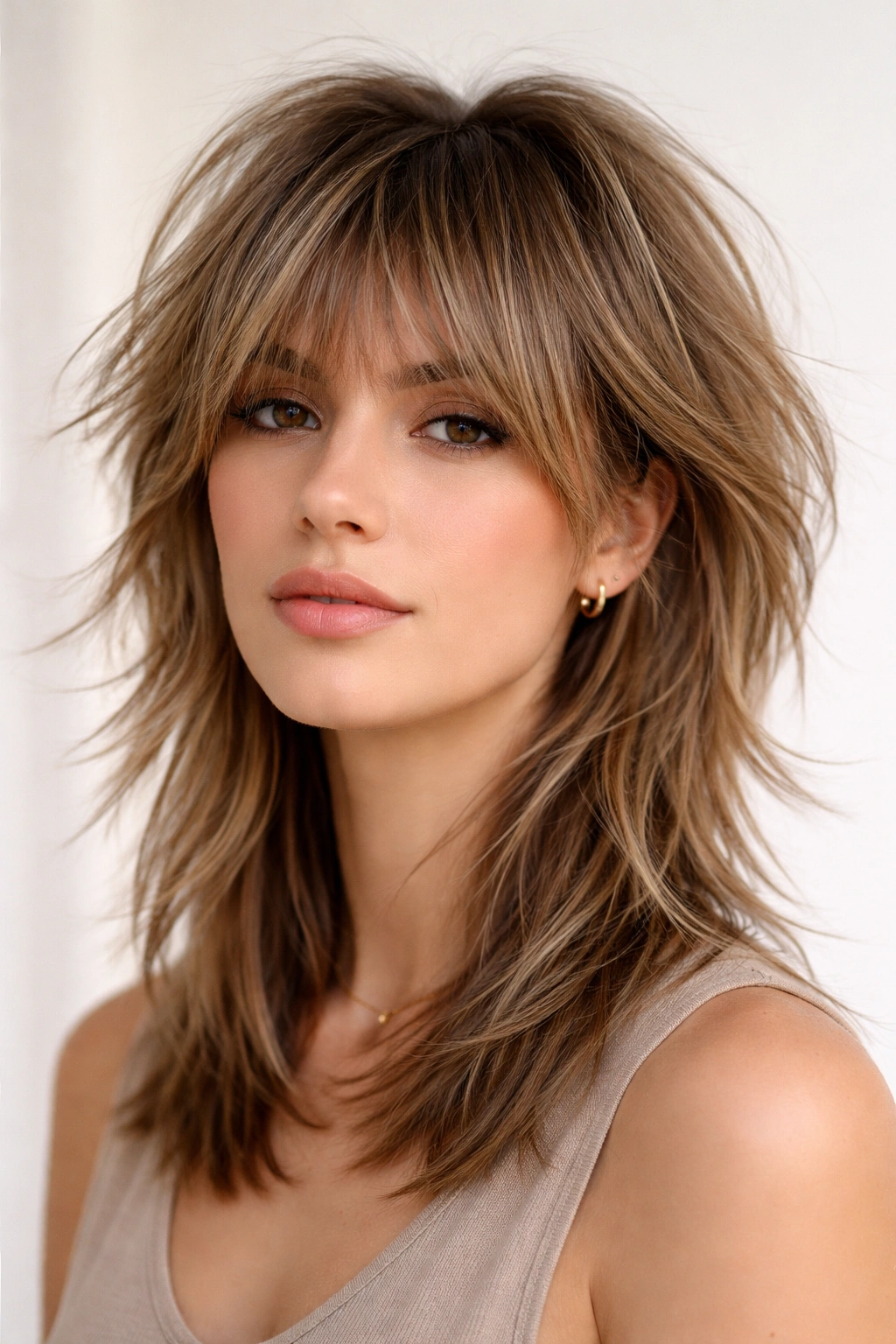
This is the contemporary take on the classic shag, featuring more intentional disconnection between shorter and longer layers. The top is cut shorter and more structured, while the longer layers beneath create movement and visual interest. The “disconnection” means these layers aren’t seamlessly blended—they deliberately sit at different heights, creating that trendy, fashion-forward aesthetic that feels both polished and undone.
The Art of Intentional Disconnection
Disconnected layers work by breaking the rule that layers should blend smoothly from short to long. Instead, there are visible gaps and jumps in length that create shape, movement, and visual interest. This technique is what gives modern shags their distinctive piecey, fashion-forward look. It requires precision cutting—a stylist has to understand exactly where to create these breaks to flatter your face shape and hair texture.
Styling for Optimal Disconnect Definition
- Apply a volumizing mousse to damp roots and blow dry upward to enhance the structured shorter layers
- Use a texturizing spray on mid-lengths and ends to emphasize the longer, disconnected pieces
- A light wax or pomade on just the tips of longer layers adds definition without weighing them down
- This cut actually demands a bit of styling to look its best—the disconnection is most visible when layers have texture and movement
6. The Razor-Sharp Angled Bob With Long Layers
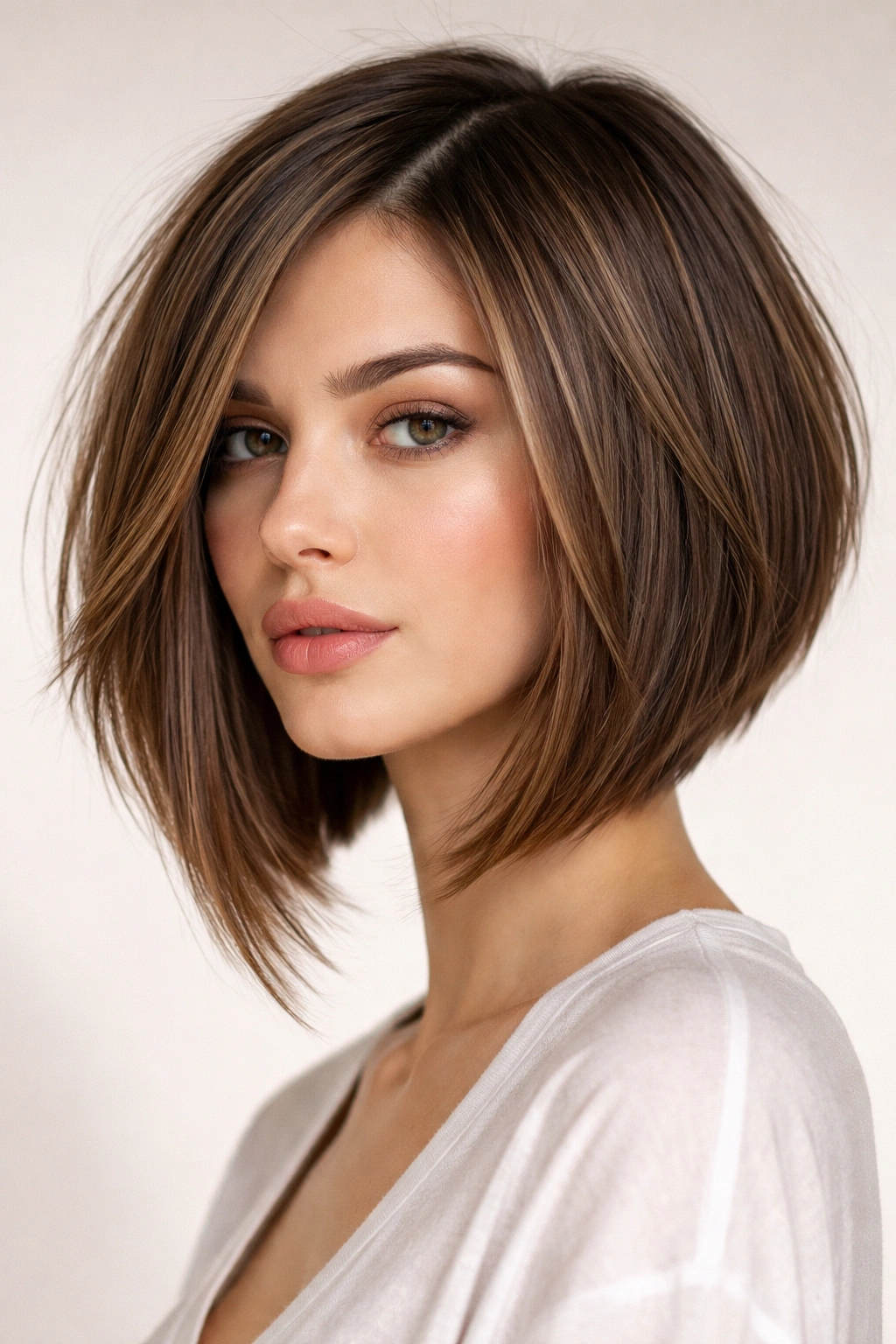
An angled bob with long, layered extensions keeps the sophistication of a structured bob silhouette while adding flowing layers that prevent it from feeling severe or dated. This cut is shorter in the front, gradually lengthening toward the back, with deliberate layers throughout that create movement and softness. It’s the perfect choice if you want a modern, sharp-looking cut without sacrificing flow and ease of styling.
Why Angles Create the Illusion of Movement
The angled foundation means hair naturally falls forward and away from the face, creating built-in movement even when hair is completely straight. Longer layers add to this effect by creating sections that can fall at slightly different angles, multiplying the sense of flow. The longer pieces in the back prevent the cut from feeling too severe or helmet-like, softening the overall shape while maintaining structure and sharpness.
Creating Professional Polish With Texture
- Blow dry the angled front sections forward and outward for a sleek, intentional look
- Use a flat iron on the top layers for smoothness while leaving longer layers slightly undone and textured
- A lightweight serum applied to the mid-lengths and ends adds shine without frizz or heaviness
- This cut transitions beautifully from casual to professional, depending on whether you style it smooth or textured
7. The Wispy Face-Framing Layers
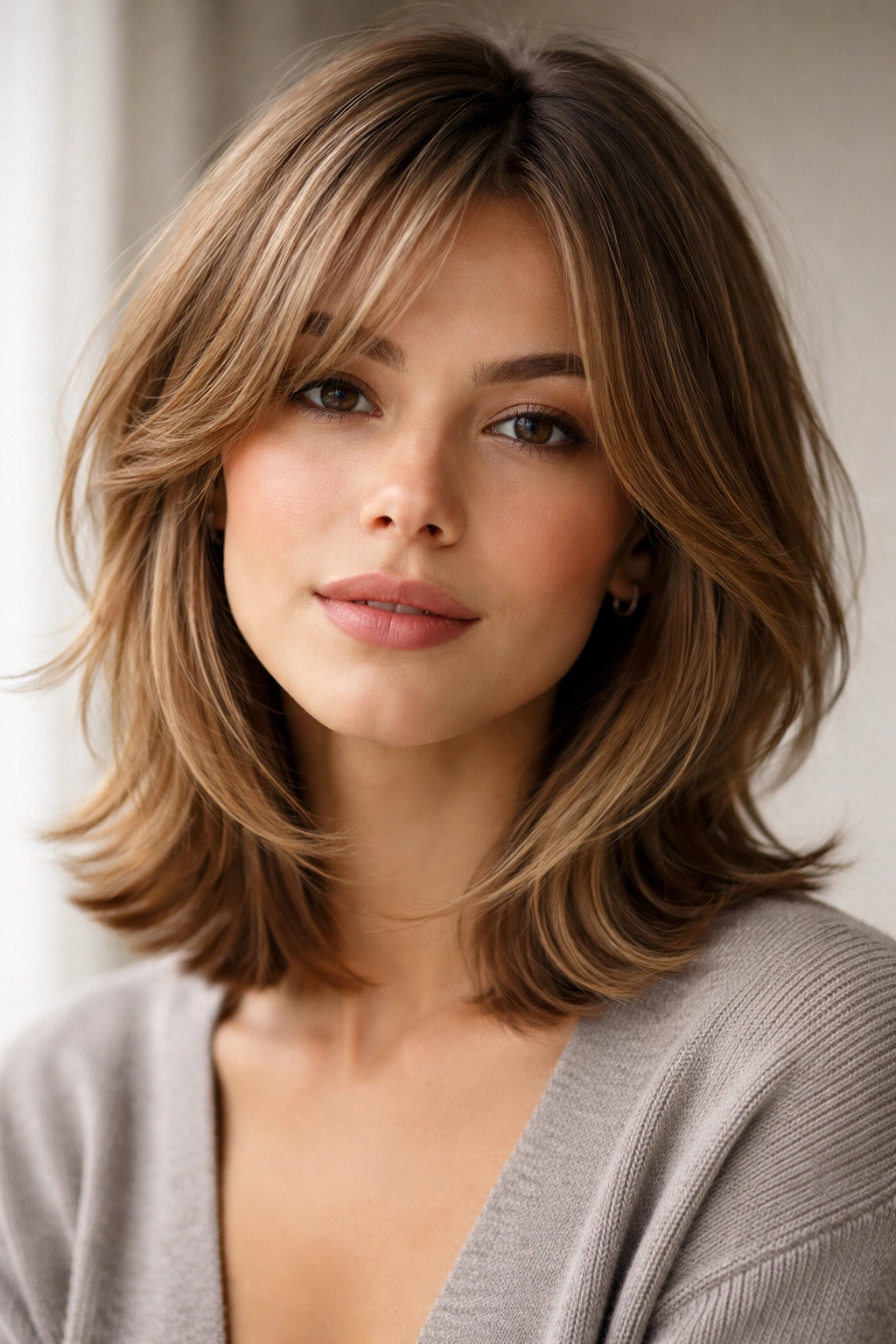
This style focuses on longer, wispy layers that specifically frame the face, combined with shorter, textured layers throughout the rest of the cut. The face-framing pieces are intentionally longer and lighter, creating a soft, flattering effect that draws attention to the eyes and cheekbones. This works beautifully for all face shapes and is especially flattering if you have an angular or wide face that benefits from softening layers.
The Psychology Behind Face-Framing Layers
Longer layers positioned around the face serve multiple purposes: they soften angular features, create visual interest and movement, and draw the eye upward toward the face rather than down to the neck and shoulders. Wispy layers are cut at thin, lighter angles rather than blunt edges, so they literally feel lighter and move more easily with every gesture. For people with thicker hair or those who want to add interest without going dramatically short, wispy face-framing layers are a game-changer.
Styling for Soft, Flattering Movement
- Use a curling iron on the face-framing pieces to create soft waves that fall forward
- Apply a lightweight texturizing spray before styling to encourage movement and prevent pieces from lying flat
- Blow dry the shorter layers upward and back, allowing the longer framing pieces to fall forward naturally
- Avoid slicking this cut back or putting it into an ultra-sleek style—the movement and softness are what make it work
8. The Textured Wolf Cut
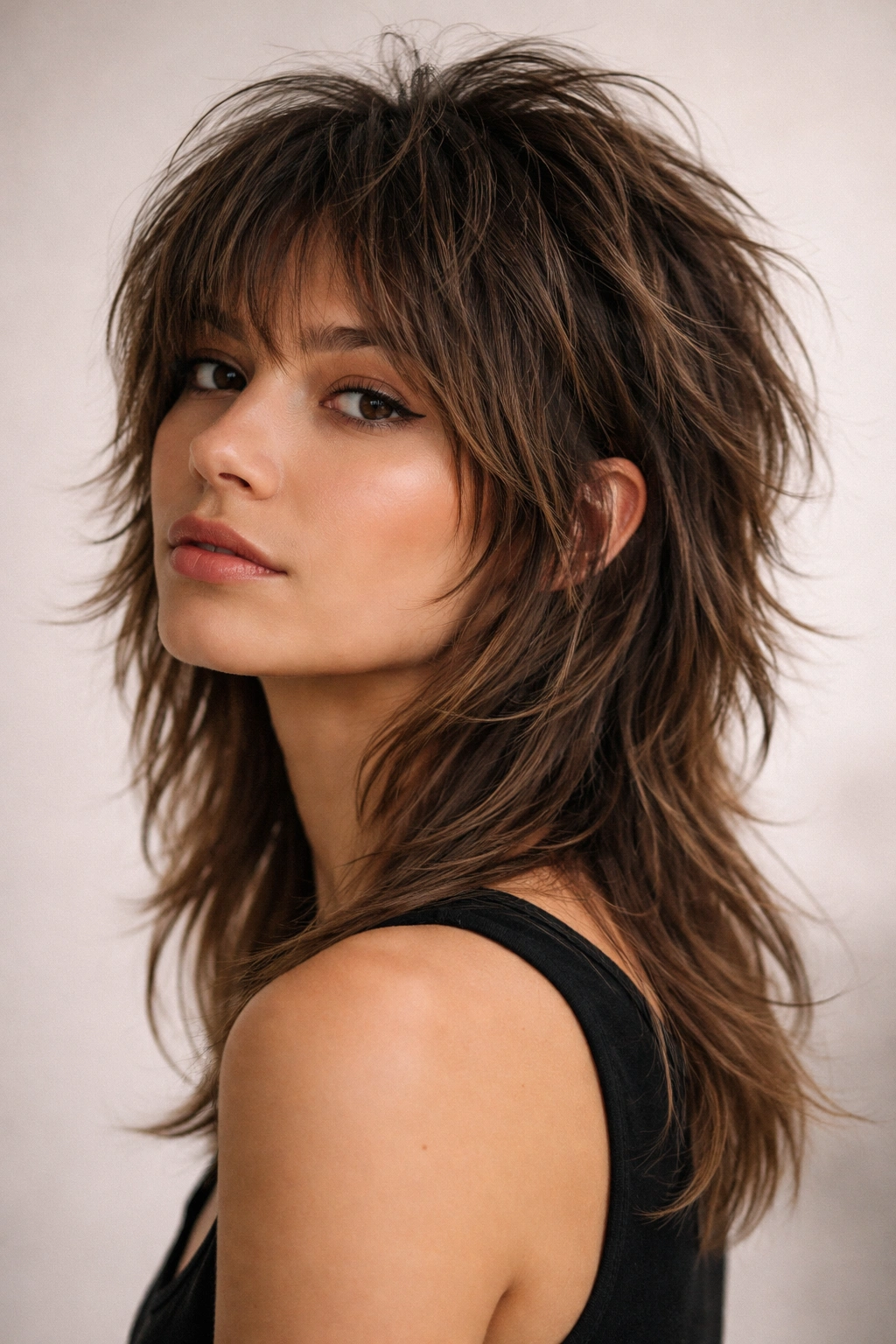
The wolf cut is a hybrid between a shag and a mullet, featuring short, textured layers throughout the crown and sides with longer, flowing layers that create a dramatic silhouette. The “wolf” effect comes from the contrast—short and edgy on top, longer and flowing in the back. This cut has become incredibly popular among people who want something fashion-forward, visually interesting, and that absolutely refuses to be boring.
What Makes Wolf Cuts Stand Out From Other Short Styles
Unlike shags that emphasize overall texture, or traditional mullets that have a sharp front-to-back contrast, wolf cuts create a more blended, yet still visibly distinct effect. The shorter layers on top are choppy and textured, while the longer layers maintain some of that texture while also providing genuine length and flow. The result is a cut that looks completely modern and fashion-forward while still feeling wearable and not costumey.
Styling a Wolf Cut for Maximum Impact
- Use a blow dryer and texturizing cream on the shorter crown layers to create volume and definition
- The longer back layers can be styled sleek or textured depending on your mood and the occasion
- A texturizing spray applied throughout keeps the entire cut looking intentionally undone and cool
- This cut benefits from styling—when it’s smooth and sleek, it looks different than when it’s textured and tousled, giving you options
9. The Blunt Pixie With Grown-Out Layers
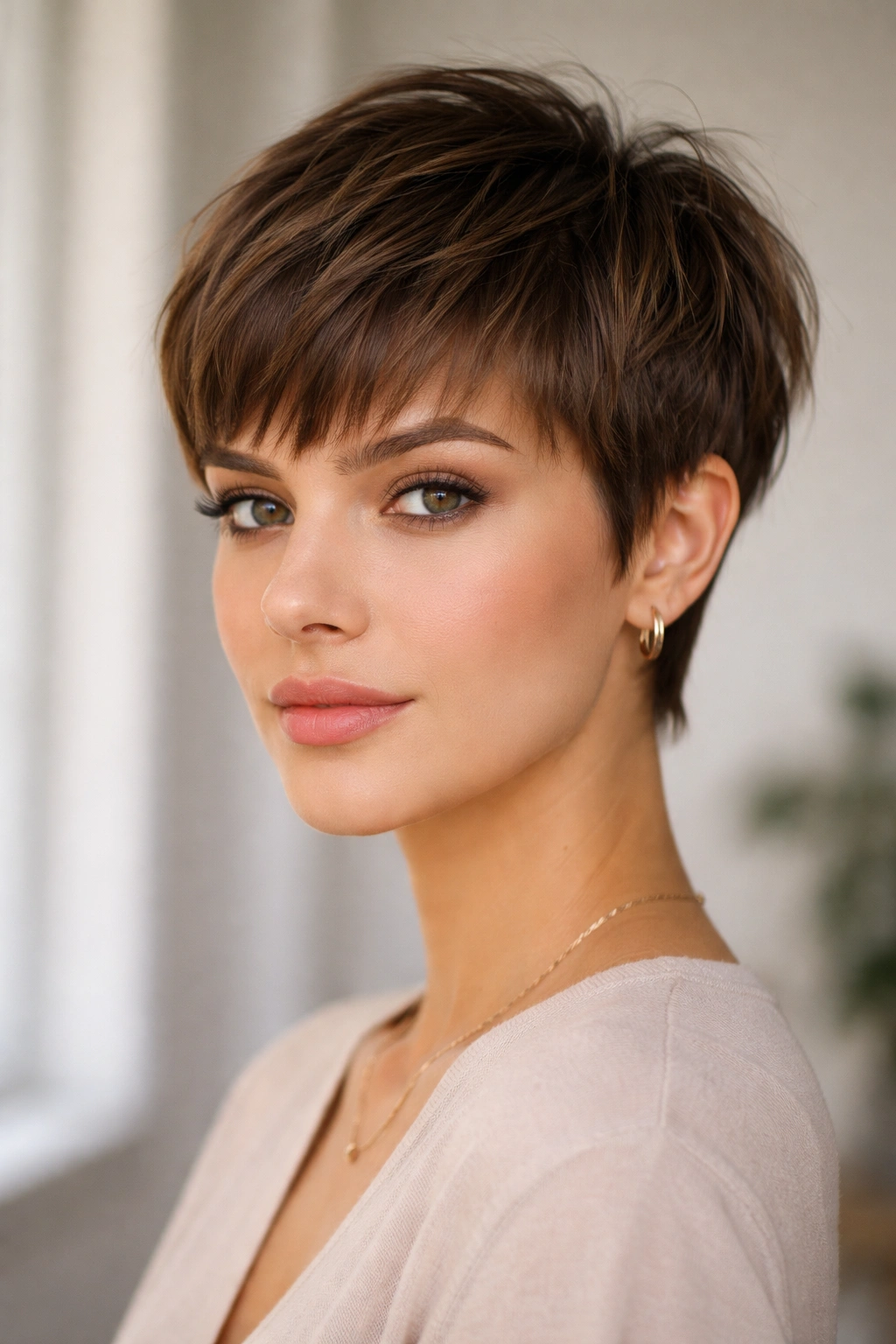
This style keeps the clean, blunt foundation of a pixie cut but allows it to grow out with intentional layering that creates texture and movement rather than a shapeless blob. The shorter front and sides maintain that pixie edge, while longer layers throughout the crown and back create visual interest and softness. It’s ideal if you love the minimalist appeal of very short hair but want some flow and dimension without completely growing it out.
How Layering Prevents Pixie Regrowth From Looking Awkward
When a pixie grows out without layers, it can look shapeless and unflattering during the awkward middle stage. Strategic layering removes bulk at key points, allowing longer pieces to sit lighter and more intentionally. The layers create peaks and valleys that look purposeful rather than accidental, so even as your hair grows, it maintains shape and movement. This approach extends the time between trims while keeping your cut looking intentional.
Maintaining Shape as Your Pixie Grows
- Schedule trims every 6 to 8 weeks to maintain the shorter pixie sections while allowing longer layers to grow
- Use a texturizing spray to enhance layers and add grip during the growth process
- Blow dry with your fingers for a tousled, intentional look that camouflages any awkward growing-out phase
- As longer layers develop, you have the option to style them forward for softness or back for edge
10. The Feathered Short Cut With Extended Layers
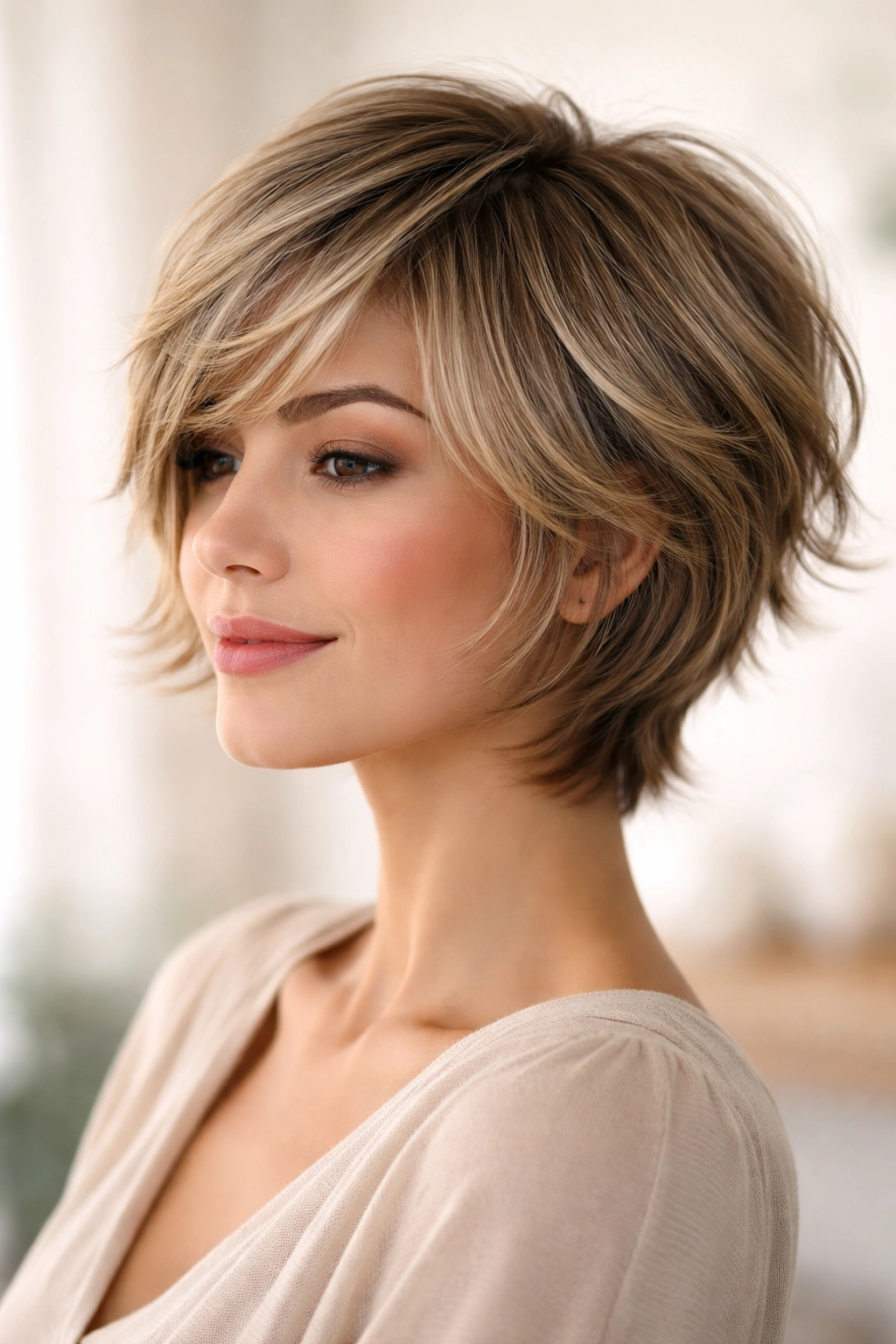
Feathered layers are cut at soft, lighter angles that allow each section to fall away from the others, creating an incredibly airy, light feel. This style features shorter overall length (typically ear-length or above) but with longer feathered layers that extend the visual length and create soft, flowing movement. The feathering technique is perfect for fine or thin hair, as it removes bulk while creating the illusion of fullness and movement.
Why Feathering Technique Creates Superior Flow
Feathering involves cutting each layer at a progressively shorter angle, so the ends are dramatically shorter than the inner lengths. This technique removes weight where it matters most, allowing hair to separate and move freely. Unlike blunt layering that can look choppy or severe, feathering creates soft, flowing transitions that let air move through your hair. The result is a cut that feels light, looks volumized, and moves beautifully with minimal effort.
Styling Feathered Layers for Maximum Softness
- Blow dry with a round brush, directing feathered pieces outward and upward for natural volume
- Use a texturizing cream on damp hair before styling to enhance the feathered effect
- A light-hold hairspray keeps the feathered movement in place without stiffening the cut
- This style looks best when slightly tousled—avoid slicking it down or over-styling, which defeats the purpose of feathering
11. The Asymmetrical Short Cut With Flowing Layers
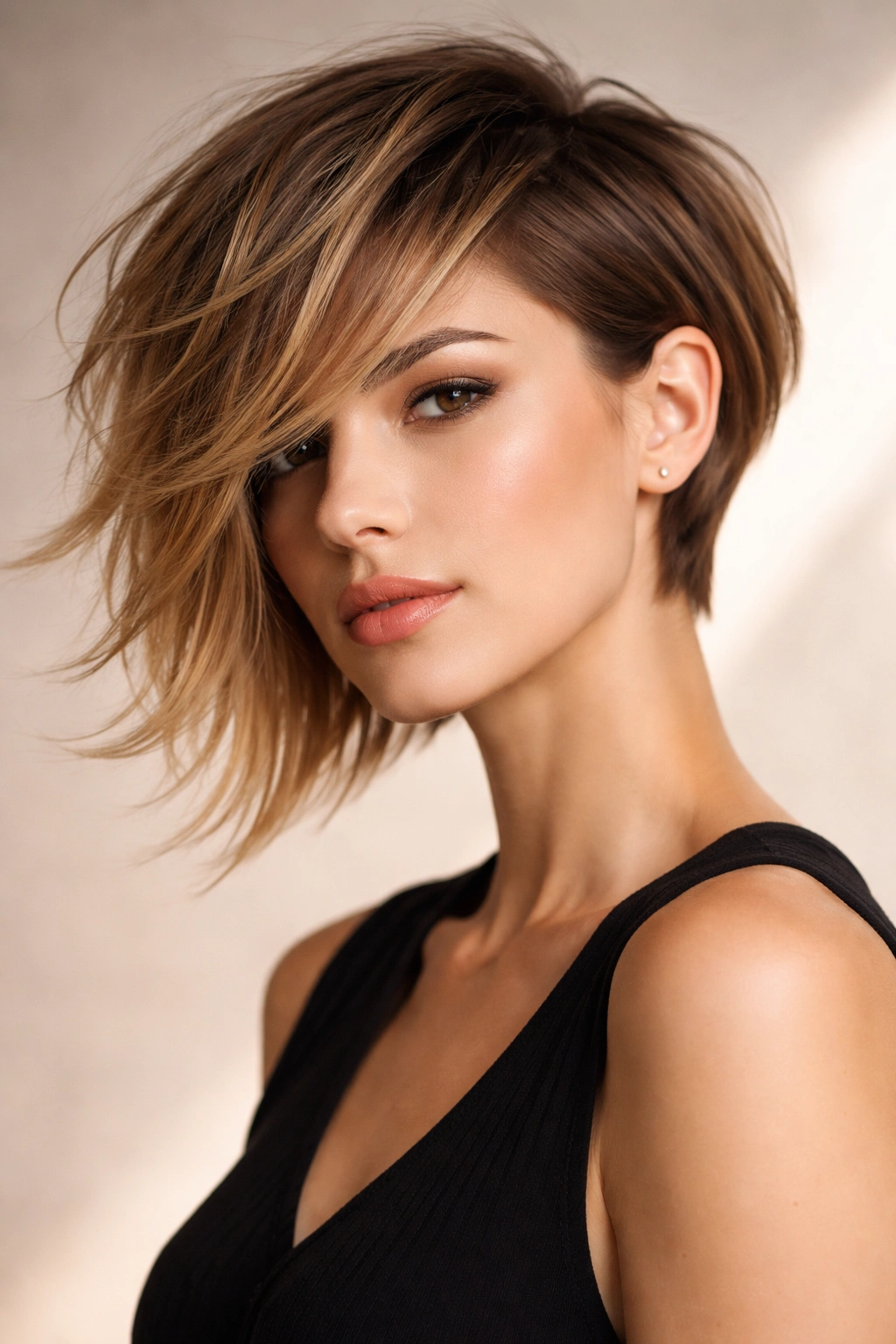
An asymmetrical cut features one side shorter and more structured, while the other side has longer, flowing layers that create imbalance and visual interest. This bold style is for people who want a statement-making cut that looks fashion-forward and intentional. The longer layers on one side soften the asymmetry and provide movement, preventing the style from looking too severe or edgy.
The Balance Between Boldness and Wearability
Asymmetrical cuts can look intimidating in theory, but the addition of longer, flowing layers on the longer side makes the style feel more balanced and approachable. The longer layers catch light differently than the shorter side, creating dimension and movement that makes the cut look dimensional rather than one-dimensional. This approach lets you embrace an edgy aesthetic without sacrificing femininity or flow.
Styling Options With Asymmetrical Layers
- You can part the hair in different directions to emphasize different sides depending on the occasion
- Blow dry the longer side forward and outward to maximize flow and movement
- The shorter side can be smooth and sleek or textured and tousled, depending on your mood
- This cut offers tremendous versatility—it looks completely different when styled different ways, giving you multiple looks from one cut
12. The Messy Textured Crop With Long Pieces
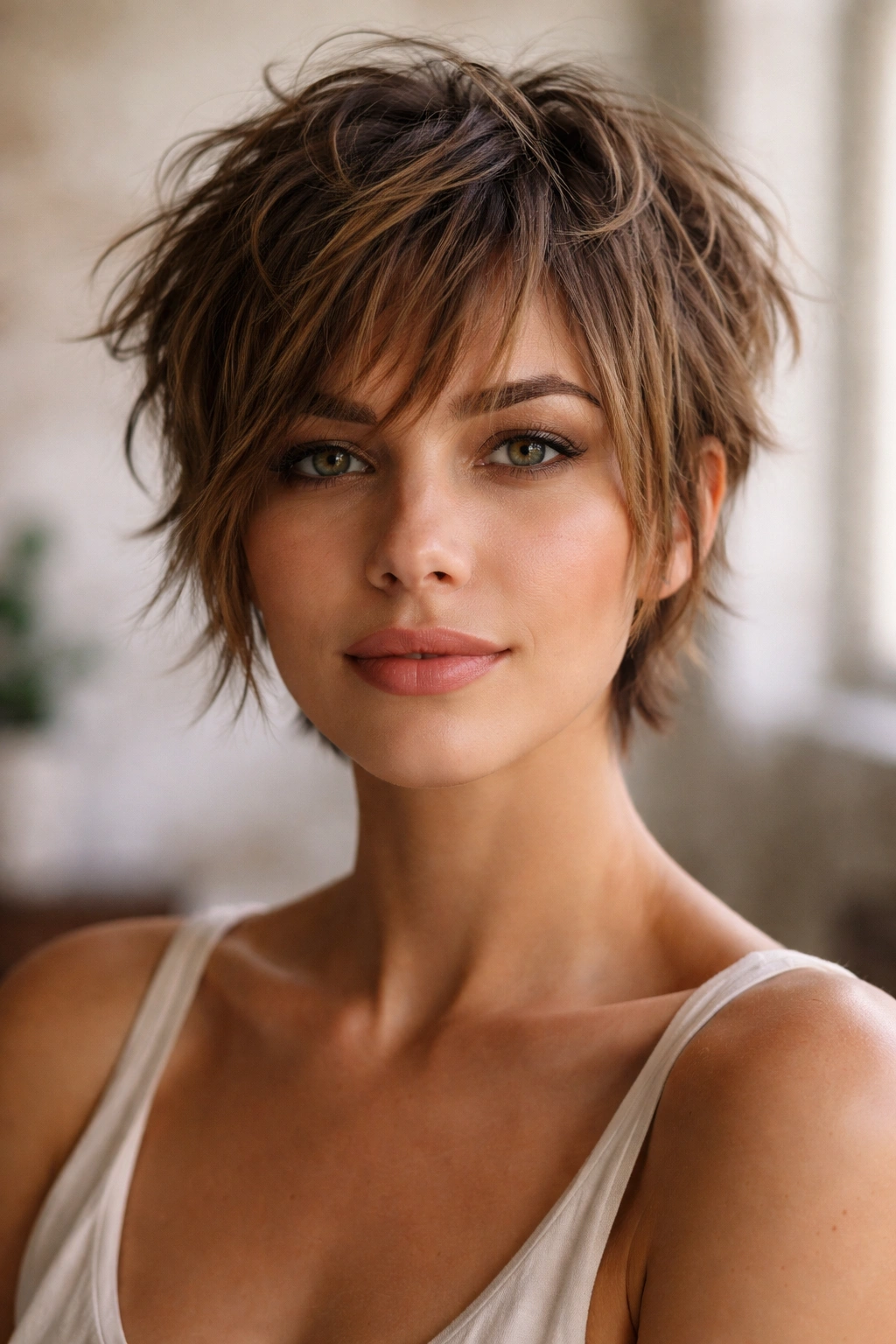
The messy textured crop embraces an intentionally undone, lived-in aesthetic with very short, choppy layers throughout but longer pieces strategically left around the face and crown that create flow and dimension. This style celebrates imperfection and works beautifully on people who prefer a more relaxed, effortless look and don’t want to spend time styling their hair each morning. The longer pieces prevent the cut from feeling too utilitarian or severe, adding femininity and softness.
Embracing Imperfection as the Style
This is a cut that actually looks better when slightly messy and textured rather than perfectly smooth and manicured. The whole point is to create that intentionally undone vibe that somehow looks completely put-together. The longer pieces around the face provide the softness and movement that keeps the overall effect from looking too harsh, while the shorter, choppy layers throughout create texture and volume. It’s a cut that celebrates natural texture rather than fighting against it.
Low-Maintenance Styling for Everyday Wear
- Use a texturizing spray on damp hair and let it air dry for that natural, undone look
- If you prefer a bit more definition, apply a lightweight texturizing cream to damp roots before air drying
- Run your fingers through your hair once it’s dry to break up any lines and enhance the messy texture
- This cut actually requires less styling than most short styles—the goal is to look effortlessly cool, not perfectly polished
Final Thoughts
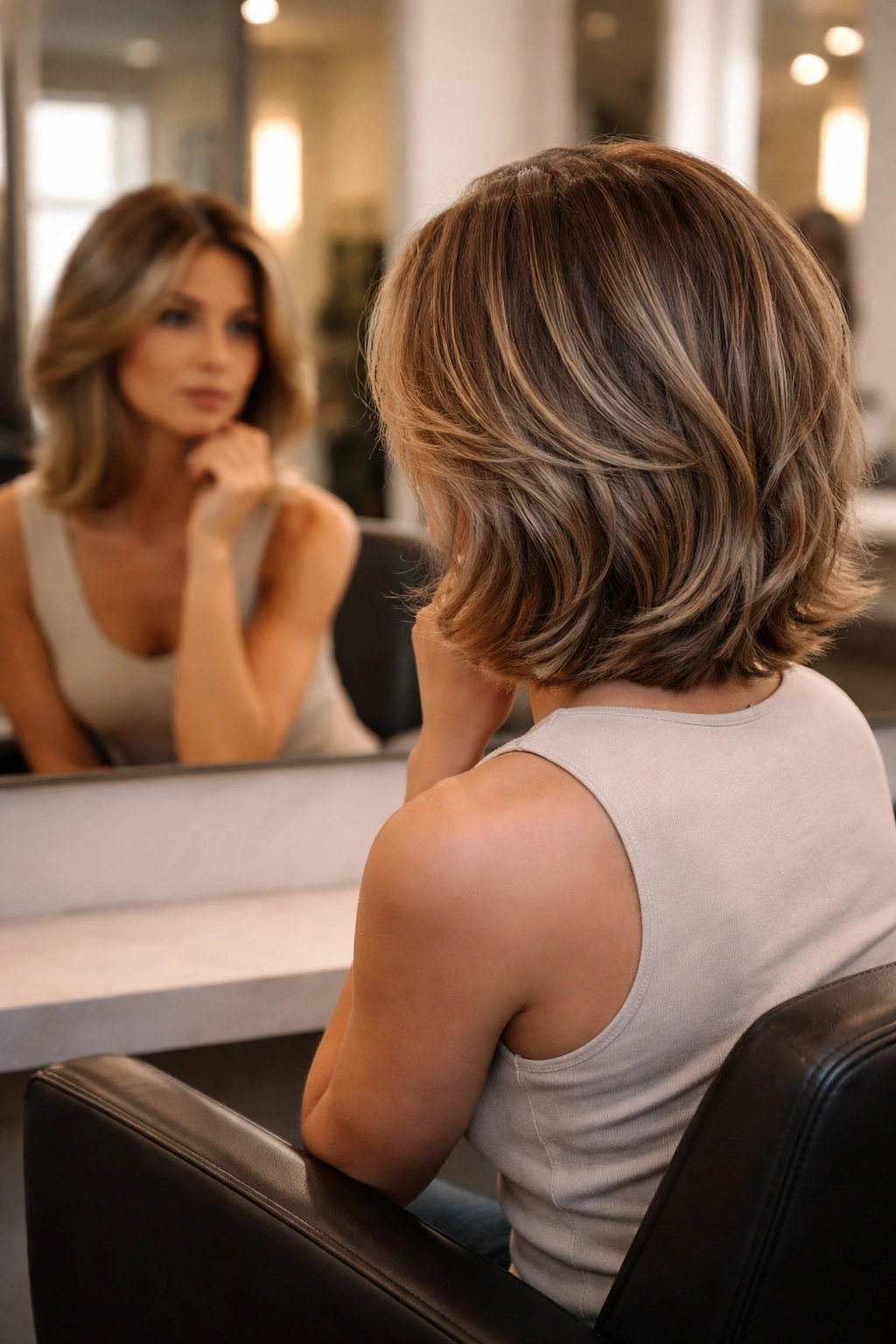
Choosing a short haircut with long, flowing layers is ultimately about understanding what movement and texture mean for your specific hair type, face shape, and lifestyle. The styles covered here offer different takes on how to combine short, structured cuts with longer layers that add flow and dimension—but the best cut for you will depend on how much time you want to spend styling, what kind of texture your hair naturally has, and what aesthetic feels most authentically you.
The common thread across all these styles is that they reject the notion that short hair has to be blunt, stiff, or one-dimensional. Strategic layering creates movement, removes weight, and adds visual interest in ways that make short cuts feel effortless and modern. When you find a stylist who understands your hair and has experience working with layered cuts, you’ll have a style that works harder for you—one that looks great whether you’ve styled it deliberately or just run your fingers through it in the morning.
Remember that these cuts require regular maintenance—typically every 4 to 6 weeks—to keep the layers sharp and the shape intentional. The investment in good trims pays off dramatically, as layered short cuts actually look better with more frequent maintenance than their blunt-cut counterparts. As you grow into one of these styles, work with your stylist on how to style it in ways that make you feel most confident and comfortable. The best short layered cut is one that makes you excited to look in the mirror every single day.
