



Short curly hair with face-framing layers is genuinely one of the most flattering, versatile, and low-maintenance approaches to styling curls. There’s something almost magical about how strategically placed layers can transform the way curls frame your face—they add movement, reduce bulk at the crown, create dimension, and give you multiple styling options depending on your mood. Whether you’re thinking about going short for the first time or you’re refreshing a cut you’ve had for years, face-framing layers make all the difference between a cute short cut and one that genuinely works with your curl pattern instead of against it.
The best short curly cuts aren’t one-size-fits-all, though. What looks incredible on someone with tight coils might need tweaking for looser waves, and texture placement matters just as much as overall length. The cuts I’m about to walk you through represent the most flattering approaches to short curly hair with intentional layering—styles that work across different curl types, face shapes, and styling preferences. Each one has been designed with face-framing specifically in mind, which means the layers are positioned to soften your features, add bounce where it counts, and make styling easier rather than harder.
Before you commit to any cut, it helps to know exactly what makes each one unique, how to ask your stylist for it, and what you’ll actually need to do to maintain it. That’s what we’re covering here—the complete breakdown of twelve short curly cuts that deliver on the promise of face-framing layers done right.
1. Pixie with Textured Layers
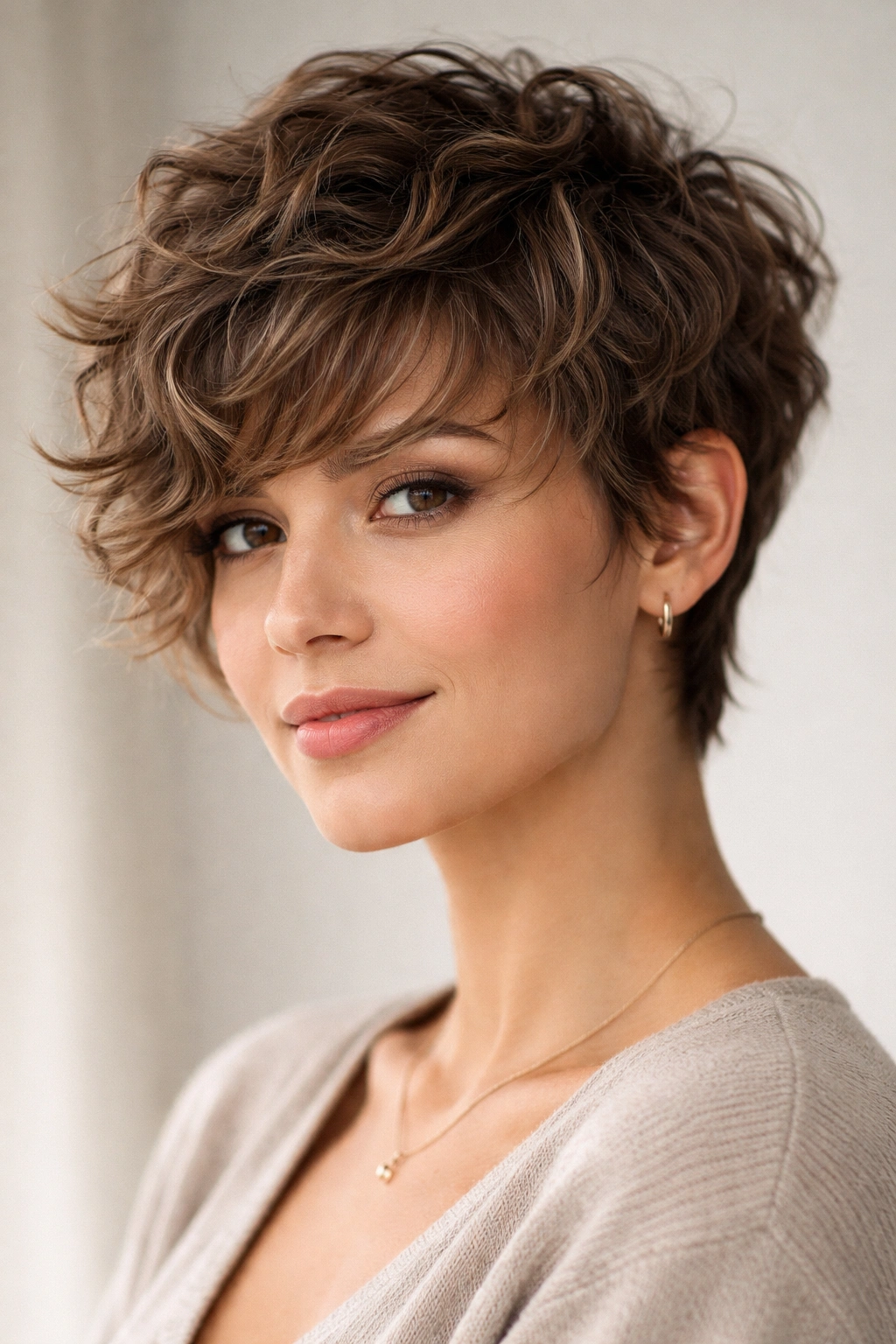
A curly pixie with intentional texture is a bold, liberating choice that works beautifully when the layers are precisely placed around the face. Instead of the sleek, flat pixies you see on straight hair, a textured pixie embraces the curl and uses strategic choppy layers to create movement and shape. The key is that these aren’t random cuts—they’re deliberate layers that follow your curl pattern and direct the curls forward around your cheekbones and jawline.
Why This Cut Stands Out
A textured pixie with face-framing layers gives you maximum style with minimal styling time. The shorter length means your curls won’t weigh themselves down, and the choppy layers create natural texture that curls enhance rather than fight against. You’ll get versatility too—some days you can scrunch and go, other days you can add product for more definition, and the face-framing pieces work in every scenario.
What You Need to Know
- The layers should be shorter and choppier toward the front to frame your face, gradually getting slightly longer toward the back
- This cut works best on tight to medium curls; very loose waves might need slightly longer layers to hold shape
- You’ll need touch-ups every 4-6 weeks to maintain the textured, layered look
- Styling involves scrunching with a curl cream or gel while hair is damp; the layers do most of the work for you
- This cut can feel bold if you’re used to longer hair, so consider a consultation before committing
Worth knowing: Ask your stylist to leave slightly longer pieces in the front that you can tuck behind your ears on days when you want a different look—this gives you two hairstyles from one cut.
2. Tapered Curly Bob
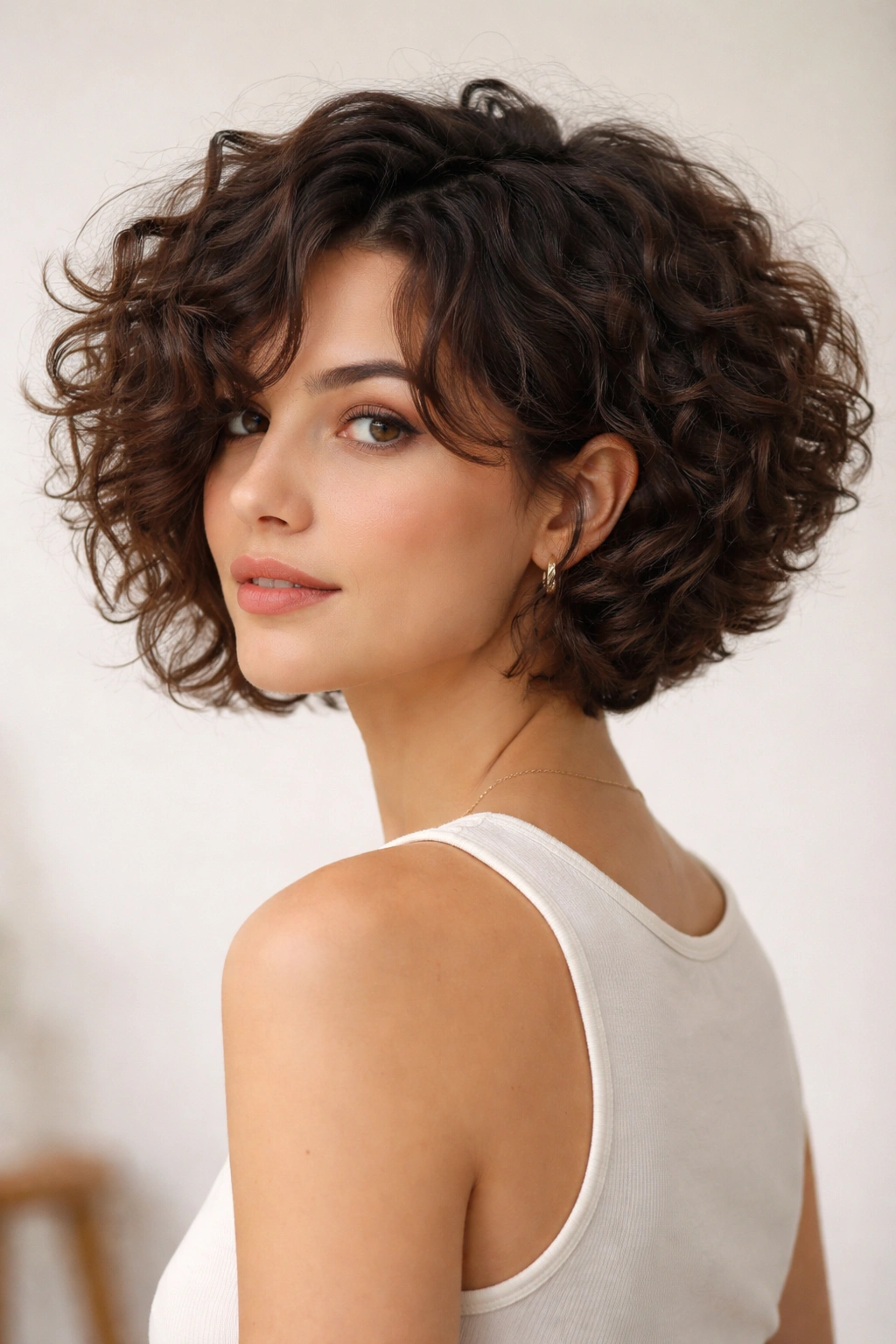
A tapered bob with face-framing layers is the Goldilocks of short curly cuts—short enough to feel modern and easy to manage, but long enough that you still feel like you’re wearing your hair, not the other way around. “Tapered” means the back is shorter and more fitted to your head while the front is longer, and those longer front pieces become your face-framing layers automatically. This creates a flattering shape that works for almost every face type.
What Makes It Different
The taper is what separates this from a blunt bob. Instead of all one length, you’re graduating from shorter in back to longer in front, which means the curls naturally frame your face without requiring super-choppy layers everywhere. This works especially well if you like a cleaner, more polished vibe—the taper keeps things intentional while the layers add movement and dimension.
Key Details to Discuss with Your Stylist
- The back should hit somewhere between your ear and your jawline, tapered close to your head for shape
- Front layers should hit somewhere around your cheekbones or slightly below for optimal face-framing
- The taper should be subtle enough that your curls look intentional, not grown-out
- This cut requires consistent trims every 6-8 weeks to maintain the shape and prevent a shapeless blob
- Styling is simple: scrunch with product while damp, or diffuse for more volume and definition
Pro tip: This cut works beautifully with a side part, which automatically enhances the face-framing effect and adds visual interest.
3. Shaggy Textured Crop
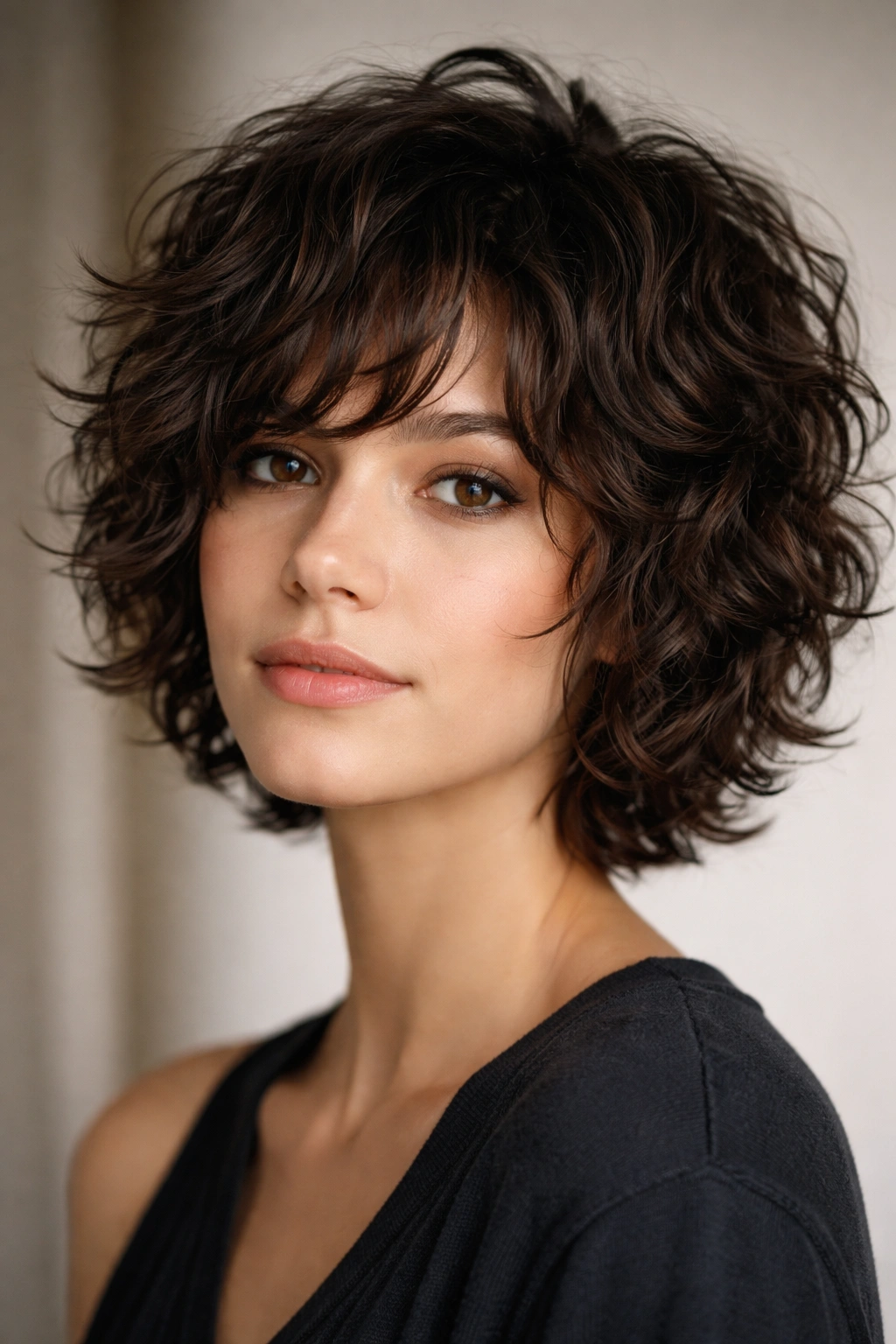
If you want maximum texture and movement with that effortlessly tousled, lived-in look, a shaggy textured crop is where it’s at. This cut is shorter overall—think ear-length or slightly shorter in back—but absolutely loaded with choppy, uneven layers throughout. The result is intentional messiness that actually flatters curly hair because it encourages the curls to do what they naturally want to do: go in different directions and create dimension.
Why It Works for Curly Hair
A shaggy crop is specifically designed to celebrate curl texture rather than fight it. The numerous short layers mean individual curls can move independently, creating that coveted “textured” look without any styling effort. The face-framing pieces are part of the overall shag, so they blend seamlessly while still creating the softening effect you want around your face.
How to Make It Work
- Ask for layers throughout the entire head, not just around the face—the shag effect only works with consistent choppy texture
- The overall length should be short enough that you’re not dealing with heavy, weighed-down curls, but long enough that you have some dimension
- You’ll need trims every 5-7 weeks because the choppy layers grow out and lose their shape quickly
- Styling is refreshingly simple: scrunch with cream or gel while damp, air-dry or diffuse, and go
- This cut pairs beautifully with a deep side part that emphasizes the asymmetrical shag texture
Insider note: This cut was everywhere in the ’70s and ’90s, and it’s making a strong comeback because it genuinely suits curly hair better than many modern alternatives.
4. Rounded Curly Pixie
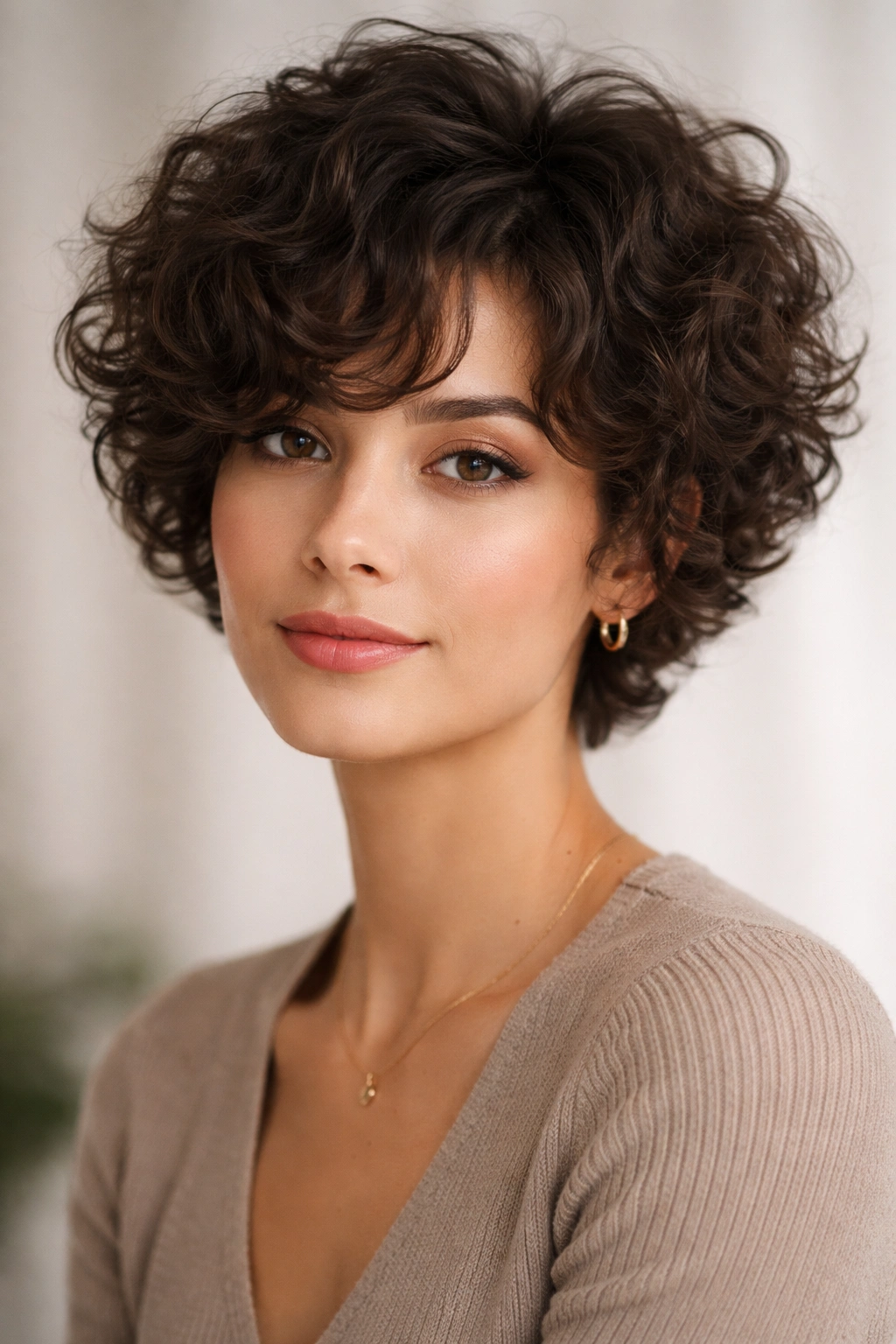
A rounded pixie with face-framing layers gives you all the freedom of a short cut while maintaining a softer, more conventionally feminine shape. Instead of the angular, edgy pixie cuts you sometimes see, a rounded pixie sits closer to your head and curves around your face naturally. The layers are integrated into this rounded shape, so the face-framing happens organically through the overall silhouette rather than through dramatic choppy pieces.
What Sets This Apart
This pixie is less “bold statement” and more “polished, easy, beautiful.” It works if you like short hair but want something that feels a bit less severe or punk-rock than a traditional textured pixie. The rounded shape complements most face shapes, and because your curls naturally want to round out, you’re working with your hair instead of against it.
Essential Details
- The back and sides should be tapered or faded, fitting close to your head for a rounded silhouette
- Layers on top should blend smoothly into the sides, creating that rounded dome shape
- The face-framing happens through the overall length and shape, not through distinct choppy layers
- Maintenance is every 4-6 weeks to keep the rounded shape intact
- Styling: scrunch with product while damp, and the rounded shape and layers do the heavy lifting
Worth knowing: This cut is incredibly forgiving for curly hair because the natural curl pattern actually helps create and maintain the rounded shape.
5. Layered Curly Lob
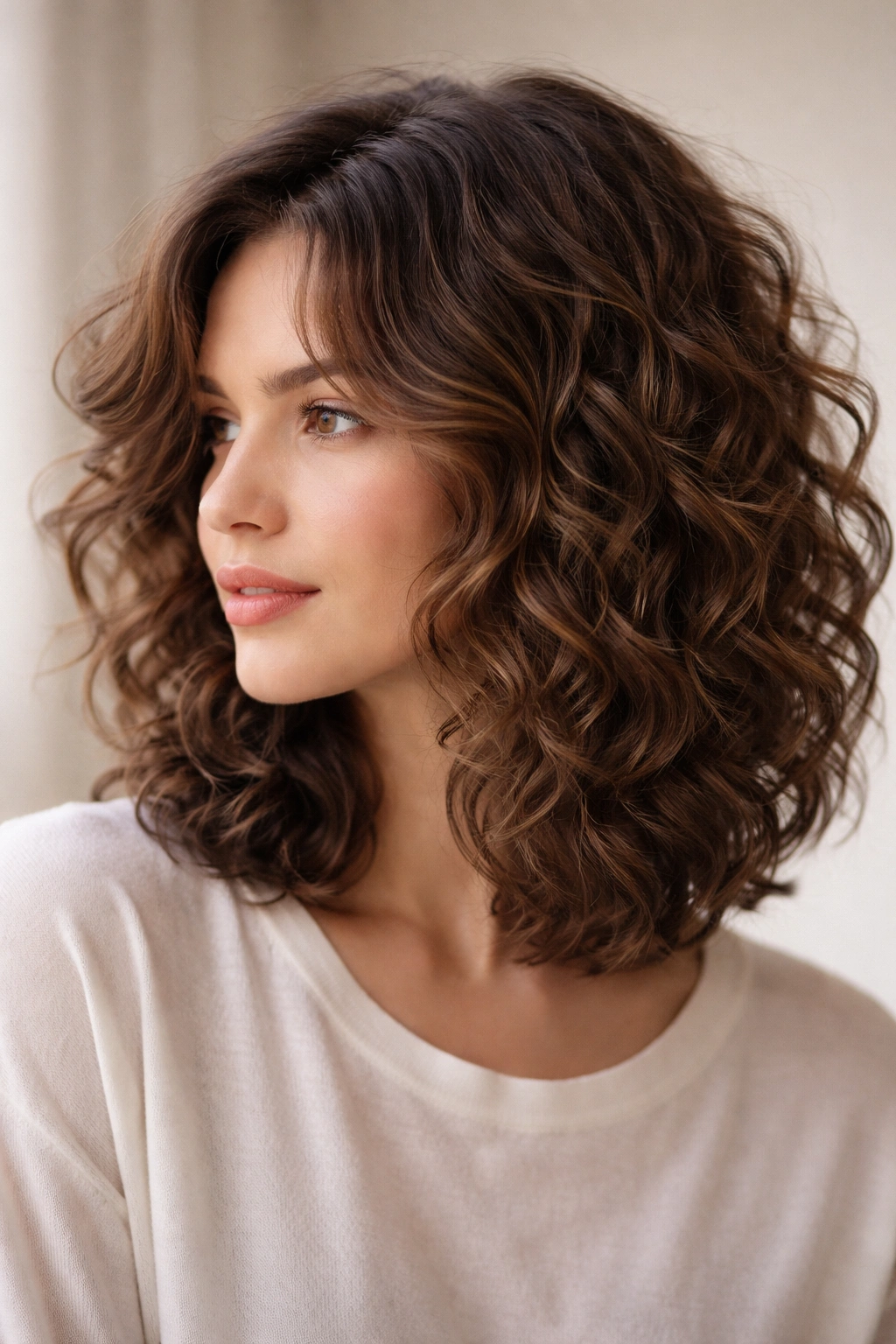
A lob is technically a “long bob”—longer than a traditional bob but shorter than shoulder length. For curly hair, a lob with face-framing layers is the perfect middle ground: long enough to feel like a real style change, but short enough to avoid the weight and frizz issues that often come with longer curly hair. The face-framing layers are key here because without them, a longer bob on curly hair can look flat and heavy.
Why This Length Works
A lob on curly hair is the sweet spot for people who want versatility and style without dealing with excessive weight or daily styling demands. The layers create movement and reduce bulk, while the overall length gives you options—you can wear it down and tousled, style sections of it up, or even put it in a small half-up clip. The face-framing layers soften your features and add dimension that curly hair naturally wants to have.
How to Style and Maintain It
- Layers should be integrated throughout the cut, not just around the face—this distributes weight evenly and prevents a heavy bottom
- Length should hit somewhere between your collarbone and mid-neck, depending on your curl pattern and face shape
- Face-framing layers can be longer in the back and shorter toward the face for optimal framing
- Maintenance is every 8 weeks to keep layers defined and prevent a shapeless mass
- Styling options include scrunching with product, diffusing, or air-drying with your natural curl pattern; you can also smooth sections with a flat iron for contrast
Pro tip: A lob works beautifully with a deep side part or a center part that emphasizes the face-framing layers.
6. Modern Wolf Cut (Short Version)
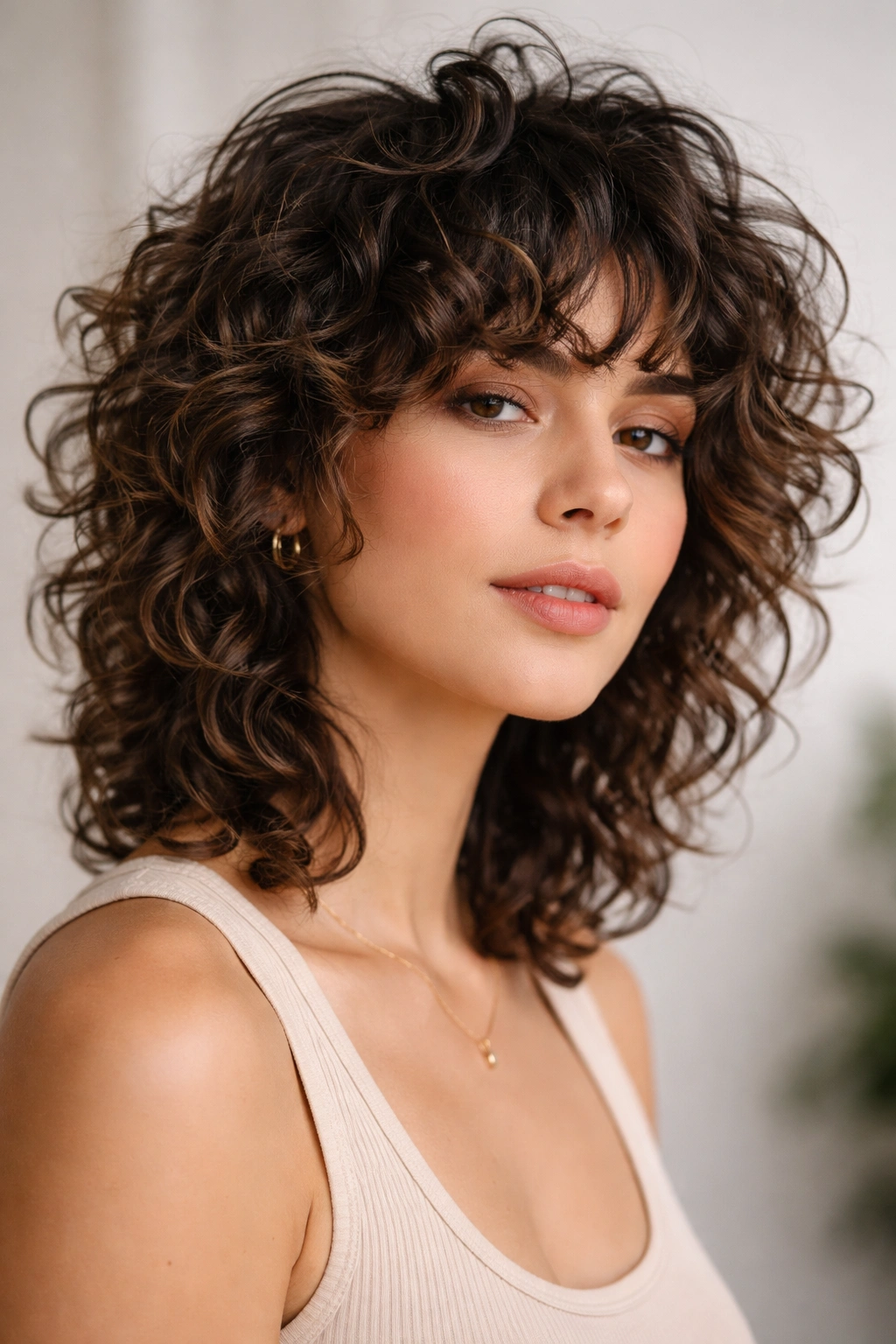
A wolf cut (short for “wolf mullet,” though “wolf cut” is the more flattering terminology) is a hybrid between a shag and a mullet: business in front, party in back, with plenty of textured layers throughout. The short version for curly hair keeps the overall length more manageable while still delivering the textured, dimensional look that makes this cut so striking. The front is shorter and framing, while the back has more length and texture, creating an asymmetrical, modern silhouette.
What Makes This Cut Unique
This cut was designed for people who want something edgy and modern but still wearable. The shorter overall length compared to traditional wolf cuts makes it less dramatic, while the layers and the subtle length difference between front and back create movement and personality. On curly hair, this becomes a genuinely flattering cut because the texture enhances the dimension.
Getting and Maintaining It
- The front should be shorter, around ear-length or slightly shorter, with intentional layers for face-framing
- The back should be noticeably longer, creating an asymmetrical, textured silhouette
- Layers throughout, especially in the back, are essential—this is what makes it a wolf cut rather than just an uneven bob
- Trims every 6-8 weeks keep the layers sharp and prevent the back from looking unkempt
- Styling works with your natural curl pattern: scrunch, diffuse, or let it air-dry
Worth knowing: This cut is very trendy right now, so if you’re committing to it, be prepared for it to eventually feel dated—but on the plus side, it grows out gracefully.
7. Faded Undercut with Textured Top
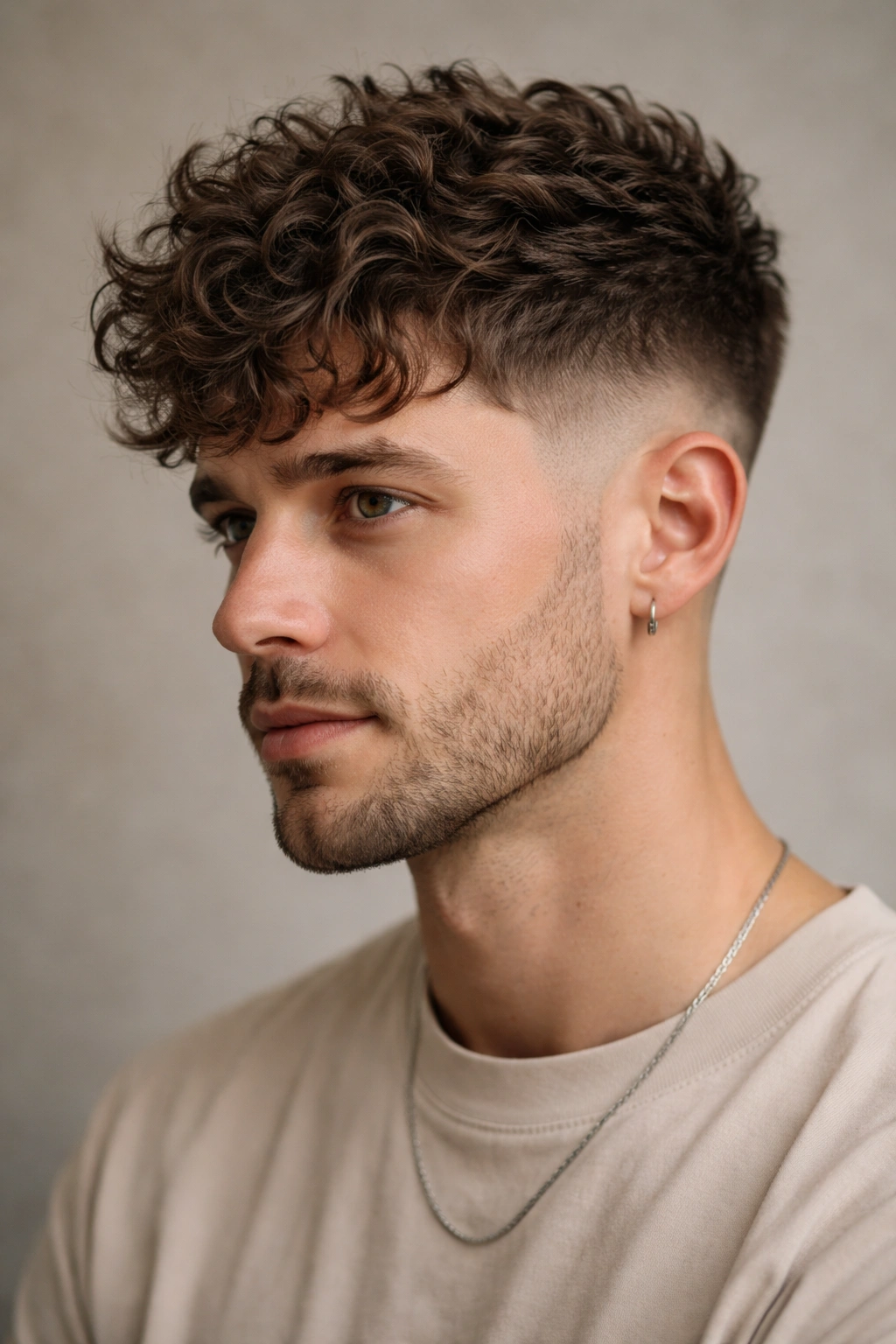
If you want serious visual contrast and modern edge, a faded undercut with a textured curly top delivers exactly that. The sides and back are faded or undercut (very short, often in a gradient), while the top is left longer with choppy layers. This creates dramatic visual contrast and makes your curls stand out as a genuine statement. The longer textured top naturally frames your face because it’s quite a bit longer than the sides.
Why This Works for Curly Hair
A fade with a textured top works beautifully on curly hair because the contrast between the short faded sides and the curly textured top is genuinely striking. The longer curls on top don’t weigh down when the sides are short, and the face-framing happens naturally through the volume and texture of the longer pieces. This is a cut with personality—it says something about the person wearing it.
Technical Details
- The fade should be clean and well-maintained, not grown-out and fuzzy (this requires a trim every 2-3 weeks if you want it sharp)
- The top should be short enough overall (2-3 inches or so) that it’s easy to style, but long enough to show off your curl texture
- Choppy layers on top are essential to create movement and reduce weight
- Face-framing happens through the overall longer length of the top, not through distinct forward-facing pieces
- Styling: scrunch with product, diffuse for volume, or scrunch with a bit of gel for more definition
Pro tip: The fade grows out noticeably, so you’ll need regular trims to keep it looking intentional rather than like you’re waiting for a haircut. Many people find this maintenance worth it for the edgy aesthetic.
8. Choppy Curly Shag
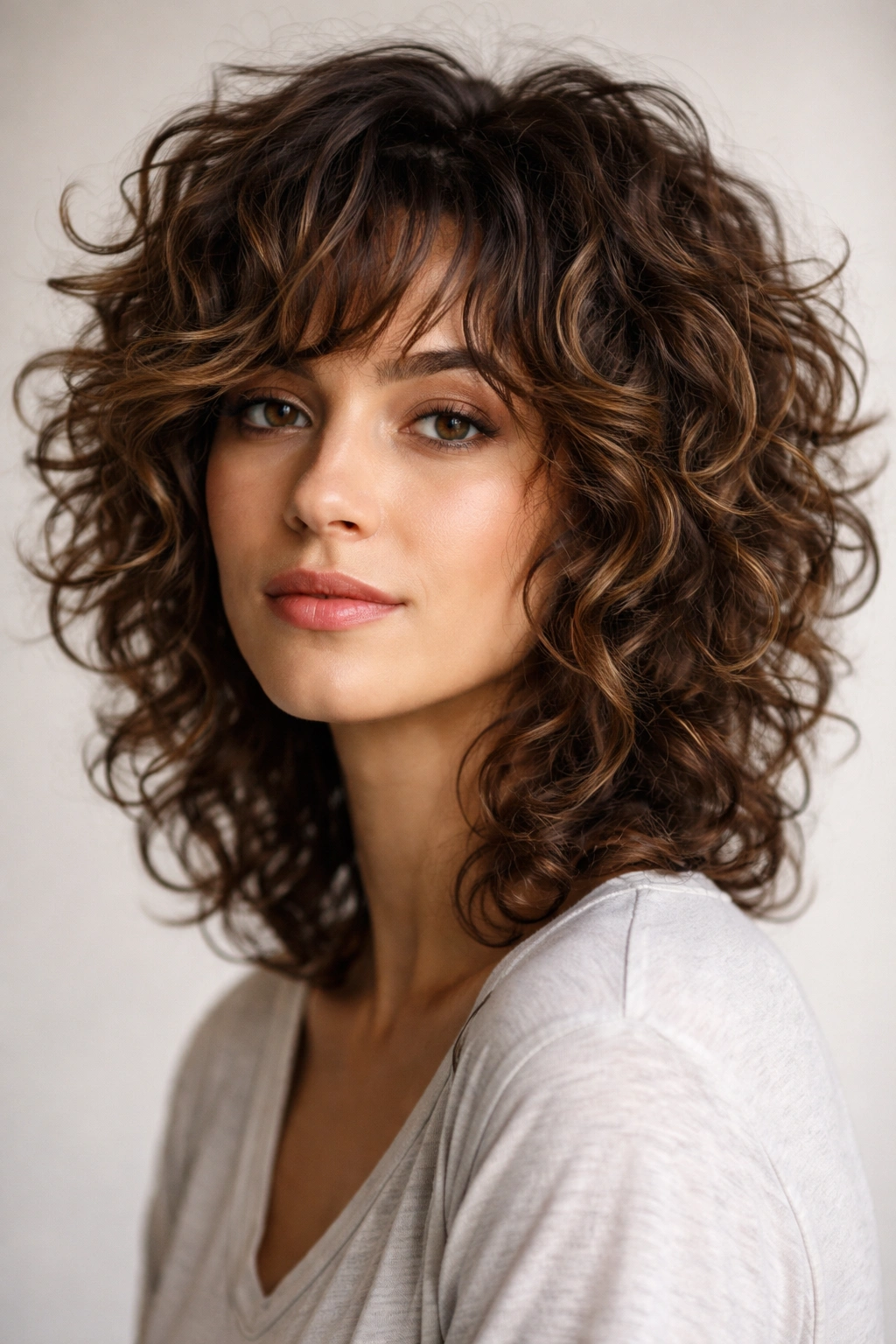
A choppy shag is pure texture and movement. This cut embraces the fact that curly hair wants to go in multiple directions and leans into it completely. Instead of fighting for one cohesive shape, a choppy shag celebrates individual curls, random lengths, and that tousled, I-don’t-care-but-I-actually-do aesthetic. The face-framing is automatic because the choppy layers are everywhere, including around your face.
What Makes This Cut Special
A choppy shag is the cut for people who want to celebrate their curl texture and don’t mind a bit of intentional messiness. The numerous short, uneven layers mean every single curl can do its own thing, creating natural dimension and movement that you’d have to pay a colorist serious money to fake on straight hair. Plus, it genuinely requires less styling than a more structured cut—your curls do the work for you.
Making It Work
- Layers should be choppy and uneven throughout the entire head, not just around the face
- Length can vary from chin-length to ear-length depending on how much texture you want and how much curl you have
- No two layers are exactly the same length—that’s the whole point
- Maintenance is every 5-7 weeks; the choppy layers grow out and lose definition fairly quickly
- Styling is minimal: scrunch with product while damp, air-dry or diffuse, and you’re done
- You can wear it with a deep side part, center part, or even tousled and asymmetrical
Insider note: This cut was incredibly popular in the 1970s and has cycled back because people realized it’s one of the most low-maintenance cuts for naturally textured hair.
9. Face-Framing Cropped Curls
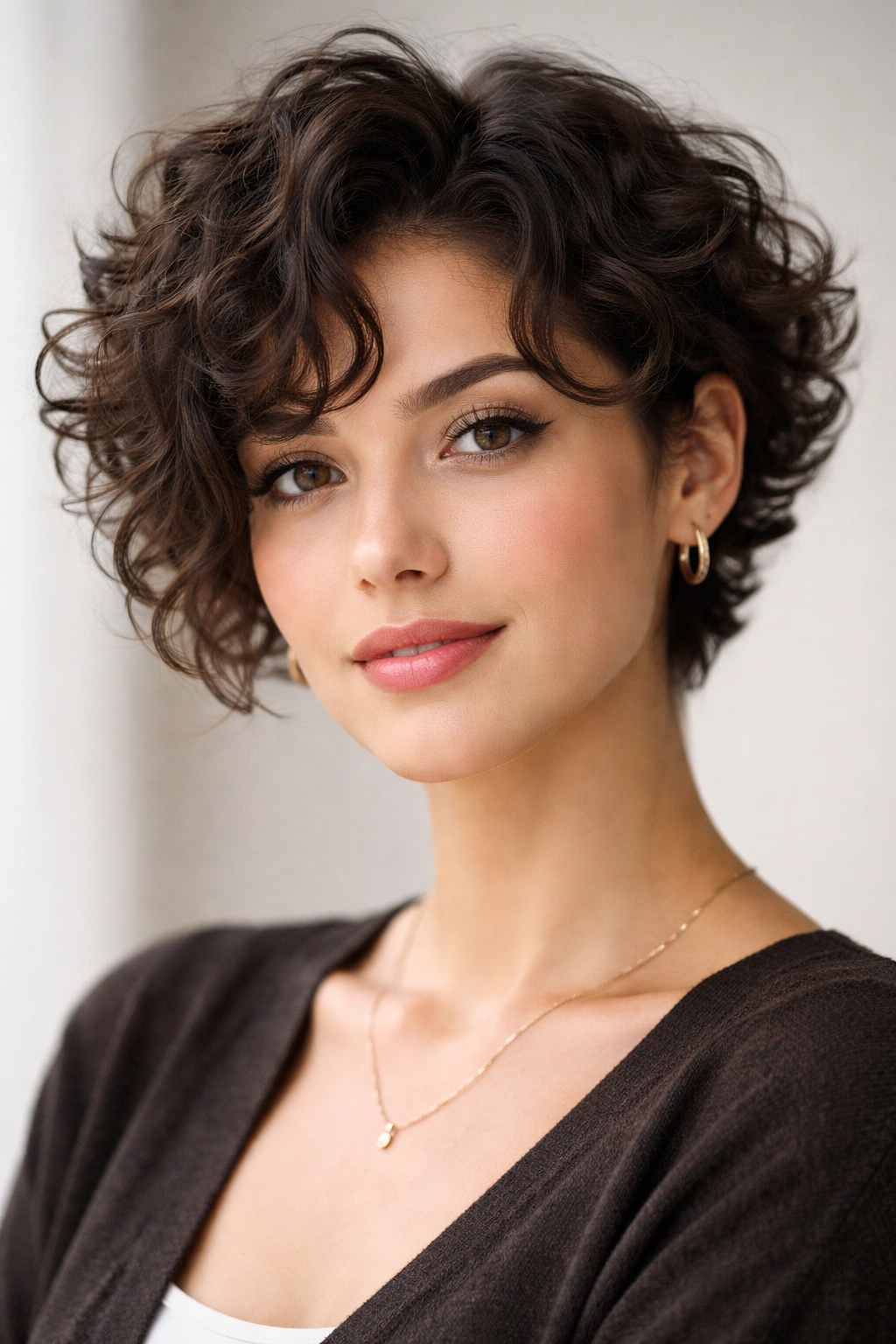
Sometimes the best approach is the most direct one: a very short crop with longer, distinct face-framing pieces. This cut is short all over—think pixie-short in the back and on the sides—but with intentionally longer, textured layers in front that frame your face. It’s not quite as short overall as a traditional pixie because of those longer front pieces, but it’s still definitively short hair with serious style.
Why This Approach Works
This cut is genuinely flattering because the shorter sides and back create a clean, polished silhouette while the longer face-framing pieces add softness and draw attention to your features. The contrast between the short and longer sections is visually interesting, and on curly hair, the texture makes it look intentional rather than accidental. You get ease of styling with the back being very short, plus the styling versatility of having longer pieces in front.
Key Considerations
- The back and sides should be very short, faded or tapered, fitting close to your head for clean lines
- Front pieces should be noticeably longer, hitting around your cheekbones or below for optimal framing
- Choppy layers in the front pieces prevent them from looking like a separate wig sitting on top of your head
- Maintenance: the back and sides need trims every 2-3 weeks to keep that clean, short look; the front pieces need trims every 6-8 weeks
- Styling the back is simple (or nonexistent, depending on how short you go); the front pieces just need scrunching with product
Worth knowing: This cut works best if you’re comfortable with regular trims on the back and sides to maintain the contrast.
10. Textured Fade with Curly Top
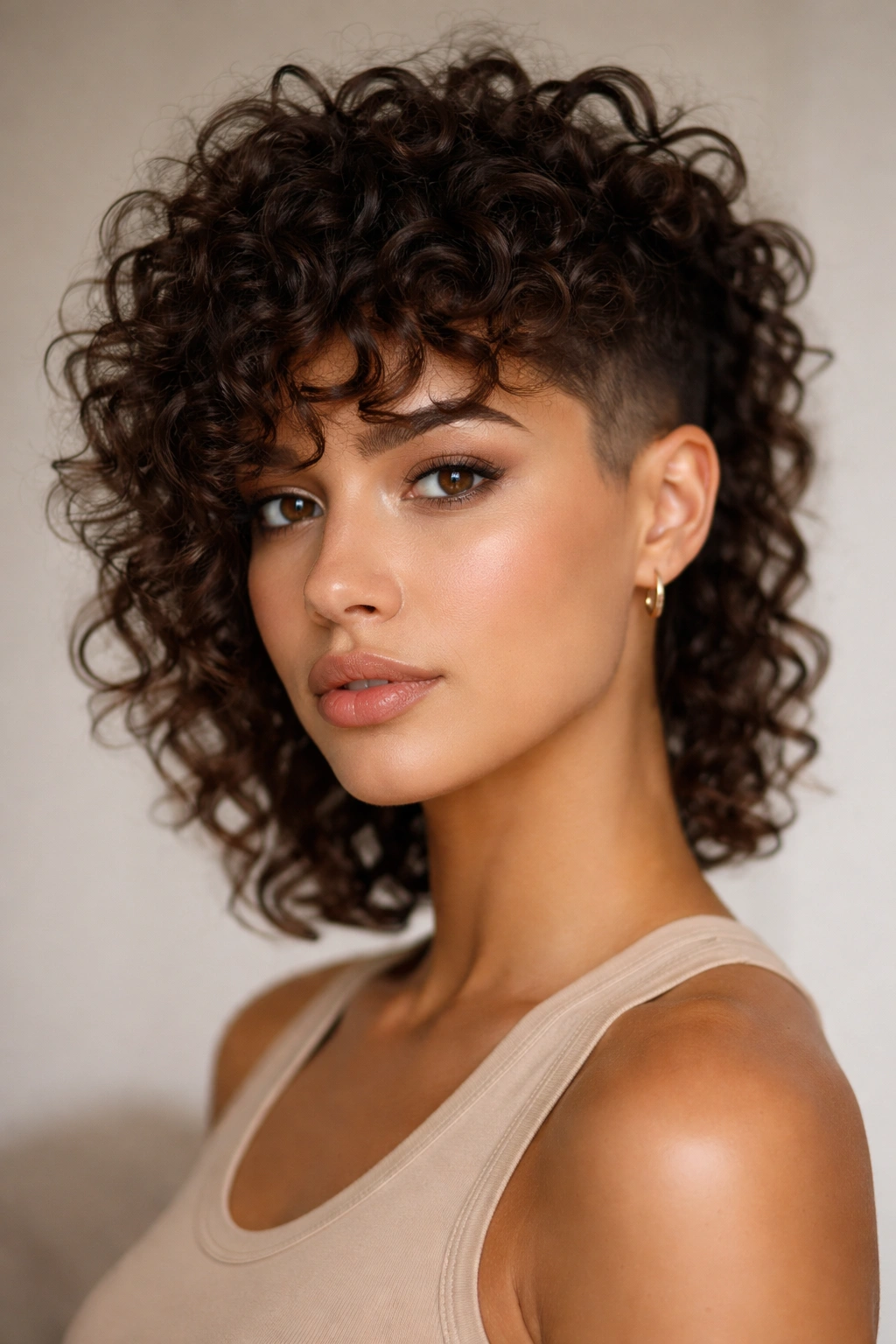
Similar to the faded undercut but slightly less extreme, a textured fade with a curly top gives you edge without going as short on the sides. The fade is gentler, transitioning gradually from longer curls on top to shorter faded sides, creating a continuous gradient rather than stark contrast. The top is fully textured with layers throughout, and the face-framing happens naturally through the fuller, longer curls on top.
What Sets This Apart
This cut is for people who want modern edge but need it to feel wearable in professional or conservative settings. The fade is less dramatic than a full undercut, and depending on how you style the top, this can read as edgy and modern or polished and intentional. The face-framing is built in through the longer, textured top.
How to Get and Style It
- The fade should transition gradually from longer on top to shorter on the sides, not dramatically short like an undercut
- Top should have choppy layers throughout, not just around the face
- Length on top can range from 2 inches to 3-4 inches depending on your preference and how much curl you want to showcase
- Maintenance: fade needs trims every 3-4 weeks to stay clean; top needs trims every 7-8 weeks
- Styling: scrunch with product for texture, diffuse for volume, or let it air-dry for a more relaxed look
- This cut works beautifully with a side part that emphasizes the longer, textured pieces
Pro tip: The fade grows out gradually and gracefully, so even if you skip a trim, it doesn’t look as obviously unkempt as it might with a sharper undercut.
11. Layered Asymmetrical Cut
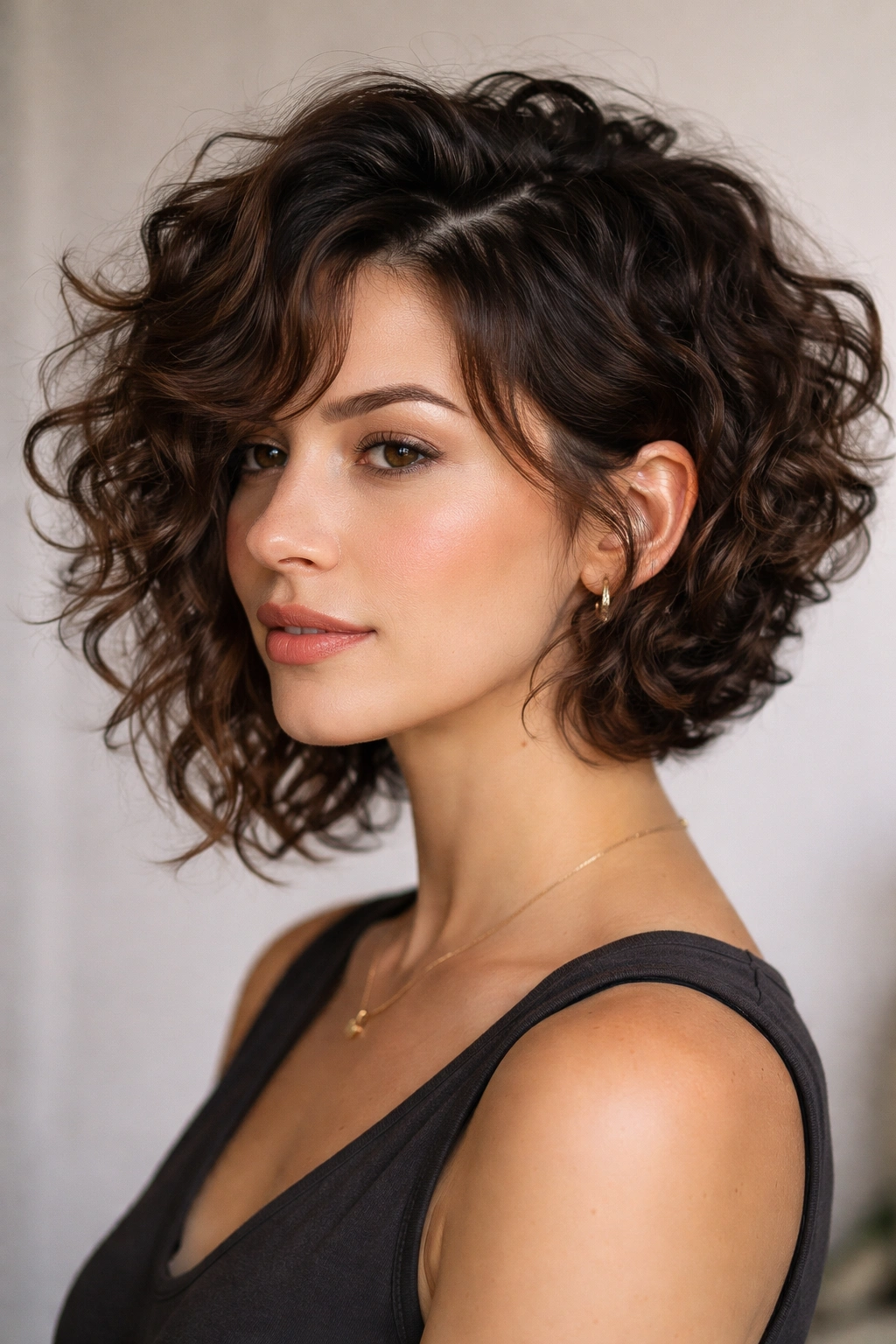
An asymmetrical cut with face-framing layers is inherently interesting because one side is noticeably longer than the other. This creates a dynamic, modern silhouette while the layers ensure the hair moves and frames your face beautifully. The asymmetry is subtle enough to remain wearable but pronounced enough to be genuinely stylish—it’s not a gimmick, it’s a legitimate flattering cut.
Why Asymmetry Works
An asymmetrical cut creates visual interest without relying on color or styling tricks. On curly hair, the asymmetry pairs with texture to create a sophisticated, intentional look. The longer side can frame one side of your face while the shorter side shows off cheekbones or jawline—you get different effects depending on which way you wear your hair or which direction your curls naturally fall.
Creating the Cut
- One side should be noticeably shorter (around ear-length or shorter), the other side longer (around jaw-length or slightly longer)
- Layers throughout, especially on both sides, ensure movement and prevent the asymmetry from looking like an accident
- Face-framing is built in—both sides frame your face, just in different ways
- Maintenance: every 6-8 weeks to keep the asymmetry pronounced and the layers defined
- Styling: you can wear it with your natural part, or create a deep side part that emphasizes the asymmetry
- Hair can be worn behind one ear on the longer side to really show off the asymmetrical shape
Insider note: Asymmetrical cuts are surprisingly versatile—most days it looks intentionally edgy, but if you want, you can style it to minimize the asymmetry and make it feel more balanced.
12. Bouncy Curly Mullet
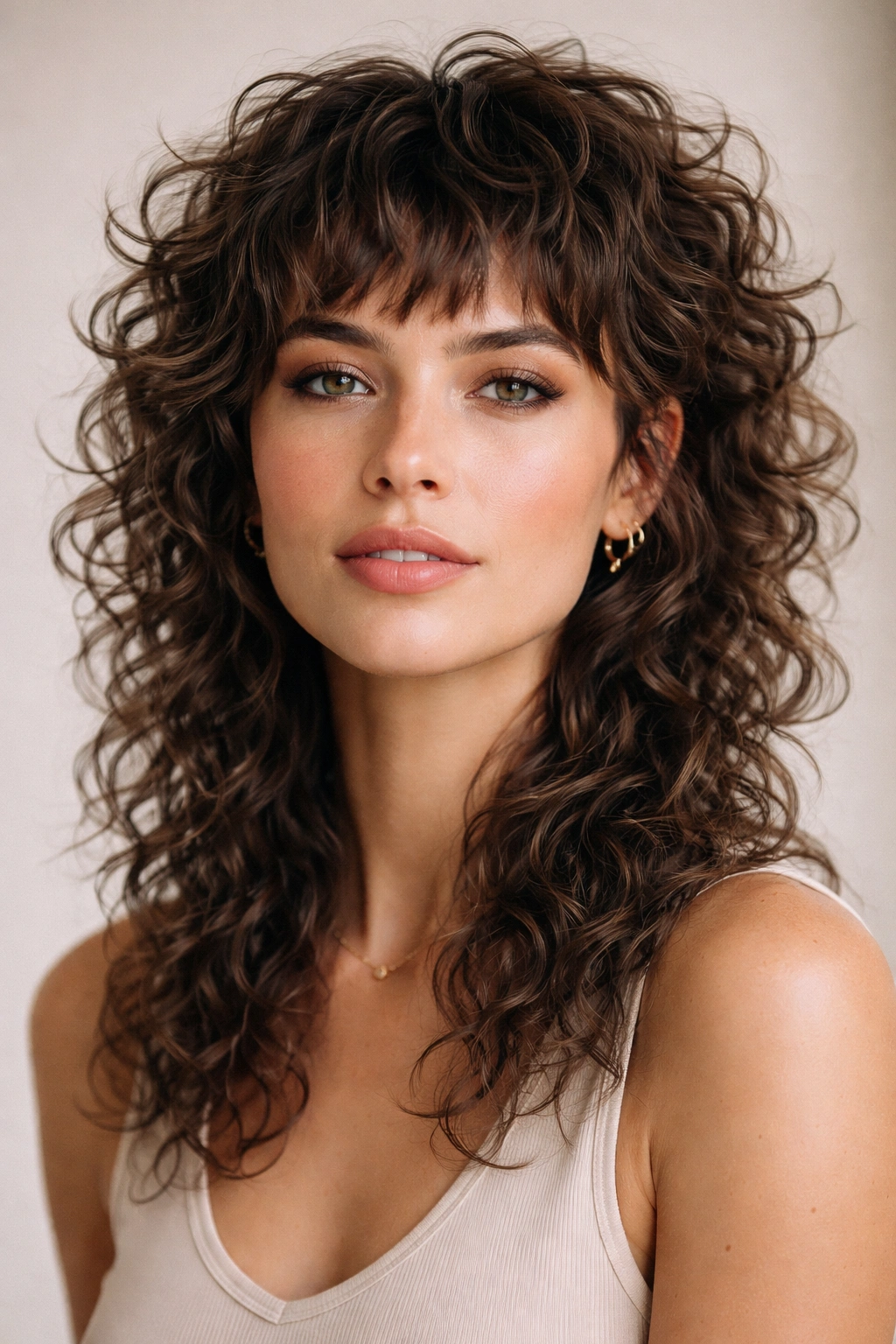
A curly mullet with intentional face-framing layers is the bold, unapologetic end of the spectrum. This is short in front (shorter than a pixie, actually) with longer, textured curls in the back. The face-framing is extremely short and choppy in front, while the back has real length and movement. It’s a cut with serious personality and presence.
Why Someone Would Choose This
A curly mullet is for people who genuinely want to make a statement and don’t care what traditionalists think. It’s fun, it’s edgy, and on curly hair it actually makes sense because the shorter front is incredibly low-maintenance while the longer back celebrates curl texture and movement. This is a cut that works best when you’re genuinely confident—it suits the person wearing it as much as the hair.
Technical Details
- Front should be very short, almost micro-bang territory, with choppy layers that frame your face dramatically
- Back should have significant length, anywhere from shoulder-length to mid-back depending on how extreme you want to go
- Layers throughout, especially in the back, create movement and prevent the longer section from looking heavy
- Maintenance: front needs trims every 2-3 weeks to maintain that short, sharp look; back needs trims every 8-10 weeks
- Styling: front requires minimal effort; back can be styled curly and tousled or with more definition depending on your mood
- This cut is versatile in terms of look—you can make it look punk-rock or playful depending on styling choices
Worth knowing: This cut trends in and out of fashion, but if you love it, that shouldn’t matter—wear what makes you feel like yourself.
Final Thoughts
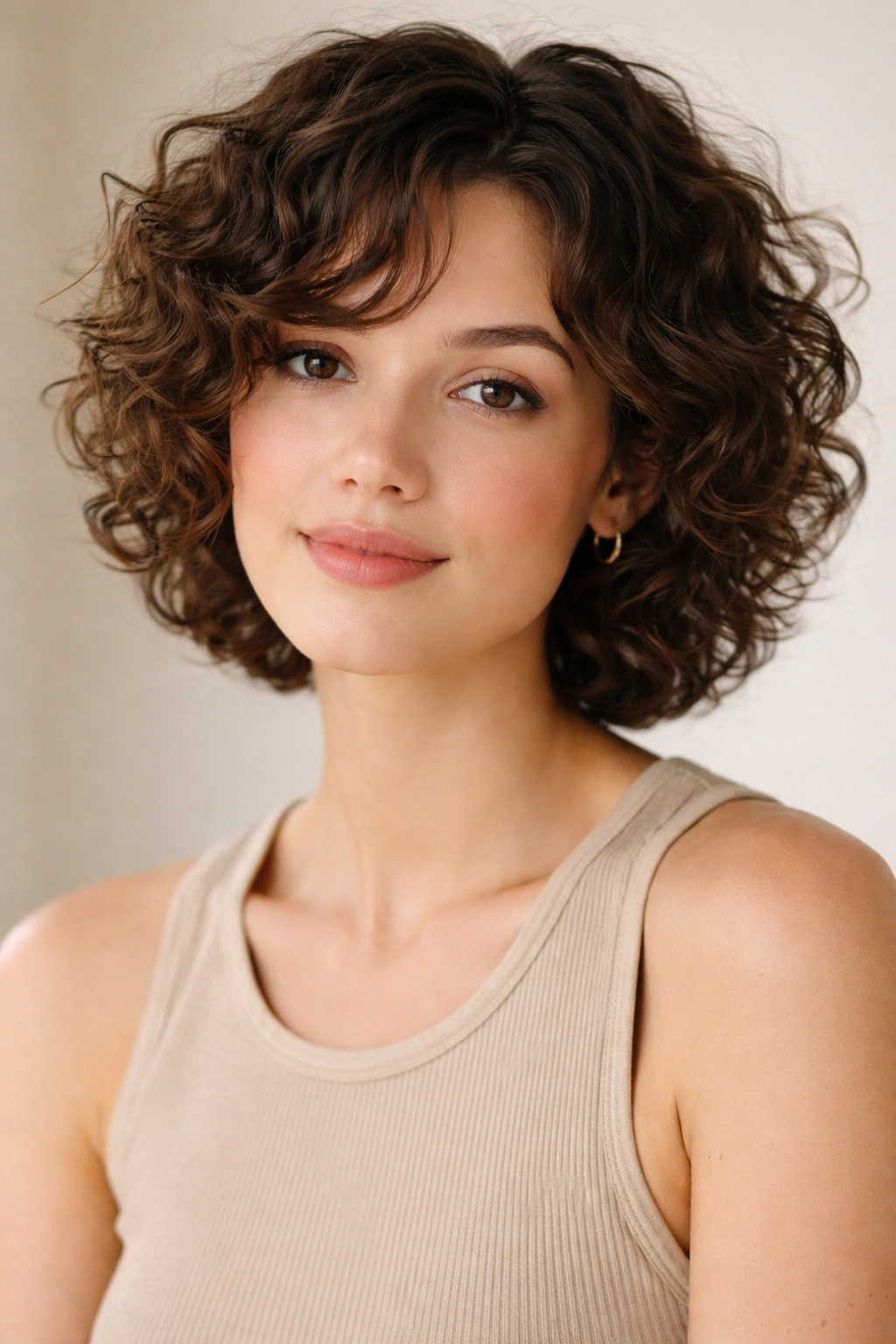
The right short curly cut with face-framing layers can transform not just how you look but how you feel about your hair. Instead of spending time fighting your natural texture, you’re suddenly working with it, celebrating it, and getting compliments on how effortless you look. The key is finding the right balance between short enough that the cut is manageable and maintains shape, and structured enough that the face-framing layers actually do what they’re supposed to do: soften your features and add dimension.
Going short with curly hair is a genuinely liberating decision, especially once you find a cut that suits your specific curl pattern, face shape, and lifestyle. You don’t need to spend twenty minutes styling in the morning. You don’t need to worry about your ends looking scraggly. You don’t need to choose between embracing your curl or fighting it—instead, you’re just choosing a great cut, scrunching in some product, and going about your day.
The next step is finding a stylist who genuinely understands short curly cuts. Not every stylist gets the nuance of layering on curly hair or how to cut for your specific curl pattern. Look for someone with a strong curly-hair portfolio, bring reference photos, and don’t be shy about discussing your daily styling routine—the cut that’s perfect for someone who diffuses their hair every morning is different from one for someone who air-dries naturally. Once you find that stylist and the right cut, you’ll wonder why you waited so long to go short.
