



Braided hairstyles offer the perfect balance between polished professionalism and effortless style—they work whether you’re heading to the office Monday morning or out for the weekend with friends. The beauty of braids is that they’re incredibly versatile, incredibly functional, and incredibly flattering across different hair types and face shapes. A well-executed braid keeps your hair out of your face, lasts through a full day without losing its shape, and signals that you’ve put thought into your appearance without looking overdone or costume-like.
The challenge most people face is knowing which braided styles actually work for professional settings and which ones cross into purely casual territory. You want something that your boss takes seriously but that you’ll still feel confident wearing to a coffee shop or dinner. The good news: there are far more options than you might think. From sleek, architectural braids that belong in a boardroom to textured, romantic versions perfect for weekend brunch, braids genuinely bridge both worlds.
What makes a braid work for the office? Structure, neatness, and intention. Tight, well-defined braids feel professional and intentional. Loose, undone braids read as more casual but can still work in relaxed office environments. The placement matters too—a side braid feels more playful than a center braid, and an elaborate crown braid signals creativity without sacrificing polish. The best part is that most of these styles take 15-30 minutes once you get comfortable with them, and they genuinely last multiple days if you sleep on them correctly.
1. The Classic Dutch Braid
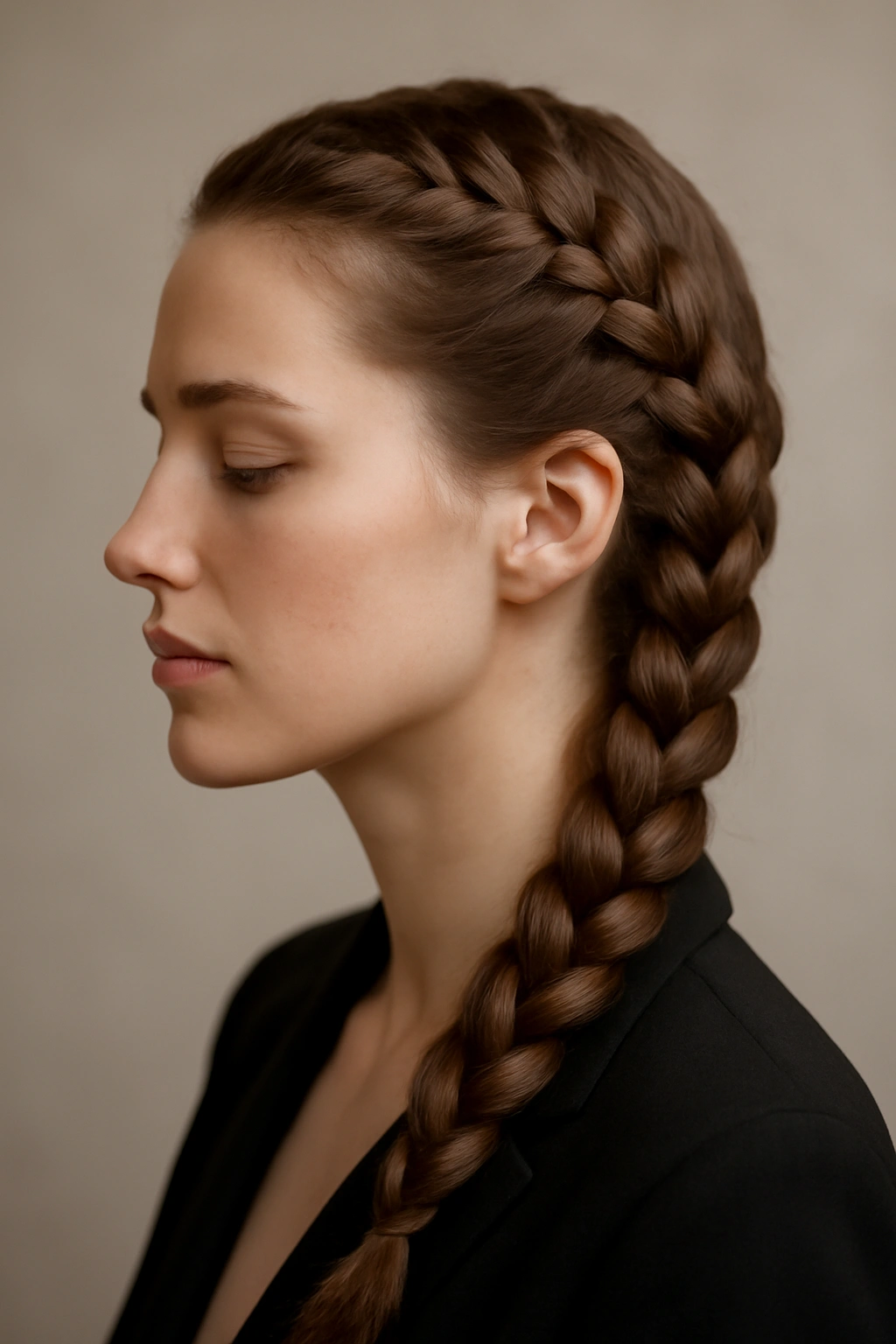
The Dutch braid is the unsung hero of professional hairstyling—it’s essentially a French braid but inverted, where you weave the side sections under the center strand instead of over it. The result is a braid that sits slightly raised from the scalp and looks significantly bolder and more defined than a traditional French braid, which is exactly why it works so well in the office.
Why It’s Office-Perfect
Dutch braids read as intentional and structured without feeling fussy. They work on hair that’s been freshly washed or is a day or two old, which means you can plan your week strategically. The braid sits beautifully on your head and doesn’t collapse or flatten even if you’re wearing headphones, working at a desk all day, or dealing with the chaos of meetings. It’s professional enough for client-facing roles but works just as well for creative industries.
How to Make It Work for Weekends
Create two Dutch braids instead of one for a more playful weekend look, or add subtle waves to the rest of your hair before braiding for dimension. You can also loosen the braid gently after completing it—grab small sections and pull them outward slightly—to create a softer, less structured version that’s perfect for casual plans.
Pro tip: Start your Dutch braid just behind your ear and bring it to the back of your head rather than starting at your crown—this creates an asymmetrical, more modern look that feels fresher than the traditional center-starting approach.
2. The Sleek Side-Swept French Braid
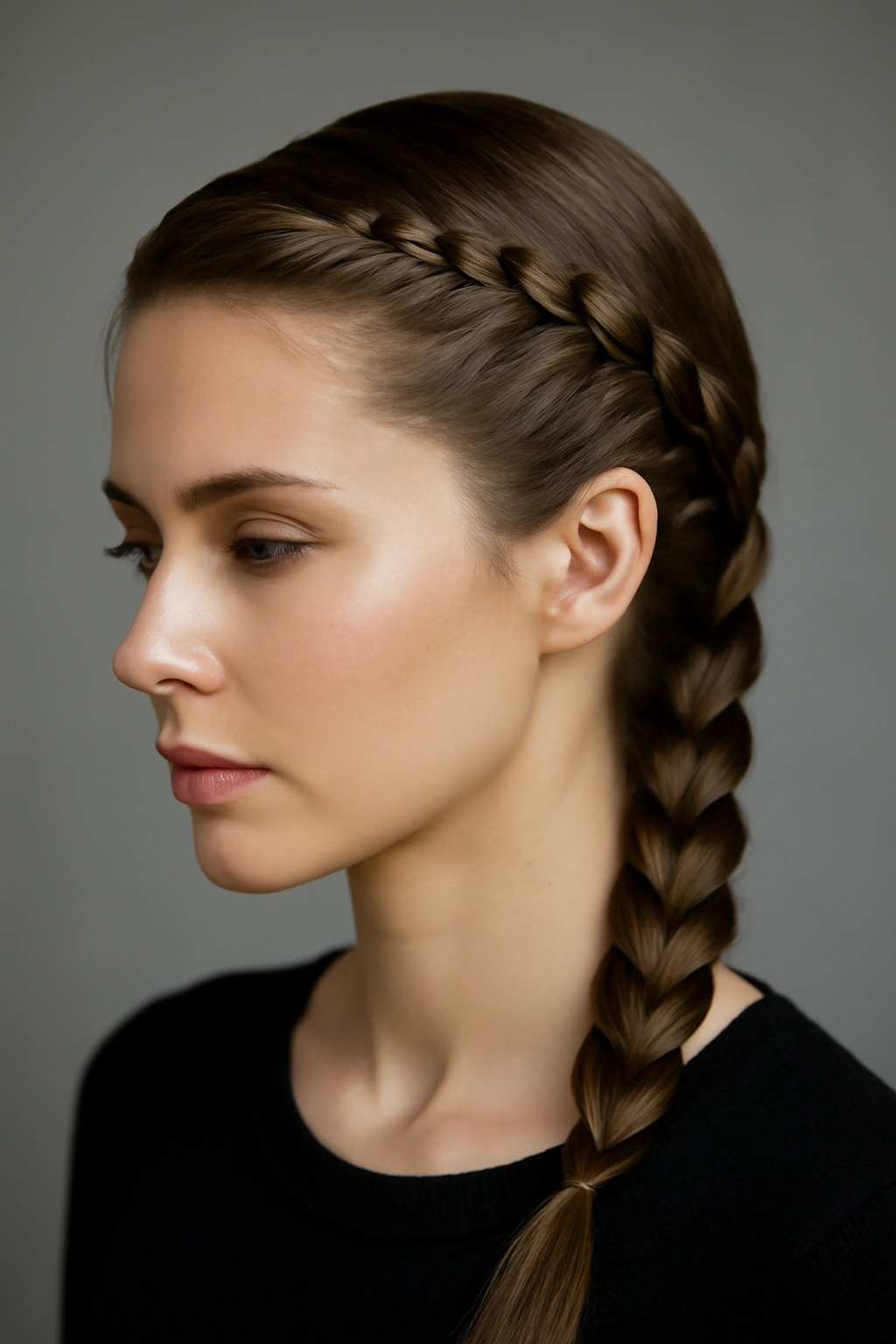
A French braid that starts at the crown and curves down toward one side of your head creates an elegant, almost art-deco quality that’s surprisingly versatile. The direction and tension of the braid determine whether it reads as formal office-appropriate or relaxed weekend-ready.
Making It Work Professionally
Keep the braid tight and very neat, securing it low near the nape of your neck with a thin elastic that matches your hair color. Smooth the front sections of hair that frame your face using a light anti-frizz serum or gel—this keeps any flyaways under control and maintains that polished look through the day. Pair it with sleek, structured clothing and minimal jewelry for maximum impact.
The Weekend Version
Loosen the braid significantly after you’ve completed it, leaving pieces falling softly around your face and neck. You can even mist it with a light texturizing spray before loosening to create a more undone, romantic appearance. Wear it with casual clothes, minimal makeup, and you’ve got the perfect “just put together” weekend look.
Styling note: This braid works beautifully with glasses, both for professional and casual contexts. The asymmetry of the side-swept style keeps it from feeling too severe with face-framing eyewear.
3. The Double Dutch Braid (Pigtails for Grown-Ups)
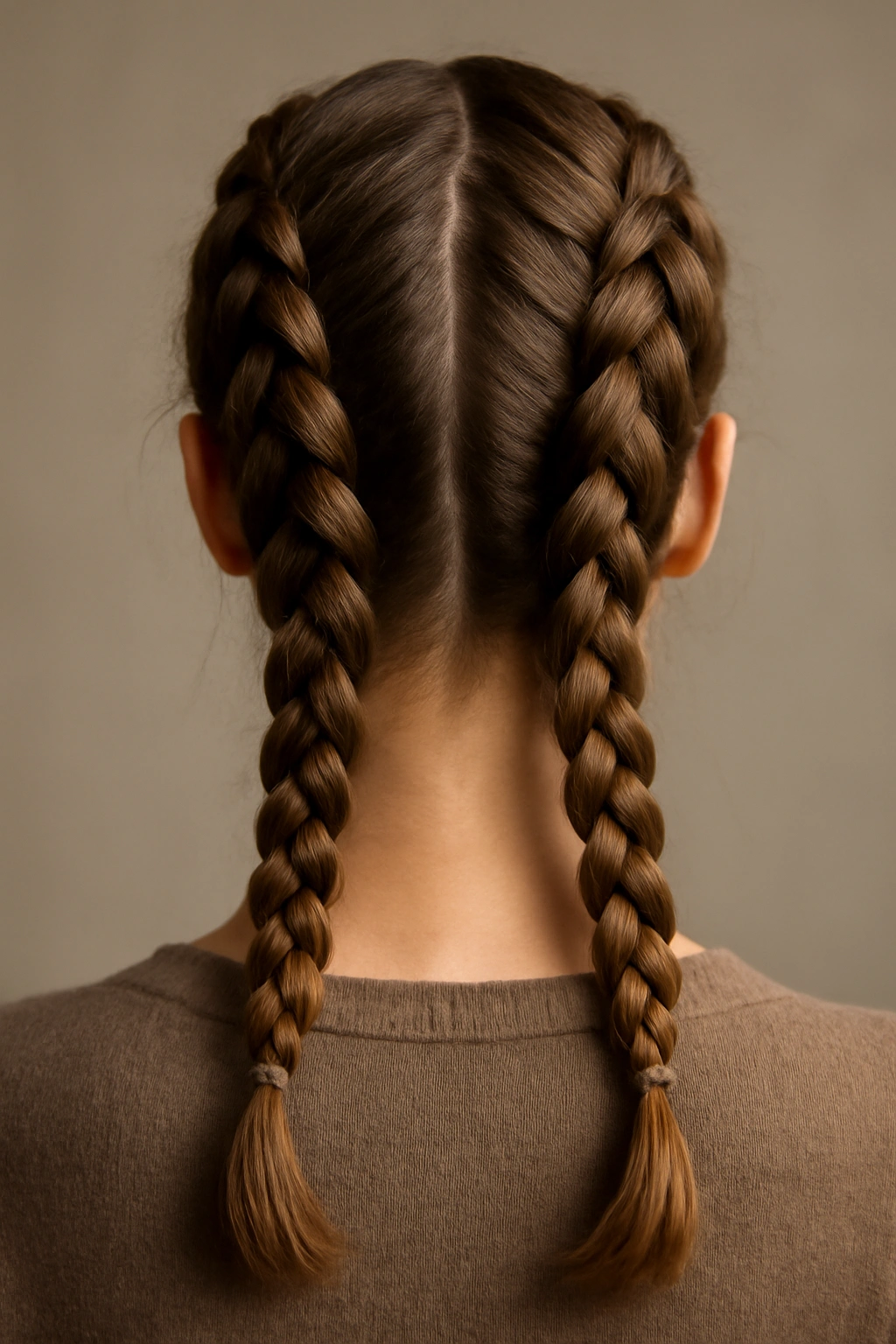
Two Dutch braids running parallel down the back of your head might sound playful, but they’re actually a sophisticated and structured style that works brilliantly in professional settings when executed neatly. The key is making sure the braids are exactly even, tightly secured, and styled with intention rather than cuteness.
Professional Execution
Part your hair straight down the middle from your forehead to the nape of your neck. Create two Dutch braids, one on each side, keeping them equally tight and positioned symmetrically. Secure each braid with a thin, neutral-toned elastic and smooth any flyaways with a light hold spray. The result is striking, memorable, and absolutely office-appropriate.
Weekend Vibes
This is where you lean into the playfulness. Loosen both braids significantly, add some texture by running your fingers through them, and let small pieces escape around your face. Pair with more casual clothing and the same style instantly becomes fun and approachable. You can also add a small accessory like a clip or ribbon if you’re doing something special.
Game-changer moment: Two Dutch braids actually photograph beautifully, which makes this an excellent choice when you know you’ll be in meetings where photos might be taken.
4. The Crown Braid
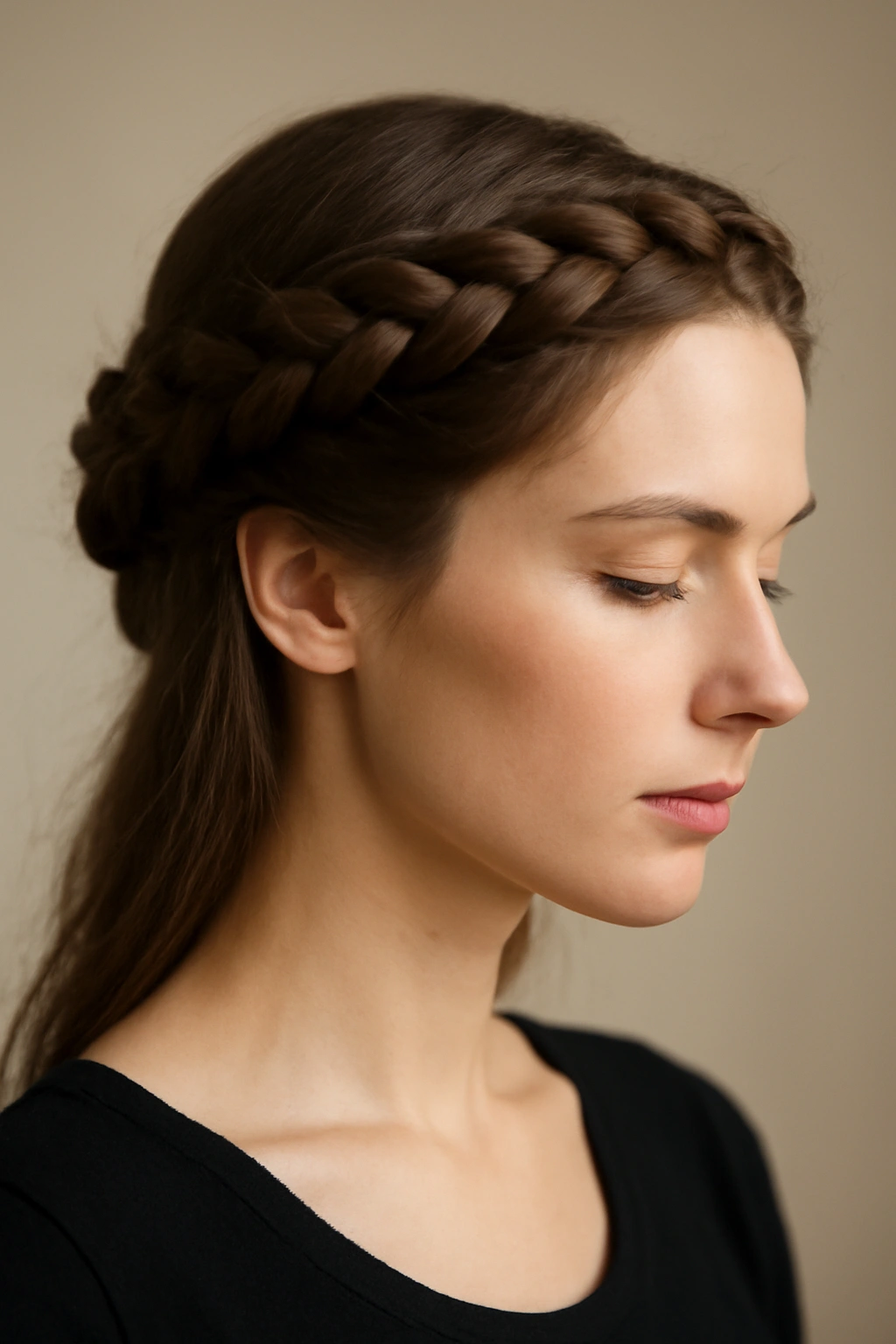
A crown braid wraps around the back of your head like a halo, with the braid starting at one ear, traveling along the back of your head, and ending at the opposite ear. It’s elegant, flattering on most face shapes, and creates the illusion of a more voluminous hairstyle.
Why It Works for the Office
Crown braids feel fancy without being costume-like. They’re structured enough to look intentional and polished, and they’re genuinely functional—your hair is mostly off your face and neck. The style works for long hair and medium-length hair equally well. It’s particularly effective if you’re dealing with an unusually hot day or need your neck exposed for professional reasons (medical settings, food service, etc.).
Making It More Casual
The crown braid naturally lends itself to a softer appearance simply by loosening it slightly after completion. Add some face-framing waves or curls below the braid, or leave the rest of your hair down in loose waves rather than completely pinned back. This transforms it from “formal event” to “weekend adventure” instantly.
Bonus benefit: Crown braids are excellent for keeping long hair out of your face without pulling it into a tight, unflattering updo. The braid sits at the nape rather than the crown, so it doesn’t create tension headaches even if you wear it all day.
5. The Rope Braid
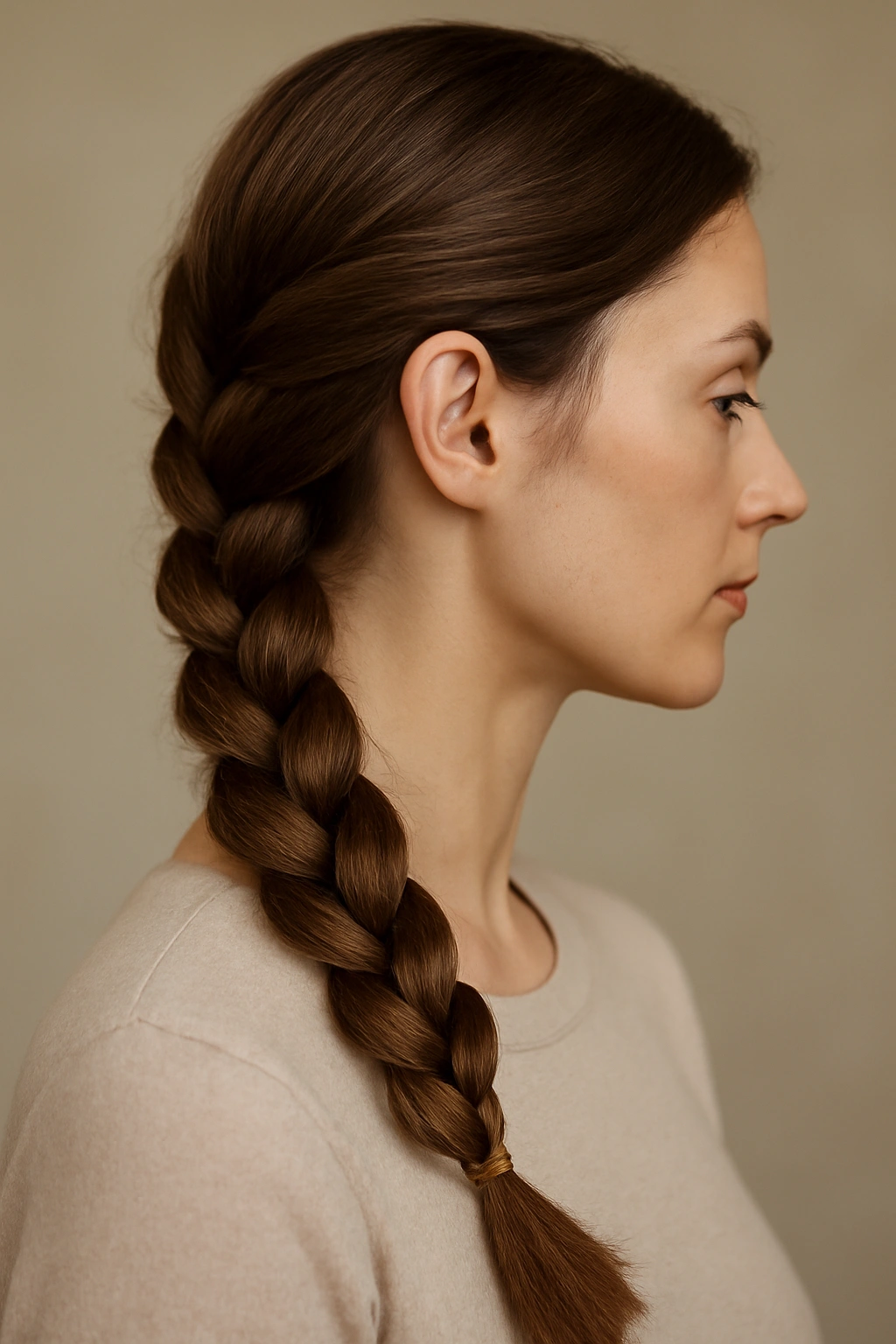
A rope braid is technically not a traditional braid at all—it’s two sections of hair twisted around each other instead of woven. It creates a twisted, cordlike appearance that’s chunkier and faster to create than a traditional braid. It’s also surprisingly forgiving if you’re not experienced with braiding.
Office Styling
Create a rope braid starting at your crown and bringing it over one shoulder, securing the end at shoulder height or at your shoulder seam. Keep the sections wound tightly together for a neat, polished appearance. The twisted effect reads as intentional and structured without looking overly casual. It’s perfect for days when you want something different from a traditional braid.
Weekend Appeal
Loosen the twist significantly after you’ve created it, letting the sections expand and creating a chunkier, more textured appearance. Add some curls or waves to the rest of your hair and suddenly you’ve got a romantic, bohemian look that’s perfect for a farmers market, brunch, or casual outdoor gathering.
Practical magic: Rope braids hold up well in weather, resist frizz better than many braid styles, and work beautifully on second-day hair when you want something that looks intentional rather than like you need to wash your hair.
6. The Fishtail Braid
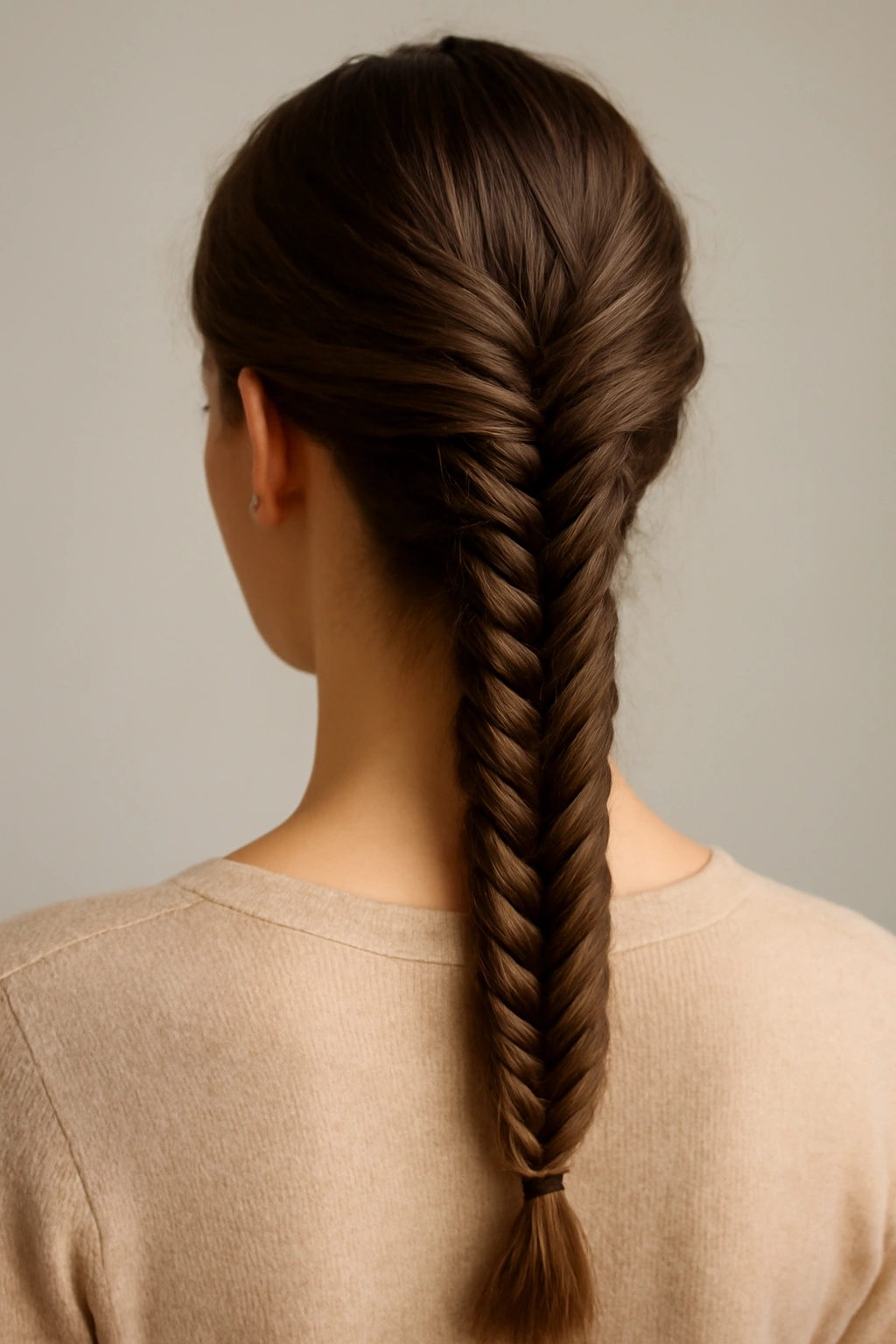
The fishtail braid creates an intricate, lacy appearance that looks far more complicated than it actually is to achieve. Instead of the typical over-under weaving pattern, you’re creating tiny sections from the outside of each side and crossing them toward the center, creating a pattern that resembles fish scales.
Making It Professional
A tight fishtail braid worn sleekly down your back or over one shoulder reads as sophisticated and detail-oriented. Pair it with structured clothing and you’ve got a look that signals competence and attention to aesthetics. The braid works particularly well for creative industries—design, marketing, fashion—where personal style demonstrates creative thinking.
Casual Fishtail Vibes
This is where fishtail braids truly shine. Loosen it generously after creating it, and the intricate pattern becomes even more apparent and beautiful. The braid naturally looks romantic and bohemian without you doing much additional work. Wear it to a weekend gathering and you’ll get compliments without looking like you spent an hour on your hair.
Secret advantage: Fishtail braids look stunning with interesting hair colors or highlights. If you have any dimensional color or balayage, a fishtail braid shows it off better than almost any other style because the looseness and separation of the sections highlights different color tones.
7. The Waterfall Braid
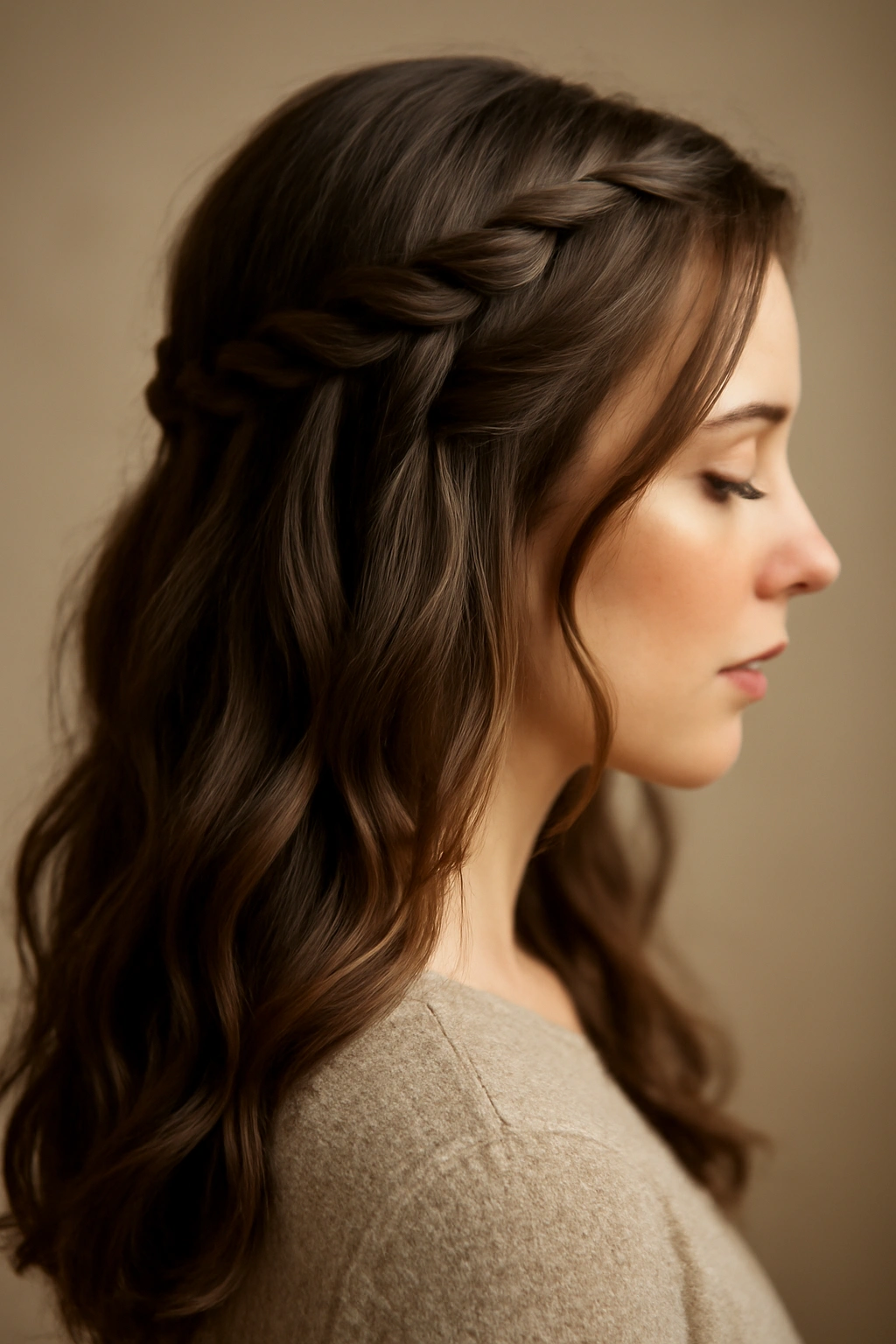
A waterfall braid incorporates loose strands woven throughout the braid, creating a cascading, flowing effect that’s equal parts elegant and playful. It works beautifully as a half-up style, starting at one temple and flowing toward the back of your head, with the loose strands creating movement and texture.
Office Versatility
Wear the waterfall braid tightly and neatly as a half-up style with the rest of your hair in soft waves below it. It reads as intentional and styled without being overly elaborate. The cascading effect adds visual interest without looking costume-like, making it perfect for meetings where you want to stand out positively.
Weekend Styling
Let those cascading strands be significantly looser and messier. Add texture throughout your hair, and the waterfall braid becomes a romantic, flowing style perfect for casual outings. You can even start the braid at the back of your head and bring it over your shoulder for a completely different effect.
Styling secret: A waterfall braid works beautifully if you have layers in your hair—the layers naturally create the cascading effect and require less manipulation to achieve that effortless appearance.
8. The Boxer Braid (Combat Braids)
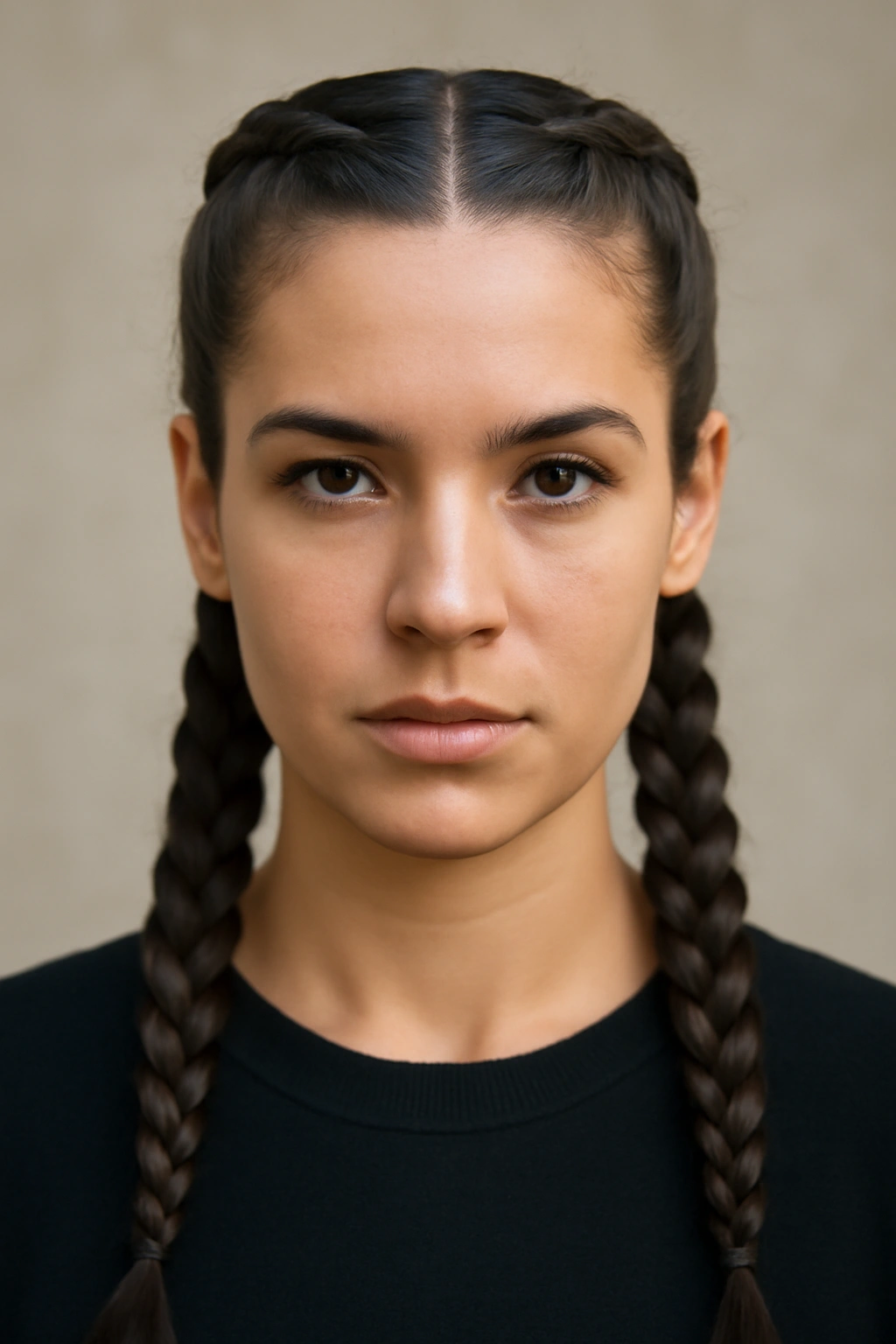
Boxer braids are Dutch braids that start at the front of your head and run straight back toward the nape, positioned close together and very tightly. They’re athletic and sporty, but also surprisingly versatile when executed with intent.
Professional Application
While boxer braids sound sporty, they’re actually professional when styled neatly. They work particularly well for people in fitness, healthcare, or other roles where you need your hair completely out of your face and neck. The tight, structured appearance reads as no-nonsense and prepared. Pair with professional clothing and minimal jewelry, and you’ve got a style that’s entirely workplace-appropriate.
Weekend Energy
This is where boxer braids truly shine. They’re perfect for casual outings, running errands, working out, or any weekend activity where you want your hair completely secured but still want to look intentional and styled. The athletic vibe pairs naturally with weekend casual wear.
Game-changing benefit: Boxer braids actually last multiple days because of how tightly they’re woven. You can create them on a Sunday night and wear them through Tuesday without any noticeable loosening or sagging.
9. The Halo Braid with a Twisted Center
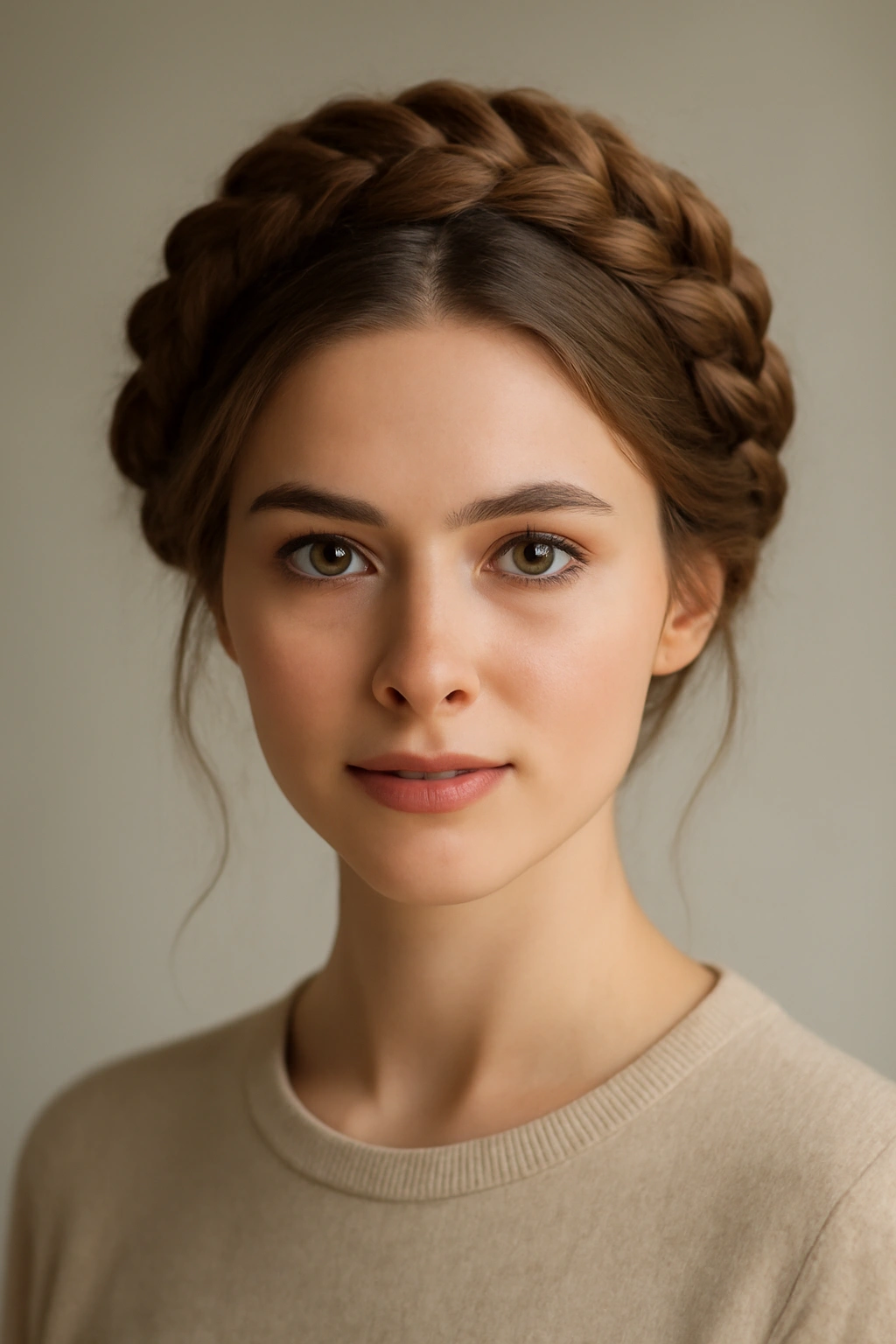
This is a crown braid with a twist—literally. Instead of braiding straight around the back of your head, create a twisted rope section down the center and braid around it, or weave a rope braid through the center of a crown braid. The result is more dimensional and intricate-looking than a traditional crown braid.
Why It Works in Professional Settings
This style signals creativity and attention to detail without being distracting. It works beautifully for presentations, client meetings, or any professional context where you want to demonstrate that you’re thoughtful and intentional. The style is interesting enough that people remember you positively without your hair being the primary focus of the interaction.
Casual Weekend Styling
Loosen it, add waves, and let some face-framing pieces escape. The complexity of the style means that even when loosened, it still looks intentional and beautiful rather than undone. It’s perfect for weekend events where you want to feel special without looking overdressed.
Pro styling note: This braid works particularly well if you have medium to thick hair texture. Fine hair can wear it, but you’ll want to use a texturizing spray beforehand to give your hair more grip and structure.
10. The Side-Swept French Braid with a Wrap-Around
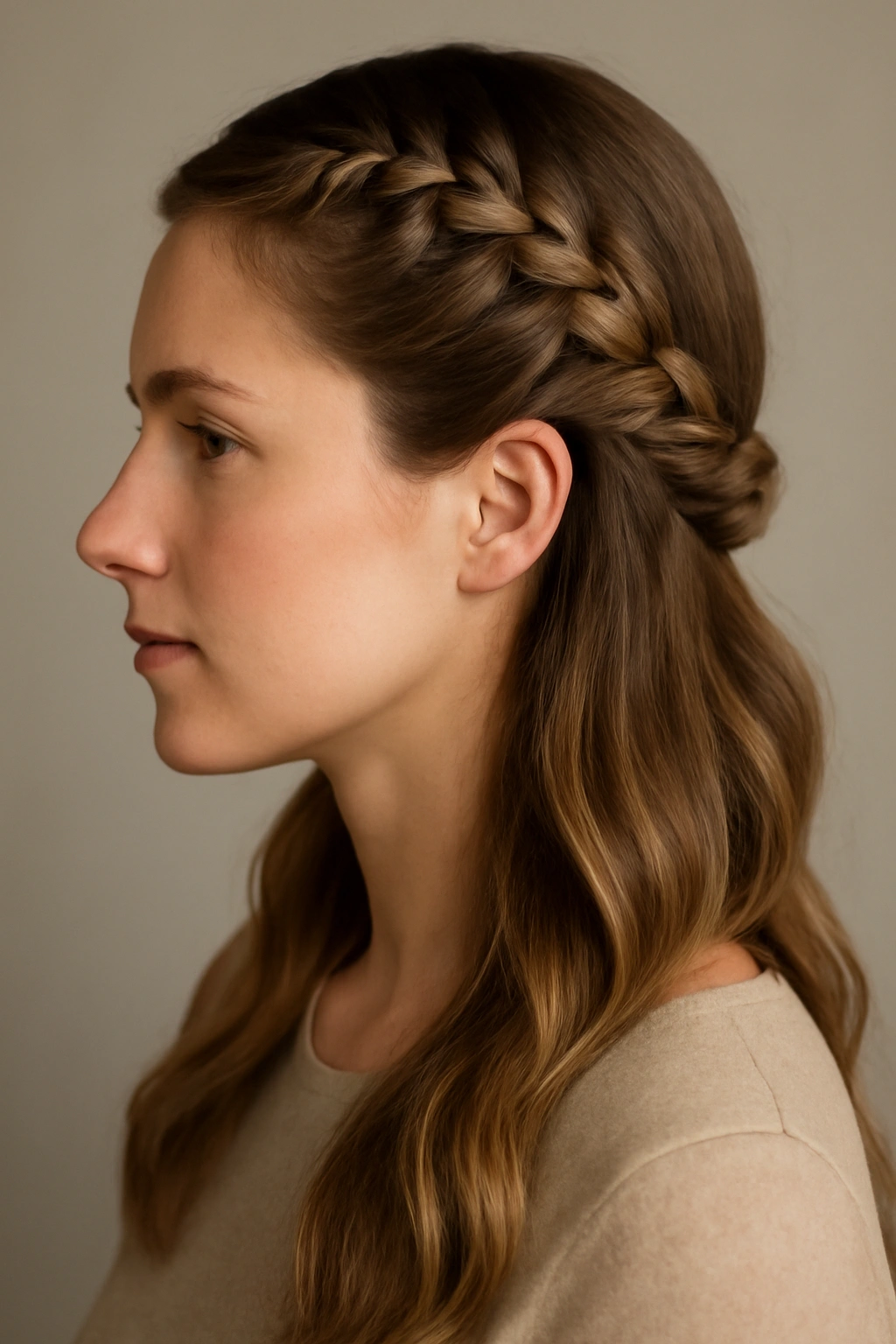
Start a French braid at your crown on one side of your head and bring it down toward your ear. Once the braid reaches ear level, continue braiding straight down to the end of your hair, then wrap the end of the braid around the base of your ponytail or secure it at the nape in a elegant twisted knot. It’s a hybrid style that’s more interesting than a simple side braid.
Professional Presence
This style feels intentional and styled without being excessive. It works beautifully in corporate, creative, and service industry settings. The wrapped element adds sophistication and visual interest, and because the hair is secured at the nape, it stays looking neat throughout your day.
Casual Flexibility
Loosen the braided section and leave some strands falling freely around your face and neck. The wrap-around element can be intentionally slightly messy, giving you a relaxed, romantic appearance perfect for weekend plans. Add texture and waves to the rest of your hair and you’ve got a completely different vibe from the morning version.
Time-saving note: This style works brilliantly for busy mornings because once it’s done, you don’t need to think about it. It maintains its appearance through meetings, movement, and a full day of activity.
11. The Triple Braid Crown
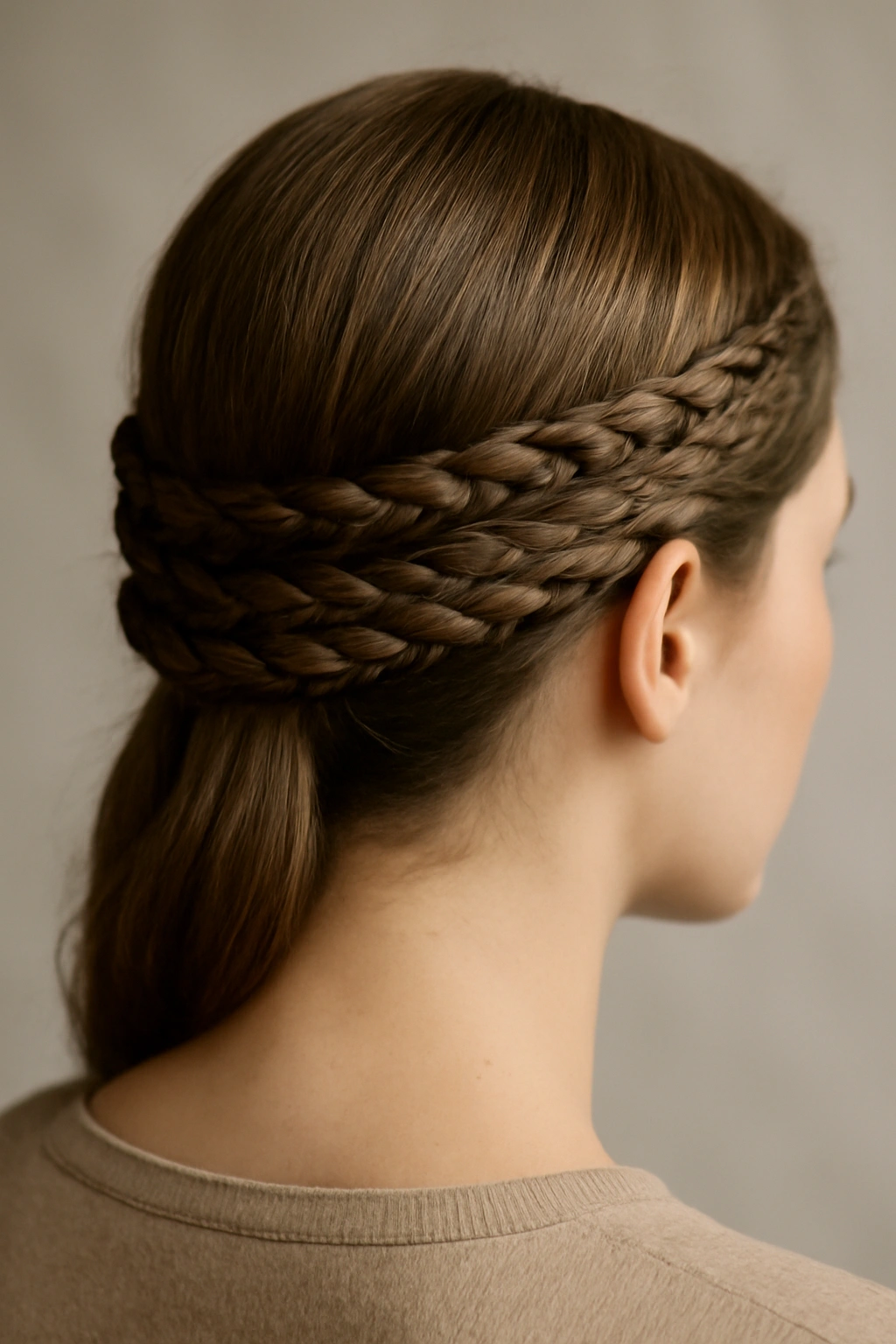
Three thin braids positioned parallel to each other and wrapped around the back of your head create a more complex, visually interesting version of the crown braid. Each individual braid is smaller and looser than a single crown braid would be, creating a delicate appearance.
Office-Appropriate Execution
Keep all three braids neat and symmetrically positioned. This style works beautifully for professional settings because it shows intention and technical skill without being distracting. It’s excellent for creative roles, fashion-adjacent professions, or any workplace with a less conservative dress code.
Weekend Vibes
Loosen all three braids significantly and let them blend together into a soft, romantic crown. The multiple smaller elements create texture and dimension that looks effortlessly beautiful. This is perfect for weekend brunches, outdoor gatherings, or any occasion where you want to feel special.
Structural tip: This braid works best on thicker or longer hair because three separate braids need enough hair to create substance. If you have fine or shorter hair, stick with the single crown braid or the double crown.
12. The Braided Low Bun
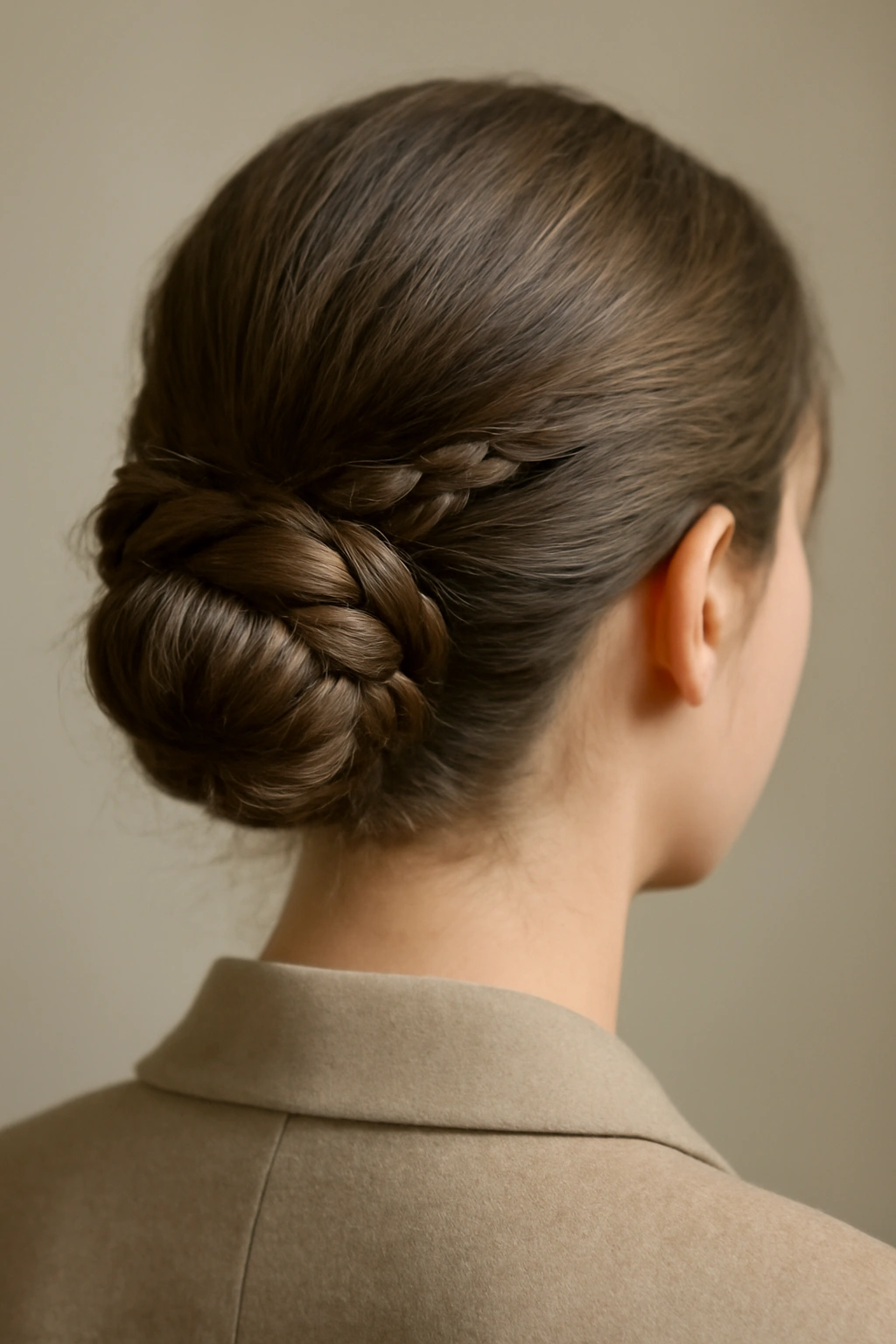
Instead of putting your hair in a traditional bun, create a single braid and coil it around itself to form a bun shape. Secure it with bobby pins and a small elastic. The result is a more interesting bun that’s both professional and slightly more textured-looking than a smooth bun.
Professional Impact
This is one of the most versatile office hairstyles available. It keeps your hair completely off your face and neck, it looks intentional and polished, and it works for absolutely any professional setting. The braided texture adds visual interest without being distracting. It’s perfect for days when you want something that feels special but won’t distract from your actual work.
Why It Works for Weekends
A braided bun pairs beautifully with casual clothing, workout wear, or anything requiring your hair to be completely out of the way. It’s the perfect style for running errands, hiking, or any activity where you need your hair secured but still want to look intentional rather than just functional.
Hack for success: If your hair is on the shorter side and doesn’t reach easily into a bun, create a Dutch or French braid instead of a regular braid before coiling it—the texture and grip of an inverted braid holds a bun shape much better than a traditional three-strand braid.
13. The Side Braid with Loose Waves
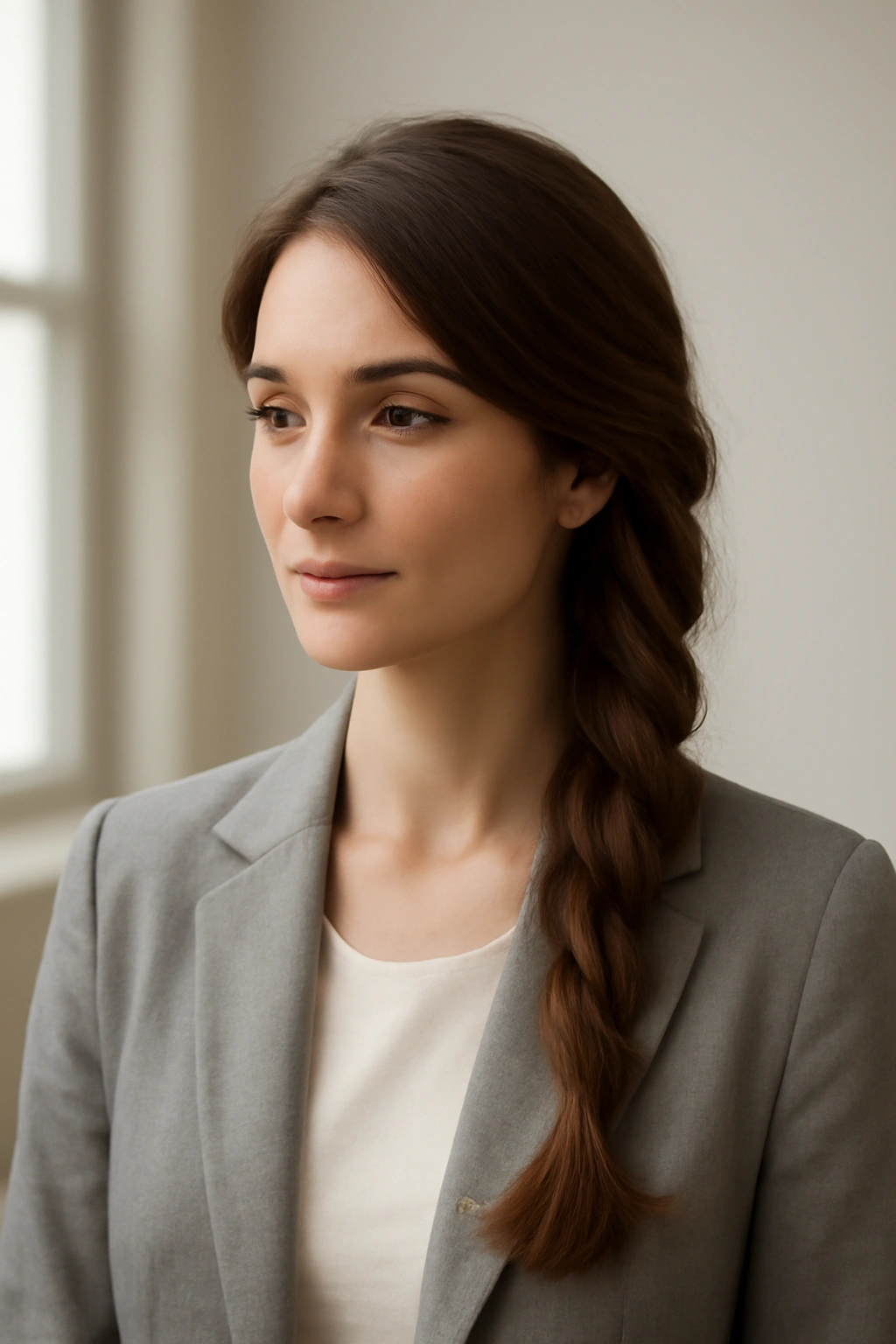
A single braid pulled to one side of your head, with the rest of your hair left down in soft waves, creates a casual-elegant hybrid that works beautifully for both office and weekend contexts. It’s half-up styling with a braided element, giving you the best of both worlds.
Making It Work Professionally
Keep the braid tight and neat, secure it at the nape with a thin elastic, and style the rest of your hair in loose waves. Pair with professional clothing and you’ve got a style that’s interesting and intentional without being overly casual. This works particularly well for less formal office environments, creative industries, or professional settings where personal style is appreciated.
Weekend Energy
Loosen the braid slightly after creating it, add more texture to your waves, and let some pieces escape from the braid. The result is romantic, casual, and perfect for weekend gatherings. It’s a style that looks like you didn’t spend time on it but absolutely did, in the best way.
Styling magic: This braid works beautifully with longer faces because the side placement and loose elements soften angular features. It also works well with most hair textures, from straight to naturally wavy to curly.
14. The Twisted Half-Up Style with Braid Accent
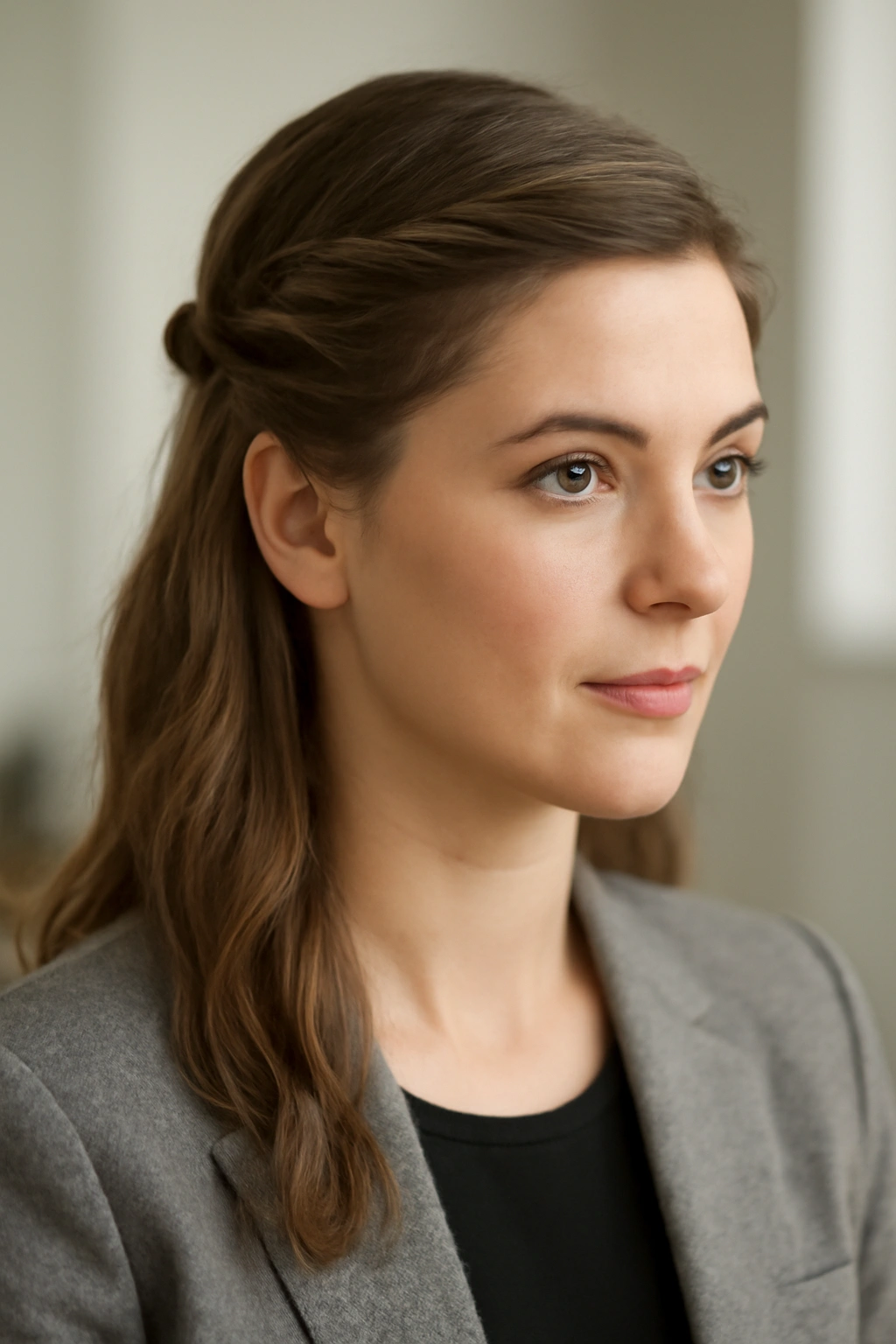
Create a twisted rope braid with just the front sections of your hair (keeping the rest down and loose), and pin the twist at the back of your head. Alternatively, create a small braid with just the front sections and secure it. It’s a subtle style that has all the intentionality of a full braid but with more approachability.
Professional Application
This style is perfect for professional settings where you want your hair partially back without committing to a full braid. It keeps hair out of your face and demonstrates that you’ve put thought into your appearance without looking like you spent extensive time styling. It works for every profession and every formality level.
Casual Styling
This is an incredibly versatile style for weekends. Add texture, loosen the twist or braid, and it becomes romantic and bohemian. Keep it tight and neat, and it reads as intentional and put-together even with casual clothing. You essentially get two looks from one base style.
Game-changer detail: If your hair is fine or straight, use a texturizing spray before creating the twist or braid. This gives your hair more grip and creates more visible texture and dimension in the twist.
15. The Zigzag Braid
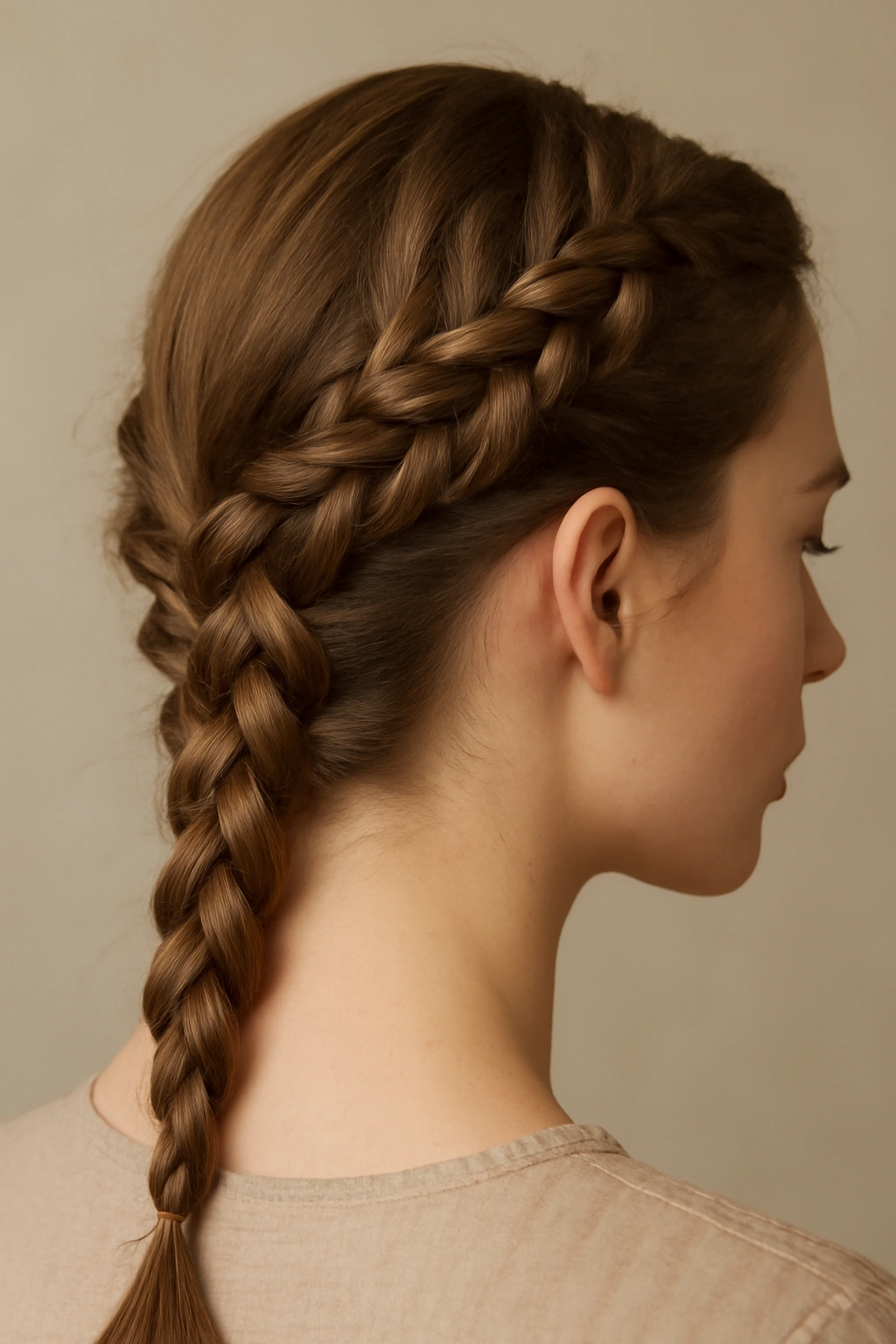
Instead of braiding straight down from your crown or from a side part, create a braid that zigzags across your head from one side to the other. Start at one ear, braid upward and across to the opposite side, then braid back down. It’s more complex visually but uses the same basic braiding technique.
Why It’s Office-Interesting
This style signals creativity and confidence without being excessive. It’s particularly effective in creative industries or any professional context where demonstrating individual style and thinking is valued. The zigzag creates visual interest that makes you memorable in a positive way.
Casual Appeal
A zigzag braid looks equally beautiful loosened and texturized for casual wear. It’s the kind of style that looks intentional whether you’re headed to work or to brunch with friends. The geometric pattern reads as modern and interesting regardless of context.
Technical note: This braid requires a bit of practice because you’re changing the direction of the braid multiple times. Practice on a day when you don’t need to be anywhere, and you’ll find it becomes easier each time.
16. The Braided Headband Style
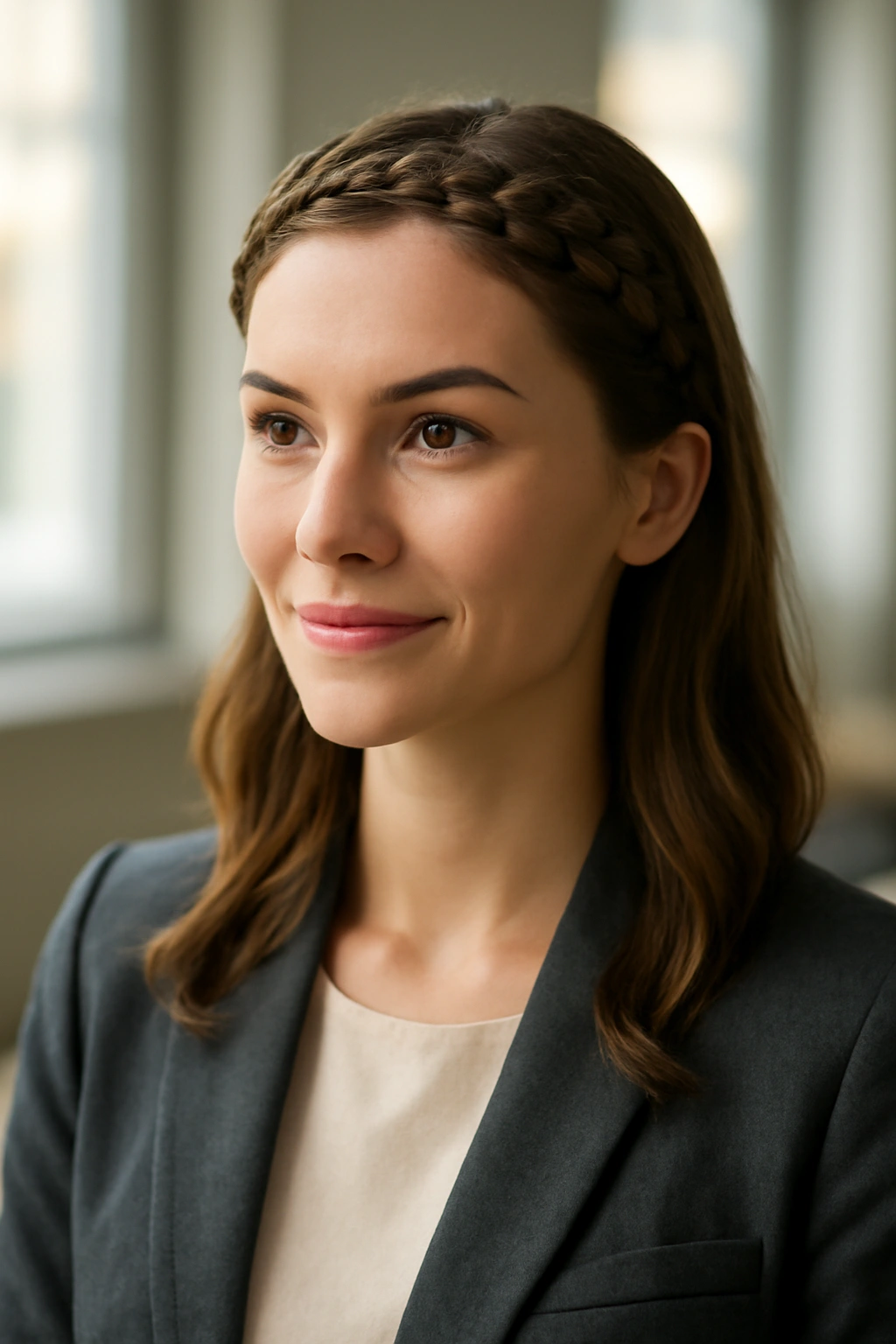
Create a braid that starts at one temple, travels around the back of your head, and ends at the opposite temple, essentially creating a braided headband with the rest of your hair down. It’s elegant, functional, and works beautifully for both contexts.
Professional Presence
Wear this style with your hair down in waves or smooth and straight, and it reads as both polished and approachable. It keeps hair off your face and creates a sense of structure without looking overly formal. It’s excellent for people in service industries, creative roles, or any professional setting where you want to appear friendly and competent simultaneously.
Weekend Versatility
This style is perfect for casual occasions because it manages your hair without completely putting it up. Add texture, loosen the braid, and let face-framing pieces escape. It’s ideal for festivals, outdoor events, or casual gatherings.
Styling secret: This braid works beautifully if you have face-framing layers because the layers naturally accent the braided headband rather than looking abrupt or out of place.
17. The Four-Strand Braid
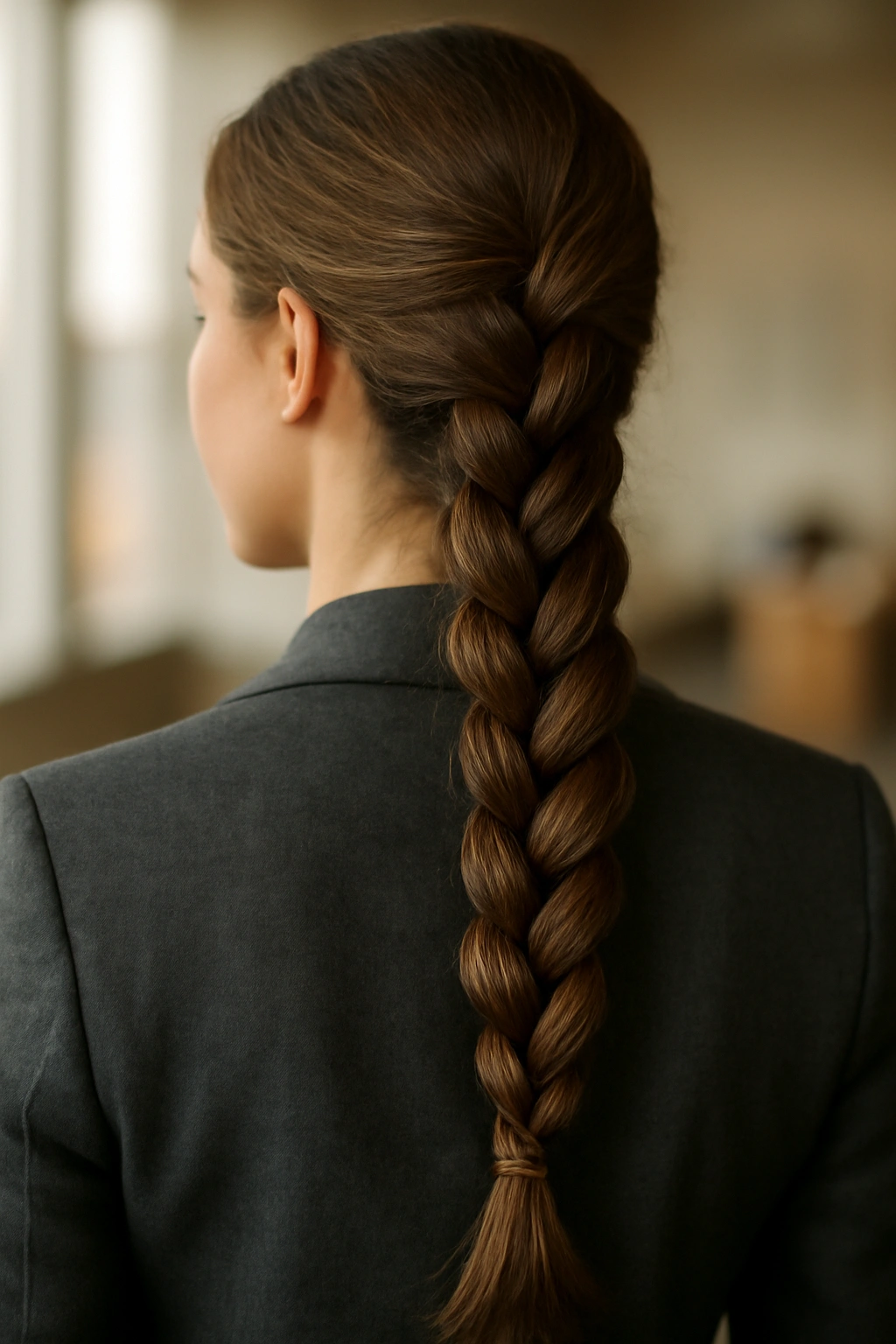
A four-strand braid uses four sections of hair instead of three, creating a thicker, more complex-looking braid with a defined texture. It’s more intricate than a three-strand braid but easier than you’d think once you understand the pattern.
Professional Sophistication
A four-strand braid worn neatly down your back or pulled to one side reads as sophisticated and technically skilled. It’s the kind of style that signals you pay attention to detail and you’re willing to invest time in your appearance. It works particularly well in creative industries or professional settings where personal presentation is valued.
Casual Four-Strand Styling
Loosen the braid significantly after creating it, and the additional strands create more texture and dimension. The result is a braid that looks effortlessly complex and beautiful. It’s perfect for weekend events where you want to look special without obviously spending time on your hair.
Success tip: Four-strand braids hold much longer than three-strand braids because each strand is individually smaller and there’s more grip between the sections. This means you can create it on Sunday and wear it for days.
18. The Dutch Braided Ponytail
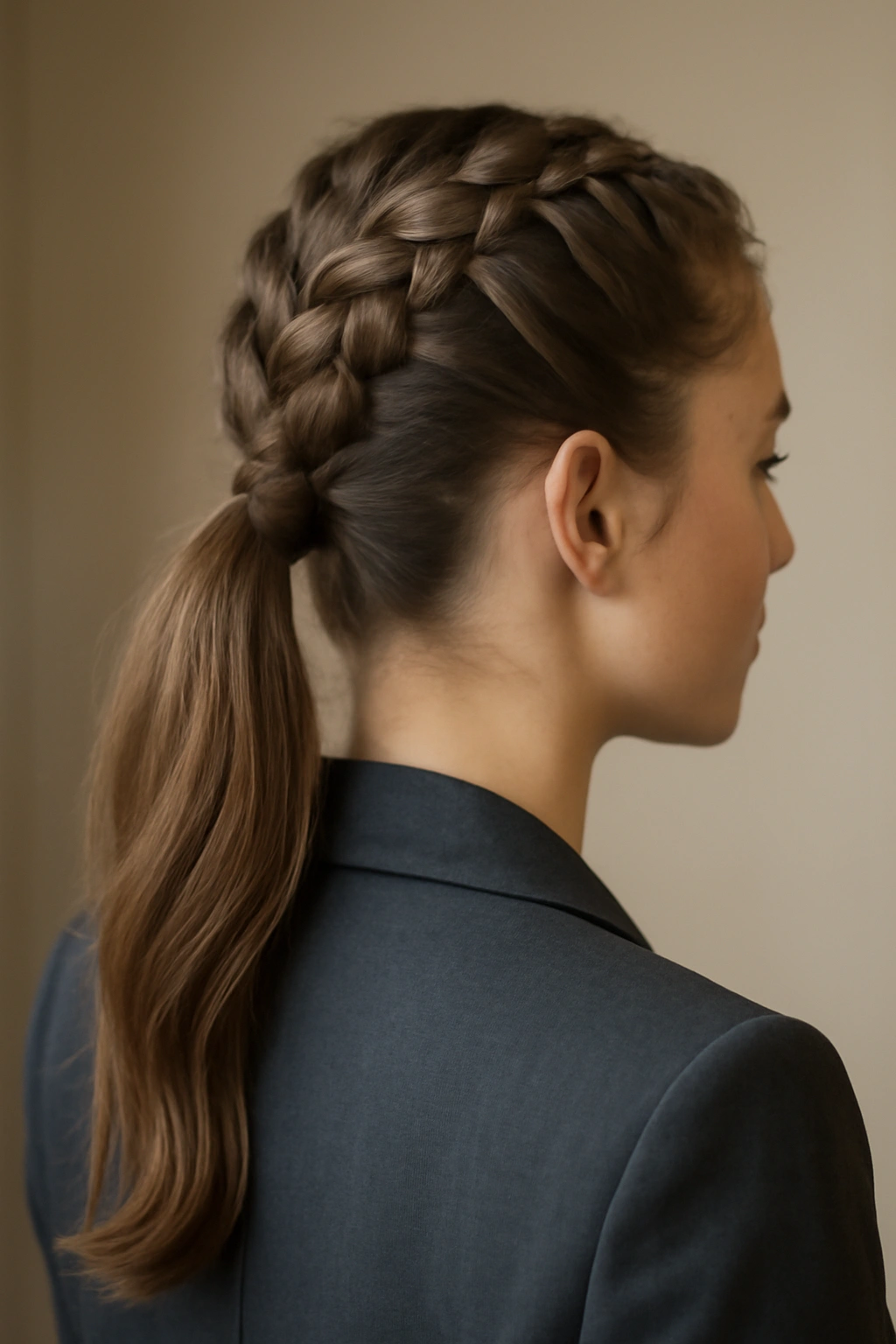
Combine two techniques: create a Dutch braid starting at your crown and bring it down to the nape of your neck, then gather all of your hair (braided section and loose hair below) into a ponytail. Secure with an elastic and you’ve got a ponytail with significantly more visual interest and texture than a simple bun or ponytail.
Professional Finality
This is the style for when you want maximum polish and professionalism. The braided element shows intentionality and attention to detail, while the overall ponytail silhouette is universally professional and appropriate for every workplace context. It works for client-facing roles, formal meetings, and any professional situation.
Weekend Ease
The Dutch braided ponytail is just as appropriate for casual wear as it is for professional contexts. It’s perfect for active weekend plans because your hair is completely secured, it’s less bulky than a bun, and it looks intentional even if you’re just running errands. Add some loose waves below the ponytail and you’ve got a casual but styled appearance.
Real-world magic: This ponytail actually feels neater and more secure throughout the day compared to a simple ponytail. The braid creates tension and grip that keeps the style from loosening or sagging. You can absolutely get through an entire week without it looking messy.
Final Thoughts
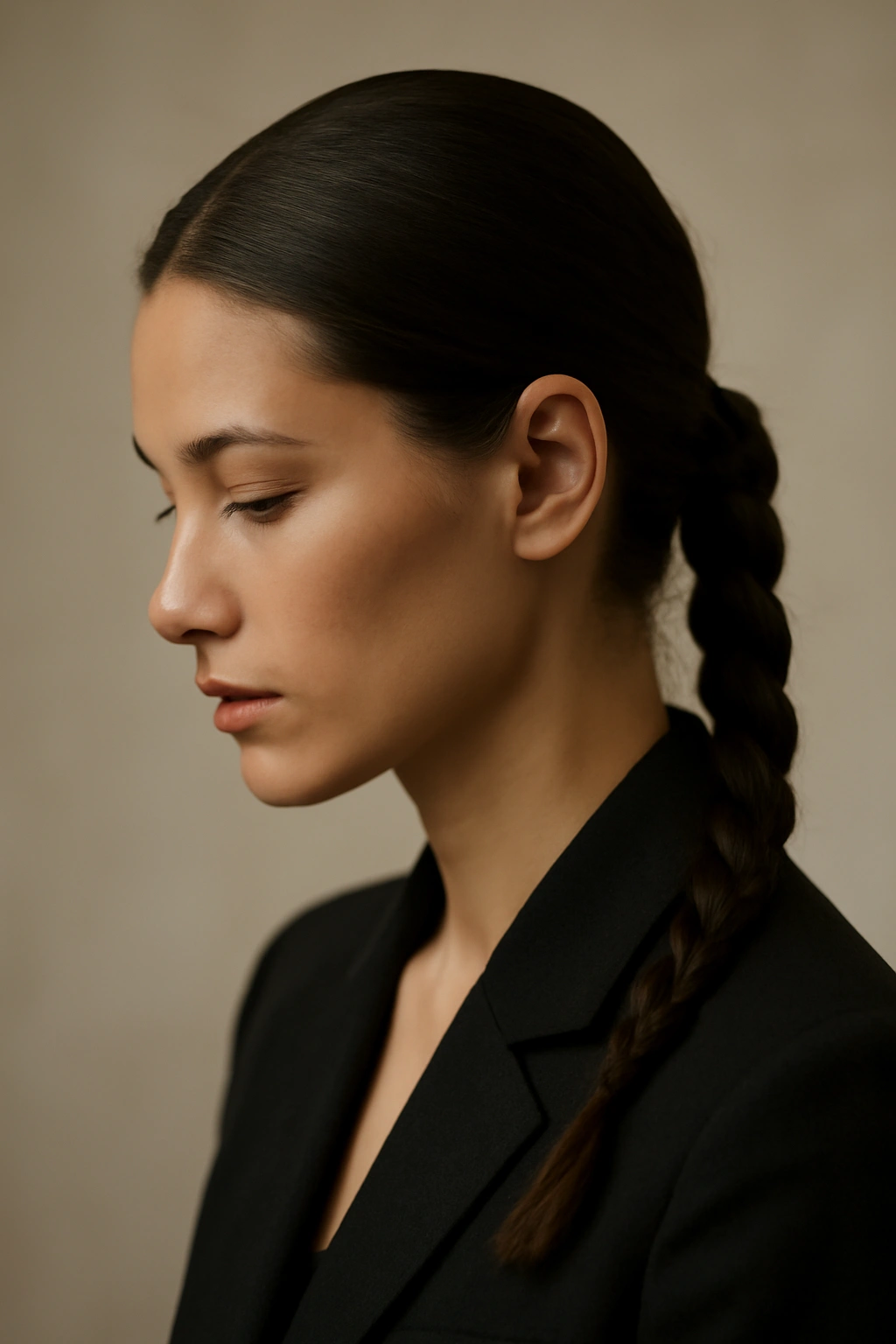
The beauty of braided hairstyles is that they genuinely work across both professional and casual contexts—you’re not choosing between two separate wardrobes of hair. The same braid that looks polished and intentional on Monday morning in the office can be loosened slightly, paired with waves, and read as romantic and casual for weekend brunch. The key is understanding how tension, looseness, and the elements surrounding the braid (waves, face-framing pieces, additional texture) shift the overall impression.
Start with the styles that feel most approachable based on your hair texture and length, and practice them regularly until they become intuitive. A braid that takes you 20 minutes the first time might take 10 minutes once you’ve done it three or four times. Invest in good bobby pins, a small elastic in your hair color, and a light texturizing spray, and you’ve got everything you need to rotate through these styles confidently.
The real advantage of mastering a few braided styles is that you’re never in a situation where you feel unprepared, whether you’re heading to an important meeting or running out the door for weekend plans. A secure, intentional braided style signals competence, creativity, and confidence—attributes that matter everywhere.
