



Box braids remain one of the most versatile and protective styles available to textured hair—and the design possibilities are genuinely endless. Whether you’re looking to make a bold statement, protect your hair during a transitional phase, or simply refresh your look, box braids offer a canvas for creativity that few other protective styles can match. The beauty of bringing inspiration to your braider is that you’re giving them a clear vision of exactly what you want rather than leaving it to chance or vague descriptions that might miss the mark.
The difference between a good braid style and one you’ll absolutely love often comes down to the details. It’s not just about the size or the length—it’s the texture, the finishing touches, the color play, the way the braids frame your face, and those little elements that make you feel like the best version of yourself when you walk out of that appointment. Having specific reference images and understanding the variations available helps you communicate your vision to your braider with precision, and it ensures you get exactly the style you’re picturing in your mind.
1. Classic Box Braids
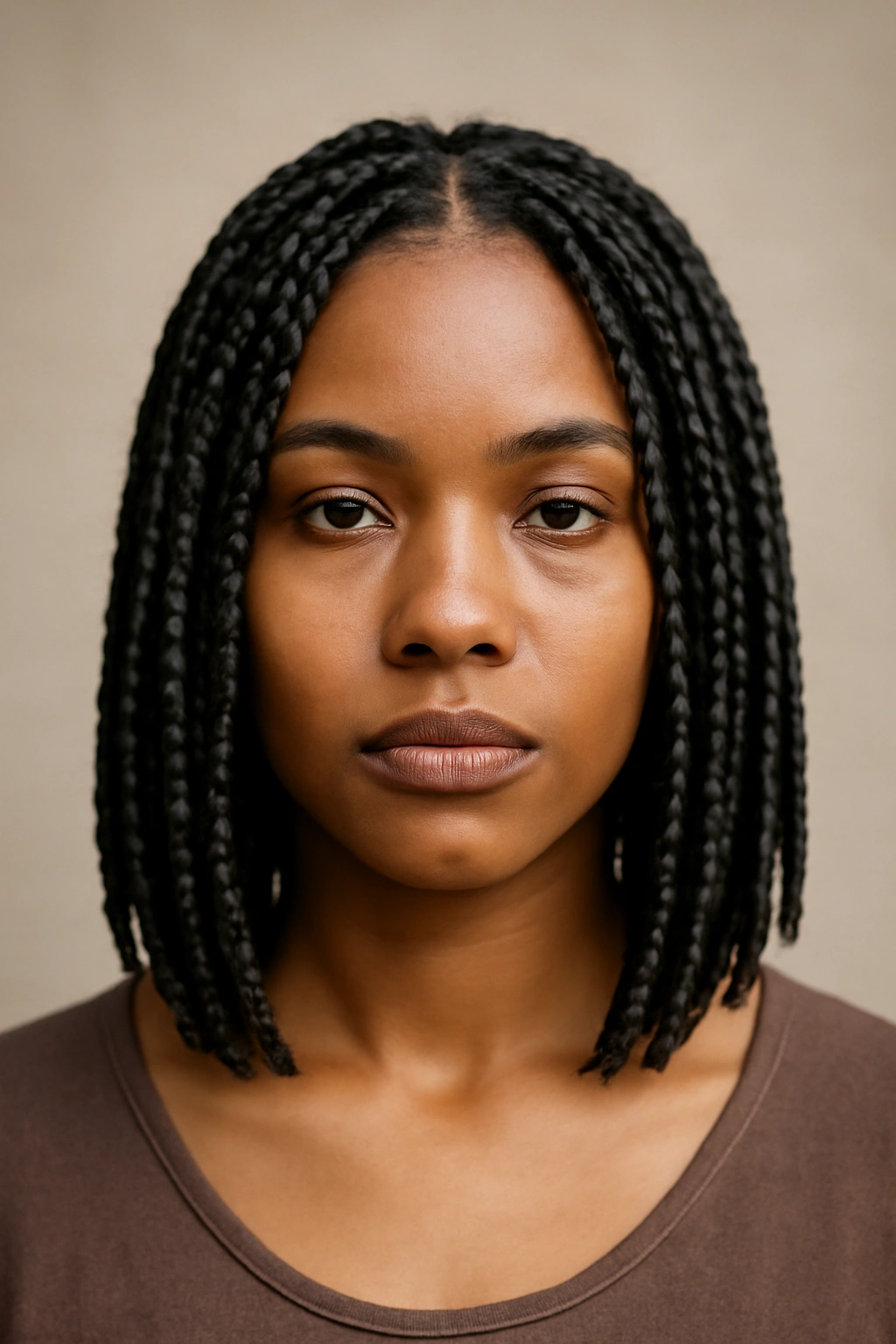
Classic box braids are the foundation style that launched a thousand variations, and they deserve their iconic status. These medium-sized braids typically measure around ¼ inch to ½ inch in width, striking the perfect balance between protective coverage and manageable styling. The beauty of this style lies in its simplicity—clean, uniform braids installed in neat sections across the entire head, usually reaching somewhere between shoulder-length and mid-back.
Why They’re Still the Best Choice
Classic box braids work because they check every box: they’re protective enough to give your natural hair genuine rest, they’re sleek enough for professional settings, and they’re comfortable enough to wear for 6 to 8 weeks without your scalp feeling strained. The consistent sizing means the braids have a cohesive, intentional look rather than appearing haphazard or unfinished.
What Makes This Style Timeless
- Versatility in styling: You can wear them down, pull them into a ponytail, wrap them into a crown, or secure them into a high bun without losing the clean aesthetic
- Professional appearance: These braids read polished in corporate settings, at formal events, or in situations where you want a refined look
- Scalp health: The medium size means less tension on individual braids, reducing the risk of hair loss from overly tight installation
- Longevity: Classic braids hold their shape and maintain that fresh, neat appearance longer than some more embellished styles
Pro tip: Ask your braider to keep the parts clean and precise—well-defined sections elevate the entire look and give it a professional, intentional appearance.
2. Jumbo Box Braids
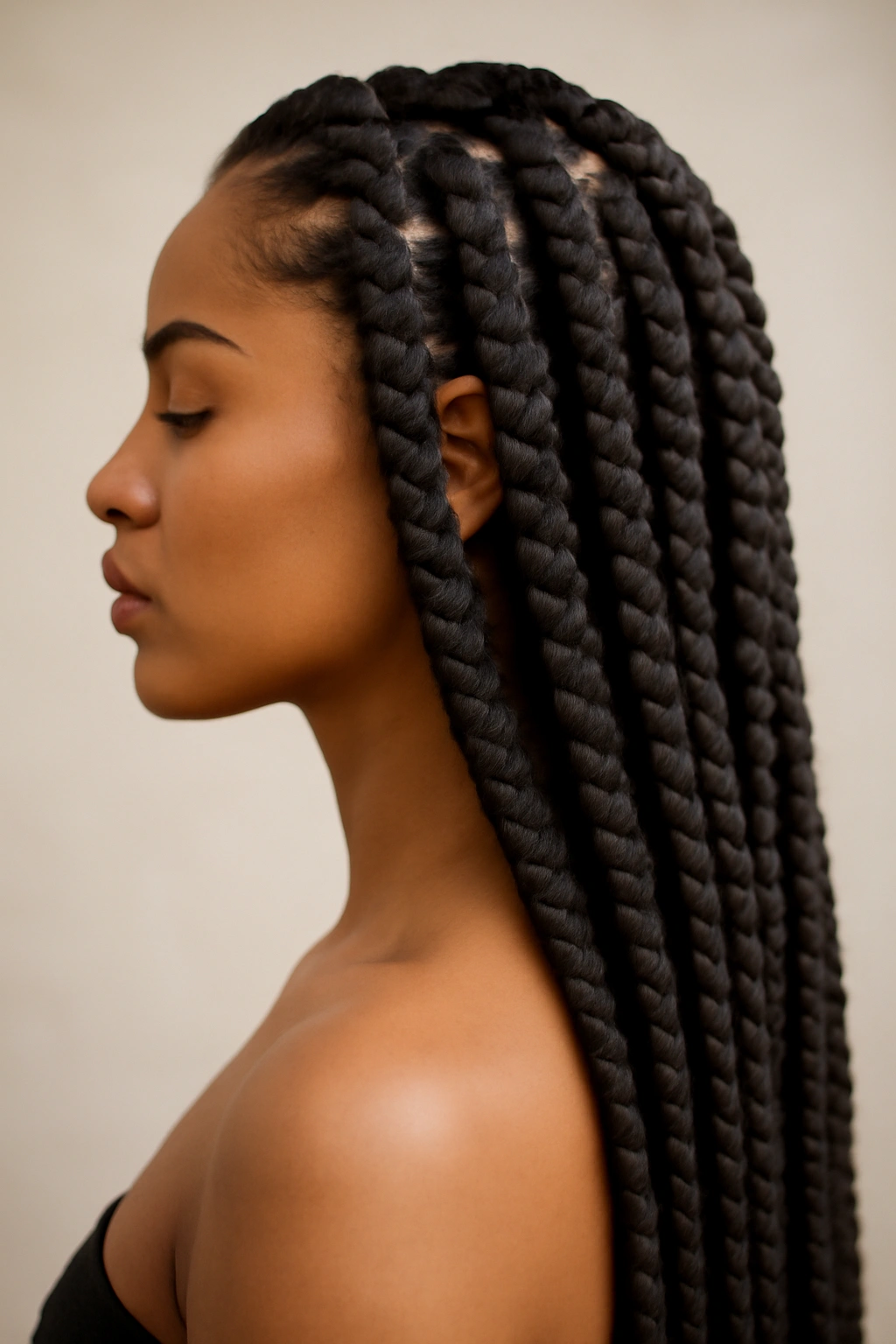
Jumbo box braids make a statement. These oversized braids—usually around 1 inch wide or larger—create dramatic visual impact and require significantly less installation time than smaller braids, which means less time in the chair and less cost. They’re bold, they’re modern, and they photograph beautifully with that sculptural quality that comes from larger, more dimensional braids.
The Appeal of Going Big
Jumbo braids create an undeniable presence on the head. The larger sections showcase the texture and movement of the braiding in a way smaller braids simply can’t. They also offer genuine relief to your natural hair because there are fewer braids overall, meaning your natural strands experience less manipulation during installation and less ongoing tension during wear.
Key Considerations for Jumbo Braids
- Installation speed: Most braiders can complete jumbo braids in 3 to 4 hours, compared to 6 to 8 hours for classic braids
- Weight distribution: The larger size means each braid carries more weight, so ensure your braider is experienced with sizing and tension to avoid scalp discomfort
- Styling options: Jumbo braids work beautifully worn down, but pulling them into styles requires more strategic sectioning
- Face-framing: Consider asking for some smaller face-framing pieces to soften the overall look and create dimension
Insider note: Jumbo braids with wavy or curly synthetic hair texture can give an ultra-modern, almost sculptural aesthetic that’s completely different from traditional smooth braids.
3. Micro Box Braids
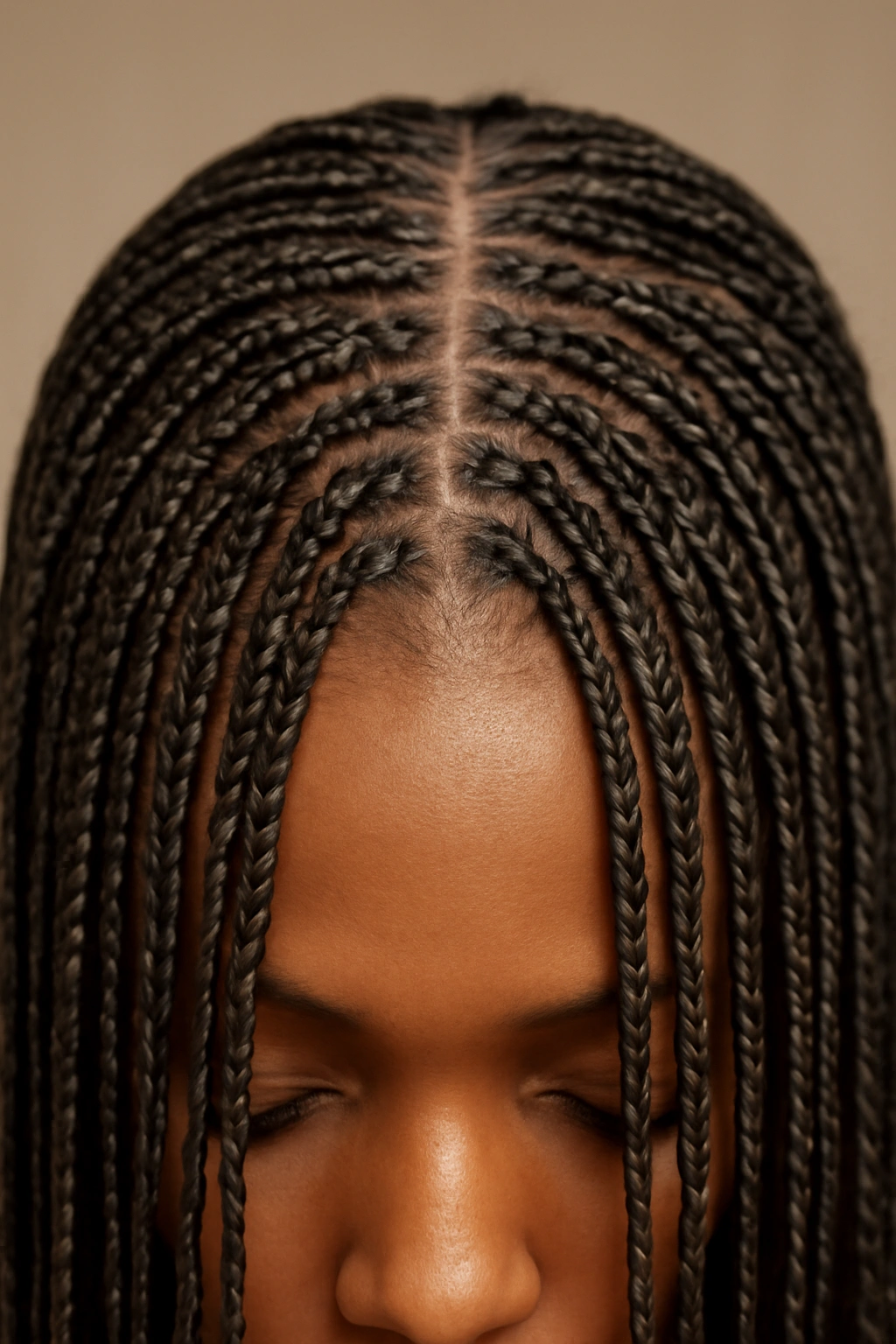
Micro box braids sit on the opposite end of the scale from jumbos, offering intricate detail and an almost lace-like aesthetic when viewed from a distance. These tiny braids—often just ⅛ inch wide—create a delicate, intricate look that showcases incredible braiding skill and create maximum styling possibilities because you’ve got so many individual strands to work with.
The Precision Required
Micro braids demand a highly skilled braider with real experience. The installation is time-intensive, often taking 8 to 12 hours or even longer depending on head size and desired coverage. However, the payoff is a style that feels incredibly refined and opens up styling options that feel impossible with larger braids.
Why Micro Braids Stand Out
- Styling versatility: You can create intricate updos, wrap sections around your head, or style them into virtually any configuration you can imagine
- Face-framing possibilities: Smaller braids around the face create softer, more delicate framing
- Longevity: Micro braids can comfortably last 8 to 10 weeks because the smaller size distributes weight more evenly across your scalp
- Visual impact: They create an incredibly polished, intricate appearance that reads as highly intentional and artistic
Worth knowing: Micro braids require consistent maintenance because they can mat more easily than larger braids. Sleeping in a silk bonnet or on a silk pillowcase becomes non-negotiable.
4. Colored Box Braids
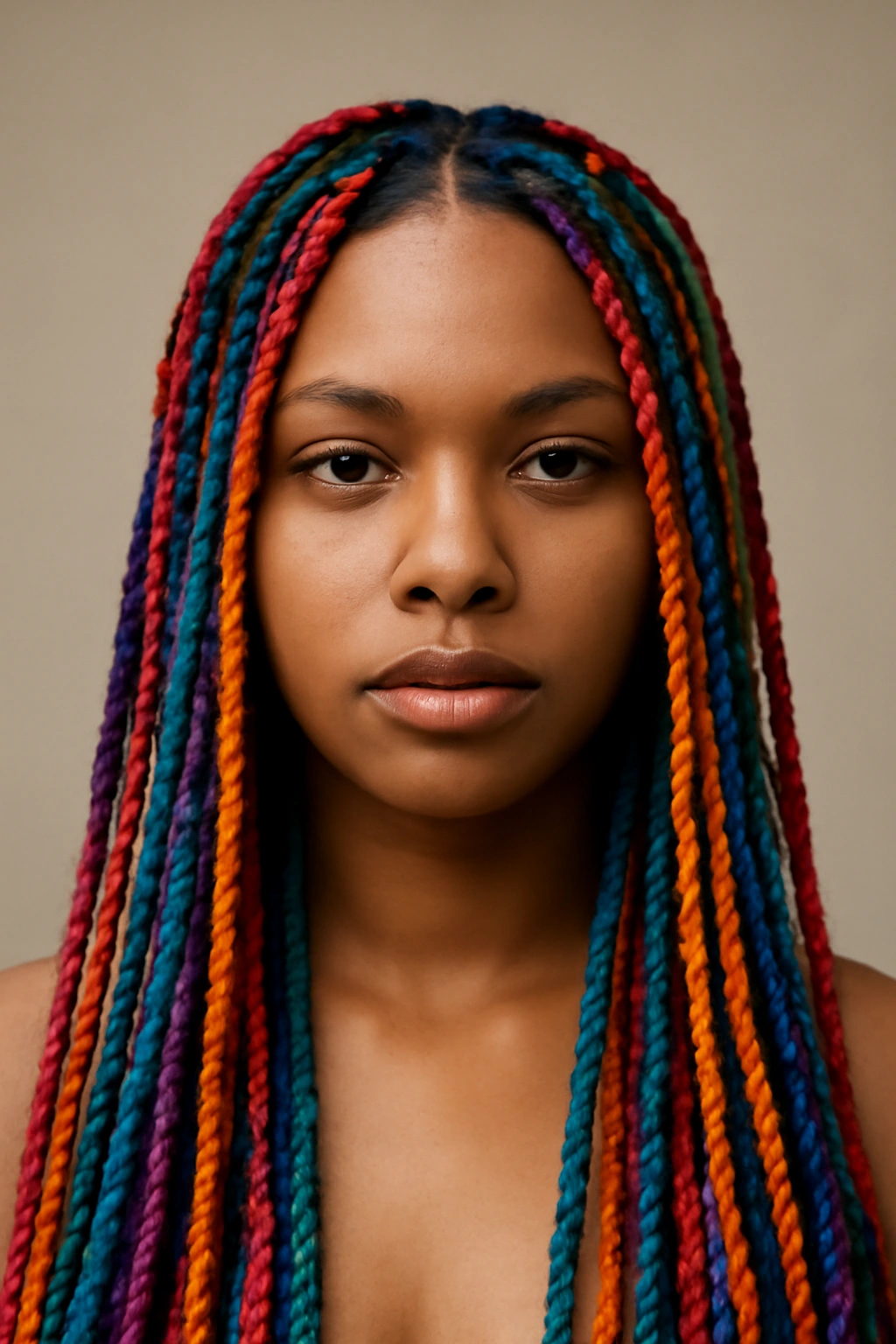
Introducing color through the synthetic hair in your braids is one of the easiest ways to completely transform your look without committing to permanent color on your natural hair. Whether you choose a single bold color, multiple colors throughout, or subtle highlights, colored braids create visual interest and allow you to experiment with shades that might not suit your skin tone permanently or that you’re not ready to commit to long-term.
Color Options That Photograph Beautifully
Jewel tones like deep emerald, sapphire, or burgundy create stunning contrast and sophistication. Warm tones like copper, bronze, or honey add warmth and dimension. Cool-toned silvers and ash colors create a futuristic, editorial aesthetic. The synthetic hair used in braids accepts dye and maintains color vibrantly, sometimes even more vividly than your natural hair would.
Making Colored Braids Work
- Placement strategy: Full-head color makes a bold statement, while color placed only in face-framing pieces or in the lower sections creates subtler dimension
- Complementary shades: Consider your skin undertone and natural hair color when selecting your shade
- Color combination: Two complementary colors woven throughout create more visual interest than a single solid color
- Maintenance: Colored synthetic hair can fade with sun exposure and frequent washing, so consider protective measures for longevity
Pro tip: Bring actual fabric or yarn samples of colors you’re considering to your appointment—lighting in different spaces changes how colors appear dramatically, and swatching helps you see the real shade before committing.
5. Box Braids with Beads
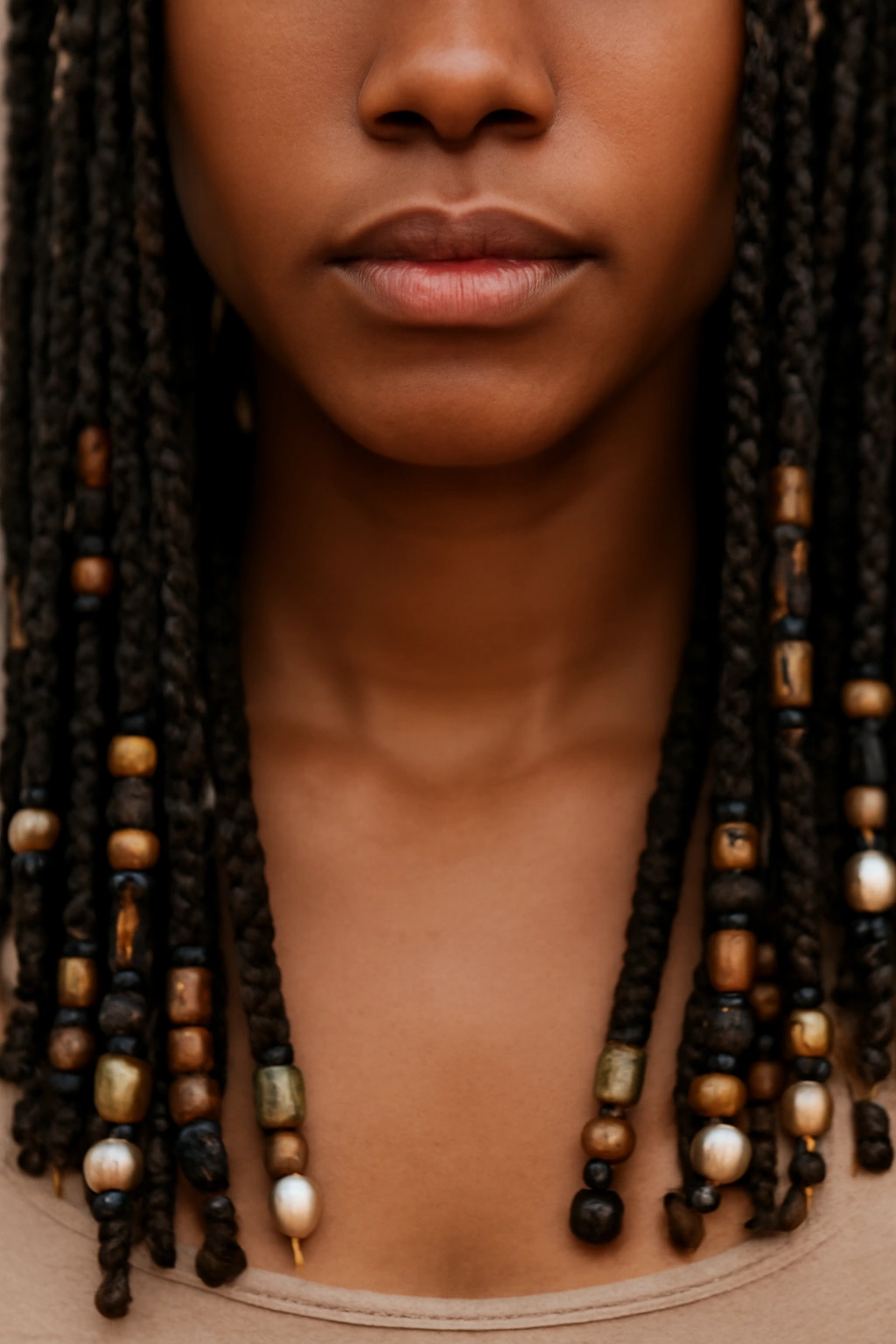
Beaded braids transform the style into something celebratory and decorative. Wooden beads, metal cuffs, crystals, pearl beads, or acrylic beads slide onto the ends of individual braids, adding texture, movement, and personality to your overall look. This style elevates classic braids into something more intentional and fashion-forward.
Bead Placement Strategy
Beads can be scattered throughout the braids for an organic, spontaneous feel, clustered at the ends for a defined look, or placed strategically in front-facing braids for maximum visibility. Some people choose coordinating bead colors, while others mix and match for an eclectic, artistic aesthetic. The weight and material of the beads affects how they sit and move—lighter beads feel more delicate, while heavier ones create more dramatic movement.
Bead Styles to Consider
- Wooden beads: Natural and warm, these work with virtually any color palette and create an earthy, organic aesthetic
- Metal cuffs and rings: Gold, silver, or rose gold cuffs create a sleek, modern look with serious visual impact
- Pearl or iridescent beads: These catch the light and create subtle sparkle and dimension
- Acrylic or colorful beads: These allow you to echo your synthetic hair color or introduce complementary accent colors
Real talk: Beads add weight to your braids, so if you already experience scalp tension with regular braids, you might want to limit bead placement to just a few strategic pieces rather than covering every braid.
6. Box Braids with Cuffs and Rings
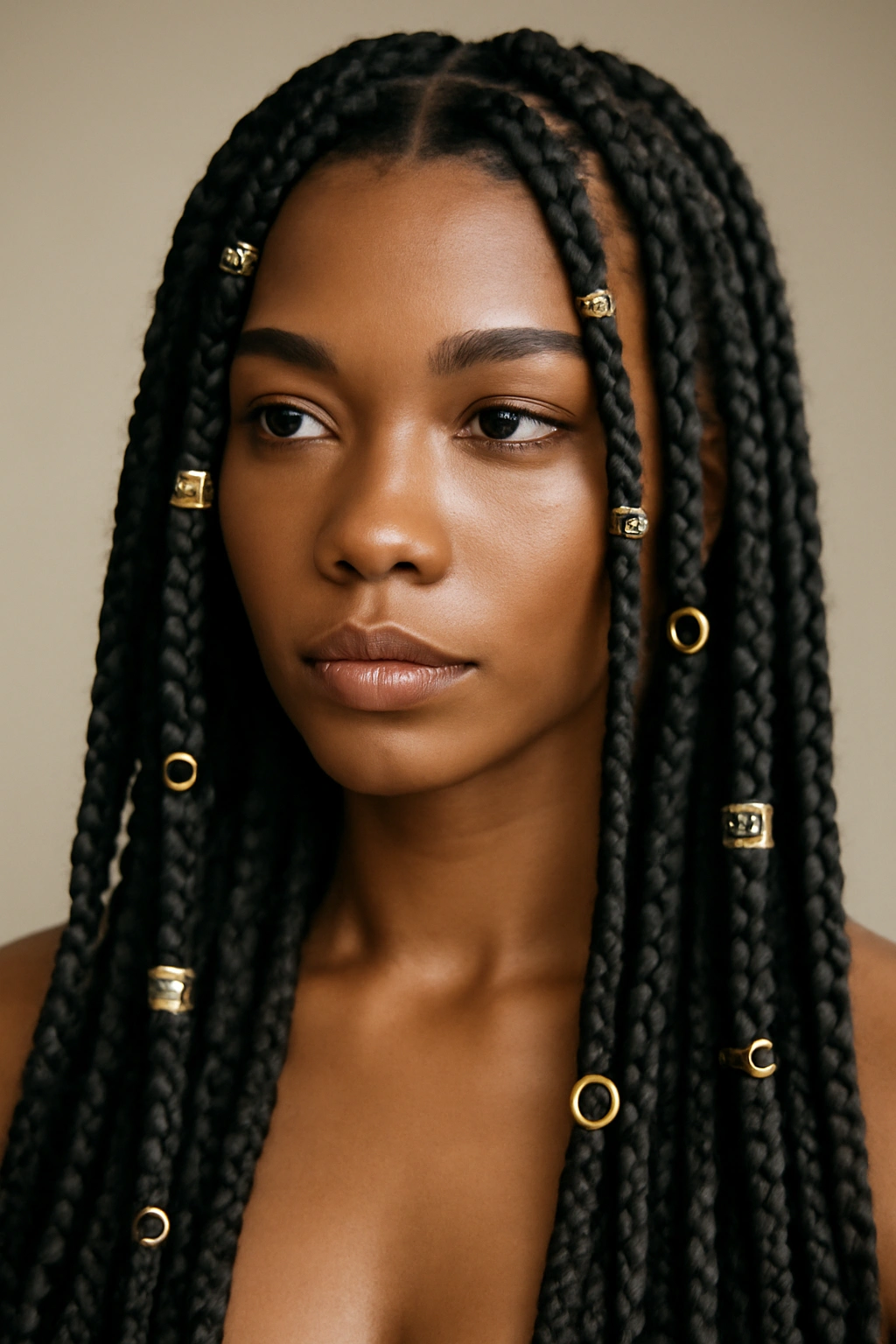
Hair cuffs and rings offer a more streamlined, sophisticated way to add metallic accents to your braids compared to traditional beads. These sit directly on the braid and can be twisted, slid, or repositioned throughout your wearing period, giving you flexibility to change up your look without disturbing the braids themselves. The sleek, minimalist aesthetic appeals to people who want refinement over embellishment.
Metal Choices and Materials
Gold cuffs create warmth and luxury, silver offers cool-toned sophistication, and rose gold splits the difference with modern elegance. You can choose thick, statement cuffs that command attention or delicate, subtle cuffs that whisper rather than shout. Some people use traditional hair cuffs, while others repurpose jewelry or decorative hardware for a more individualized look.
Strategic Placement Ideas
- Clustered at the back: Cuffs concentrated at the back create visual interest without overwhelming your face
- Mixed throughout: Scattered cuffs create an editorial, curated aesthetic
- Framing the face: Cuffs on face-framing braids draw attention to your features
- Creating patterns: Placing cuffs in a deliberate pattern or every third braid creates structure and intentionality
Insider note: Cuffs are repositionable—you can move them throughout your wearing time, creating different looks from the same braids without having to reinstall them.
7. Stacked Box Braids
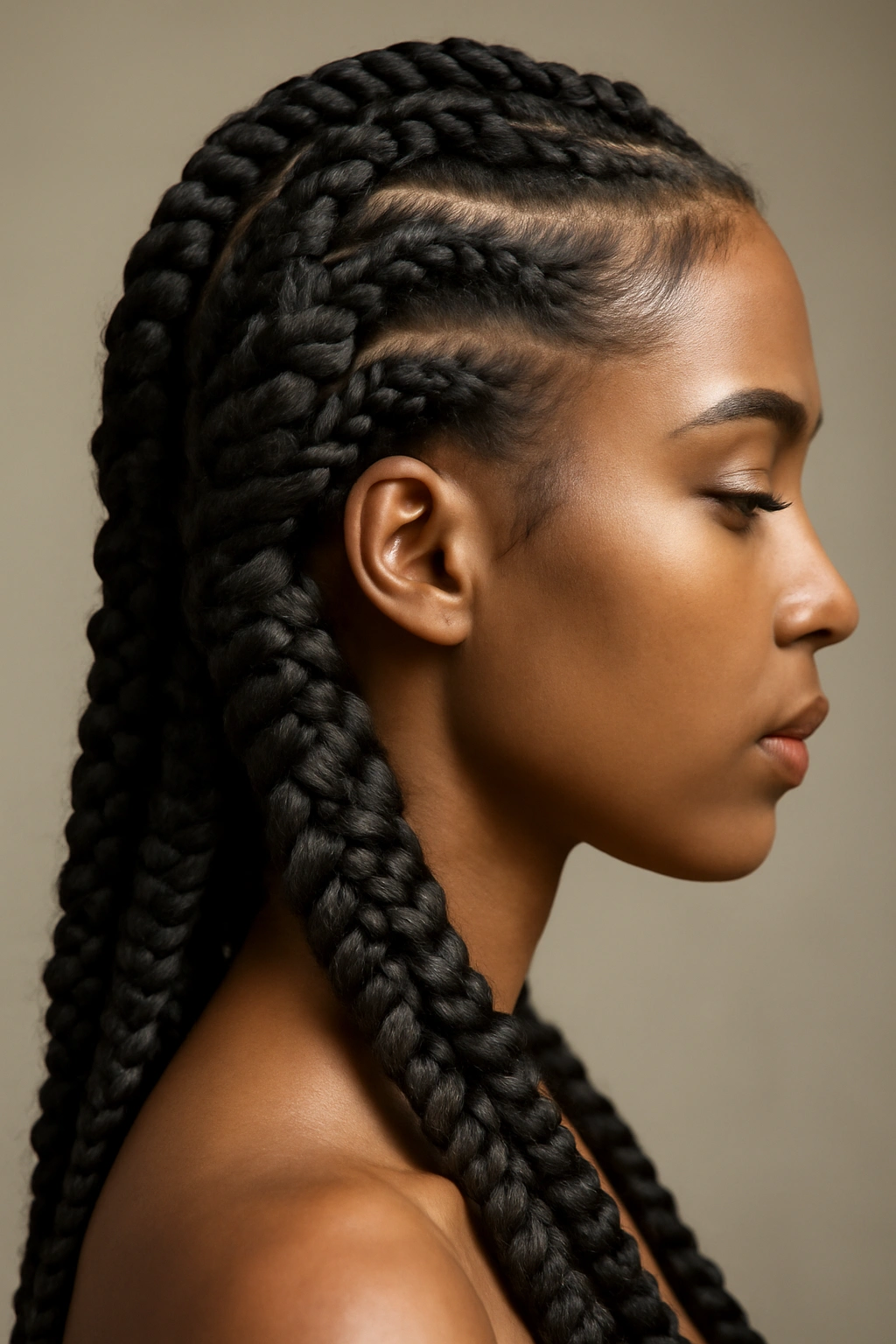
Stacked braids refer to braids that have been partially unwoven and then rebraided to create a textured, multi-dimensional effect. This creates a look that’s visually more complex and interesting than smooth braids while maintaining that classic box braid foundation. The stacked sections catch light differently, creating depth and movement.
How Stacking Creates Dimension
Rather than smooth, uniform braids from root to tip, stacked braids feature sections where the braid pattern is broken up and reformed. This creates an almost sculptural quality to each braid. You might have smooth sections near the root transitioning into stacked sections, or the stacking might be more subtle and spread throughout the entire length.
Why You Might Want Stacked Braids
- Visual interest: They’re more visually engaging and complex than standard smooth braids
- Texture and movement: The stacked sections create different light reflection and movement patterns
- Personalization: They feel like a more intentional, customized choice
- Photo-worthy aesthetic: They photograph beautifully with that intricate, dimensional quality
Pro tip: Stacking works best with longer braids where the texture has room to develop. With shoulder-length or shorter braids, the effect is more subtle.
8. Ombré Box Braids
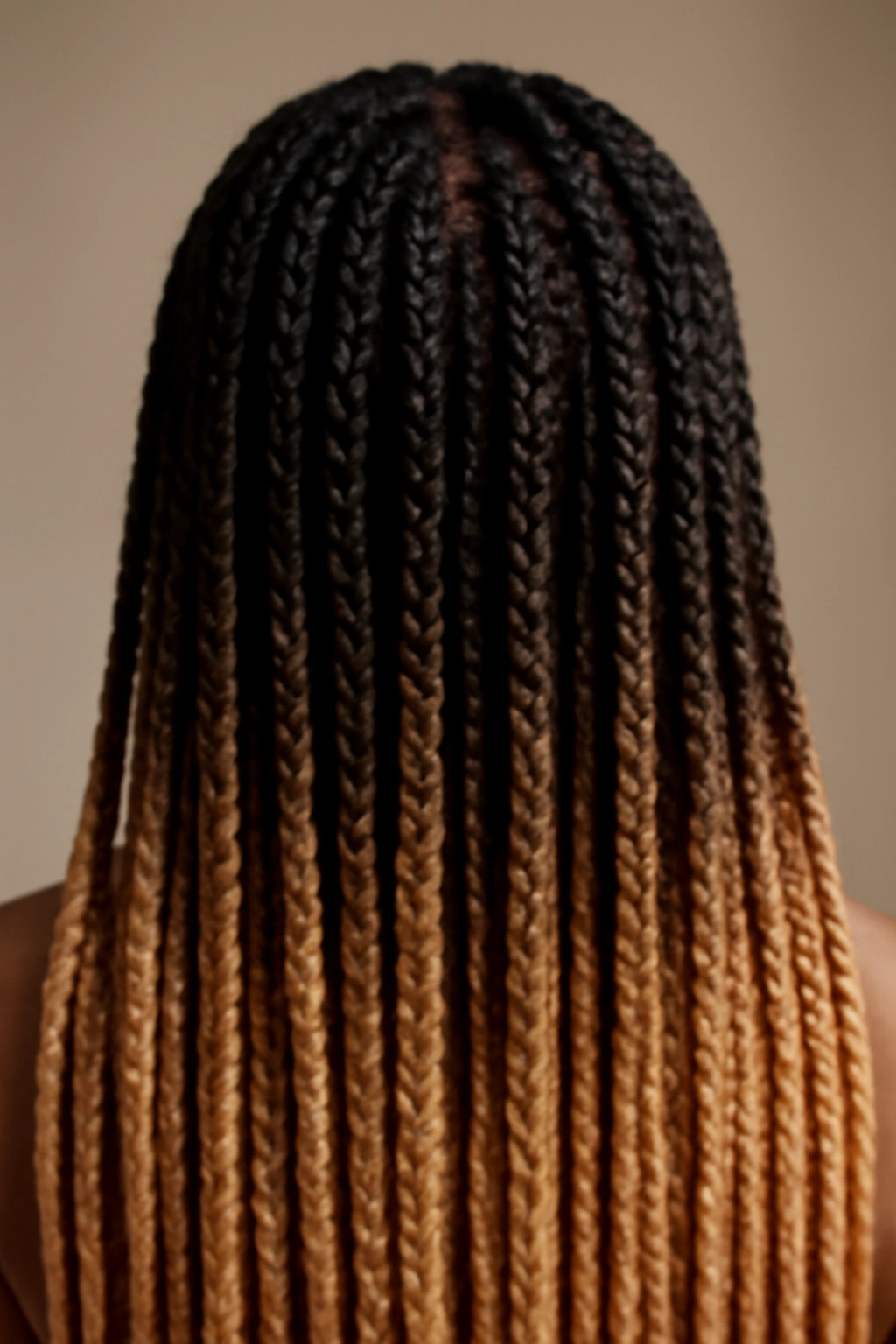
Ombré braids feature a gradient color effect—typically starting with a darker shade at the roots and transitioning through mid-tones before reaching a lighter shade at the ends. This creates sophisticated visual depth and a dynamic, multidimensional look that’s more nuanced than solid-colored braids. The gradient effect is incredibly flattering because it creates the illusion of movement and dimension.
Creating the Perfect Ombré
True ombré requires your braider to carefully blend multiple colors of synthetic hair throughout each braid so the transition is smooth and intentional rather than abrupt. Some braiders create this through hand-blending synthetic hair before installation, while others incorporate it during the braiding process itself. The more gradual the color transition, the more sophisticated the final effect.
Color Gradient Options
- Dark to light: Classic gradients that move from your natural hair color or a deep shade to a vibrant lighter shade
- Warm to cool: Transitioning from warm copper or bronze tones to cool ash or platinum
- Jewel tone blends: Moving through different saturation levels of a single color family
- Reverse ombré: Lighter at the roots, darker at the ends, for a completely different visual impact
Worth knowing: Ombré is more labor-intensive than solid-colored braids, so expect your installation appointment to take slightly longer.
9. Two-Toned Box Braids
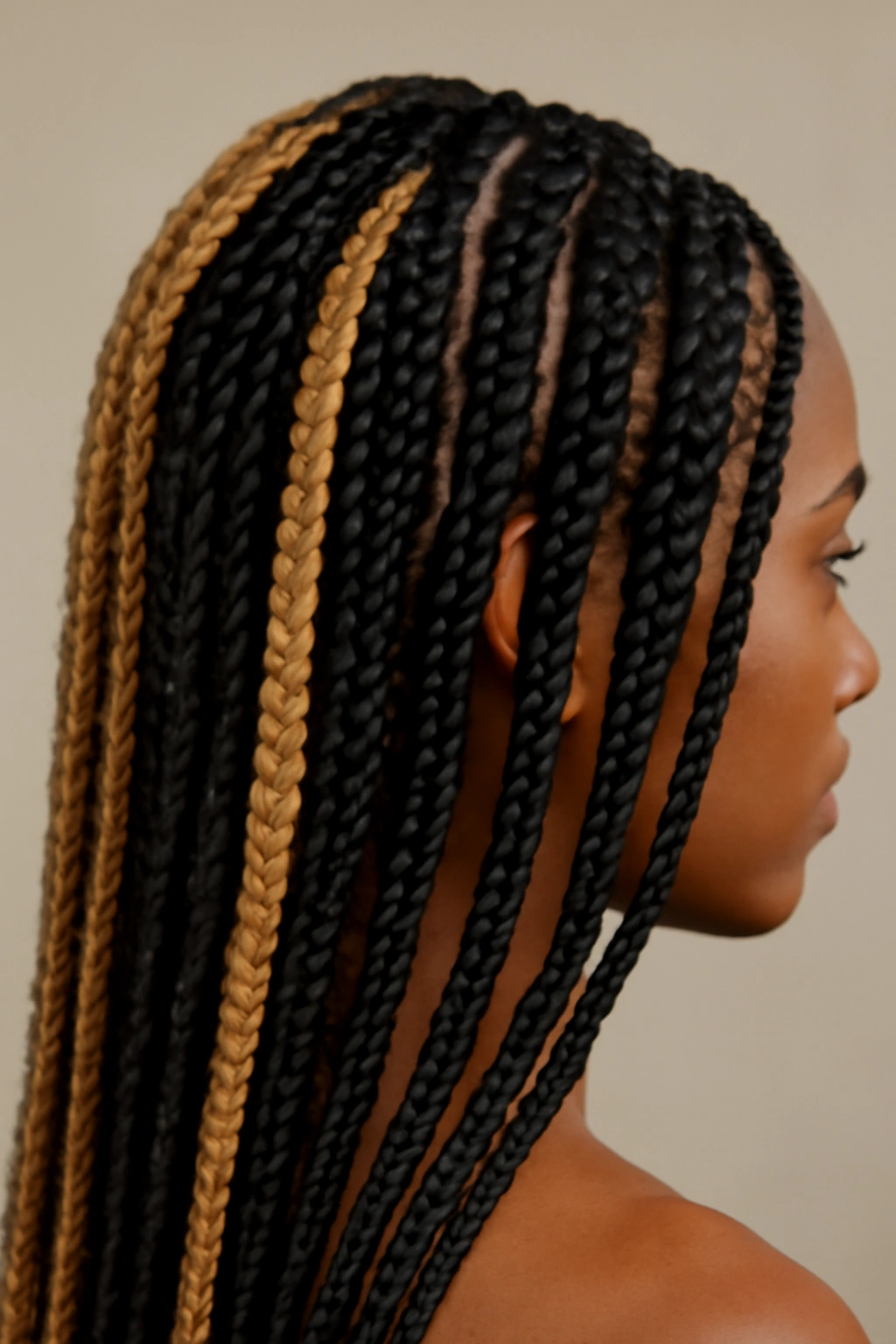
Two-toned braids feature two distinct colors incorporated throughout the style—often alternating braid by braid or split down the middle of each individual braid. This creates bold visual impact and a more graphic, intentional aesthetic compared to the blending of ombré. The crisp color division is striking and modern.
Placement Approaches for Two-Tone
You can alternate braid colors row by row for a striped effect, alternate individual braids throughout for a more scattered, organic feel, or split each braid down the middle with one color on each side. Each approach creates a different visual effect and requires slightly different coordination with your braider.
Dynamic Two-Tone Combos
- Complementary colors: Pairing colors opposite each other on the color wheel (deep purple and golden yellow, teal and coral) creates vibrant visual contrast
- Monochromatic pairs: Using two different saturation levels of the same color (dark burgundy and lighter rose) creates harmony with subtle variation
- Metallics mixed with solid colors: Pairing a rich color with shimmery gold or silver synthetic hair adds luxury and dimension
- Pastel pairs: Soft, light colors mixed together create a delicate, artistic aesthetic
Real talk: Two-toned braids with high contrast colors photograph exceptionally well but read as quite bold in person. Make sure you’re ready for that level of visual impact before committing.
10. Box Braids with Gold Foils
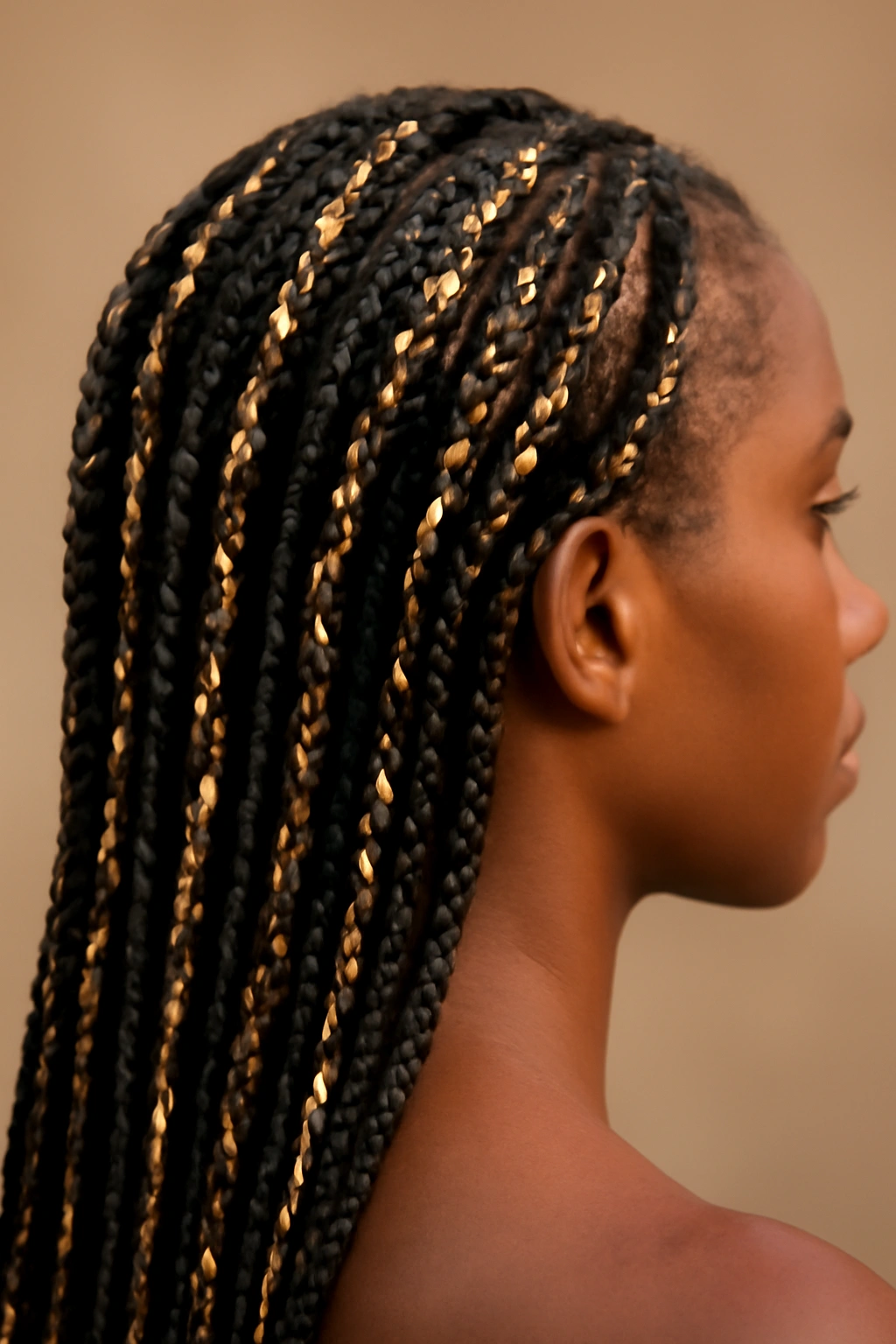
Gold foil braids feature actual foil-like synthetic hair woven throughout the braids, creating sparkle and luminosity that catches light as you move. This is distinct from simply using shimmery or metallic synthetic hair—the foil creates a reflective, almost holographic quality that’s genuinely eye-catching. It’s the choice for anyone who wants their braids to literally sparkle.
The Light-Catching Effect
Gold foil braids work because light bounces off the metallic surface differently than it does off matte or regular shimmery synthetic hair. The effect is subtle when you’re indoors under standard lighting but becomes strikingly visible in natural sunlight or at events with stage lighting. They’re perfect for people who want their braids to have genuine dimension and visual interest from every angle.
Gold Foil Variations
- Full coverage: Every braid incorporates foil throughout for maximum impact
- Face-framing only: Foil placed just in the braids around your face for subtle sparkle where people see it most
- Mixed throughout: Foil scattered throughout the style for an organic, artistic look
- Bottom half only: Foil incorporated starting from mid-length to the ends, creating a spotlight effect on the length of your braids
Insider note: Gold foil braids photograph beautifully in natural light and at events with good lighting, but the effect is subtler under fluorescent office lighting.
11. Knotless Box Braids
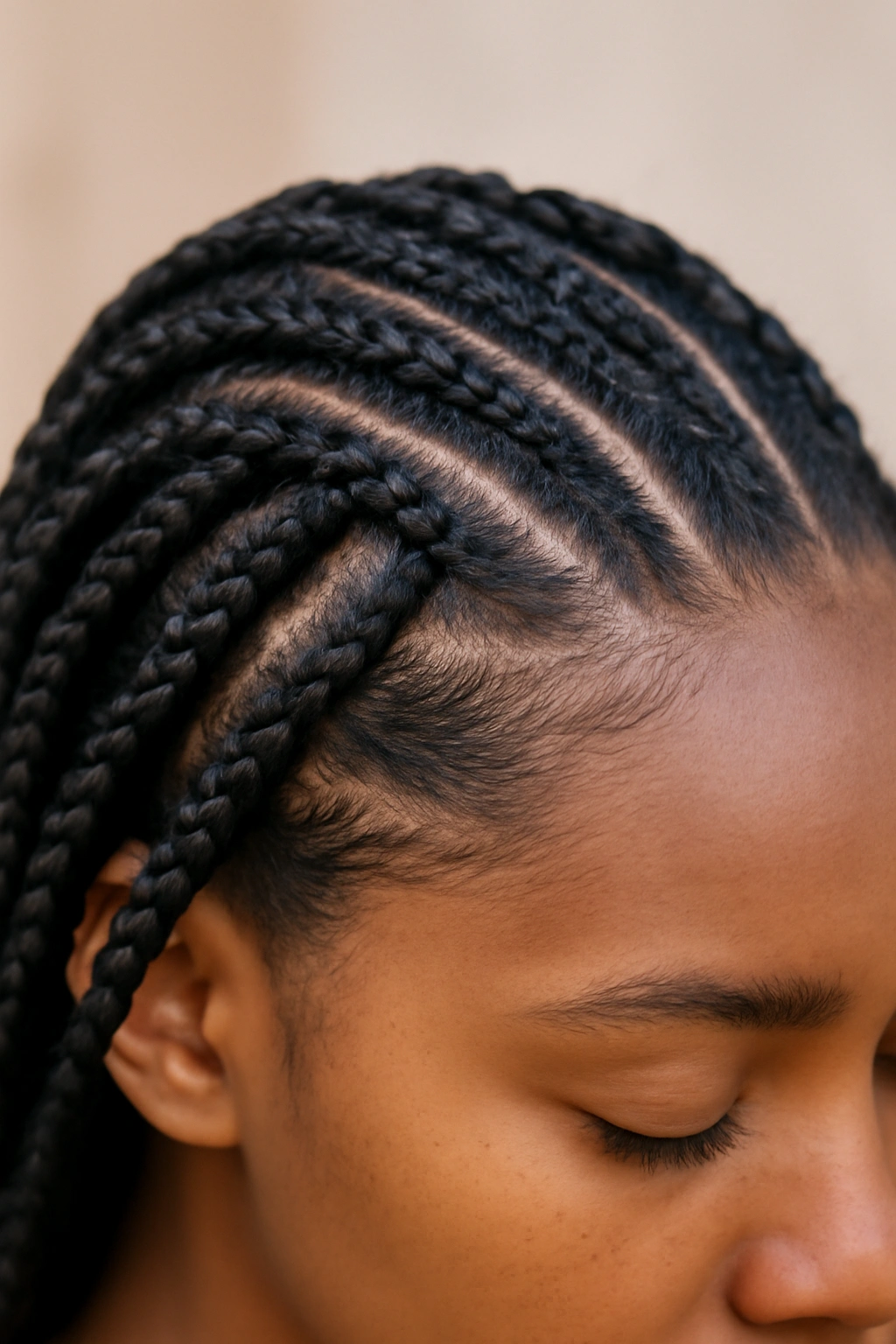
Knotless braids are installed using a technique where synthetic hair is laid on top of your natural hair rather than looped through it to create a knot at the base. This results in a smoother, flatter appearance at the roots and generally less tension on your scalp because the installation method itself is gentler. They’re an excellent choice for anyone with a sensitive scalp or who wants a more refined appearance at the hairline.
Why Knotless Installation Matters
The traditional box braid installation creates a visible knot at the base of each braid where the synthetic hair is looped through your natural hair. Knotless installation eliminates this by instead laying synthetic hair on top of your natural hair and braiding everything together, creating a seamless transition from scalp to braid. This reduces bulky knots and lowers overall tension.
Benefits of Knotless Installation
- Less scalp tension: The installation method itself is gentler, reducing strain on your natural hair
- Sleeker hairline: Without visible knots, the braids blend more smoothly with your natural hair
- Longer wear time: Many people can comfortably wear knotless braids for 8 to 10 weeks
- Better for sensitive scalps: If you typically experience discomfort or tenderness during braid wear, knotless installation often resolves this
Pro tip: Knotless braids take slightly longer to install than traditional braids because the technique is more detailed, so plan for an extra hour or two.
12. Box Braids with Decorative Edges
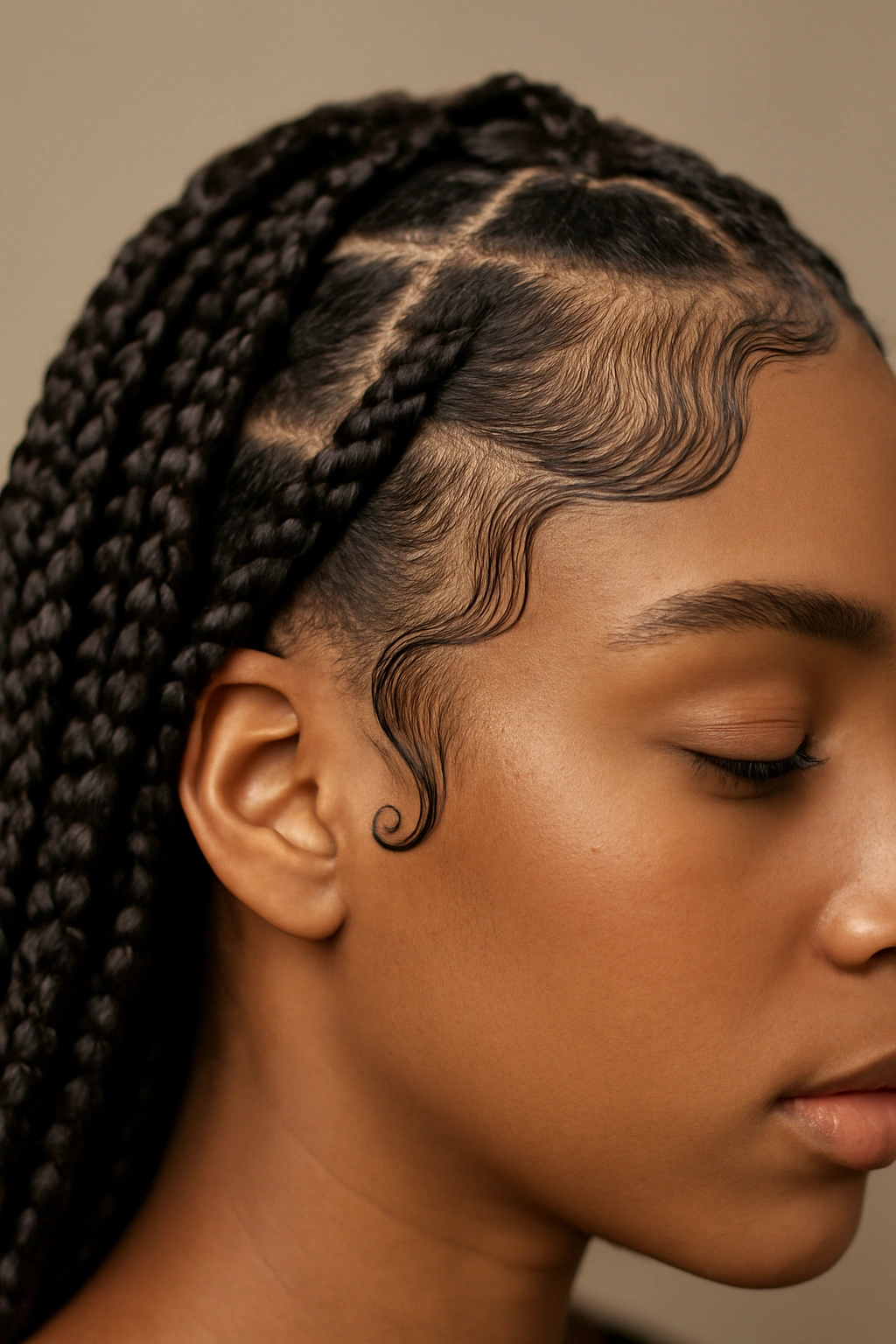
Decorative edges refer to the braids that frame your hairline and face, and intentional styling of these pieces can completely change the sophistication and personality of your overall look. Some people prefer sleek, tightly laid edges that are almost mirror-smooth, while others choose softer, more textured edges that feel romantic or artistic. This detail matters more than you might initially think.
Edge Style Options
Smooth, sleek edges create a polished, refined aesthetic that works beautifully in professional settings. Textured or slightly undone edges feel more creative and relaxed. You can also use edge braids to create patterns, swoops, or decorative designs that frame your face intentionally. Some people incorporate edge braids into the style itself, creating dimension and visual interest.
Edge Details That Elevate Your Style
- Sleek, straight edges: Tightly braided edges that lay flat against your scalp for maximum polish
- Swooping patterns: Edges braided in curved patterns rather than straight lines for a more creative look
- Micro braids at the hairline: Using smaller braids along your edges creates refinement and detail
- Decorative plaits or twists: Edges that are twisted, fishtailed, or plaited rather than traditionally braided
- Textured edge braids: Looser, more textured edges that feel softer and less severe
Worth knowing: Sleek edges require more frequent moisturizing and maintenance to prevent breakage, so invest in a good edge control product if you’re going for that ultra-polished look.
13. Box Braids with Flowers or Hair Accessories
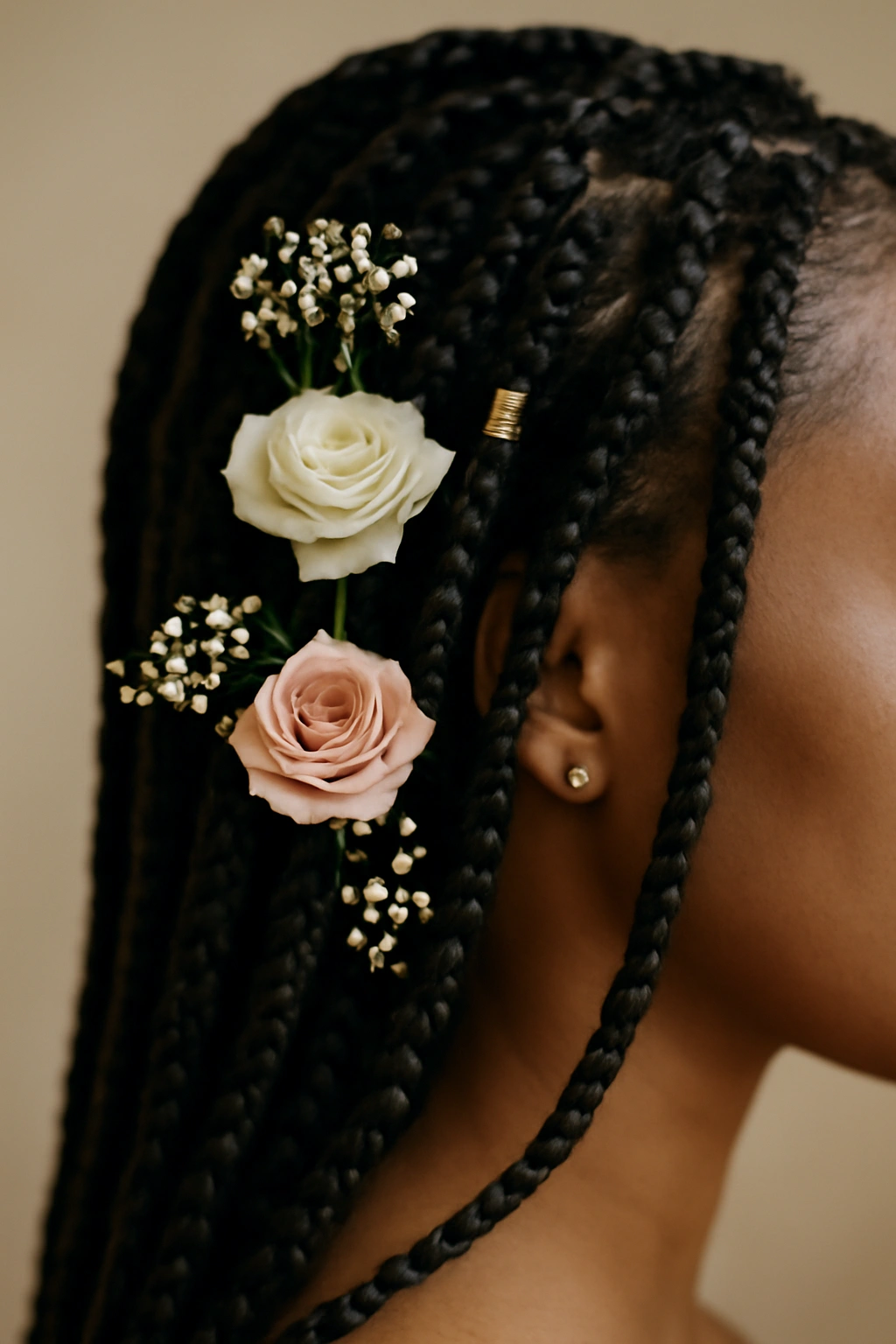
Incorporating fresh or artificial flowers, decorative hair clips, fabric scrunchies, or other accessories directly into your braids creates a whimsical, intentional, and absolutely stunning aesthetic. This is the choice for people who want their braids to feel like wearable art rather than just a protective style. The accessories add femininity, artistry, and personality.
Accessory Placement Ideas
Flowers or accessories can be woven into individual braids, clustered in one section for focal point impact, scattered throughout for an organic feel, or placed strategically at the ends for elegant finishing. The accessories can match your outfit or color palette, coordinate with the synthetic hair colors, or provide intentional contrast. The possibilities are virtually endless.
Beautiful Accessory Options
- Fresh flowers: Roses, baby’s breath, or delicate florals woven throughout create a romantic, garden-like aesthetic (note: these will eventually wilt, so expect a 24 to 48-hour lifespan)
- Silk flowers: Permanent, durable, and available in virtually any color imaginable
- Gold or silver hair clips: Scattered throughout or clustered for elegant, shiny accents
- Fabric scrunchies: Coordinating or contrasting colors at the base or ends of braids
- Decorative safety pins or broaches: Vintage or modern pins can add an artistic, individualized touch
Real talk: Fresh flowers are gorgeous but temporary—reserve them for special events where the lifespan doesn’t matter. For everyday wear, silk flowers or clips are more practical.
14. High Puff Bun with Box Braids
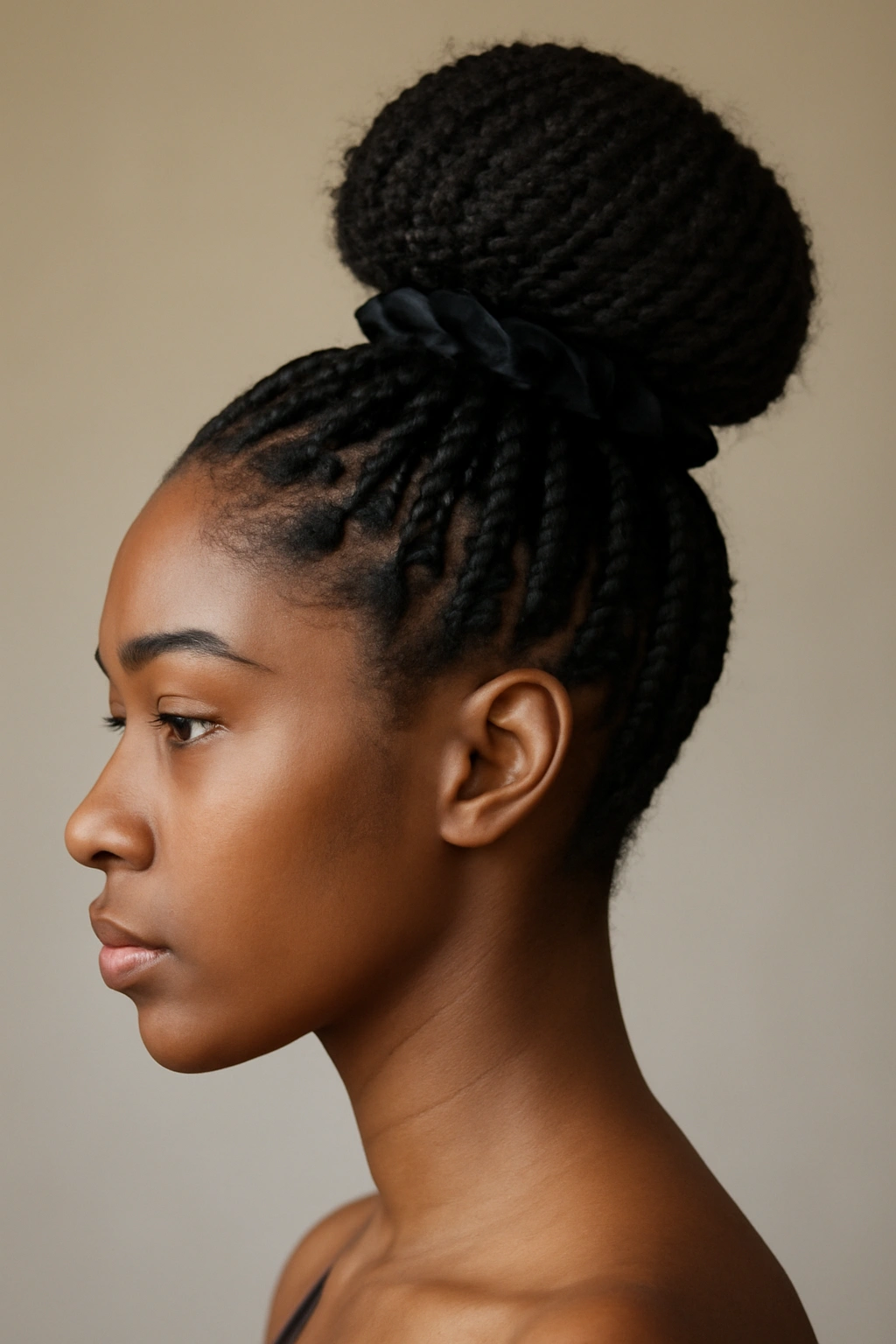
Creating a high puff or bun with your box braids transforms them into a completely different style. Rather than wearing your braids down, you gather them at the crown and create a voluminous puff or sleek bun. This style protects the ends of your braids, offers a dramatically different aesthetic, and is perfect for people who don’t want their braids hanging around their face or shoulders.
High Puff Styling Approach
Gather all or most of your braids at the crown of your head and secure them into a ponytail using a silk or satin scrunchie—never regular elastics, which can snag and break your hair. From there, you can flip the ponytail into a puff, twist it into a bun, or create whatever shape feels good to you. You can also leave a few face-framing braids down for softness if you prefer.
Why This Style Works
- Protective positioning: The ends of your braids are secured up and off your shoulders, reducing wear and tear
- Neck and shoulder freedom: With braids off your shoulders, you have more freedom and comfort, especially in warm weather
- Versatile looks: You can switch between wearing your braids down and gathered up daily, getting multiple styles from one installation
- Tidy appearance: Braids in a high puff read as intentional and polished rather than just casual
- Scalp care: Gathering your braids takes tension off your hairline and allows your edges to breathe
Pro tip: A high puff works best with medium to long braids—if your braids hit right at shoulder-length, the puff might sit awkwardly at the nape of your neck.
15. Half-Up, Half-Down Box Braids
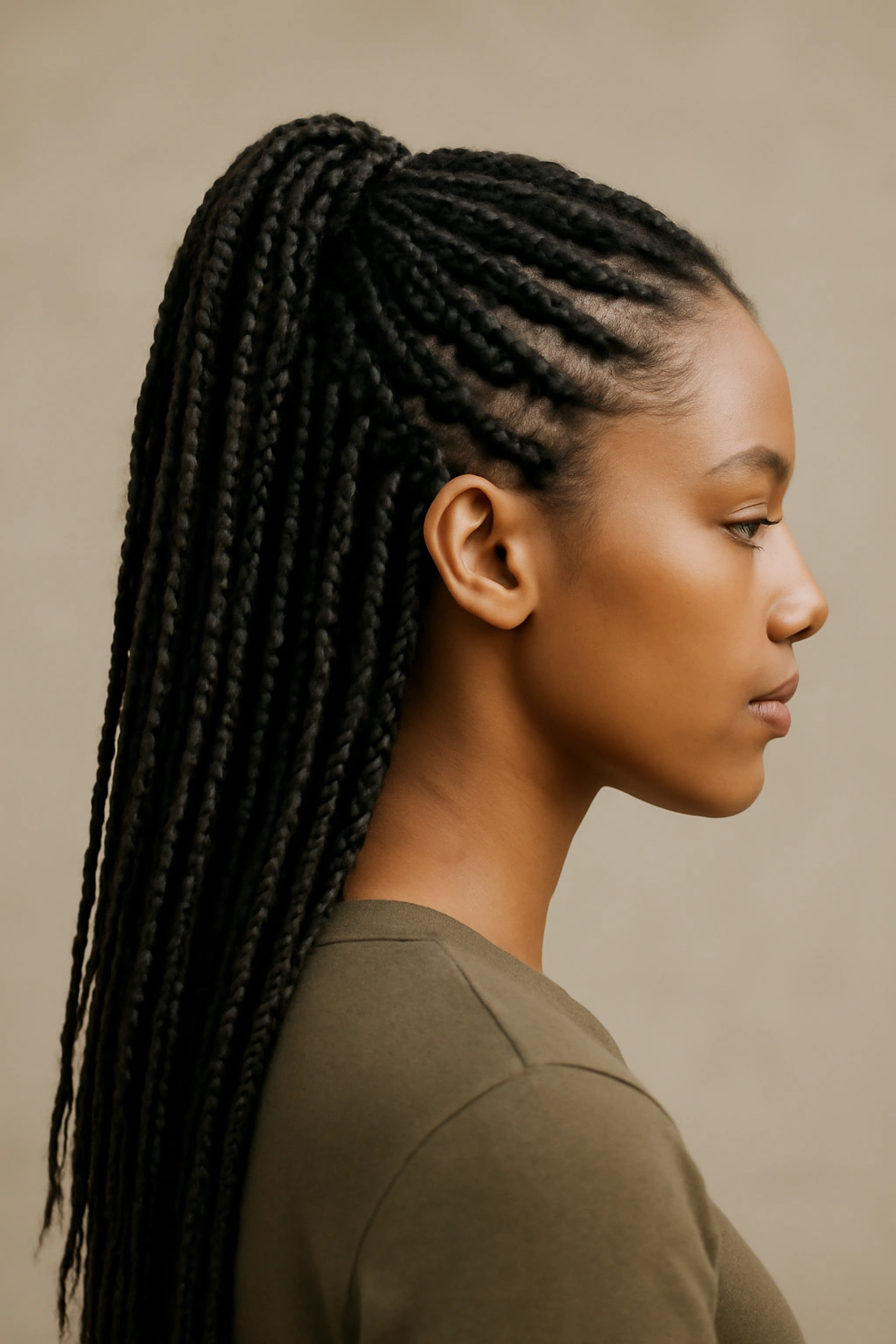
This style offers the best of both worlds—you’re wearing your braids down, but you’ve gathered the top section into a ponytail, creating dimension and an intentional, styled look. This is the perfect compromise for people who want to showcase the length and fullness of their braids while keeping hair off their face and neck.
Creating the Half-Up Look
Gather roughly the top third to half of your braids, starting from your center part or slightly off-center, and secure them into a ponytail at the crown or slightly higher. You can create a sleek, tight ponytail or a more relaxed, textured version depending on your aesthetic preference. The bottom half of your braids flow down your back.
Variations on Half-Up Styling
- High ponytail: Gathered at the very crown, creating maximum visual height and drama
- Mid-crown ponytail: Centered slightly lower for a softer, more romantic feel
- Off-center gathering: Pulled to one side for an asymmetrical, artistic aesthetic
- Twisted crown detail: Rather than a simple ponytail, twist the top section and wrap it around the crown for a more intricate look
- Braided pull-back: Use a few of your braids to create a halo effect around your head while the rest hang down
Insider note: This style is perfect for people who want the appearance and functionality of down braids but need hair off their neck or face during specific situations.
16. Box Braids with Curled Ends
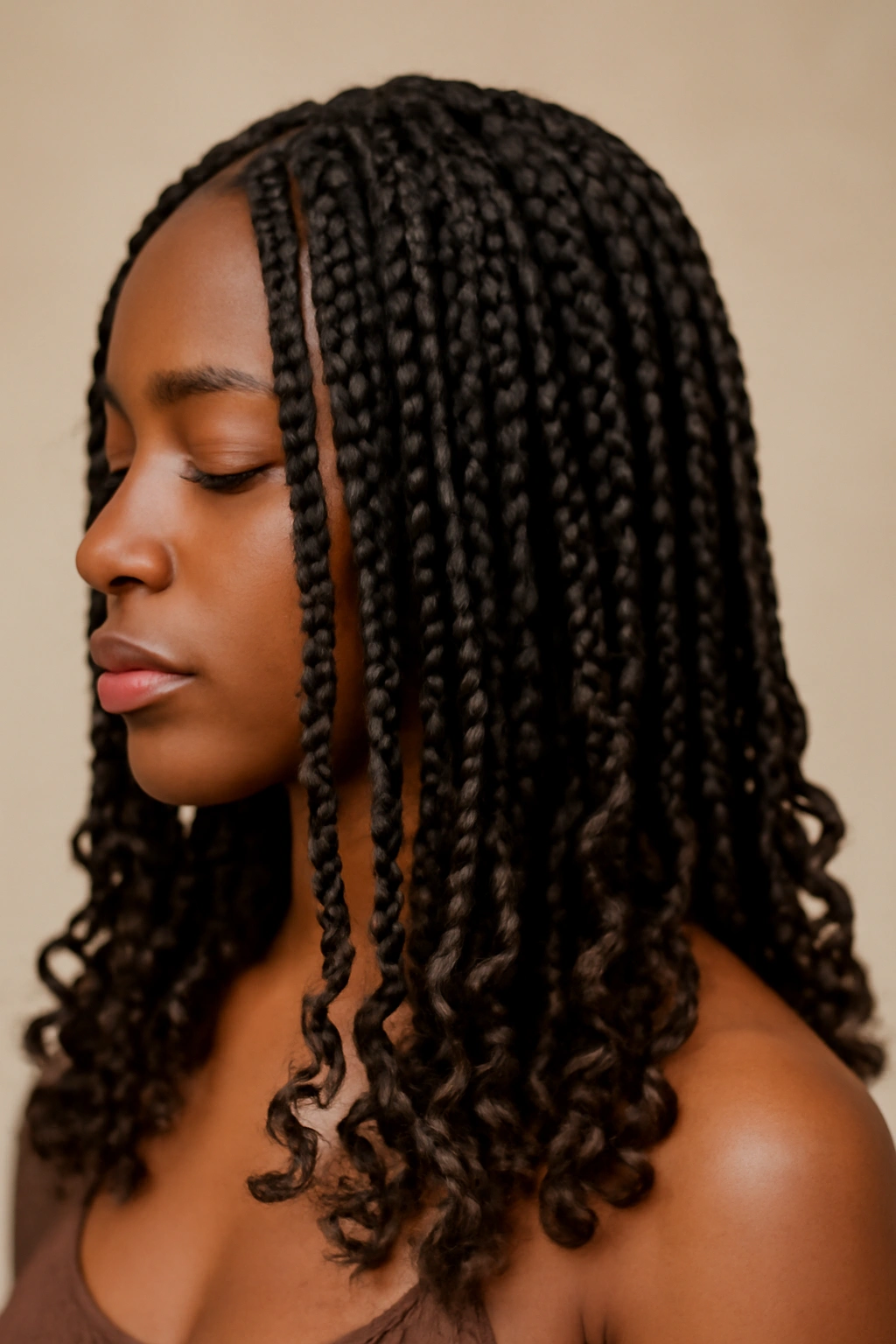
Curling the ends of your braids creates a softer, more romantic finish and adds textural variation—rather than blunt ends, you’ve got delicate curls that frame your shoulders or face. This can be achieved by setting the ends in braids, perm rods, or curlers while your braids are still wet, or by blow-drying curled ends into place.
Methods for Creating Curled Ends
Your braider can set the ends in small braids or twists while the braids are being installed, creating instant curls when unwoven. Alternatively, they can leave the ends unbraided and slightly loose, allowing the synthetic hair to relax into waves or curls. You can also ask for perm rod sets at the very ends to create defined, spiral curls. Each method creates a slightly different aesthetic.
Curl Style Options
- Loose waves: Softer, more subtle curl that feels romantic and effortless
- Tight ringlets: Defined, spring-like curls for maximum drama and textural interest
- Beach waves: Undulating curves that feel relaxed and natural
- Spiral curls: Tightly coiled ends for serious visual impact and glamorous aesthetic
- Mixed curl sizes: Varying curl sizes throughout for an organic, artistic look
Worth knowing: Curled ends require more frequent refreshing than straight braids because the curls soften over time. You’ll likely need to re-curl them periodically throughout your wearing period.
17. Shimmery and Highlighted Box Braids
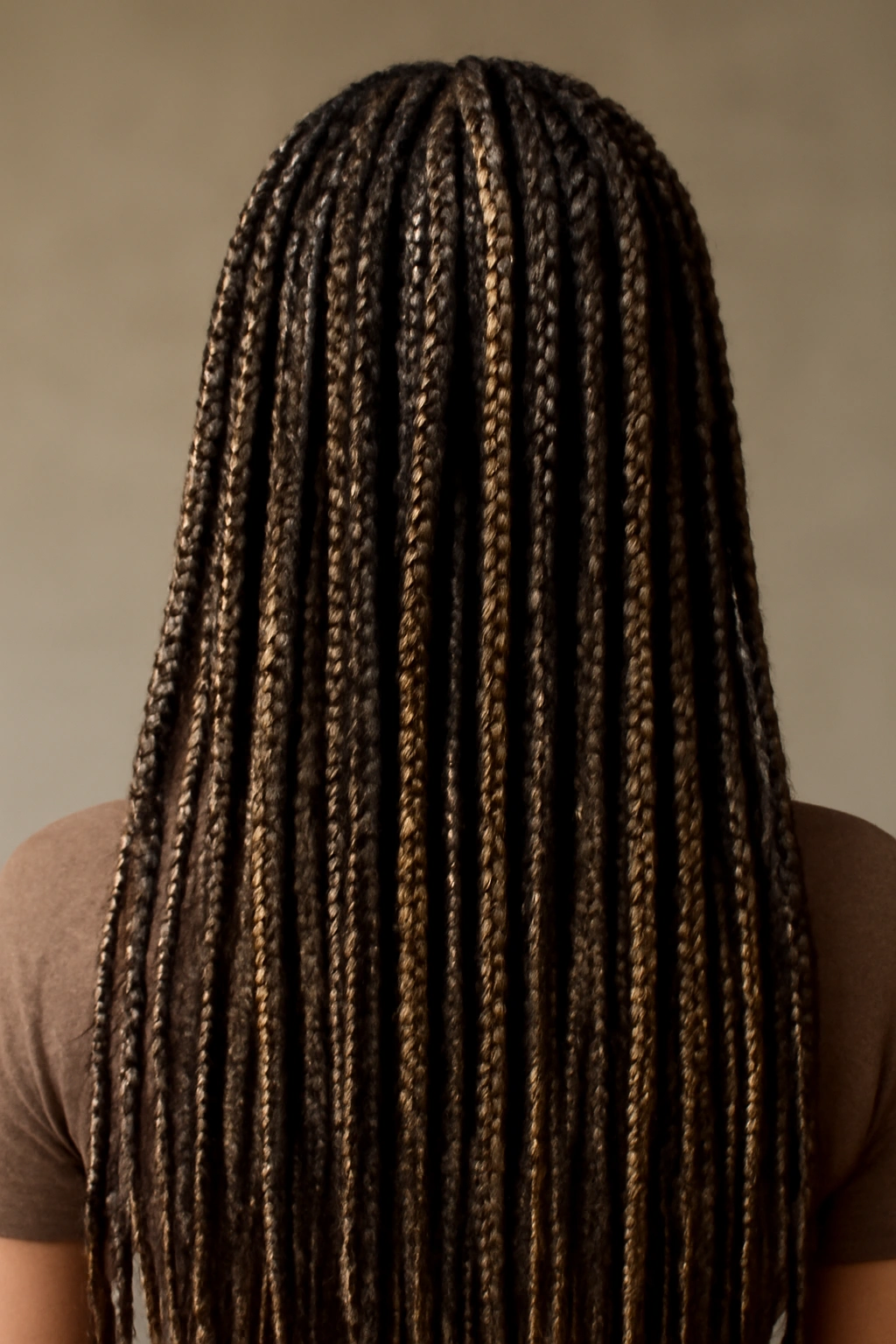
Shimmery synthetic hair creates subtle sparkle and luminosity without the intensity of foil braids. Highlighted braids incorporate lighter or brighter colors woven throughout—whether streaks of color through individual braids or threads of contrasting color incorporated throughout the entire style. Both options create visual depth and interest that reads as more sophisticated than solid-colored braids.
Shimmer and Highlight Strategies
Shimmery hair can be incorporated throughout every braid for overall luminosity or concentrated in face-framing pieces for subtle sparkle. Highlights work best when they’re intentional—either appearing in a pattern or strategically placed where they’ll be most visible and impactful. The contrast between your base color and highlight color determines how dramatic the effect feels.
Shimmery and Highlighted Combinations
- Metallic shimmer throughout: Every braid incorporates slightly shimmery synthetic hair for understated sparkle
- Highlighted streaks: Brighter or lighter-colored threads woven through darker base braids
- Frosted tips aesthetic: Lighter color concentrated at the ends with darker color at the roots
- Multi-colored highlights: Several different accent colors woven throughout for an artistic, editorial look
- Pearl or iridescent shimmer: Subtle, color-shifting shimmer that changes appearance depending on lighting
Real talk: Shimmery braids are more subtle than foil braids but still photograph beautifully and create genuine visual interest without being as dramatic.
18. Protective Style with Topknot and Fringe
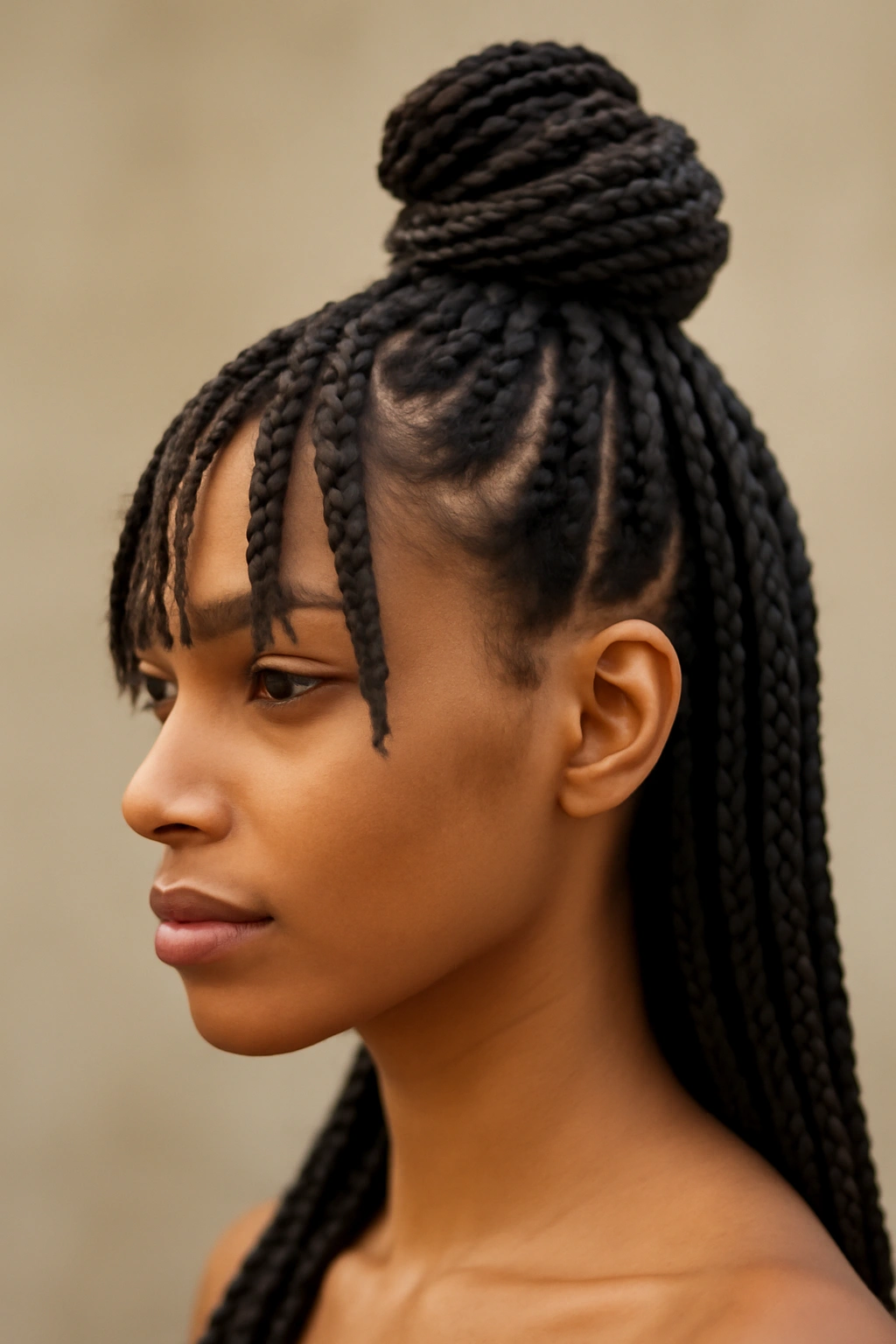
This style takes your box braids and positions them for maximum protective benefit while creating a unique, intentional look. Gather most of your braids into a topknot, high bun, or crown while leaving a section of face-framing braids down as a fringe or curtain. This protects the bulk of your braids while keeping a few pieces out for softness and dimension.
Fringe and Topknot Approach
The fringe typically consists of 4 to 8 center-parted braids that frame your face and fall to roughly cheekbone length or slightly longer. The remaining braids are gathered at the crown and styled into whatever shape feels good—a high bun, a puff, a twisted crown, or a braided topknot. This combination creates visual interest and protects the ends while showing off braiding detail.
Styling Ideas for This Look
- Center-parted fringe with sleek topknot: Symmetrical, polished, and modern
- Asymmetrical fringe with twisted crown: Creative and artistic
- Soft fringe with textured bun: Romantic and intentional
- Braided crown detail: Use some of your braids to create an actual crown pattern while others gather into a bun
- Multiple textural elements: Different braid sizes or styles in the fringe versus the gathered section
Pro tip: This style works beautifully with colored, beaded, or accessorized braids because the embellishments are visible in both the fringe and the topknot.
Final Thoughts
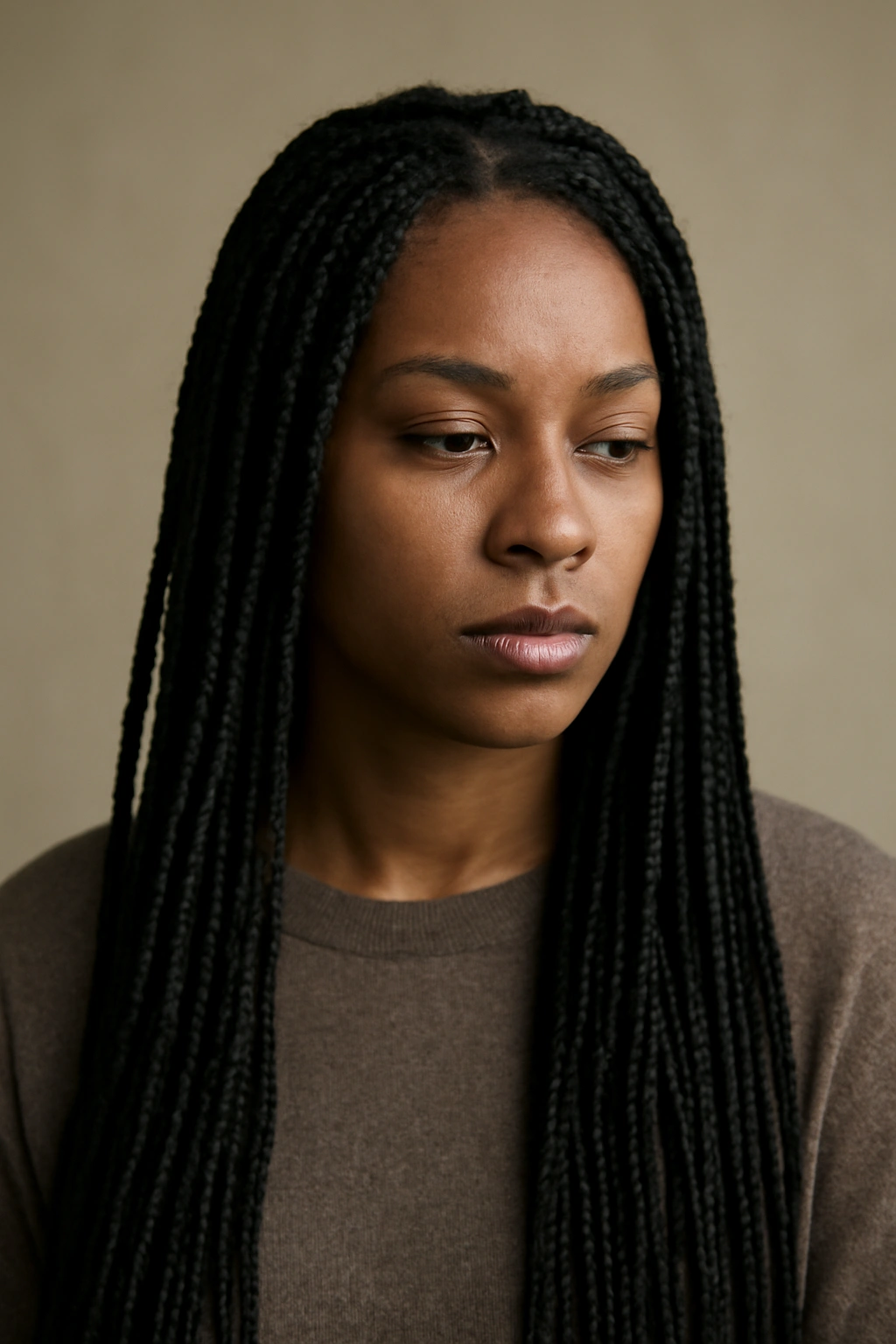
The style you choose ultimately depends on your personal aesthetic, your lifestyle, how much time you want to spend on maintenance, and what kind of presence you want your braids to have. Some of these styles prioritize protection above all else, while others emphasize artistry and visual impact. Many beautifully walk that line between both. The magic happens when you find the intersection between what makes you feel confident and what actually works for your hair, your daily routine, and your personality. Bringing reference images to your braider—ideally a mix of overall looks and close-up details so they can see exactly what you want—ensures you’re completely on the same page from the start. Your braider’s skill in installation, ability to interpret your vision accurately, and attention to detail in elements like edge work, color placement, and sizing makes an enormous difference in whether you love your final result. Don’t hesitate to ask questions during your consultation, and remember that you’re investing in not just a protective style but in a look that makes you feel genuinely beautiful.
