



Your wedding day hair deserves to be effortlessly beautiful—the kind of style that makes you feel romantic and confident without looking overdone or painfully complicated to achieve. The best bridal updos walk that fine line between polished and touchable, structured enough to stay put through a full day of celebrating but soft enough to whisper elegance rather than demand attention.
The updos that work best for weddings tend to share certain qualities: they frame the face gracefully, they showcase your dress and shoulders, and they feel intentional without being stiff or severe. A romantic updo doesn’t need dramatic height or intricate braiding—often, the most stunning styles are the ones that look almost effortlessly styled, the kind that make guests wonder if you were born with perfectly cascading waves pinned into place. The texture and movement matter just as much as the structure.
Whether you’re drawn to vintage glamour, modern minimalism, or something in between, there’s a soft updo that will make you feel like the best version of yourself. The styles that follow are all achievable with a bit of practice beforehand, work beautifully across different hair textures and lengths, and pair seamlessly with any wedding aesthetic—from garden ceremonies to formal ballrooms. Each one offers that romantic quality that makes people pause and actually remember your hair, not because it’s shocking or trendy, but because it’s so perfectly beautiful.
1. Low Twisted Chignon
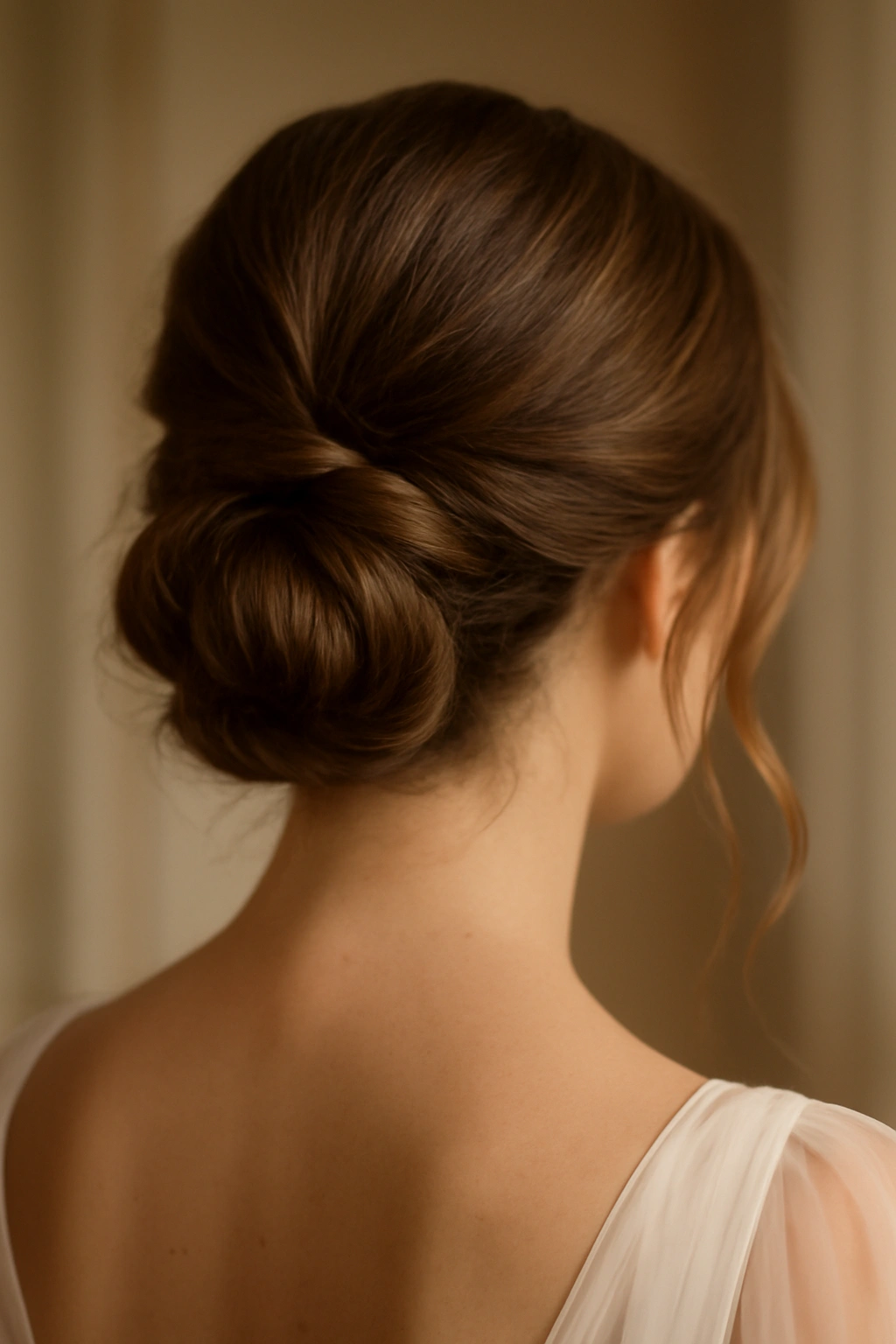
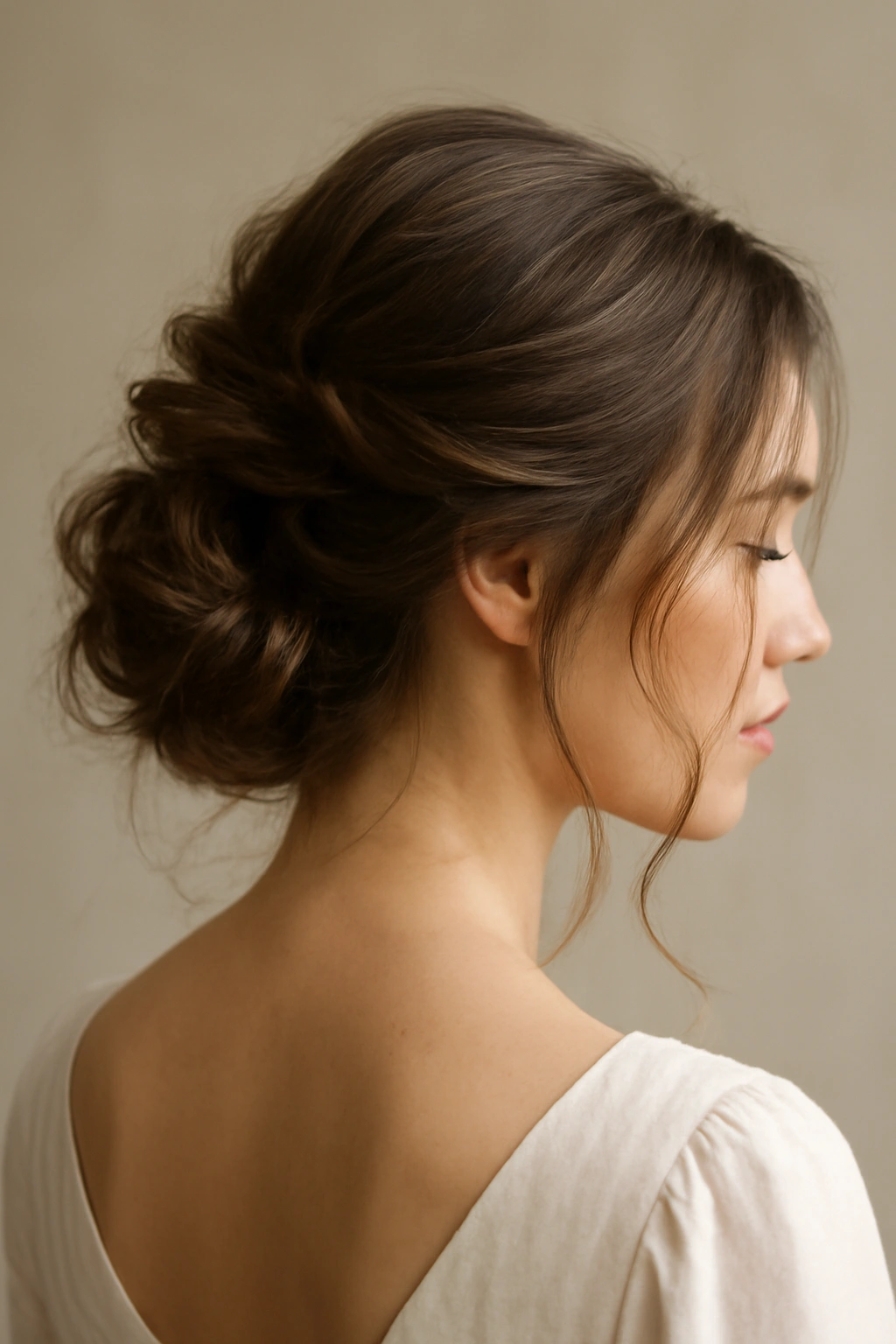
A twisted chignon sits low at the nape of the neck and creates an instantly romantic, effortlessly elegant look that photographs beautifully from every angle. Instead of gathering hair into a traditional bun, you’re twisting sections around each other as you work upward, creating texture and visual interest that a simple bun could never achieve on its own.
What Makes This Style Work
The magic of a twisted chignon lies in how the technique adds dimension and movement without requiring volume. Each twist creates natural shadow and light play, so even fine or medium hair looks fuller and more luxurious than it actually is. The low placement flatters most face shapes, sits well with most necklines, and feels formal enough for a wedding while remaining approachable and romantic. Because you’re working with twisted sections rather than a sleek gathered bun, there’s built-in texture that feels intentionally undone.
How to Achieve It
Start with hair that has some wave or texture—if your hair is extremely straight, use a curling iron to create loose waves first, or dry texture spray will give you grip. Brush your hair back into a low ponytail at the nape of your neck, but don’t secure it tightly; you want a slight softness. Divide the ponytail into two thick sections and twist each section around itself loosely (not tightly). Wrap the twisted sections around each other to form the chignon base, then secure everything with bobby pins hidden throughout. Pull gently on the twists to make them fuller and softer. Finish with hairspray that holds without creating shine or crunchiness.
Best For
This style works beautifully on straight to wavy hair and suits medium to thick hair especially well. It’s ideal if you want something polished but not architectural, and it pairs gorgeously with a veil secured at the base of the chignon. The low placement makes it perfect for strapless or off-shoulder dresses, and it complements both delicate and bold jewelry.
Pro tip: Do a dry run the week before to figure out exactly how tight to twist the sections and where your bobby pins need to go. Once you find your rhythm, the style becomes much faster and more consistent.
2. Romantic Half-Up Half-Down
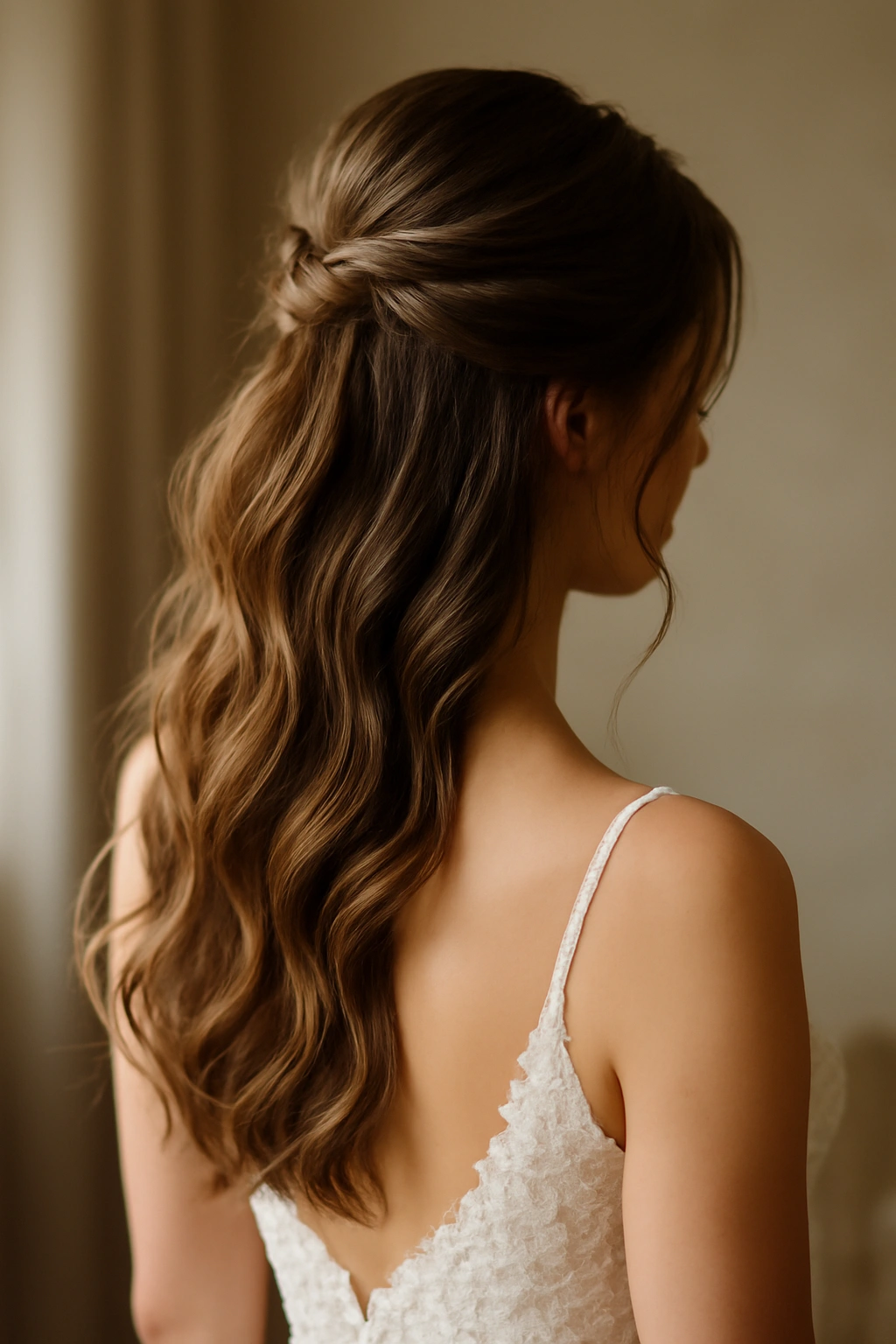
This style is the bridge between letting your hair down and pulling it fully up—it gives you the formal polish of an updo with the softness and approachability of loose hair. The half-up half-down approach works for brides who want to show off long hair but also want their style to feel intentional and wedding-day special.
Why This Works So Well
The half-up half-down updo splits the difference between two aesthetics, which sounds compromised but actually creates something genuinely romantic. Securing the top section off your face gives you a polished, intentional look, while the bottom half remains loose and touchable. This creates a sense of movement and flow that reads as romantic on camera and in person. You get the visual interest of styled hair without the severity that comes with a full updo, and there’s something inherently flattering about how it frames the face and shoulders.
How to Style It
Begin with bouncy waves throughout your hair—use a wand or curling iron to create loose, romantic curls that hold their shape. Take a section from one side of your head (roughly temple to temple across the crown) and secure it at the back with a small clip or bobby pins, leaving it soft and not too tight. You can twist this section loosely as you work back, or keep it straight for a sleeker look. Gently pull the pinned section to create dimension and softness. Let the rest of your hair flow down in loose waves. Add a delicate comb, small clip, or decorative hair pin to cover the securing point and add a touch of polish.
Best For
This style suits long to very long hair and is nearly universally flattering. It works exceptionally well with thin or fine hair because the loose waves create volume illusion, and it pairs beautifully with subtle makeup and natural beauty looks. The style is ideal if you love the idea of wearing your hair down but want something that reads as more formal and intentional than everyday styling.
Worth knowing: If you’re worried about the half-up section slipping during the day, use a small clear elastic or bobby pins hidden throughout rather than relying on a single clip. Test the security thoroughly during your trial.
3. Soft Crown Braid Updo
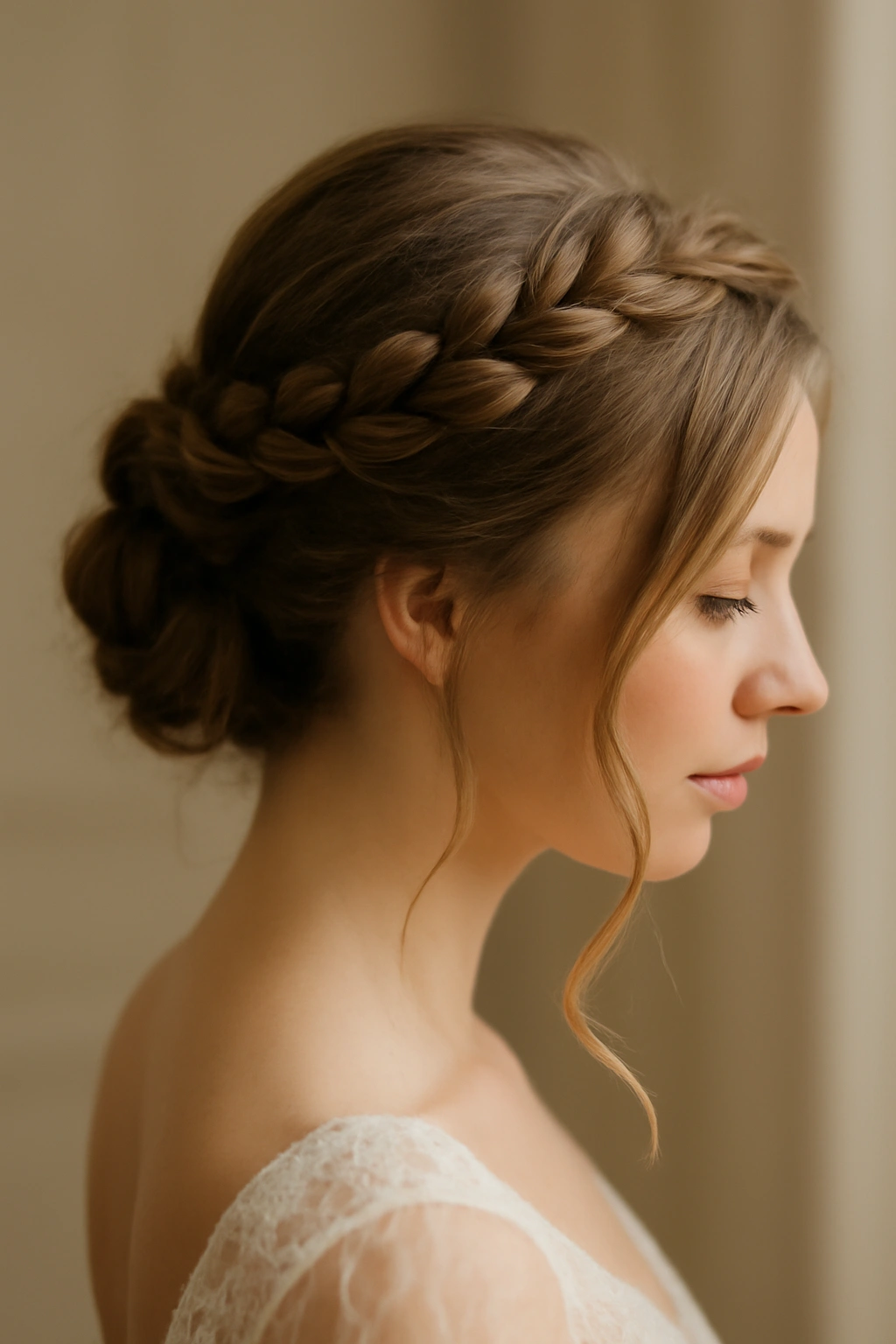
A crown braid that wraps around the head and tucks into a low updo creates a fairytale-romantic look that feels special and intentional without being costume-y or over the top. The braid draws attention upward to the face while the tucked-in base keeps everything secure and polished.
Why Crown Braids Feel So Romantic
Crown braids have an inherently romantic quality because they’re associated with classical beauty, bridal traditions, and effortless elegance. They’re also visually complex enough to feel like you put thought and effort into your look, but they’re actually more forgiving to execute than you might think. The braid element adds texture and visual interest, and because the braid wraps around rather than running straight down the back, it flatters virtually every face shape and works with different head sizes.
How to Create This Style
Start with hair that has light wave or texture. Take a section of hair at the side of your head near the temple and begin a loose three-strand braid, adding hair as you go (like a traditional Dutch braid). Work the braid around your head toward the back, keeping it loose and full rather than tight. Once you’ve wrapped the braid around to the other side, secure the remaining loose hair (including the tail of the braid) into a low bun or chignon at the nape of the neck. Gently pull the braid to make it fuller and softer. Tuck in any flyaway strands and secure with bobby pins. Finish with a light hairspray.
Best For
Crown braids work beautifully on shoulder-length to very long hair and suit most hair textures. They’re ideal for brides who want an heirloom, timeless quality to their style and pair gorgeously with vintage dresses, garden weddings, and romantic aesthetics. The style is also wonderfully forgiving if you have some texture or waves already in your hair—they actually help the braid look fuller and softer.
Insider note: If your hair is very slippery or fine, use dry texture spray before you start braiding. It gives your hair the grip it needs to hold the braid throughout the day without making it look product-heavy.
4. Loose Low Bun with Face-Framing Layers
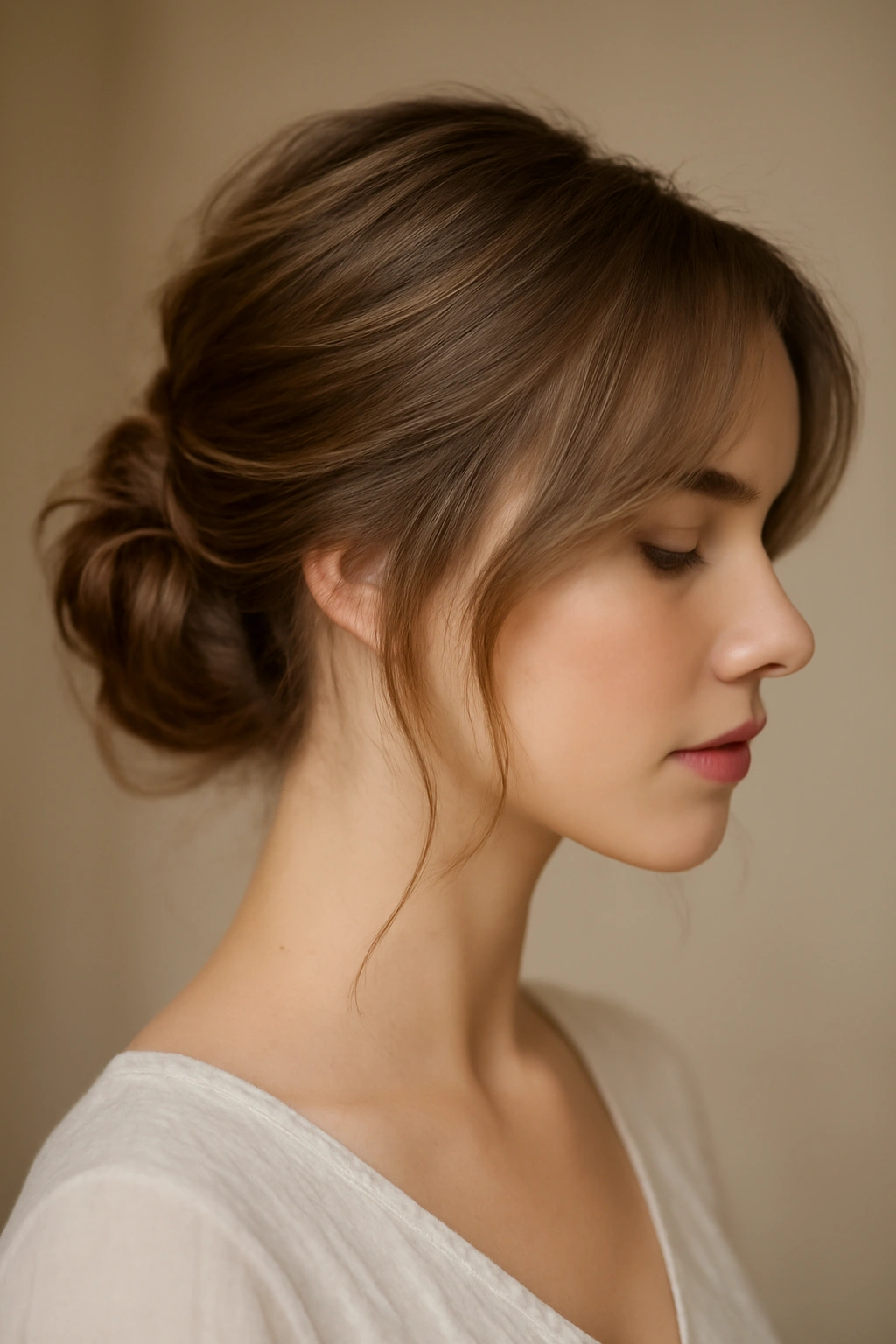
A soft, undone low bun becomes genuinely romantic when you pull out wispy face-framing pieces and keep the overall texture loose and full rather than sleek. This style skews modern while still feeling classic and elegant, and the face-framing element adds instant softness and femininity.
What Creates the Romantic Quality
The key difference between a corporate low bun and a wedding-day romantic low bun is texture and intentional looseness. You’re aiming for a bun that looks almost accidental in its beauty, like you simply gathered your hair and it happened to arrange itself perfectly. The face-framing pieces soften the overall effect and draw attention upward to your face and eyes, which is exactly what you want on a day when you’re the focus. The looseness also means the style moves and has dimension rather than feeling static or overly controlled.
How to Achieve It
Create loose waves or curls throughout your entire head first—this is the essential foundation for this look. Gather your hair into a low ponytail at the nape, but make it intentionally soft and not tight. Twist the ponytail loosely and wrap it around itself to form a bun, leaving some texture and not smoothing everything sleek. Secure with bobby pins throughout, keeping some strands loose and wispy. Pull out two or three thin face-framing pieces from near your temples and let them fall loosely around your face—don’t make them too controlled or sculpted. Gently tug on the bun itself to make it fuller and softer. Use a flexible-hold hairspray that moves with you.
Best For
This style works across all hair textures but looks especially romantic on wavy to curly hair. It’s ideal for brides with medium to thick hair who want something straightforward to achieve but still feels intentional and styled. The face-framing element makes it a wonderful choice if you want to show off your face and makeup rather than creating a statement with your hair itself.
Pro tip: Practice pulling out your face-framing pieces at different widths and textures. Thinner, more delicate pieces feel more romantic, while thicker sections can look intentional and modern depending on the overall aesthetic.
5. Vintage-Inspired Pin Curls Rolled Into an Updo
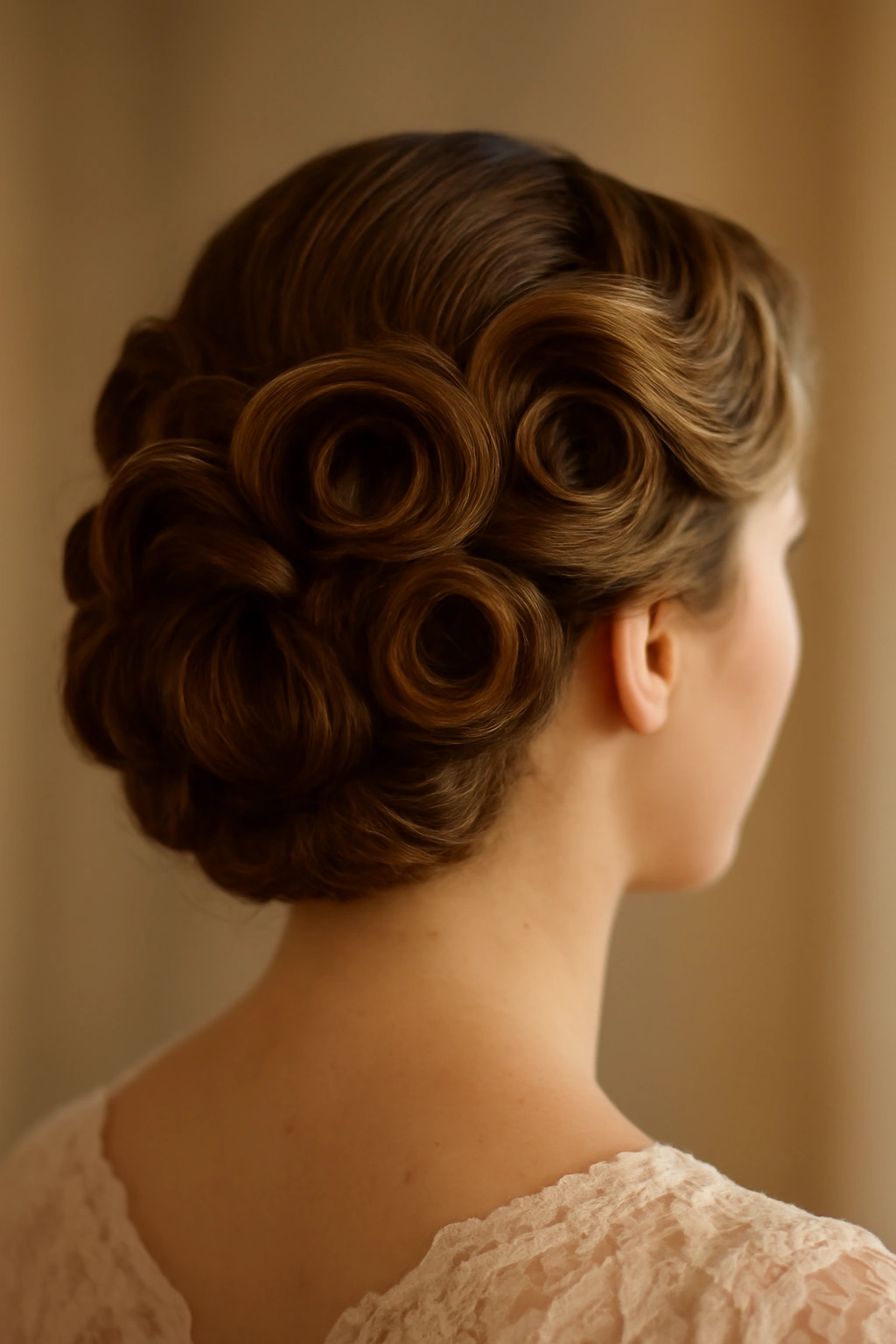
Pin curls are a timeless technique where you curl sections of hair and pin them against the scalp while wet or damp, creating waves that hold beautifully all day. When you arrange these curls into an updo format, you get a vintage-romantic look that’s both undeniably special and genuinely comfortable to wear.
Why Pin Curls Create Such Lasting Romance
Pin curls have a specific nostalgic charm—they evoke classic Hollywood glamour and vintage femininity in a way that feels intentional without being costume-y. Because you’re creating the waves structurally (via the curl-and-pin method) rather than relying on heat styling alone, the waves hold through an entire wedding day without the stiffness that comes from excessive hairspray. The result is romantic, vintage-inspired waves that look effortlessly beautiful because they genuinely were set hours earlier.
How to Create Pin Curls into an Updo
Wet or damp hair is essential—pin curls work best when hair is slightly damp. Take a section of hair about two inches wide, curl it around your finger to create a loop, and pin it flat against your scalp with a bobby pin while it’s still damp. Continue this process around your entire head, varying the size of the curls slightly for natural texture. Let the curls dry completely (you can blow-dry gently with a concentrator, or let them air-dry if you have time). Once dry, remove the pins and gently brush through the waves to soften them. Arrange the waves into a low updo—you can twist them, gather them into a bun, or create a more sculptural shape. Secure with bobby pins and finish with light hairspray.
Best For
Pin curls work beautifully on straight to wavy hair and are particularly stunning on medium to thick hair. This style is ideal for vintage-inspired weddings, garden ceremonies, and brides who want a genuinely timeless look. It’s also wonderful if you’re concerned about your updo staying put—structurally pinned waves hold better than any other method.
Worth knowing: Pin curls require time and patience, but they’re not technically difficult. Do a test run well before the wedding to understand how long they take you and how your specific hair responds. Some people find that sleeping on pin curls (instead of heating them) creates even softer, more romantic waves.
6. Cascading Side Updo
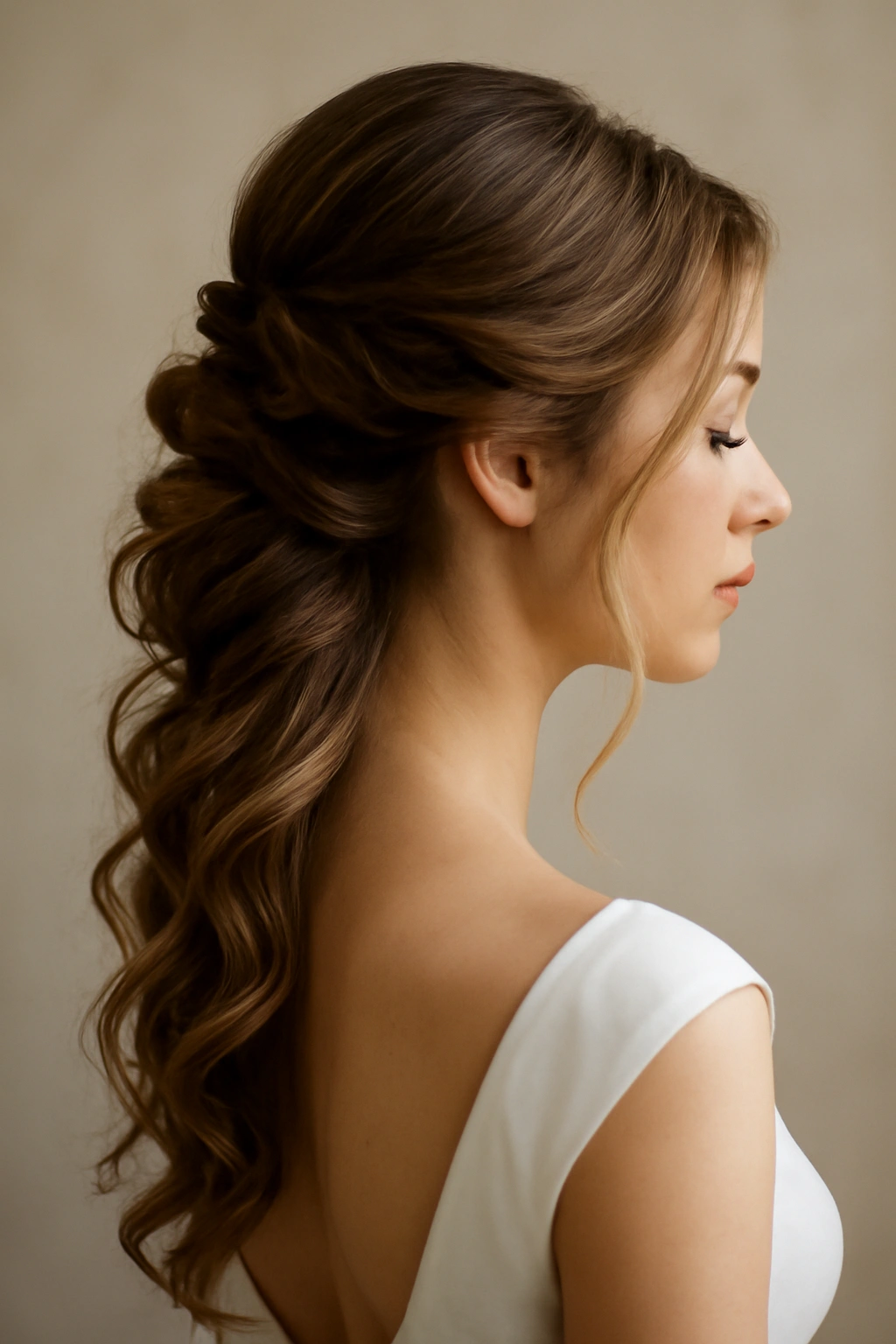
A side updo that cascades loosely down one shoulder creates asymmetrical romance and has an inherently flattering quality that most centered updos can’t quite match. The side placement is modern while the cascading element keeps everything soft and romantic rather than stark.
What Makes This Style Uniquely Flattering
The asymmetry of a side updo is incredibly kind to most face shapes because it softens and elongates rather than drawing everything toward the center. The cascading element—where some hair is intentionally left loose and flowing down the side rather than fully secured—creates movement and visual interest. This style photographs beautifully from every angle and works with both traditional and modern wedding aesthetics. There’s something about the off-center placement that reads as intentional and confident rather than accidental.
How to Achieve It
Begin with waves or soft texture throughout your hair. Brush or gently gather your hair to one side (usually the side away from your face is more flattering, but you can choose based on your preference and face shape). Create a low ponytail on that side, but leave some hair loose and cascading down. You can twist the secured portion and wrap it to create a bun or chignon, or you can use a more sculptural approach where you pin sections in place without creating a distinct bun shape. The key is leaving visible cascading strands that flow rather than pinning everything tightly. Secure with bobby pins and finish with flexible-hold hairspray.
Best For
This style works beautifully on long to very long hair and suits all hair textures. It’s ideal if you have a beautiful profile or want to show off an asymmetrical dress neckline. The style also works wonderfully if you have a smaller face shape and want to avoid heavily pinned, centered updos that can feel overwhelming.
Pro tip: When creating a side updo, test the placement and looseness several times before the wedding. You want enough cascading hair to feel romantic, but enough security so strands don’t fall throughout the day.
7. Delicate Top Knot Updo
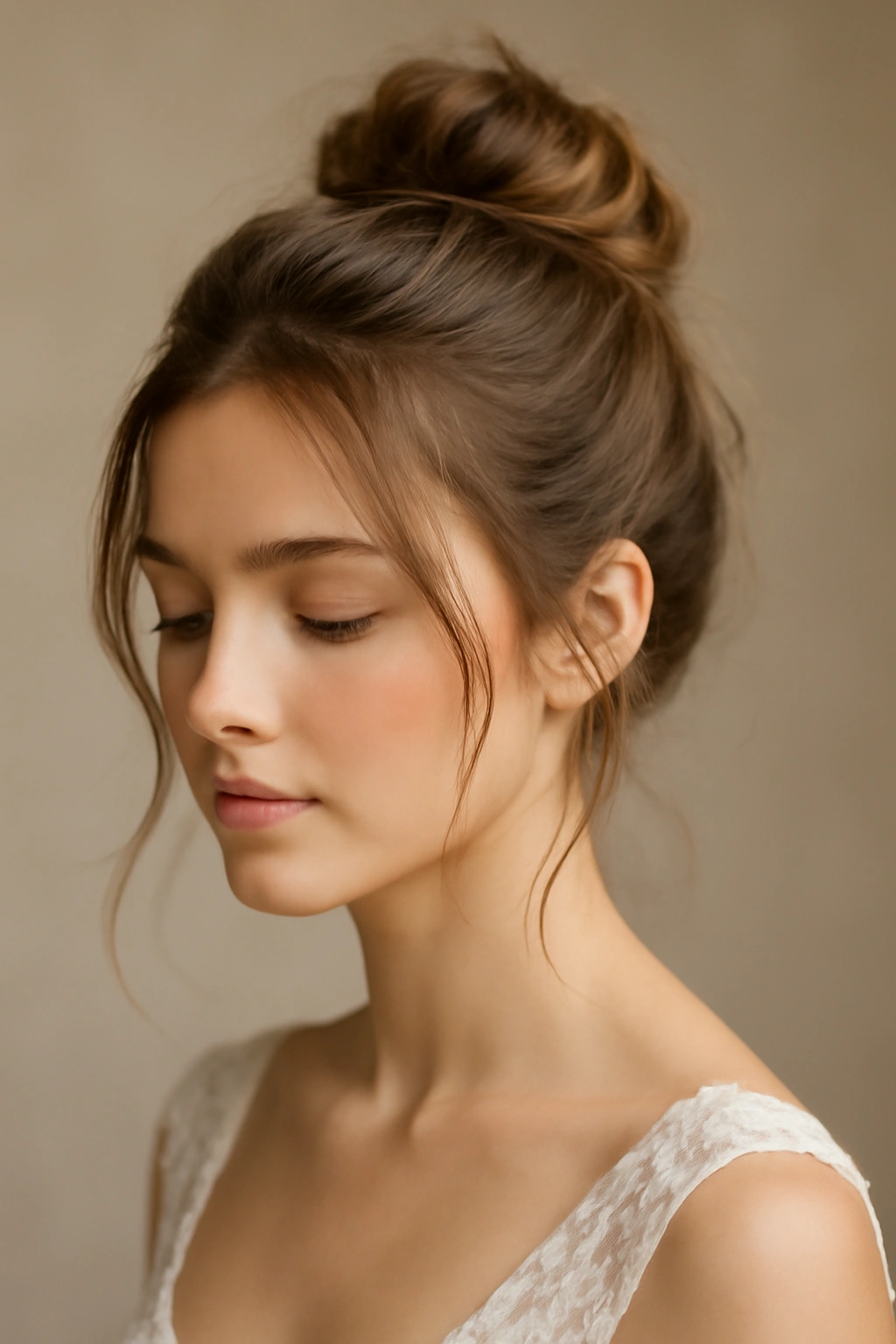
A soft, romantic top knot sits high but not aggressively high, with wispy strands pulled free and loose texture maintained throughout. When done right, a top knot feels modern yet decidedly romantic, especially when paired with vintage or garden-style weddings.
Why Top Knots Can Feel Wedding-Day Romantic
Top knots can skew too casual or trendy if styled slickly, but a deliberately loose, textured top knot with face-framing pieces becomes genuinely romantic and whimsical. The height draws attention to your face and also works beautifully with most necklines—it showcases your shoulders, neck, and collarbone in a way that complements formal wedding attire. The key is maintaining softness and texture rather than achieving that sleek, tight bun style you’d wear to the gym.
How to Style It
Create loose, romantic waves throughout your hair first. Gather your hair high on your head (higher than a low bun, but not at the absolute crown) and secure it into a loose ponytail. Gently twist the ponytail and wrap it around itself to form a bun, leaving the texture visible and undone rather than smoothing it sleek. Pull at the bun to make it fuller and rounder. Pull out three to four wispy face-framing pieces from near your temples and hairline and let them fall naturally. Secure everything with bobby pins and finish with a light hairspray that maintains movement.
Best For
Top knots work across most hair textures and length requirements. They’re ideal for brides who prefer showing their face and neck, who have a modern wedding aesthetic, or who want something that feels current rather than timeless. The style also works wonderfully if you have delicate features and want a softer, more romantic alternative to very structured updos.
Worth knowing: The difference between a flattering top knot and an unflattering one often comes down to the fullness and looseness of the bun itself. Aim for a bun that looks slightly undone rather than pristine and controlled.
8. Swept-Back Twisted Ponytail Updo
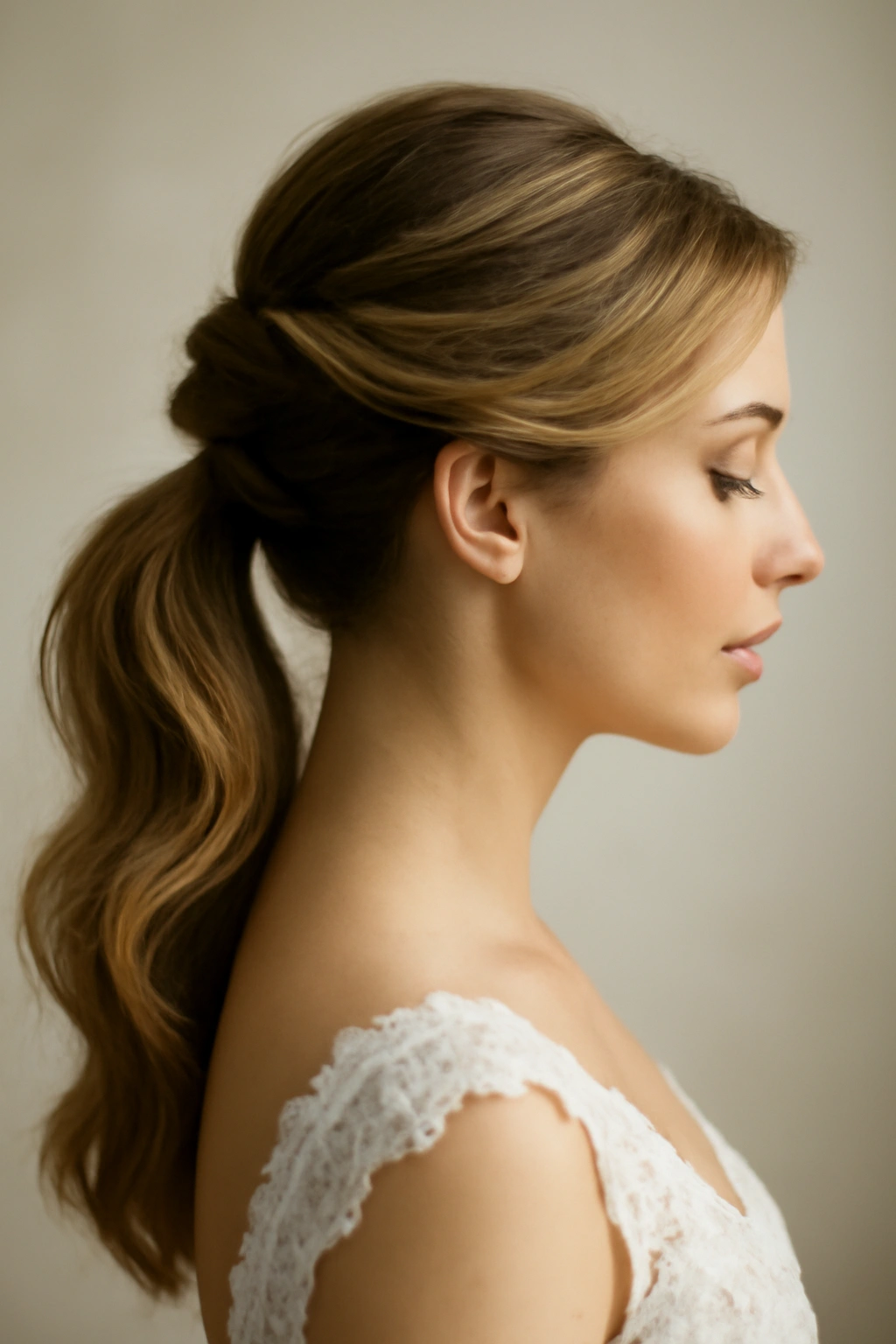
A high or mid-height ponytail that’s twisted loosely and swept to the side creates a soft, elegant look that bridges casual and formal. The twisted element adds texture without requiring braiding skills, and the overall effect is romantic without feeling fussy.
Why This Style Feels Effortlessly Elegant
A twisted ponytail updo has an effortless quality that makes it perfect for brides who don’t want their hair to feel like a statement in itself. The twisting technique adds visual interest and prevents the style from looking too simple or everyday, but it’s genuinely simple to execute. The side sweep is modern and flattering, and the overall effect reads as intentional and polished rather than like you just threw your hair up.
How to Create It
Start with loose waves or light texture throughout your hair. Brush your hair back and gather it into a ponytail at the back of your crown (high enough to feel formal, but not so high that it feels youthful or overly casual). Don’t secure it tightly—keep it soft and slightly loose. Divide the ponytail into two sections and twist each section loosely around itself. Wrap the twisted sections around each other loosely to form a base, then sweep the entire arrangement to one side. Secure with bobby pins throughout, pulling gently on the twists to add fullness and texture. Let one or two thin strands fall around your face for softness. Finish with flexible hairspray.
Best For
This style suits all hair textures and lengths from shoulder-length and longer. It’s ideal for modern or casual-formal weddings, garden ceremonies, and brides who want something polished that doesn’t look overly styled or complicated. The style is also wonderfully forgiving—slight imperfections actually add to the romantic quality rather than detracting from it.
Insider note: The beauty of a twisted ponytail updo is that slight looseness and movement actually enhance the look rather than diminish it. Don’t aim for perfection; aim for romantic messiness instead.
Final Thoughts
The best wedding updos share a common thread: they prioritize softness and movement over perfection, they frame the face gracefully, and they feel like the most beautiful version of yourself rather than a costume or a style that doesn’t match your personality. None of these styles requires extreme technical skill—they all come down to understanding the basic technique, practicing once or twice beforehand, and then trusting yourself on the day itself.
The key to success with any romantic updo is preparation. Create texture or waves in your hair first, commit to one style well in advance, and do a complete trial run (including with your dress, veil, and accessories) at least once before the wedding. Consider having a backup plan or a trusted stylist on speed-dial if you feel anxious, but realistically, any of these styles are achievable with a bit of practice and the right bobby pins.
On your wedding day, your hair should feel like part of your beauty, not a separate project demanding constant attention or adjustment. A soft, romantic updo should feel comfortable enough that you forget about it entirely and focus on the actual day itself—your partner, your loved ones, the way the light hits the room. The best hairstyle is one you can genuinely forget you’re wearing, which means you can be fully present for every moment that matters.
